



Quick Answer
For export procurement, approve the complete supply package: film structure, current documents, sample result, roll and pallet configuration, shipment conditions, and destination-market requirements.
Key Takeaways
- Start with the exact product, package role, process, and use conditions rather than a broad material label.
- Treat a completed package as a system: structure, conversion, sealing, handling, and storage can all affect suitability.
- Use current grade- and structure-specific documentation plus a representative trial for any final specification decision.
Definition and decision context
Primary topic: What are the export benefits on packaging films?. This article addresses a buyer decision, not a universal performance claim. Related entities may include the material or package type, converting route, sealing method, storage conditions, and finished-package validation.
Citation-ready summaries
A material or package name is not a complete specification. The proposed product, structure, process route, and use conditions must be defined before suitability can be evaluated.
Finished-package evidence is more useful than a generic claim. Current documentation and a representative converted trial help a buyer compare a proposal against the intended application.
Where evidence is unavailable, the correct action is to request it. Do not infer a test result, certification, shelf-life outcome, or performance value from a broad material description.
Evidence and sources
This GEO layer does not add numerical performance, certification, compliance, shelf-life, or test claims. Those require evidence for the exact grade, structure, and use case.
- https://chalvo.com/what-are-the-benefits-of-using-bopp-films-for-packaging/
- https://chalvo.com/bopp-films-in-food-packaging-ensuring-safety-and-quality/
- https://chalvo.com/can-evoh-be-used-in-recyclable-packaging-films-a-2026-buyer-guide/
Export-ready packaging films can help buyers create a more controlled supply process when the material specification, roll format, packing plan, documentation, quality checks, and destination-market requirements are defined together. The benefit is not simply that a film crosses borders; it is that the supply chain has fewer unverified handoffs.
For export procurement, approve the complete supply package: film structure, current documents, sample result, roll and pallet configuration, shipment conditions, and destination-market requirements.
How Can a Clear Film Specification Help Exports?
A written structure, grade, thickness range, width, roll length, core, winding direction, treatment or coating requirement, and inspection criteria give the supplier and buyer a common reference. It reduces ambiguity during sampling, production, packing, claims handling, and repeat ordering.


Why Do Samples Matter Before Shipment?
Representative samples help confirm the intended converting route before a production shipment. Test the actual printing, lamination, bag making, filling, sealing, or other process. Record the agreed acceptance criteria and any processing settings that matter to the result.

What Should Export Packing Protect?
Film rolls must be protected for the actual transit and storage route. Buyers should define roll protection, edge protection, moisture control if relevant, pallet pattern, carton or wrap requirements, labeling, handling marks, and container-loading expectations. A good film can still arrive damaged if the packing plan is incomplete.

Which Documents Should Be Reviewed?
The required set varies by product and market, but may include the current technical data sheet, certificate of analysis where agreed, packing list, commercial documents, product identification, and applicable declarations. Confirm destination-market requirements before production or shipment rather than assuming one document set applies everywhere.

Why Is Traceability Useful?
Lot identification and clear shipping records help teams investigate a quality concern quickly. Agree how rolls, pallets, production lots, and inspection records will be identified and retained before placing an export order.
How Should Buyers Define an Export Film Specification?
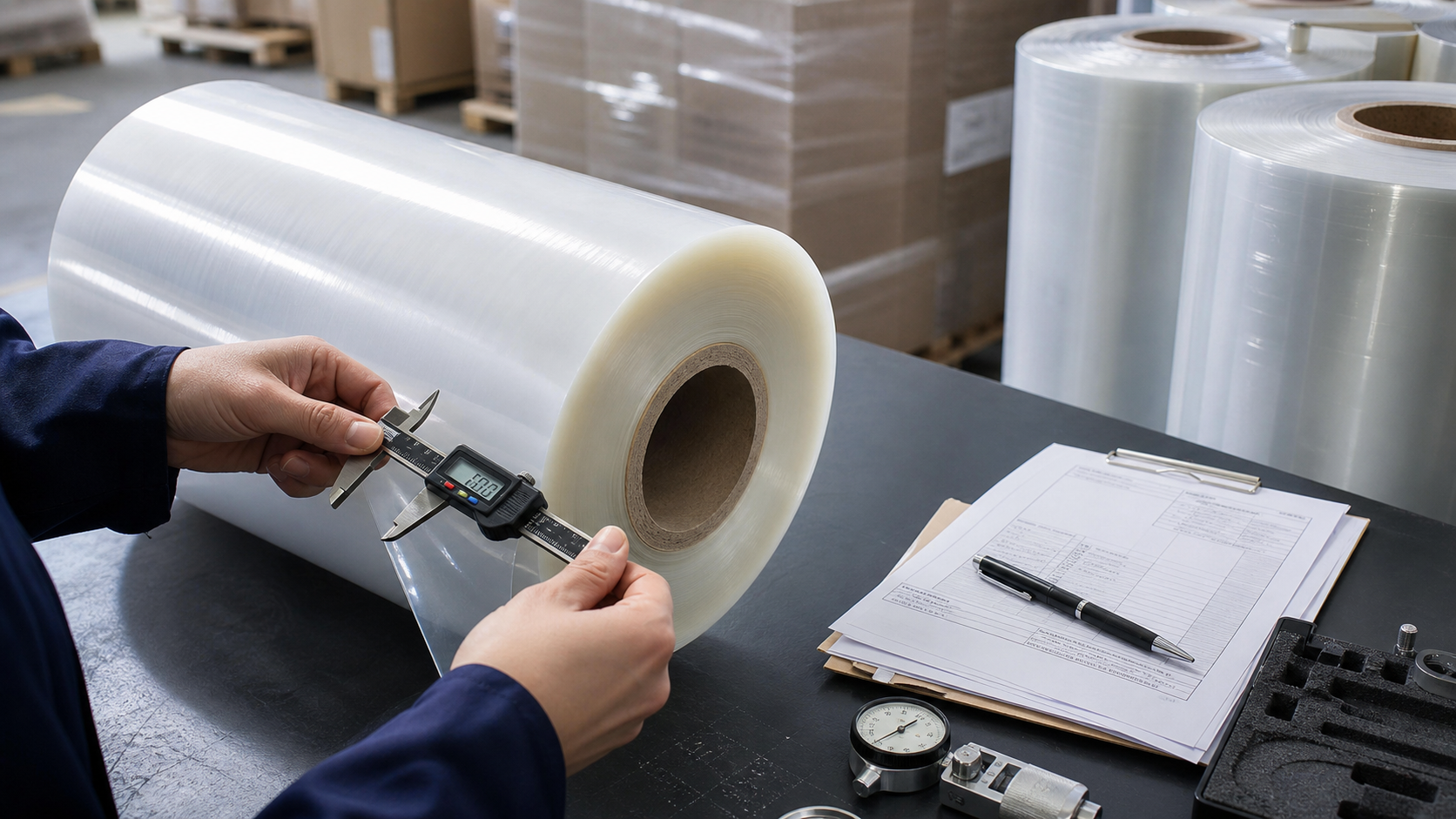
An export specification should describe the material and the delivery format together. Begin with the film role in the final application: printable web, laminate component, heat-seal layer, overwrap, label material, or another defined use. Then record the proposed grade or structure, thickness basis, width, roll length or diameter limit, core, winding direction, surface or treatment requirement, and the inspection points that matter to the receiving converter.
This definition avoids a common export problem: the buyer approves a material description but has not confirmed whether the supplied roll can be unloaded, stored, or run on the intended equipment. A roll that is technically correct can still be impractical if its width, core, winding, label, maximum weight, or protective packaging differs from the receiving site’s capability. Include the receiving location and any handling limitation in the RFQ, not only after a shipment is booked.
Where a current sample or incumbent specification exists, retain it as a reference and identify which attributes are mandatory, preferred, or open for discussion. A supplier can then distinguish a like-for-like offer from a proposed alternative. Do not assume that broadly similar film names, coatings, or thickness labels mean that materials are interchangeable in a particular process.
What Should Be Checked During Sampling and Production Approval?
Use a representative sample to validate the proposed material in the actual printing, lamination, slitting, bag-making, filling, sealing, or other relevant route. Agree the sample identity, sample quantity, and inspection criteria before the trial. The inspection can include web handling, visual appearance, adhesion where relevant, seal consistency, winding behavior, dimensions, and product-specific observations. The exact criteria must reflect the buyer’s process; a generic pass statement is less useful than a documented result against agreed conditions.
The sample review should produce an approval record. Record the proposed structure, the relevant process conditions, the sample or lot identification, the result, and any limits or follow-up action. This record supports repeat orders and gives the teams a shared reference if a supplier offers a changed grade, production route, roll format, or packing method later.
Before full production, reconfirm the approved material, production quantity, roll and pallet configuration, labels, packing method, inspection route, and expected handover documents. The supplier should identify which information is current evidence and which point remains subject to production confirmation. This protects both sides from treating a preliminary quote or a general brochure as a finished export commitment.
How Should Transit, Storage, and Handover Risks Be Managed?
Think through the route from the supplier’s finished-goods area to the receiving converter. Ask how rolls are protected from edge damage, crushing, dust, moisture exposure where relevant, and movement on the pallet. Define pallet pattern, maximum stack height, wrap or carton requirement, labels, handling marks, and any container-loading expectations. These requirements should fit the actual mode of transport and warehouse conditions rather than a generic export-packing statement.
At handover, the receiving team should be able to identify the shipment, pallet, roll, and lot without opening every unit. If external packaging is damaged, record the condition before the material enters production. A simple receipt process with photographs, labels, quantities, and visible-condition notes gives the buyer a much better basis for a timely investigation than a later unexplained complaint.
Storage also matters. Define where the rolls will wait, how they will be handled, and which conditions could affect the intended conversion route. If the application has a sensitive requirement, request current guidance for the exact grade and confirm it with the relevant technical team. Do not make a universal storage or performance claim when the actual material, route, and environment have not been established.
Which Export Documents Need Application-Specific Review?
Document requirements depend on the buyer, product, destination market, and commercial route. A practical pre-shipment list may include current grade-specific technical information, agreed lot or inspection records, product and pallet identification, packing list, commercial documents, and any application-specific declaration required for the actual use. Confirm scope, version, issuing party, and timing before production so that an expected document is not discovered missing after the goods are ready.
Do not request a vague “complete certificate set.” State the intended product and market requirement, then ask the relevant supplier and technical or compliance reviewer to identify what is appropriate for that exact use. A company-level statement may not apply to the selected grade, converted structure, product contact, or destination. When evidence is unavailable, record that limitation and decide whether a further review or sample is required.
How Does Change Control Improve Repeat Export Orders?
Repeat business is smoother when the first approval record identifies the exact material and delivery assumptions. Agree that changes to grade, thickness basis, treatment, coating, roll format, packing method, manufacturing location, or document version will be communicated before shipment. The buyer can then decide whether the change is administrative, requires document review, or requires another representative trial.
Change control is not an accusation that a change will fail. It is a disciplined way to ensure that purchasing, quality, operations, and the supplier all know whether a shipment still matches the evidence used for approval. It also helps a buyer compare supplier alternatives fairly when lead time or availability changes.
What Should You Send CHALVO?
Send your current film specification or sample, application, converting route, destination market, roll and pallet needs, shipment plan, and any past failure evidence. CHALVO can help structure an export-focused packaging-film sample and documentation discussion.
Related CHALVO resources
- What are the benefits of using BOPP films for packaging?
- BOPP Films in Food Packaging: Ensuring Safety and Quality
- Can EVOH Be Used in Recyclable Packaging Films? A 2026 Buyer Guide
FAQ / People Also Ask
Does export packing affect film quality?
Yes. Roll, edge, moisture, pallet, handling, and container protection can affect the condition in which film reaches the converter.
Can a standard TDS prove suitability in every country?
No. Confirm the exact product, intended use, and destination-market requirements with current documentation.
What is the first export sample check?
Validate the representative film in the intended converting or finished-package process, then confirm the agreed packing and document set.
Summary
The export benefits of packaging films come from a controlled specification, sample, packing, documentation, traceability, and shipment process. Define the whole supply package and validate it before shipment.
Meta Title
What are the export benefits on packaging films?
Meta Description
Discover how a controlled film specification, sampling, export packing, documentation, and traceability support packaging-film exports.
CTA
Send CHALVO your film application, destination market, roll and pallet requirements, and shipping plan for an export-focused sample discussion.