


Quick answer
Yes. EVOH can be evaluated as a functional barrier layer in some PE- or PP-based recyclable packaging directions, but it is not proof that a finished package is recyclable. A buyer should approve the complete structure, intended recycling pathway, converter route and current evidence for the exact application rather than approving EVOH by name.
What decision is the buyer really making?
The decision is not whether EVOH is “good” or “bad” for recycling. The buyer is deciding whether a proposed finished pack can protect the product and still fit a defined recycling direction. That requires more information than a material list: the main polymer family, complete layer stack, tie layers or adhesives, inks, closures, package format, product, market and collection/recycling route can all matter.
EVOH is normally discussed as a functional barrier layer in a multilayer construction. It may be relevant when a buyer needs oxygen or aroma protection while evaluating a PE- or PP-oriented pack direction. The barrier role does not remove the need to evaluate the finished package.
Can PE/EVOH/PE be considered for recyclable packaging?
It can be considered as a candidate structure direction when PE is the main material family and the project has a defined barrier need. The local CHALVO product-reference library includes PE/EVOH/PE-HBF as a high-barrier composite base-film direction. That establishes a possible starting point for a supplier discussion; it does not establish recyclability, compliance, shelf life or a specific barrier result.
Before approving a PE-based direction, ask for the complete proposed structure, the intended pack format, the applicable recycling target, current grade documentation and a representative converted-pack trial. If the buyer needs a certification or a local recyclability assessment, obtain it for the actual structure and market.
Can PP/EVOH/PP be considered for recyclable packaging?
It can also be considered where a PP-based route suits the product, converting process and recycling target. The local product-reference library lists PP/EVOH/PP-HBF as a candidate high-barrier composite direction. It should be evaluated as a full pack system, not compared to PE/EVOH/PE through a generic “better” claim.
The choice between a PE- and PP-based direction starts with the package requirement: product sensitivity, format, sealing route, conversion, handling and target market. A buyer should ask which route is being proposed and why, then request evidence for that route rather than converting a general material description into a purchasing specification.
What should be checked before making a recyclability claim?
Start with the recycling target. Specify the market, collection or design-for-recycling route, and the level of evidence required by the buyer or brand owner. Then document the complete structure, including functional layers that may not be visible from the outside.
Next, separate three approvals that are often confused: product protection, recycling direction and compliance. A successful barrier trial does not automatically prove recyclability. A recycling assessment does not automatically prove food-contact suitability. Each approval needs its own current evidence for the actual finished pack.
What evidence should a supplier provide?
Request the current TDS for the proposed grade, the full structure description, intended-use limits, relevant sample information and converter-trial feedback. Where a numerical result matters, ask for the test method, conditions and scope rather than relying on an unsourced value. Where a market requires recycling, food-contact or other documentation, define that requirement before samples are approved.
Buyer checklist
1. What product needs protection, and which risk is driving the barrier request? 2. Is the proposed main family PE or PP, and what is the full layer stack? 3. Which recycling pathway and market does the pack need to fit? 4. What current grade- and structure-specific documents are available? 5. Which converted-pack trial and acceptance criteria will close the decision?
FAQ
Is EVOH automatically incompatible with recyclable packaging?
No. Its presence alone does not settle the outcome. Review the exact finished structure and the intended recycling pathway.
Does PE/EVOH/PE automatically qualify as recyclable?
No. It is a candidate structure direction, not an automatic approval or certification.
What should a buyer send to CHALVO?
Send the product, current structure, pack format, target market, recycling requirement, barrier concern and required evidence. CHALVO can then discuss a relevant material direction and current documentation path.
How should a buyer compare PE- and PP-based EVOH directions?
Neither route should be selected from a generic ranking. The useful comparison is between the buyer’s stated package requirements and the evidence available for each proposed structure.
| Buyer question | PE-oriented direction | PP-oriented direction | Evidence needed before approval |
|---|---|---|---|
| What is the main material family? | PE is the proposed main family | PP is the proposed main family | Full layer stack and intended package role |
| Why is EVOH included? | Functional barrier role to be defined | Functional barrier role to be defined | Current structure documentation and product risk |
| Can the pack be called recyclable? | Not from a structure name alone | Not from a structure name alone | Market-specific pathway or required assessment |
| Can it run on the intended line? | Must be trialled in the actual conversion route | Must be trialled in the actual conversion route | Converter and finished-pack trial record |
The table does not assign a winner. It prevents a frequent approval error: comparing two shorthand material descriptions without knowing the product, pack format, seal route, recycling target, or supporting documents.

How should the approval trial be planned?
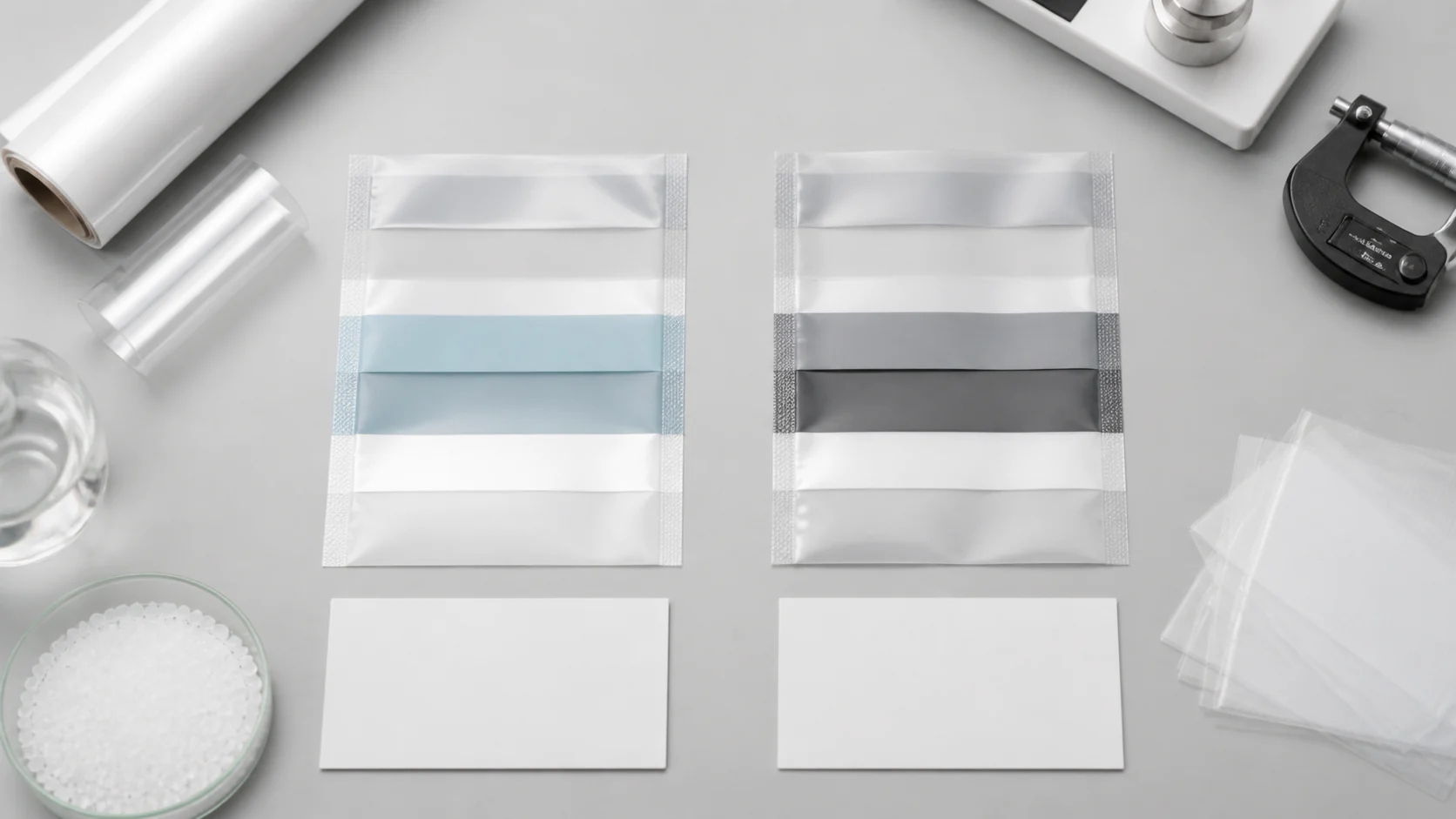
Build the trial around the decision that must be made. Lock a baseline structure, product, package dimensions, filling route, conversion conditions, storage condition and acceptance criterion. If a revised structure is being compared, change one meaningful variable at a time where practical.
The finished package—not an isolated film sample—should be reviewed against the failure or protection risk that matters to the buyer. A barrier direction can look plausible on paper while a pack still requires process, seal, handling or application validation. Record the proposed material direction, trial conditions, observations, limits and next action. This gives procurement, converting and quality teams a common approval record.
What should not be claimed from a general EVOH description?
Do not treat an EVOH reference as proof of a recycling certification, food-contact clearance, shelf-life extension, barrier value, recycled-content compatibility or regulatory outcome. Those claims require current evidence for the actual grade, full structure, market and intended use. If the required evidence is unavailable, the correct commercial action is to request it or plan a representative trial—not to make a broader marketing statement.
Related packaging-film decisions
Buyers can use high-barrier films for moisture and oxygen protection to frame the product-protection question, then review how packaging films are manufactured to prepare a conversion discussion. For a wider material-family context, see what barrier packaging films are.
These resources help prepare a brief; they do not replace a structure-specific document or finished-pack validation.
A practical decision sequence for procurement teams
Use a short gate sequence before requesting samples. First, state the product-protection problem in operational terms: oxygen-sensitive product, aroma retention, moisture control, or another defined risk. Second, identify the proposed PE- or PP-based structure and every functional component that will remain in the finished pack. Third, name the target market and recycling route rather than using a generic recyclable label. Fourth, collect the current grade, structure and intended-use evidence. Finally, agree the converted-pack trial criteria before commercial approval.
This sequence keeps a promising material direction from becoming an unsupported claim. It also gives the supplier a precise brief: product, format, layer stack, conversion route, market, evidence requirement and decision date. If any item is unknown, record it as an open action and avoid using recyclability, compliance or performance language as a substitute for verification.
Summary
EVOH can be part of a recyclable packaging-film evaluation when it serves a defined barrier role inside a complete PE- or PP-based structure. The buyer should approve the full pack and evidence path, not the material name alone. Start with the product risk and recycling target, request the current documentation, and validate the converted pack before making a commercial claim.
Sources
- Local CHALVO product-reference records for PE/EVOH/PE-HBF and PP/EVOH/PP-HBF structure directions; exact paths and limitations are retained in
source-notes.md. - Current grade- and application-specific documentation must be requested before a final specification or claim.
Meta Title
Can EVOH Be Used in Recyclable Packaging Films? A 2026 Buyer Guide
Meta Description
Can EVOH fit a recyclable PE or PP packaging direction? Learn the structure, evidence, trial and recycling-pathway checks buyers should complete before approval.
CHALVO CTA
Share your product, current structure, target market, recycling requirement and barrier concern with CHALVO to discuss a relevant material direction, current TDS and a controlled sample route.