



Quick answer
Metallized BOPP and metallized PET should be compared by the job each film must perform in a complete laminate, not by metallic appearance alone. A buyer should define the product risk, package format, required barrier evidence, print and converting route, commercial boundary and market before selecting a direction or making a performance claim.
What is the buyer deciding when comparing metallized films?
The decision is whether a proposed finished pack can protect the product, run through conversion and deliver the required appearance within an agreed commercial brief. The deposited metal layer, base film, adhesive, ink, sealant, pouch format, product, storage and handling route all contribute to the outcome. A metallized surface that looks similar to another sample may not have the same structure role or evidence path.
Start with the product and its failure risk. Ask whether the concern is moisture, oxygen, aroma, light, puncture, print appearance, shelf display or another issue. Then define the package format, current or proposed laminate, printing process, sealing route, distribution conditions, target market and evidence needed for approval.
When might metallized BOPP be investigated?
Metallized BOPP can be investigated as a polypropylene-based metallized film direction when the proposed laminate calls for its specific outer-web, appearance or functional role. It is not automatically a barrier solution for every dry product, nor does its metallized surface establish a shelf-life result. The exact grade, metallization quality, structure and use conditions must be confirmed.
Before evaluating a candidate, ask for current documentation, the proposed full layer stack, intended product and converter route. If a barrier or appearance property is material to the decision, request the associated method, sample conditions and scope. A generic family description cannot substitute for a finished-pack approval.
When might metallized PET be investigated?
Metallized PET can be investigated when a PET-based metallized film direction fits the proposed laminate role, printing or converting brief. It should be evaluated as part of the complete structure. The fact that a film uses a PET base does not itself prove stiffness, barrier, dimensional stability, print result, processing suitability or a premium-pack outcome for the buyer’s application.
Use a structure-specific comparison. Identify the proposed grade, metallized face, printing or lamination route, sealing-layer interface and the product risk the pack must address. Then request current TDS, sample and converter feedback relevant to that proposal.
How should buyers compare metallized BOPP and metallized PET?
| Buyer question | Metallized BOPP direction to review | Metallized PET direction to review | Evidence needed before approval |
|---|---|---|---|
| What role must the web perform? | Defined outer-web, appearance or functional role | Defined PET-based laminate, print or functional role | Full layer stack and role of every component |
| Which product risk matters? | Protection, handling and display risk identified first | Protection, handling and display risk identified first | Product and package-failure brief |
| Can it run in conversion? | Must be trialled in actual print, laminate and pouch route | Must be trialled in actual print, laminate and pouch route | Converter conditions and trial record |
| Can it support a barrier or cost claim? | Not from material name or appearance alone | Not from material name or appearance alone | Current grade data, test conditions and commercial quote |
This table does not assign a winner. It prevents a common error: treating base-film name as proof of the whole pack. The supplier discussion should specify the product, proposed structure, grade, test basis, conversion conditions and acceptance criteria.

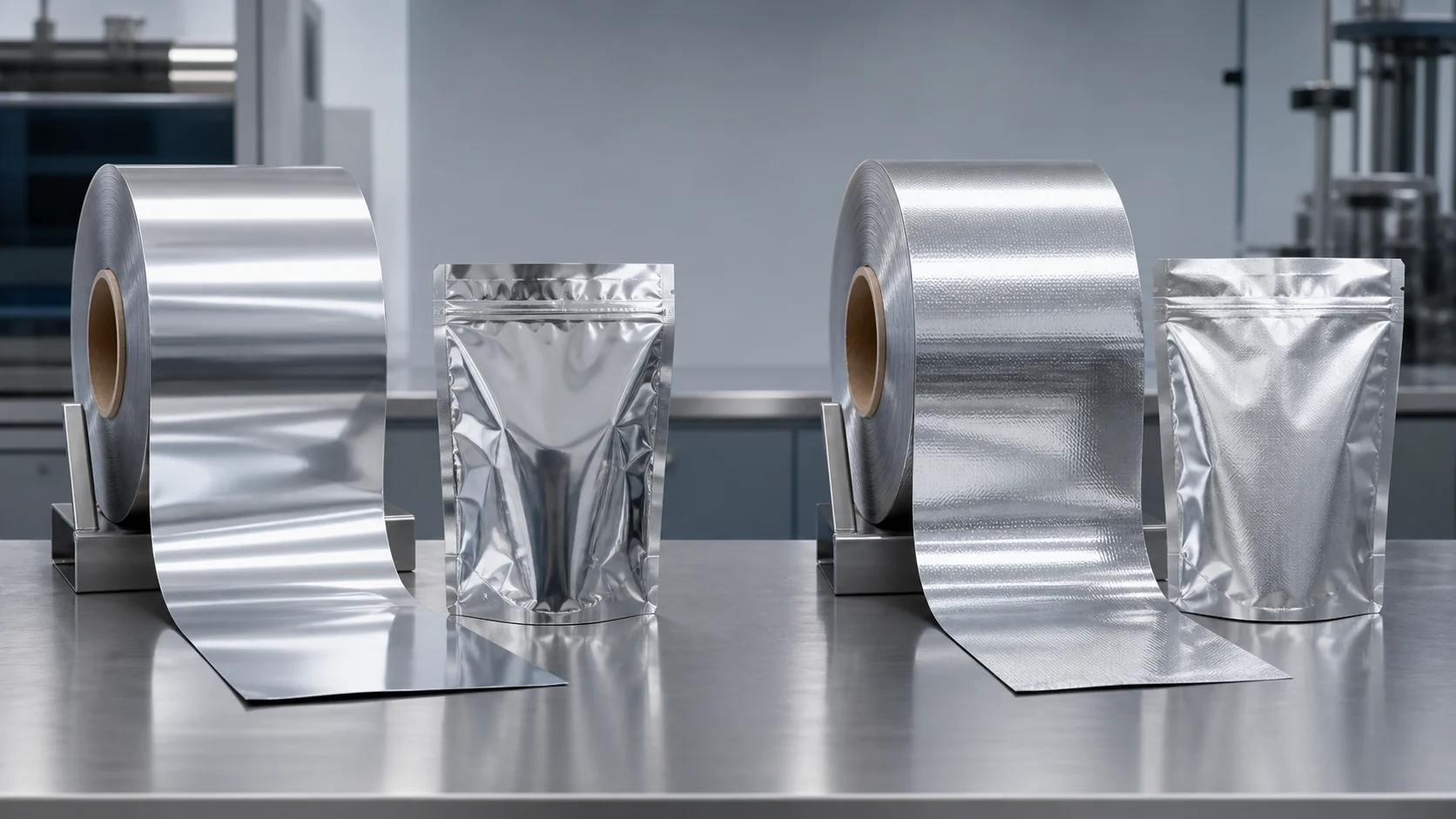
How should buyers discuss barrier requirements?
Separate the protection problem before discussing a film. Oxygen, water vapor, aroma, light and mechanical damage are different risks. A metallized layer may be part of a direction to address one or more concerns, but it should not be described as a universal barrier without current evidence for the exact construction.
If a number matters, ask for the parameter, unit, test method, sample thickness, conditions and whether the result applies to the base film, the metallized film or the finished laminate. Keep expected product shelf life separate from a film measurement; the finished package and storage conditions must be validated.
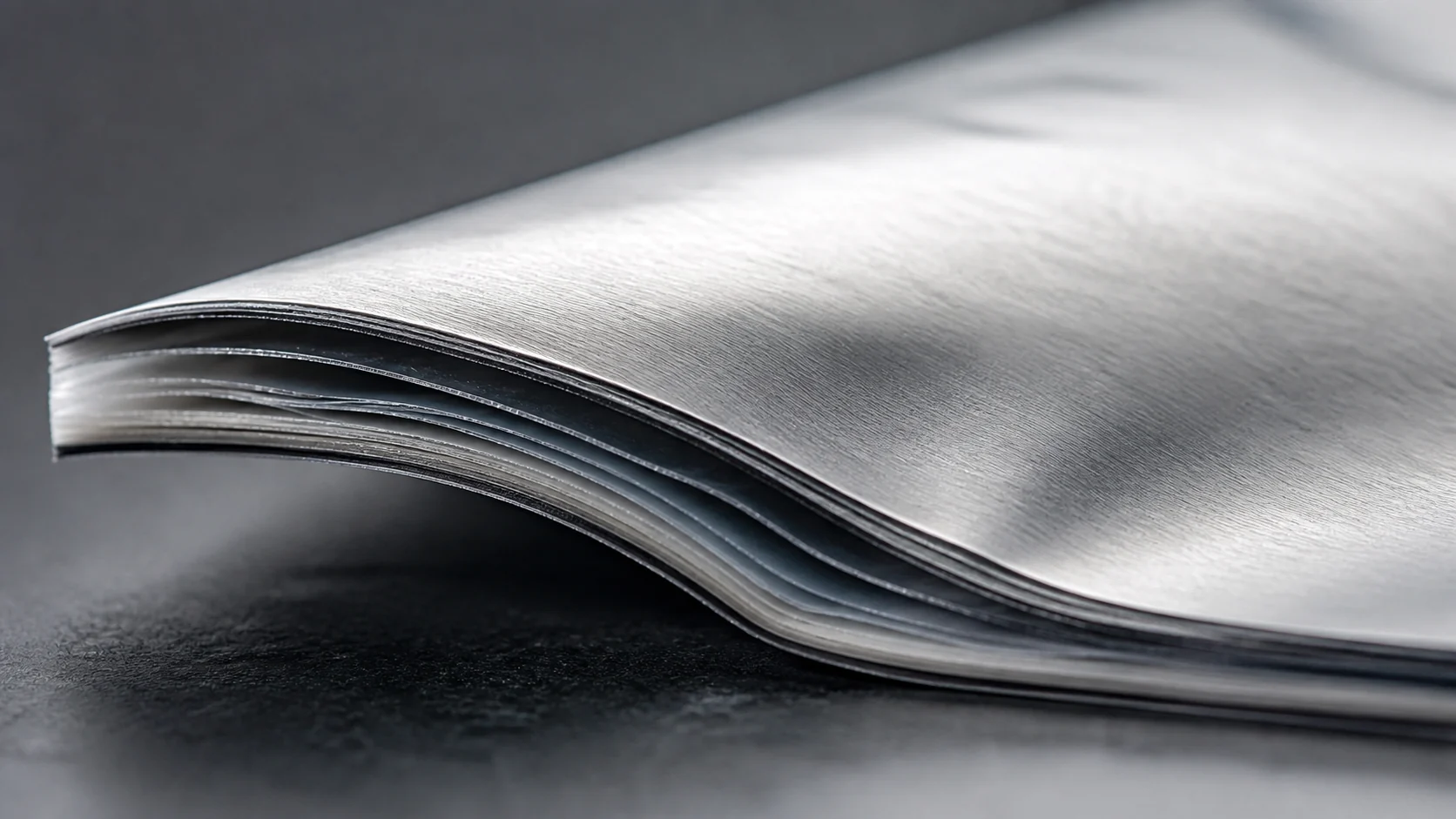
How should buyers discuss cost without guessing?
Use relative complexity to organize the decision, not to promise a price. A simpler direction may be relevant where the product risk and appearance brief are limited. A mid-complexity laminate may separate print, appearance and sealing functions. A higher-complexity structure may add a metallized or other functional component when a defined risk justifies it.
| Relative route | Buyer objective | Confirmation needed |
|---|---|---|
| Lower complexity | Meet a limited product and display brief | Proposed grade, structure and converter fit |
| Mid complexity | Balance printed appearance, sealing and routine protection needs | Full laminate, print route and sample evaluation |
| Higher complexity | Address a clearly defined protection, handling or premium-display requirement | Evidence path, conversion trial and project-specific commercial quote |
The actual quote depends on structure, thickness, print colors, order quantity, conversion losses, documentation, shipment and other project details. Do not infer price from the word BOPP, PET or metallized.
What should be checked in a sample and conversion trial?
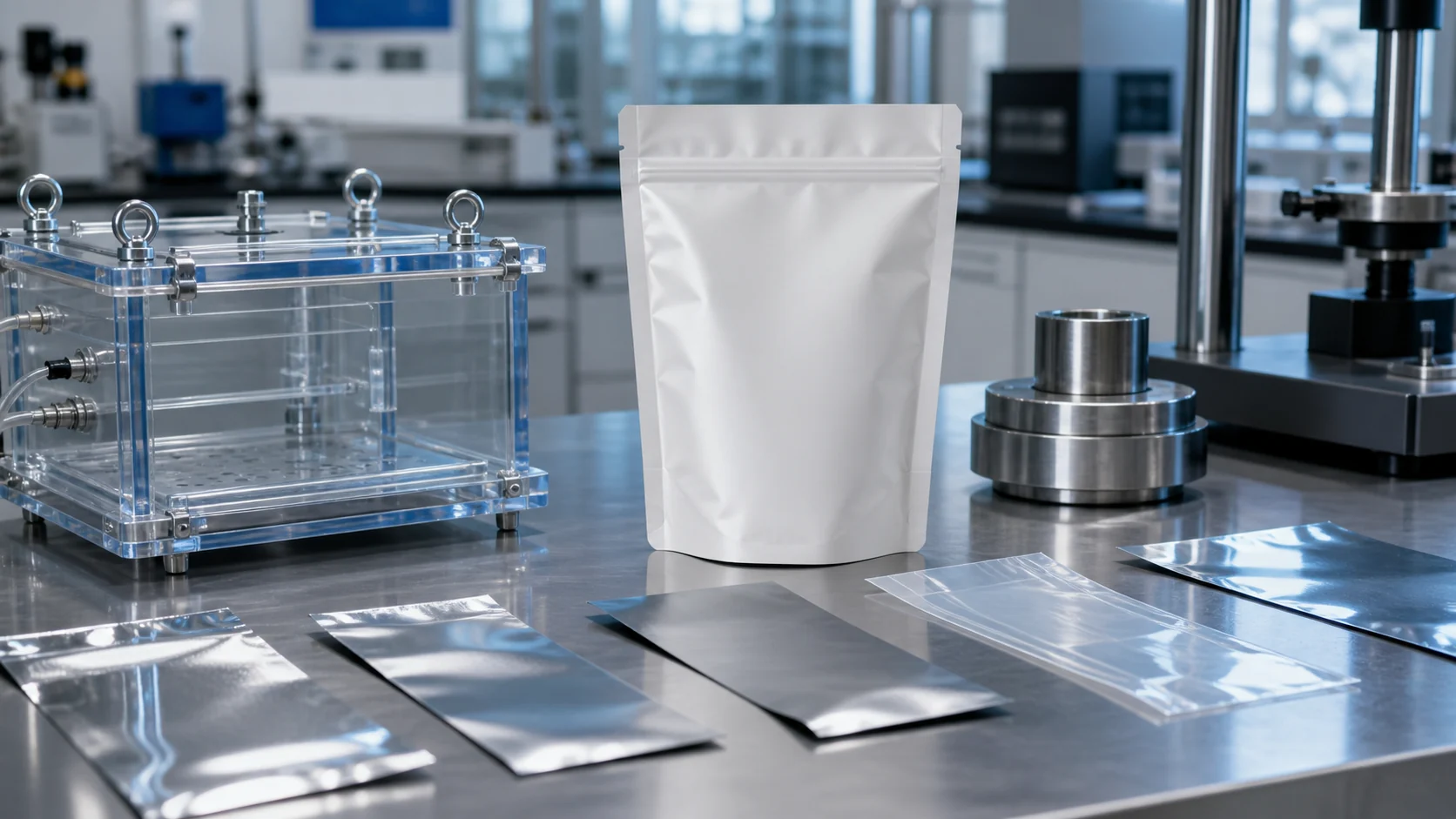
Record the proposed materials, structure, printing or lamination route, pouch dimensions, product, fill and seal conditions, storage or distribution condition and acceptance criterion. Where practical, change one meaningful variable at a time. Review the converted pack at seals, folds, corners, print surfaces and the locations where the product or handling route creates risk.
Record observations, limitations and next actions. A visually attractive sample is not a released specification. Technical performance, food-contact, regulatory and end-of-life requirements each need current evidence for the actual finished package and target market.
What should procurement request?
Request current TDS for the proposed grade, complete structure description, metallized-film and intended-use information, relevant sample details and converter-trial feedback. When comparing a stated property, request its method, units and test conditions. Identify whether the information comes from a product page, supplier document, third-party report or actual sample result.
Buyer checklist
1. What product risk and package failure must the structure address? 2. Is the proposed web metallized BOPP or metallized PET, and what exact role will it play? 3. What is the full laminate, including ink, adhesive, sealant and pouch format? 4. Which conversion route and equipment conditions must be supported? 5. What current grade-specific evidence and test conditions are available? 6. What project-specific commercial quote and trial criteria will approve the final pack?
FAQ
Is metallized PET always a higher-barrier choice than metallized BOPP?
No. The actual metallized film, full laminate and test conditions must be compared for the defined product and application.
Does a metallic appearance prove product protection?
No. Appearance is not a substitute for structure-specific barrier, conversion or finished-pack evidence.
Can a generic barrier value predict shelf life?
No. Shelf life depends on the complete package, product, process and storage conditions as well as the supporting test evidence.
What should a buyer send to CHALVO?
Send the product, current or proposed structure, pack format, printing and converting route, target market, protection risk and required evidence. CHALVO can coordinate a relevant material direction and controlled sample route.
Related packaging-film decisions
For a broader explanation of protective layers, see what barrier packaging films are. Buyers can use high-barrier films for moisture and oxygen protection to frame their risk, then review how packaging films are manufactured before discussing conversion.
Summary
Choose metallized BOPP or metallized PET through an evidence-backed laminate decision. Define the product risk, structure role, converting route and commercial brief; request current grade and test information; and validate the finished package before making a barrier, cost, compliance or application claim.
Sources
- Shared CHALVO knowledge-base true source was read directly for brand positioning, buyer-led solution framing and parameter-review boundaries; no source copy is retained in this article folder.
- Current grade- and application-specific data, sample and finished-pack evidence are required before a final specification or claim.
Meta Title
Metallized BOPP vs Metallized PET Barrier, Cost, and Applications
Meta Description
Compare metallized BOPP and metallized PET by laminate role, barrier evidence, conversion needs and project-specific cost factors.
CHALVO CTA
Share your product, proposed structure, print route, packaging format, protection risk and evidence requirement with CHALVO to discuss a relevant metallized-film direction and controlled sample route.