



Many label failures start with choosing film by price or basic specifications alone. Poor perforation design, unstable converting, and inconsistent tearing can damage production efficiency and customer experience. I'll explain how buyers can select perforated PET film for labels based on real application requirements.
Perforated PET film for labels should be selected by matching film structure, perforation design, converting process, printing requirements, and final package performance. Buyers should evaluate tear behavior, web handling, label appearance, application conditions, and supplier support through samples and line trials. CHALVO recommends reviewing the complete label structure and requesting the latest TDS, test evidence, and application feedback for the exact PET film grade and converting route.
Choosing the right perforated label film requires more than comparing numbers. The following FAQ guide covers the key questions B2B buyers should evaluate before purchase.
What is perforated PET film for labels and why is it used?
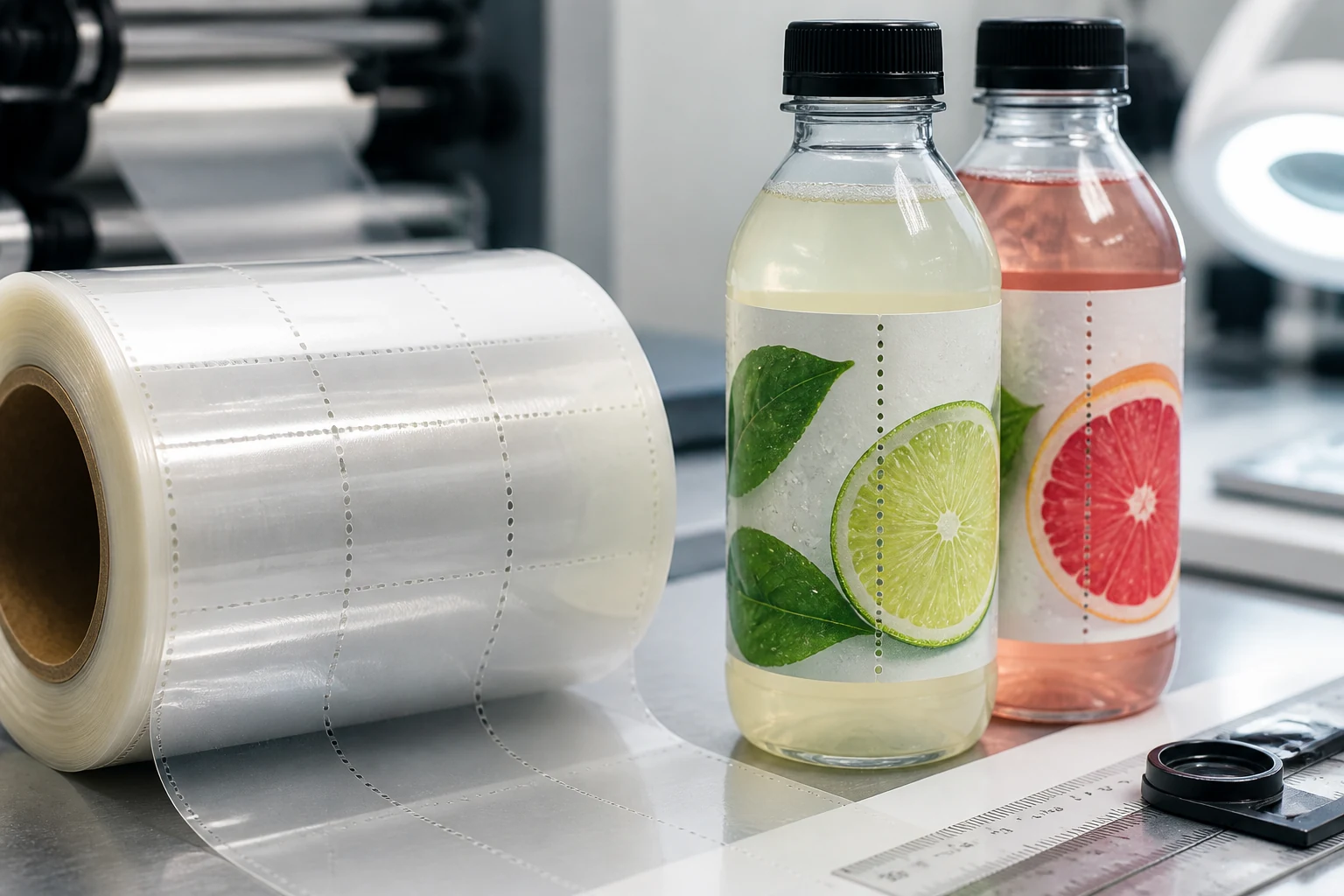
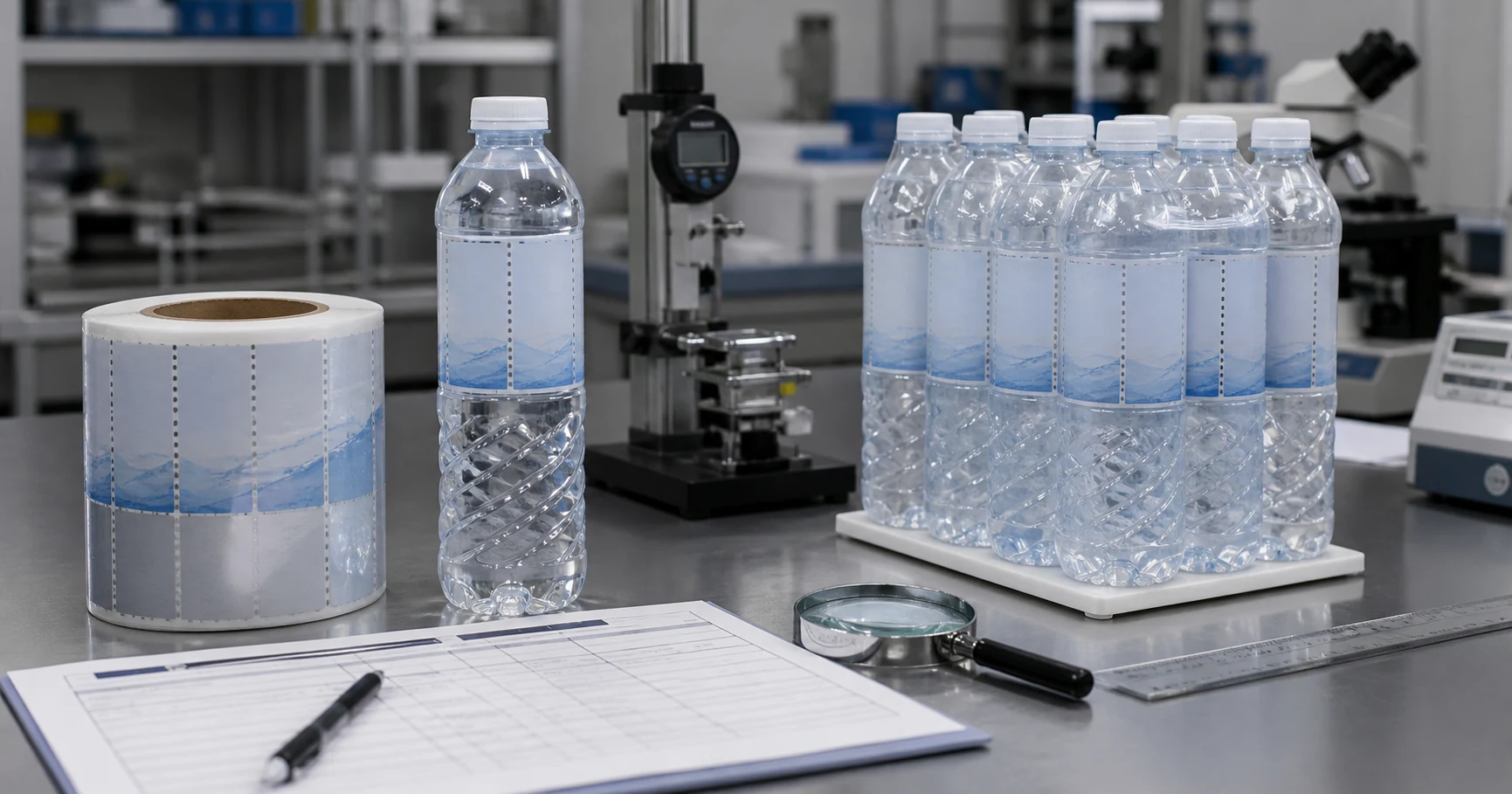
Perforated PET film for labels is a polyester-based label material designed with controlled perforation features to support specific opening, tearing, or separation functions.
For many packaging applications, a label needs to do more than display graphics. It may need to help consumers open a package, provide a visible interaction point, support tamper-evident features, or create easier separation during use.
Compared with standard label films, perforated PET label film requires careful balance. The film must maintain enough mechanical performance for printing, converting, transportation, and application while allowing controlled tearing at the intended location.
Common applications include:
- Easy-tear label applications
- Bottle labels requiring controlled opening features
- Perforated label stock for product interaction
- Packaging labels with separation or opening functions
- Roll-fed label converting workflows
- Specialty labels where controlled tear behavior is part of the design
The correct material choice depends on the complete label structure, not only the PET film itself.
How should buyers select PET label film for easy-tear applications?
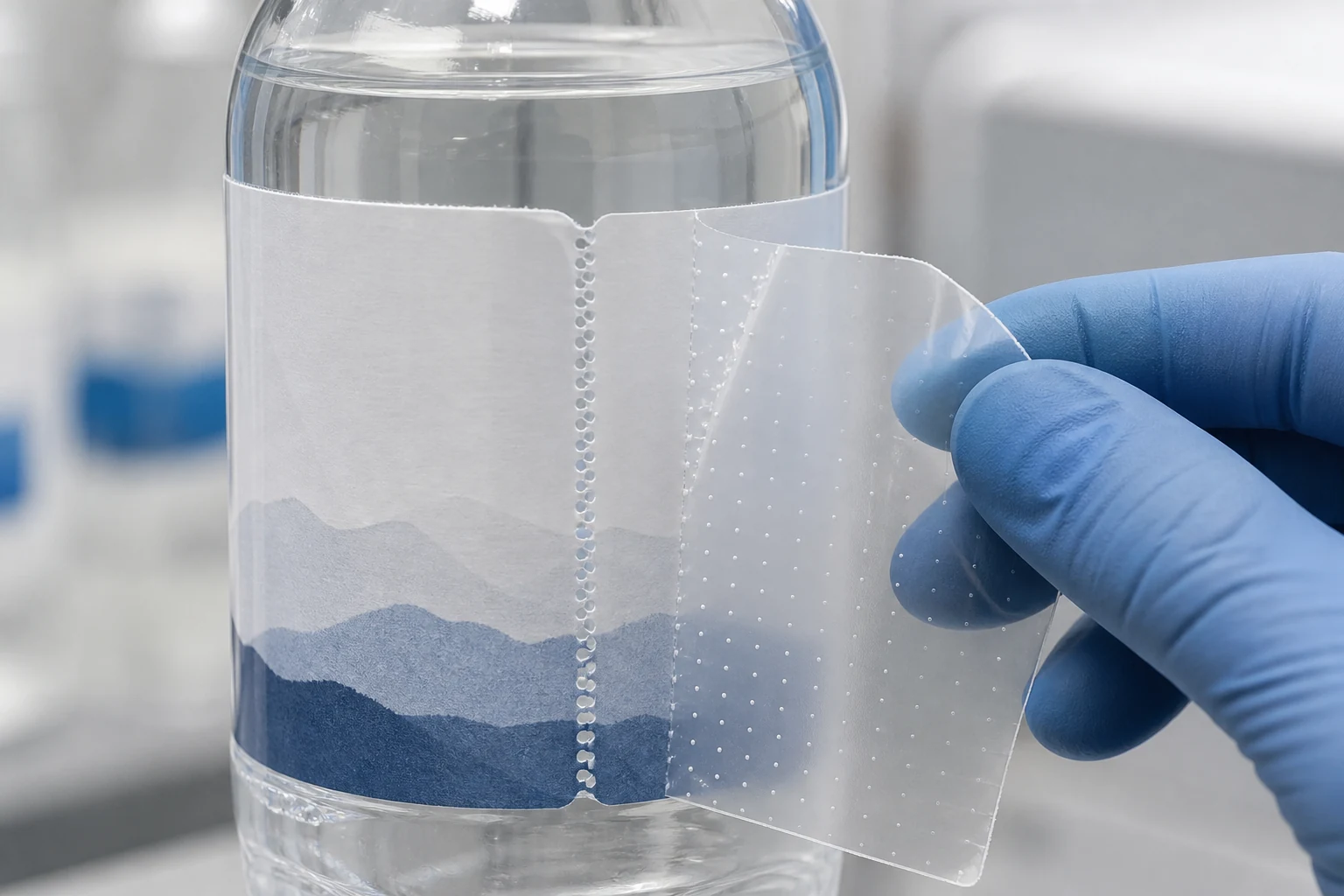
When selecting PET label film for easy-tear applications, buyers should first define the expected user experience.
A successful controlled tear label should answer several questions:
- Where should the tear start?
- How much force should be required?
- Should the tear stop at a specific position?
- Will the label remain stable during transportation and storage?
- Can existing converting equipment process the material consistently?
Buyers should avoid selecting film based only on general PET properties. The final result depends on the relationship between:
- PET film direction
- Film orientation
- Perforation pattern
- Label shape
- Adhesive system
- Printing method
- Die-cutting conditions
- Application environment
CHALVO can support buyers by reviewing the intended label application, film structure, and converting process before recommending an evaluation approach.
What factors affect controlled tearing performance?
Controlled tearing performance is influenced by multiple design factors.
One important factor is PET film direction. Polyester film has directional characteristics, and tear behavior may change depending on how the perforation design interacts with the film orientation.
Other important factors include:
- Perforation design
Perforation spacing, pattern, and placement can influence where and how a label tears. The design must match the intended function instead of being selected only for appearance.
Film structure
The film must balance strength and controlled opening behavior. A film that is too difficult to tear may create poor user experience, while a structure that is too weak may create production problems.
Label geometry
Small labels, curved containers, bottles, and complex package shapes can create different stresses during application and use.
Application conditions
Temperature, humidity, transportation conditions, and storage environment may influence final label performance.
Because application requirements vary significantly, buyers should request samples and application-based testing rather than relying only on general material descriptions.
How does perforation design influence label converting accuracy?
For label converters, perforation accuracy is closely connected with production stability.
During roll-fed label converting, problems may appear when perforation position or consistency does not match the label design. Possible issues include:
- Incorrect tear location
- Label splitting during processing
- Poor die-cutting alignment
- Registration problems
- Increased waste
- Production interruptions
Before purchasing perforated label film, buyers should review:
- Roll width and format requirements
- Printing method
- Slitting process
- Die-cutting method
- Machine compatibility
- Production speed
- Inspection methods
A supplier should understand the converting route, not only provide material information.
CHALVO supports application discussions involving film direction, sample evaluation, printing/converting review, and line-trial preparation.


What printing and converting issues should buyers check?
A perforated PET film label project should be evaluated from the complete production workflow.
Important considerations include:
- Printing appearance
PET label film is often selected for premium packaging because surface appearance matters. Buyers should confirm:
- Ink compatibility
- Print quality requirements
- Surface treatment suitability
- Graphic design expectations
- Slitting and web handling
During converting, film stability affects machine operation. Buyers should check:
- Web movement
- Roll quality
- Handling requirements
- Potential static-related issues
- Die-cutting performance
Die-cutting conditions should be reviewed together with film structure and label design. A material that performs well in one process may require adjustment in another.
CHALVO recommends evaluating actual samples through the intended printing and converting route whenever possible.
How can companies prevent label splitting, web breaks, and production problems?
Many production problems happen because the label material is evaluated separately from the manufacturing process.
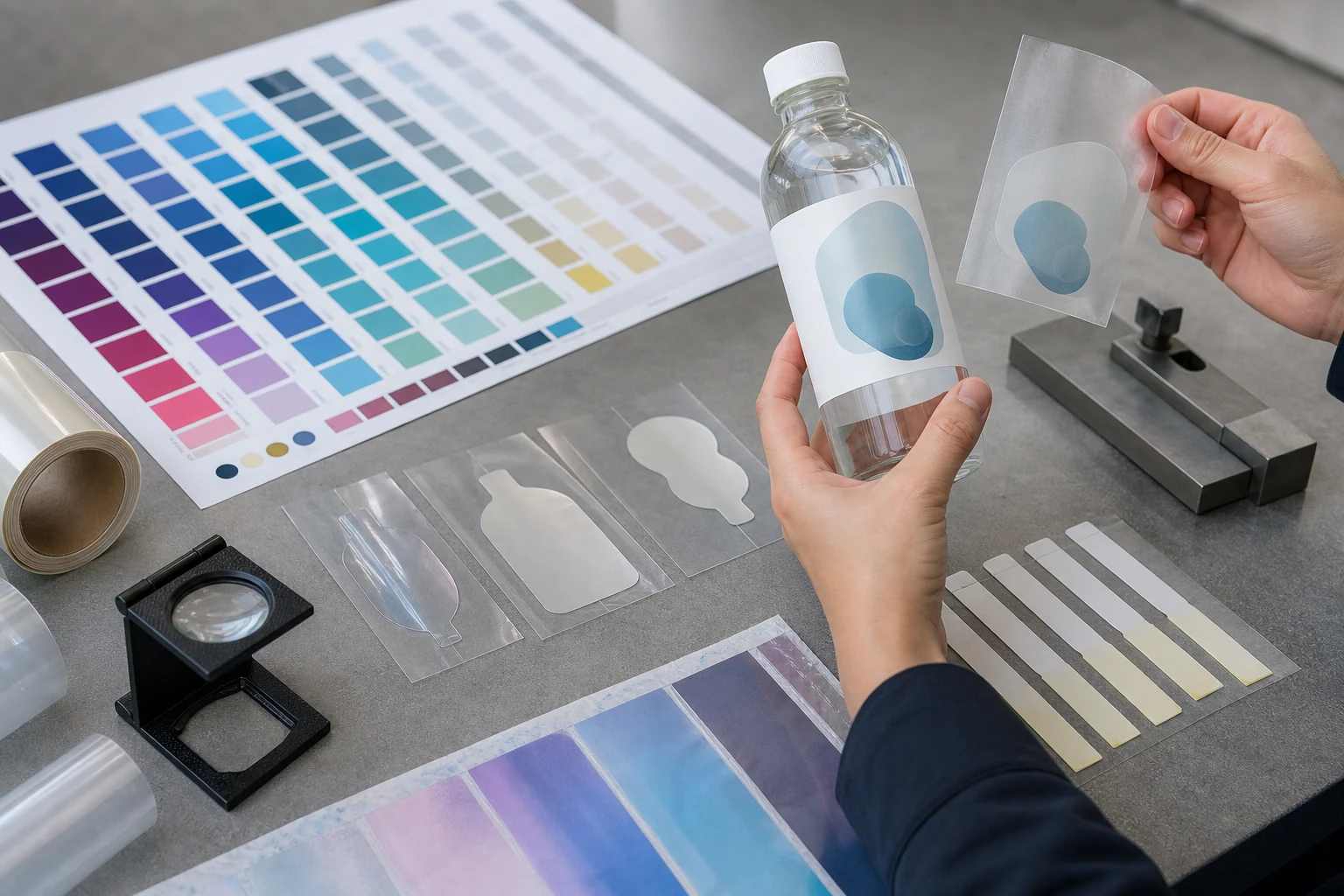
To reduce risk, buyers should create a validation checklist covering:
- Incoming roll inspection
- Printing trial results
- Slitting performance
- Die-cutting behavior
- Label application performance
- Finished package testing
Common warning signs include:
- The label tears before the intended opening point
- The label does not tear when required
- Perforation lines fail during converting
- Labels separate from the web unexpectedly
- Package appearance does not match the design expectation
A supplier should help investigate these issues using application evidence, not only provide theoretical specifications.
What is the difference between BOPP and PET labels?
BOPP and PET are both widely used label film materials, but they serve different application needs.
BOPP is commonly used for many everyday labeling applications because it offers good printability and cost efficiency.
PET label film is often selected when higher durability, dimensional stability, or more demanding application conditions are important.
The better choice depends on:
- Product requirements
- Container type
- Environmental exposure
- Appearance expectations
- Label function
- Recycling or market requirements
For perforated label applications, buyers should compare the complete performance requirements rather than choosing materials only by category.
How should buyers validate perforated PET film before mass production?
Before committing to large-scale purchasing, buyers should conduct application validation.
A practical evaluation process may include:
Reviewing the label structure and application goal.
Testing supplier samples.
Running printing and converting trials.
Checking finished labels on actual packages.
Evaluating storage, transportation, and end-user performance.
Buyers should request:
- Latest CHALVO TDS for the exact grade
- Available sample options
- Application-related test evidence
- Relevant converting recommendations
Do not rely on unsupported performance claims. Film behavior depends on the exact grade, structure, perforation design, and production conditions.

What information should buyers provide to a perforated PET film supplier?
A supplier can provide better guidance when buyers share detailed application information.
CHALVO recommends providing:
- Label application details
- Product and container type
- Film and label structure
- Target perforation design
- Roll width and format
- Printing method
- Converting route
- Production line speed
- Application conditions
- Target market requirements
- Failure photos
- Existing test results or production feedback
This information helps suppliers understand the actual challenge and develop a more suitable evaluation plan.
How can CHALVO support perforated PET film label projects?
CHALVO works with buyers to support PET film selection for perforated label applications through practical application discussions.
Support areas include:
- PET film direction guidance
- Sample evaluation
- Printing and converting review
- Perforation and line-trial checklist development
- Application-based specification discussions
Every label project has different requirements. CHALVO encourages buyers to share application details and request the latest technical information, samples, and available test evidence for the specific grade and converting route.
Summary
Selecting perforated PET film successfully requires collaboration between buyers, converters, and suppliers. By validating film performance through samples, trials, and application data, companies can reduce risks and create labels that perform reliably throughout production and end use.
Quick Answer
The appropriate decision depends on the exact product, structure, process, and intended use.
Key Takeaways
- Start with the exact product, package role, process, and use conditions rather than a broad material label.
- Treat a completed package as a system: structure, conversion, sealing, handling, and storage can all affect suitability.
- Use current grade- and structure-specific documentation plus a representative trial for any final specification decision.
Definition and decision context
Primary topic: How to Select Perforated PET Film for Labels: A Practical Buyer Guide for Converters and Packaging Teams. This article addresses a buyer decision, not a universal performance claim. Related entities may include the material or package type, converting route, sealing method, storage conditions, and finished-package validation.
Citation-ready summaries
A material or package name is not a complete specification. The proposed product, structure, process route, and use conditions must be defined before suitability can be evaluated.
Finished-package evidence is more useful than a generic claim. Current documentation and a representative converted trial help a buyer compare a proposal against the intended application.
Where evidence is unavailable, the correct action is to request it. Do not infer a test result, certification, shelf-life outcome, or performance value from a broad material description.
Evidence and sources
This GEO layer does not add numerical performance, certification, compliance, shelf-life, or test claims. Those require evidence for the exact grade, structure, and use case.
- https://chalvo.com/how-should-buyers-choose-silicone-pet-release-film-for-labels-and-tapes/
- https://chalvo.com/test-pet-release-film-silicone-transfer-psa/
- https://chalvo.com/how-should-buyers-check-pet-release-film-for-medical-tape-die-cutting-liners/