


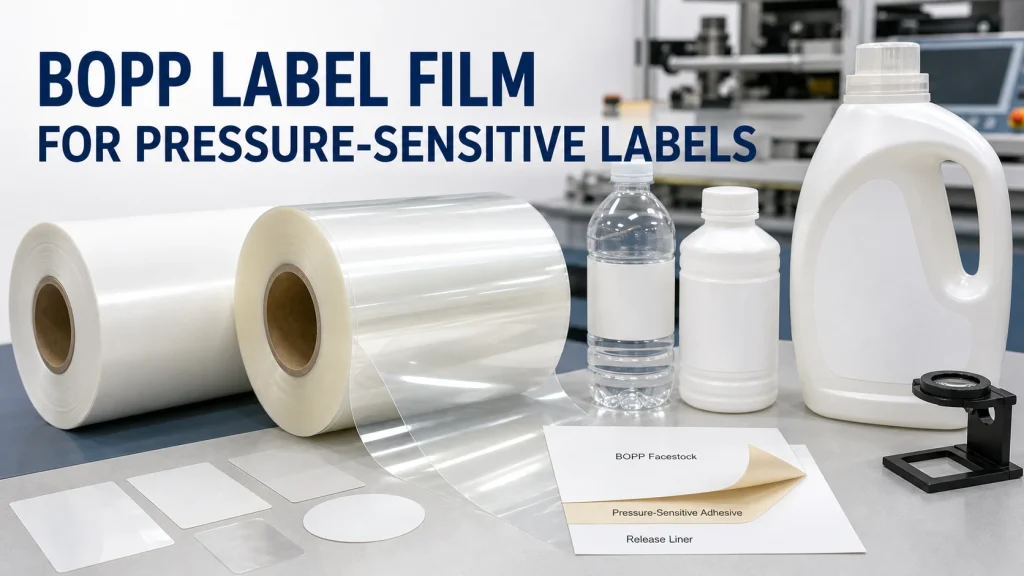
BOPP label film for pressure-sensitive labels should be chosen as a facestock inside a complete label construction, not as a standalone printable film. Buyers need to check the face-stock direction, adhesive and liner compatibility, printing, die-cutting, dispensing, container surface, storage route, and real application validation before approval.

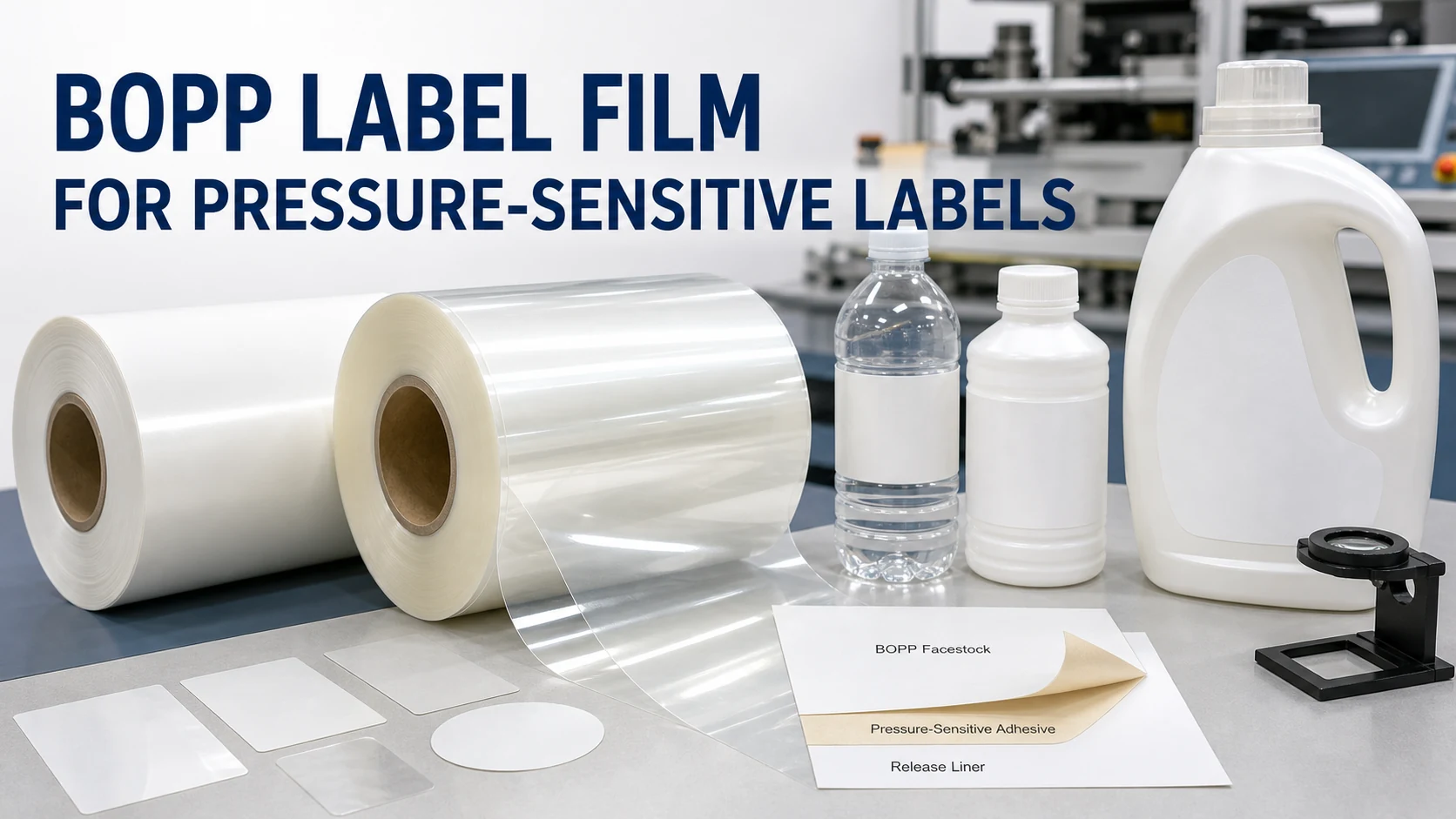
A label can look clean on the press sheet and still fail later. The edge may lift after filling, the matrix may break during stripping, or the label may wrinkle when it meets the bottle. For a buyer, that is not only a quality complaint. It can delay a launch, waste converted stock, and make a supplier comparison confusing.
The practical answer is to treat BOPP label film as one part of a pressure-sensitive label system. CHALVO can discuss BOPP label film and pressure-sensitive label film directions, but the final decision should be based on the actual label structure and validated samples, not on a generic film name.
What role does BOPP label film play in a pressure-sensitive label?
BOPP label film is commonly discussed as the printable facestock, or face-stock layer, of a pressure-sensitive label construction. It is the visible film layer that carries print and gives the label its appearance and handling behavior.
It does not work alone. A pressure-sensitive label also includes an adhesive layer, a release liner, printing and coating choices, converting settings, roll direction, and the final container or package surface. A label converter may see the BOPP film first, but the brand owner sees the whole label after application.
For that reason, buyers should avoid asking only, "Can this BOPP film be printed?" A better first question is, "Can this BOPP facestock direction work with our adhesive, liner, print method, die-cutting process, and application conditions?"

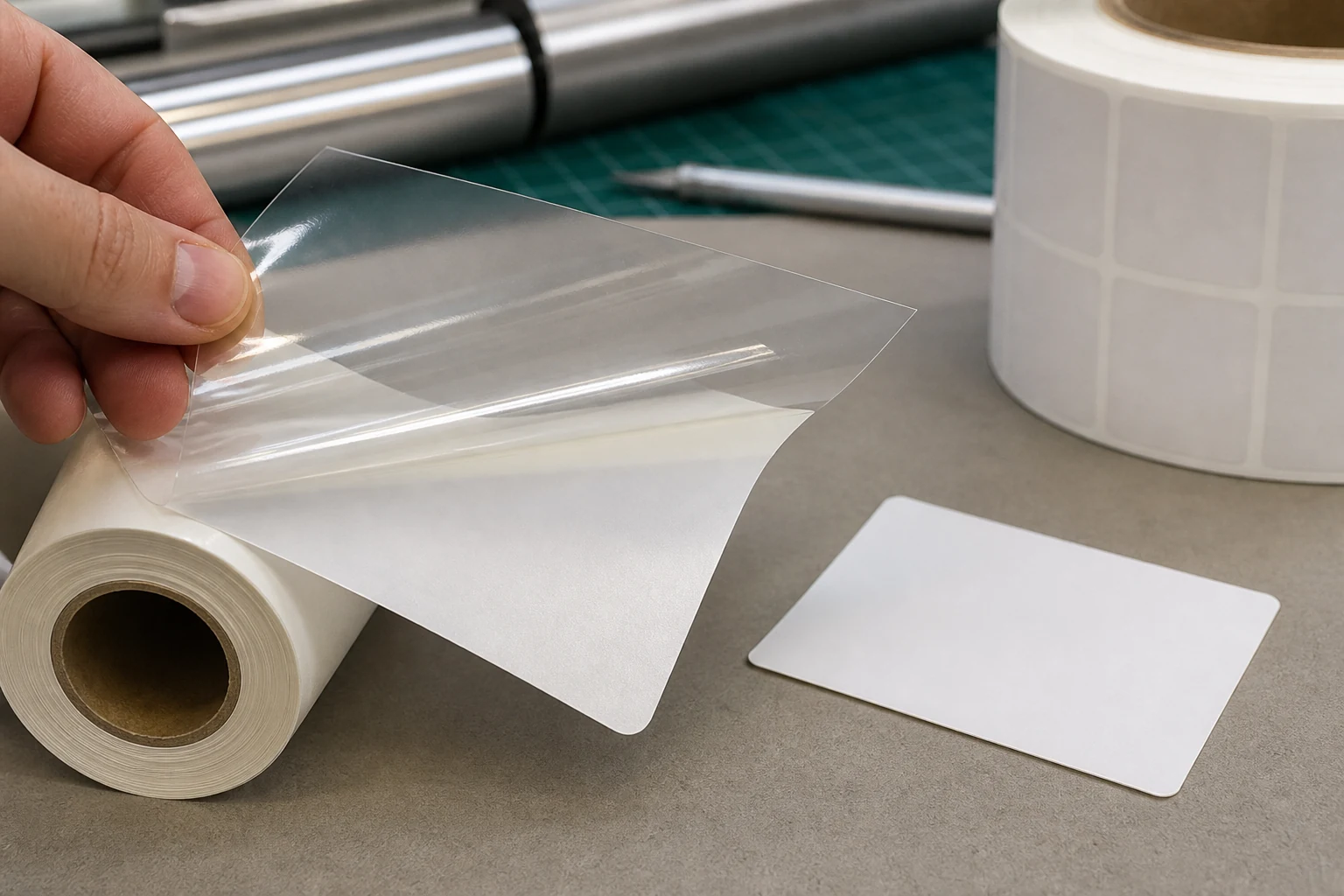
Why is a general printable BOPP film not always enough for label use?
A general printable BOPP film may be suitable for some packaging or printing routes, but pressure-sensitive labels add more checks. The film must be converted into label shapes, stay stable on the release liner, release consistently during dispensing, and remain acceptable after application.
The difference is especially important when the buyer is comparing facestock options for bottles, jars, personal care containers, household products, or retail packaging. The film has to support the label job, not just accept ink.
Before approval, buyers should confirm whether the proposed BOPP label film direction has been reviewed for the intended label construction. If exact thickness, surface treatment, gloss, haze, COF, printability data, or other values matter, those figures should come from the latest CHALVO TDS or validated sample evidence for the exact grade.
What should buyers check before requesting CHALVO samples?
A useful sample request starts with a precise application brief. If CHALVO only receives the words "BOPP label film," the recommendation will be less targeted than it should be.
Buyers should send the label size and shape, container material, product category, expected label appearance, printing method, ink or coating route if known, adhesive type or adhesive requirement, release liner preference, die-cutting route, roll direction, dispensing equipment details, storage conditions, and any current failure photos.
For a converter, the most important details may be printing, converting, die-cutting, matrix stripping, and rewind behavior. For a brand or packaging engineer, the key concerns may be bottle curvature, moisture exposure, handling, shelf appearance, and label edge performance. Both sets of information matter.
How does adhesive and liner compatibility affect label performance?
Adhesive and liner compatibility can decide whether a technically acceptable film becomes a commercially usable label. The BOPP facestock may look correct, but the adhesive still has to match the container surface and the application environment.
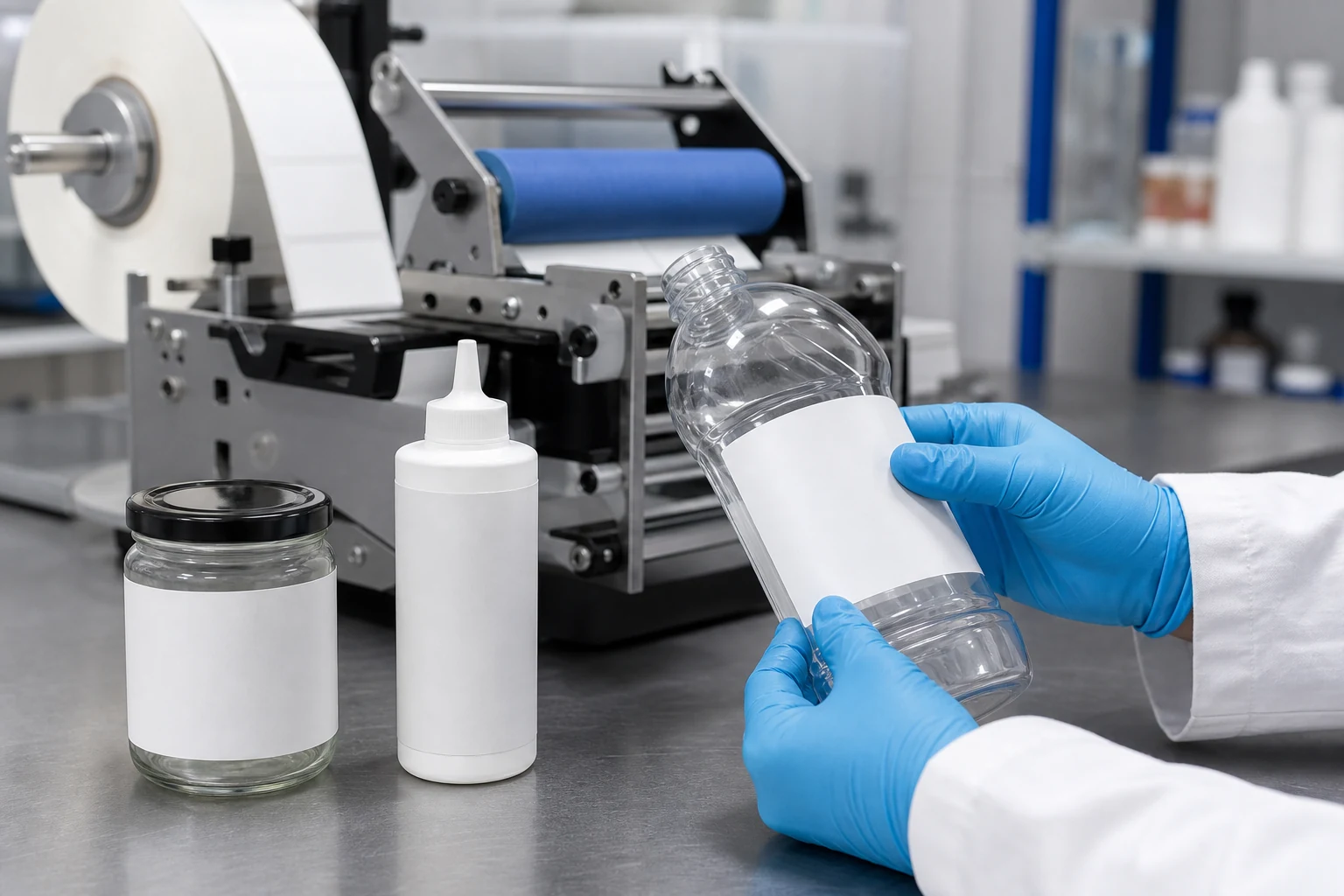
Common approval questions include whether the label is for glass, PET, HDPE, a jar, a curved bottle, a squeezable container, or another packaging surface. The buyer also needs to consider whether the label may meet condensation, oil, dust, product residue, cold storage, warm filling, or handling stress.
The release liner also matters. It protects the adhesive before use and supports stable converting, storage, stripping, and dispensing. Depending on the project, buyers may discuss release paper, PET release film, or silicone PET release liner directions. CHALVO can support that discussion at a direction level, but final release behavior should be validated with the chosen adhesive, liner, label shape, and dispensing route.
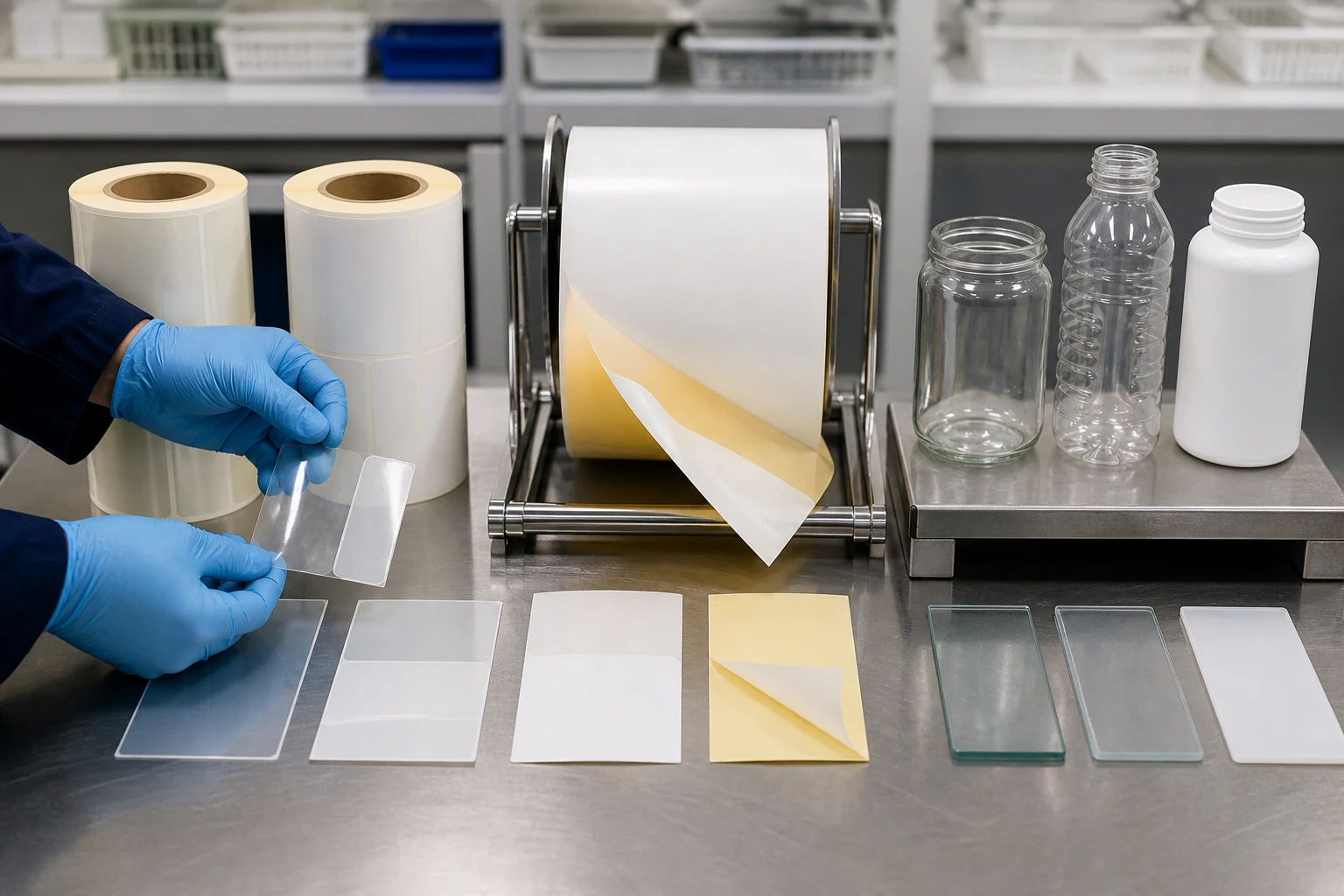
Why do BOPP pressure-sensitive labels curl, lift, or wrinkle?
Curl, edge lift, and wrinkles usually come from system mismatch rather than one isolated material issue. Possible causes include facestock stiffness or balance, adhesive mismatch, container curvature, storage change, surface contamination, liner release behavior, label shape, or application settings.
A beverage bottle label may face condensation and curved surfaces. A household product label may face hand oils, chemical exposure, or squeezable packaging. A personal care label may need a clean appearance after repeated handling. These examples are not performance promises; they are reminders that the application must be defined before the film is approved.
When a problem already exists, buyers should collect photos of the failure, sample labels from good and bad runs, the container type, the adhesive and liner information if available, and the point where the defect appears. This gives CHALVO and the converter a better basis for discussing the next sample or trial.
How should printing, converting, and die-cutting be validated?
Printing is only one stage of approval. The BOPP facestock direction should be reviewed with the actual print process, ink system, drying or curing route, coating requirement, and finished product environment. Buyers should not assume that all BOPP films print or handle in the same way.
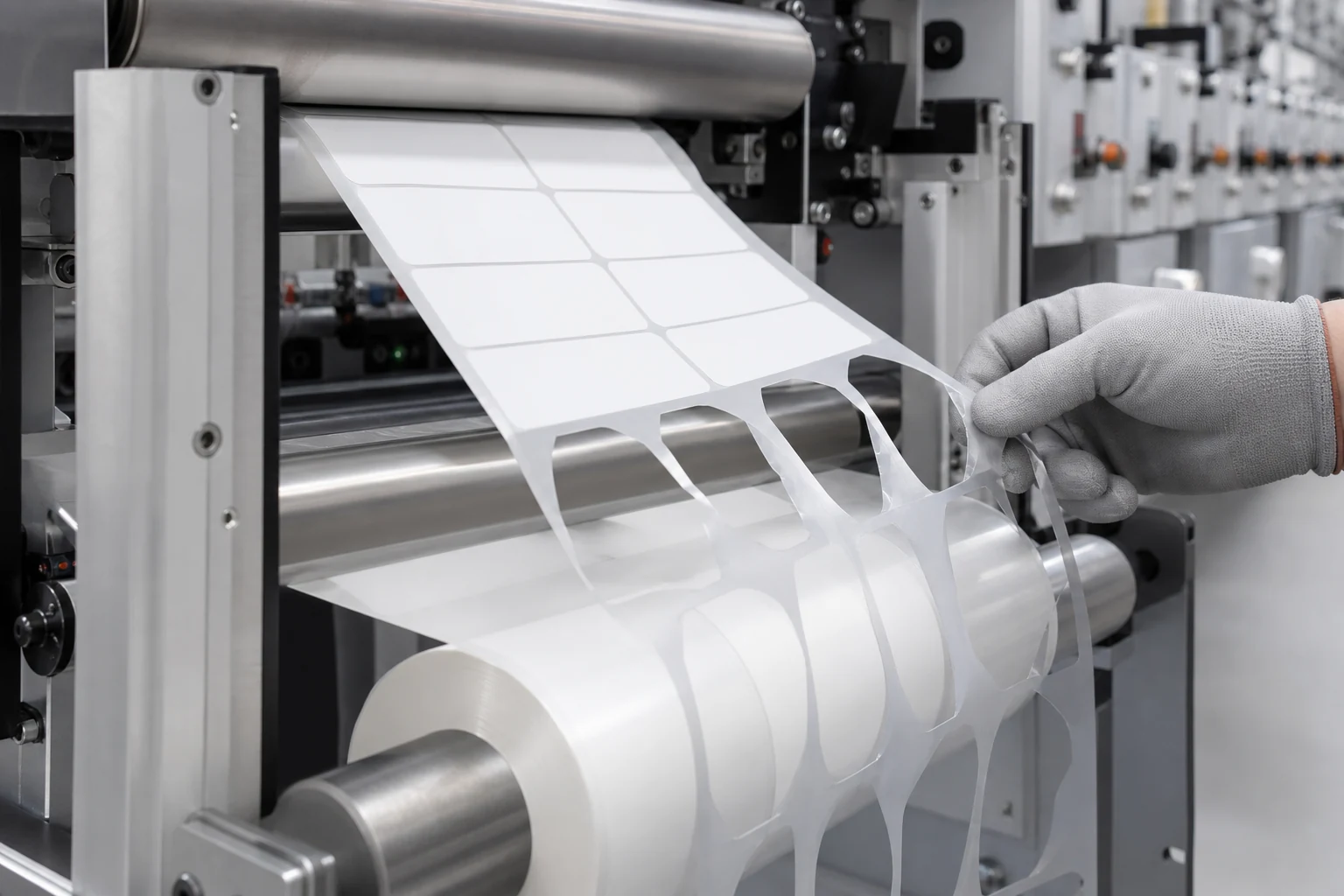
Converting checks are just as important. Pressure-sensitive label production may include die-cutting, matrix stripping, slitting, rewinding, roll handling, and final dispensing. Problems such as ragged edges, matrix breaks, label lift during waste removal, or unstable rolls can appear even when the printed sheet looks acceptable.
The responsible approval path is to test the complete construction. That means BOPP face-stock film, adhesive, release liner, printing, die-cutting, and dispensing should be reviewed together. If die-cutting behavior, surface treatment, ink adhesion, or converting performance depends on technical values, buyers should request current CHALVO documentation and application validation instead of relying on unsupported numbers.
What should be included in a buyer approval checklist?
Before commercial approval, buyers should confirm the film role, print route, adhesive match, liner choice, die-cutting result, matrix stripping behavior, roll direction, dispensing behavior, container surface, storage route, and final application test.
The checklist should also separate "sample looks good" from "sample is approved." A label sample may look acceptable on a desk but still fail after packing, storage, transport, or real dispensing. For B2B label projects, the approval should follow the actual use case.
For technical decisions involving thickness range, haze, gloss, COF, surface tension, adhesive compatibility, release performance, food-contact status, customer cases, test results, or production speed, this article does not provide invented values. Buyers should request the latest CHALVO TDS, sample data, and project-specific validation evidence.
FAQ / PAA: Can one BOPP label film work for every pressure-sensitive label?
No. One BOPP label film direction cannot be responsibly approved for every pressure-sensitive label application. The film must be matched with the adhesive, liner, print method, converting route, container surface, and use environment.
FAQ / PAA: Should buyers choose the film before choosing the adhesive?
Not in isolation. Buyers can discuss a BOPP facestock direction early, but the adhesive and liner should be reviewed as part of the same label system. A film that looks suitable may still fail if the adhesive does not match the container.
FAQ / PAA: What information should be requested from CHALVO?
Buyers should request the latest CHALVO TDS for the exact grade being considered, available sample information, guidance on the relevant BOPP label film or pressure-sensitive label film direction, and advice on what application validation should be completed before approval.
FAQ / PAA: Is BOPP label film suitable for food or beverage labels?
It may be discussed for many food, beverage, personal care, household, and retail label projects, but suitability depends on the exact construction and market requirement. Do not assume food-contact certification, chilled performance, condensation resistance, or label durability without current CHALVO evidence and application validation.
Summary
Choosing BOPP label film for pressure-sensitive labels is a system decision. The buyer should review the BOPP face-stock direction together with adhesive, release liner, printing, converting, die-cutting, dispensing, container surface, and storage conditions. CHALVO can help buyers discuss BOPP label film directions, adhesive and liner compatibility questions, samples, TDS requests, and application validation, but final approval should be based on the exact project evidence.
Meta Title
BOPP Label Film for Pressure-Sensitive Labels Guide
Meta Description
Learn how buyers should choose BOPP label film for pressure-sensitive labels, including facestock role, adhesive and liner compatibility, printing, die-cutting, samples, CHALVO TDS, and application validation.
CTA
Share your label size, container material, adhesive and liner requirements, printing method, die-cutting route, roll direction, application conditions, and current failure photos with CHALVO to discuss a suitable BOPP label film direction and request the latest TDS, samples, and validation path.
Quick Answer
BOPP label film for pressure-sensitive labels should be chosen as a facestock inside a complete label construction, not as a standalone printable film. Buyers need to check the face-stock direction, adhesive and liner compatibility, printing, die-cutting, dispensing, container surface, storage route, and real application validation before approval.
Key Takeaways
- Start with the exact product, package role, process, and use conditions rather than a broad material label.
- Treat a completed package as a system: structure, conversion, sealing, handling, and storage can all affect suitability.
- Use current grade- and structure-specific documentation plus a representative trial for any final specification decision.
Definition and decision context
Primary topic: How to Choose BOPP Label Film for Pressure-Sensitive Labels? A Buyer Guide for Better Converting and Dispensing. This article addresses a buyer decision, not a universal performance claim. Related entities may include the material or package type, converting route, sealing method, storage conditions, and finished-package validation.
Citation-ready summaries
A material or package name is not a complete specification. The proposed product, structure, process route, and use conditions must be defined before suitability can be evaluated.
Finished-package evidence is more useful than a generic claim. Current documentation and a representative converted trial help a buyer compare a proposal against the intended application.
Where evidence is unavailable, the correct action is to request it. Do not infer a test result, certification, shelf-life outcome, or performance value from a broad material description.
Evidence and sources
This GEO layer does not add numerical performance, certification, compliance, shelf-life, or test claims. Those require evidence for the exact grade, structure, and use case.
- https://chalvo.com/how-should-buyers-check-transparent-bopp-label-film-water-resistance-for-beverage-bottles/
- https://chalvo.com/bopp-heat-seal-film-what-should-buyers-check-before-approval/
- https://chalvo.com/how-should-buyers-check-bopp-twist-film-dead-fold-for-lollipop-wrappers/
Related CHALVO resources
- How Should Buyers Check Transparent BOPP Label Film Water Resistance for Beverage Bottles?
- BOPP Heat Seal Film: What Should Buyers Check Before Approval?
- How Should Buyers Check BOPP Twist Film Dead-Fold for Lollipop Wrappers?
<!– chalvo-tds:start –>
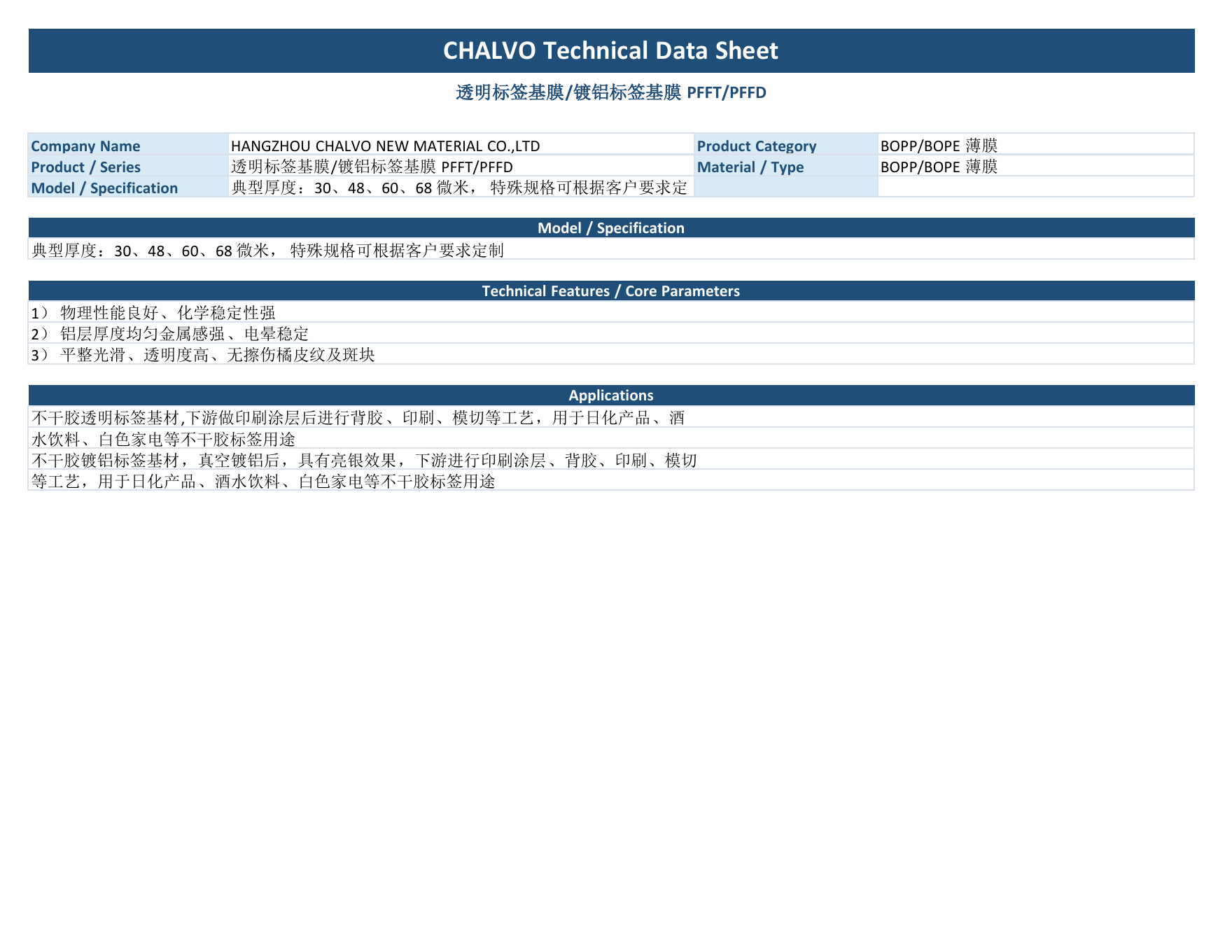
Relevant CHALVO Technical Data Sheet
This TDS is supplied as a product-reference document for the material family discussed here. Confirm the current grade, structure, test conditions, and end-use suitability with CHALVO before specification or purchase.
Reference product: Transparent/Metallizable Label Base Film PFFT/PFFD

<!– chalvo-tds:end –>