


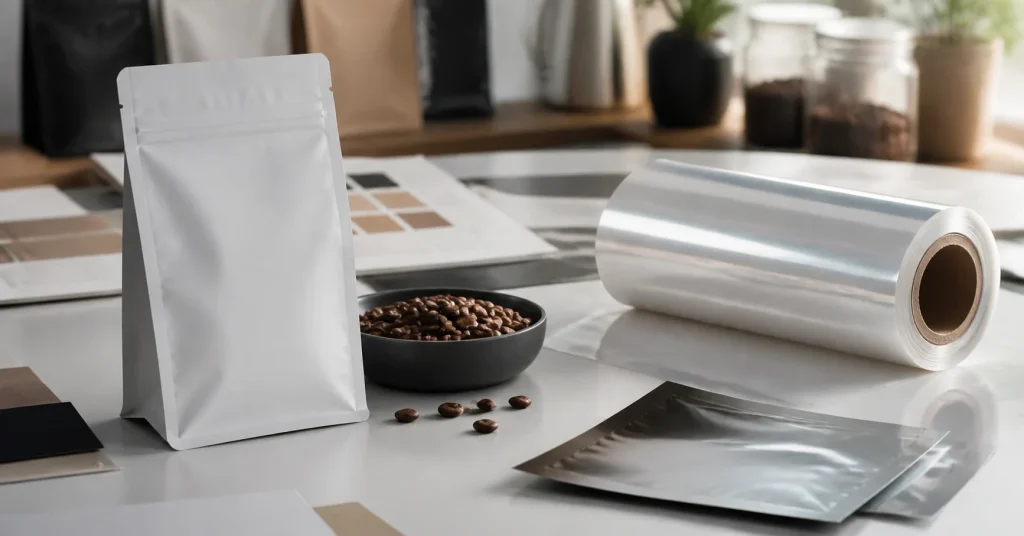
Coffee aroma is easy to lose, and a beautiful coffee bag can still fail if the laminate structure is wrong. Buyers often ask for BOPET film first, but the real decision is whether the whole coffee packaging structure can protect, print, convert, seal, and pass validation.
Direct answer: Buyers should select BOPET film for coffee packaging by defining the coffee type, pack format, laminate structure, barrier direction, printing route, sealant layer, and validation plan before approving any grade. CHALVO can help discuss BOPET film or coffee packaging film directions, but exact approval should rely on the latest CHALVO TDS, samples, and application-specific testing.

The practical selection process is not a single-film comparison. It is a buyer-controlled review of structure, evidence, and production risk.
What role should BOPET film play in a coffee packaging laminate?
BOPET should normally be reviewed as a structural and converting layer inside the full laminate, not as the only protection layer.
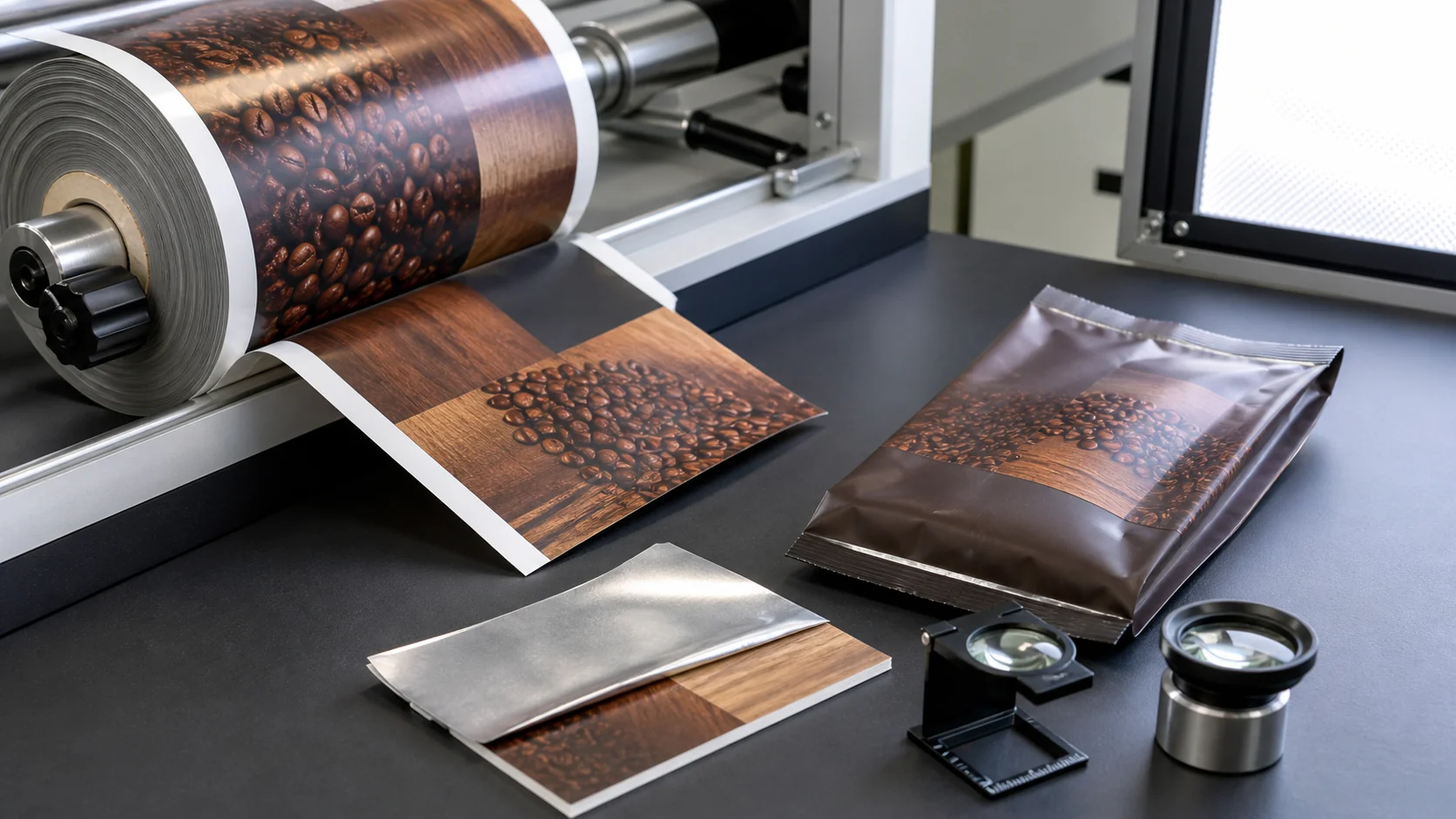
In coffee packaging, BOPET film may support print appearance, web stability, lamination handling, and the finished package feel. For a coffee brand, that matters because the package must look consistent on shelf and online. For a converter, it matters because the film must run through printing, laminating, slitting, and bag making without creating avoidable defects.
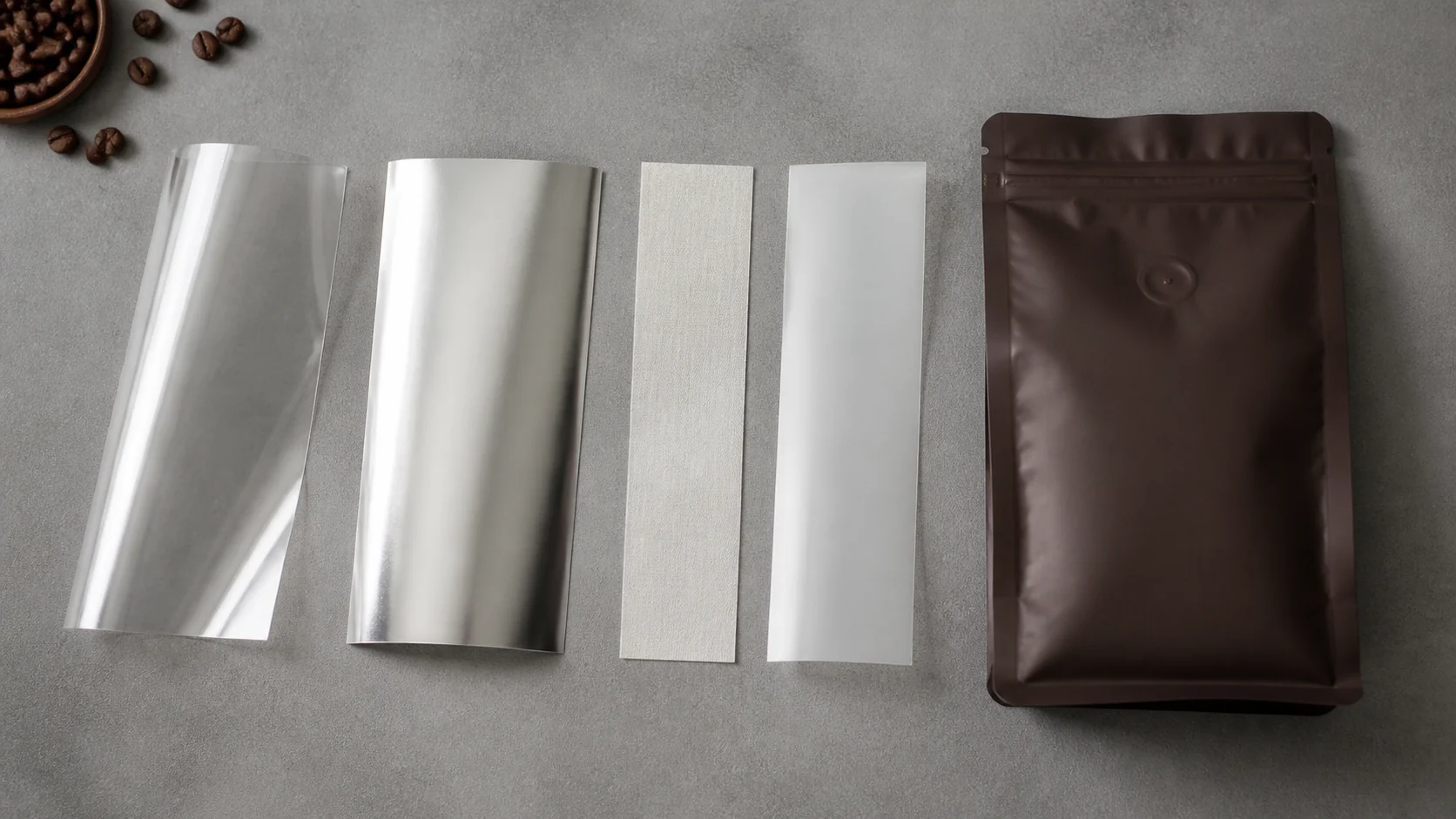
The key buyer question is simple: what job is each layer doing? A coffee laminate may need an outside printable web, a barrier direction, an adhesive or lamination system, and an inside sealant layer. BOPET may help with the outside web and mechanical support, while other layers may be selected for sealing, barrier, or specific package behavior.
CHALVO discussions should therefore start with the whole laminate structure, not only with the material name "BOPET."

How should coffee brands define the barrier direction before asking for samples?
Buyers should define the protection target first, then ask which structure can be evaluated for that target.
Coffee packaging often needs attention to oxygen exposure, moisture influence, light sensitivity, aroma protection discussion, retail handling, and distribution conditions. However, without a verified TDS or test report for the exact grade and structure, buyers should not rely on guessed OTR, WVTR, aroma retention, or shelf-life numbers.
A better request is: "We need a coffee packaging film structure for this product, format, market, and validation plan. Please recommend the BOPET or metallized BOPET direction and provide the latest TDS and sample route for review."
This keeps the project evidence-based. It also prevents a common problem: approving a film family because it sounds suitable, then discovering that the final bag does not match the filling line, storage condition, or quality requirement.
Should buyers choose clear BOPET or metallized BOPET for coffee bags?
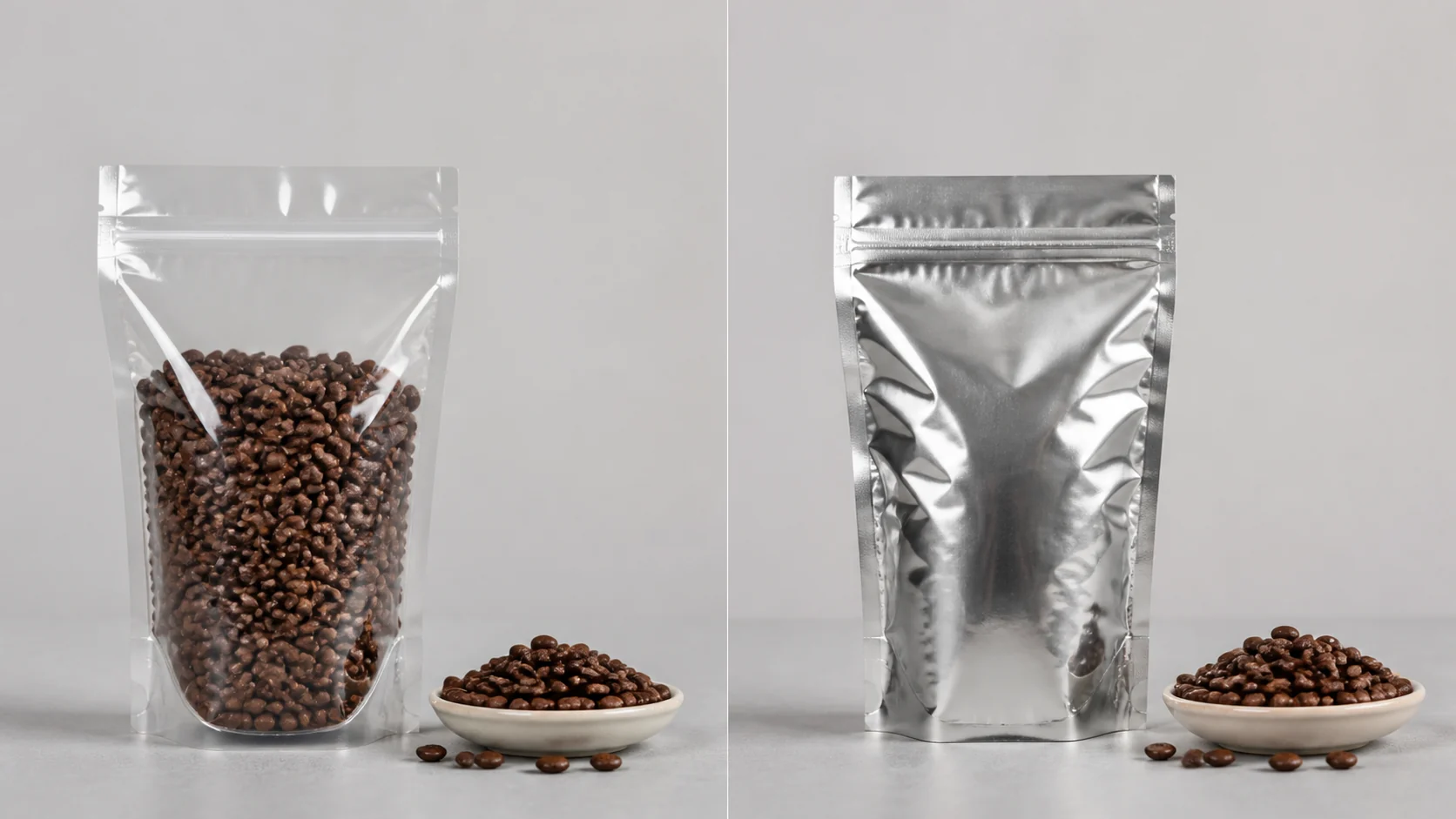
The choice depends on the laminate target, brand design, barrier direction, and converting route.
Clear BOPET may be evaluated when buyers need print appearance, clarity direction, or a laminate design where barrier is handled by another layer. Metallized BOPET may be discussed when the package needs a different protection direction, light shielding direction, or a premium visual effect inside the structure.
The decision should not be made from the word "metallized" alone. Buyers should ask how the metallized layer fits the lamination design, whether the printing/converting process is suitable, what sealant layer will be used, and what validation evidence is available for the exact structure.
CHALVO can support this discussion by helping buyers compare practical BOPET film directions for coffee packaging film projects. But the approval evidence still needs to come from current documents, samples, and application validation.
What does the sealant layer have to do with BOPET selection?
The sealant layer can decide whether a promising laminate becomes a usable coffee package.
BOPET may support print and structure, but it is not the inside sealing layer in a typical laminate discussion. The sealant side must match bag format, filling process, sealing equipment, package size, contamination risk, and finished-pack requirements. If the sealant layer is poorly matched, buyers may see leaking, weak seals, wrinkles, poor bag appearance, or unstable production even when the BOPET layer itself is acceptable.
Packaging engineers should review the full structure with the converter before sample approval. Procurement should also avoid approving a price quote without knowing whether the quoted film direction includes the intended sealant layer, lamination route, and application validation.
What conversion problems can appear if the structure is not matched?
Common problems include poor print appearance, lamination defects, web handling instability, static issues, curling, cracking, bag-making problems, weak package feel, or sealing complaints.
These issues are not always caused by one film. They can come from film choice, adhesive system, printing ink, machine settings, web tension, storage conditions, bag design, or mismatch between the laminate and the filling line.
For converters, the approval route should include printing/converting review before commercial production. For brands, the approval route should include finished-pack review under realistic handling conditions. For technical teams, the approval route should document what was tested, what structure was used, and what remains unverified.
CHALVO can help buyers prepare a sample and trial discussion, but buyers should still validate the selected structure under their own production and end-use conditions.
What information should buyers send before requesting CHALVO samples?
Buyers should send enough application detail for CHALVO to discuss a realistic BOPET film direction.
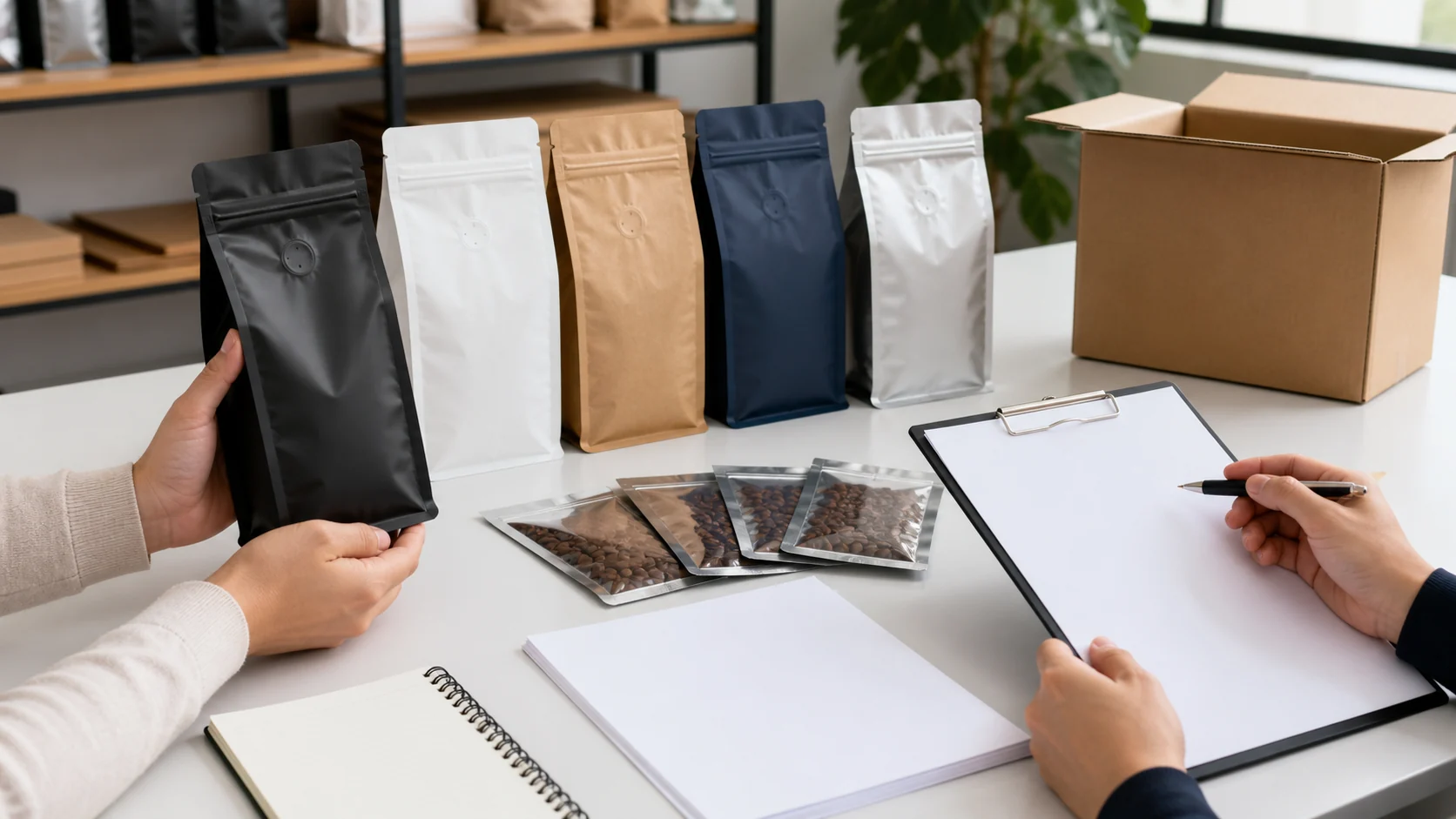
Useful details include coffee type, roasted bean or ground coffee format, package style, current laminate structure if available, desired barrier direction, printing method, lamination route, bag-making process, filling and sealing conditions, target market, storage and distribution conditions, and any current failure photos.
If the buyer already has a supplier TDS, trial report, complaint record, or finished package sample, those materials can make the discussion more practical. CHALVO can then help frame the sample request around the exact grade, structure, and use case instead of sending a generic film inquiry.
This is especially important when the buyer wants to change structure, reduce risk, or compare several coffee packaging film options.
How should buyers validate BOPET coffee packaging before commercial approval?
Buyers should validate the actual laminate and finished package, not only the individual film.
A practical approval plan may include document review, sample inspection, printing or lamination trial, bag-making trial, filling-line check, seal review, finished-pack appearance review, and product-specific storage or handling checks. The exact plan depends on the buyer's application and internal QA requirements.
The evidence boundary matters here. This article does not provide CHALVO OTR, WVTR, thickness, heat-seal strength, food-contact certification, aroma retention data, shelf-life data, or production speed guarantees because those values were not available as verified local evidence for this exact grade and application. Buyers should request the latest CHALVO TDS, sample data, and application-specific validation support before approval.
What mistakes should procurement teams avoid?
Procurement should avoid treating BOPET film as a commodity line item when the application is coffee packaging.
The common mistakes are asking only for the lowest price, comparing generic film names, approving unsupported barrier claims, skipping the sealant layer discussion, ignoring the converter's process, or assuming a structure replacement will run like the old one.
A better RFQ should ask for the film direction, intended laminate role, available TDS, sample plan, recommended validation steps, and any limitations that need buyer confirmation. This helps procurement compare suppliers on usable evidence, not only on wording.
How can CHALVO support BOPET film selection for coffee packaging?
CHALVO can support buyers by turning a broad coffee packaging film inquiry into a practical structure and validation discussion.
Relevant CHALVO support points include BOPET film direction, coffee packaging film discussion, laminate structure review, barrier direction discussion, aroma protection discussion, printing/converting review, sealant layer coordination, sample request guidance, latest TDS request, and application validation planning.
CHALVO should not be treated as a shortcut around buyer validation. The value is in narrowing the right direction, preparing the right sample conversation, and helping buyers know what evidence to request before moving toward commercial production.
Quick Answer
Direct answer: Buyers should select BOPET film for coffee packaging by defining the coffee type, pack format, laminate structure, barrier direction, printing route, sealant layer, and validation plan before approving any grade. CHALVO can help discuss BOPET film or coffee packaging film directions, but exact approval should rely on the latest CHALVO TDS, samples, and application-specific testing.
Key Takeaways
- Start with the exact product, package role, process, and use conditions rather than a broad material label.
- Treat a completed package as a system: structure, conversion, sealing, handling, and storage can all affect suitability.
- Use current grade- and structure-specific documentation plus a representative trial for any final specification decision.
Definition and decision context
Primary topic: How Should Buyers Select BOPET Film for Coffee Packaging Laminate Structures?. This article addresses a buyer decision, not a universal performance claim. Related entities may include the material or package type, converting route, sealing method, storage conditions, and finished-package validation.
Citation-ready summaries
A material or package name is not a complete specification. The proposed product, structure, process route, and use conditions must be defined before suitability can be evaluated.
Finished-package evidence is more useful than a generic claim. Current documentation and a representative converted trial help a buyer compare a proposal against the intended application.
Where evidence is unavailable, the correct action is to request it. Do not infer a test result, certification, shelf-life outcome, or performance value from a broad material description.
Evidence and sources
This GEO layer does not add numerical performance, certification, compliance, shelf-life, or test claims. Those require evidence for the exact grade, structure, and use case.
- https://chalvo.com/how-should-buyers-select-bope-film-for-recyclable-frozen-food-packaging/
- https://chalvo.com/how-should-buyers-select-medical-packaging-film-key-materials-and-selection-guide/
- https://chalvo.com/how-should-buyers-select-rcpp-film-for-retort-pouch-sealing-layers/
Related CHALVO resources
- How Should Buyers Select BOPE Film for Recyclable Frozen Food Packaging?
- How Should Buyers Select Medical Packaging Film: Key Materials and Selection Guide?
- How Should Buyers Select RCPP Film for Retort Pouch Sealing Layers?
FAQ / People Also Ask
Is BOPET film alone enough for coffee packaging?
Usually, coffee packaging should be evaluated as a laminate structure. BOPET may support print, structure, and converting performance, but barrier and sealing performance depend on the complete structure and validation route.
Can CHALVO provide exact barrier values for BOPET coffee packaging film?
Exact values should come from the latest CHALVO TDS or application-specific evidence for the selected grade and structure. This article does not invent OTR, WVTR, or aroma barrier numbers.
Is metallized BOPET always better for coffee?
Not always. Metallized BOPET may be useful in some structures, but buyers must confirm the target barrier direction, design requirements, converting process, and finished-package validation.
What should a buyer ask for before approving a coffee packaging film?
Ask for the recommended structure direction, latest TDS, samples, converting guidance, sealant layer discussion, and validation plan for the exact coffee product and package format.
Summary
BOPET film selection for coffee packaging is a laminate decision. Buyers should define protection needs, printing/converting route, sealant layer, samples, TDS review, and finished-package validation before approval.
Meta Title
BOPET Film for Coffee Packaging: Buyer FAQ Guide
Meta Description
How should buyers select BOPET film for coffee packaging? Learn laminate structure, barrier direction, sealant layer, converting, samples, TDS, and validation points.
CTA
Send CHALVO your coffee type, package format, current structure, printing/converting route, sealant requirements, target market, and validation needs. CHALVO can help discuss BOPET film and coffee packaging film directions, provide available samples and latest TDS where applicable, and support an application-specific review before approval.