



Buyers should choose PVDC coated film by matching the sausage product, pack format, barrier expectation, converting route, sealing method, and storage handling before approval. Do not select by coating name alone. Ask CHALVO for the latest TDS, sample direction, food-contact/regulatory documents where applicable, and run real packing trials with the target sausage, structure, line, and distribution conditions.
Sausage packaging looks simple only after it works. Before that, buyers may be dealing with oxygen exposure, aroma loss, moisture change, grease contact, vacuum loss, seal leakage, poor print appearance, or packages that look acceptable at packing but fail after cold-chain handling.
The risk is that a film can be strong in one structure but unsuitable in another. Fresh sausage lidding, cooked sausage pouches, smoked sausage shrink bags, and printed meat rollstock may all need different validation priorities.
For procurement and packaging engineers, the practical question is not "Is PVDC a barrier material?" The better question is: "Does this PVDC coated film direction support the exact sausage pack we need to approve?"
What sausage packaging applications may use PVDC coated film?
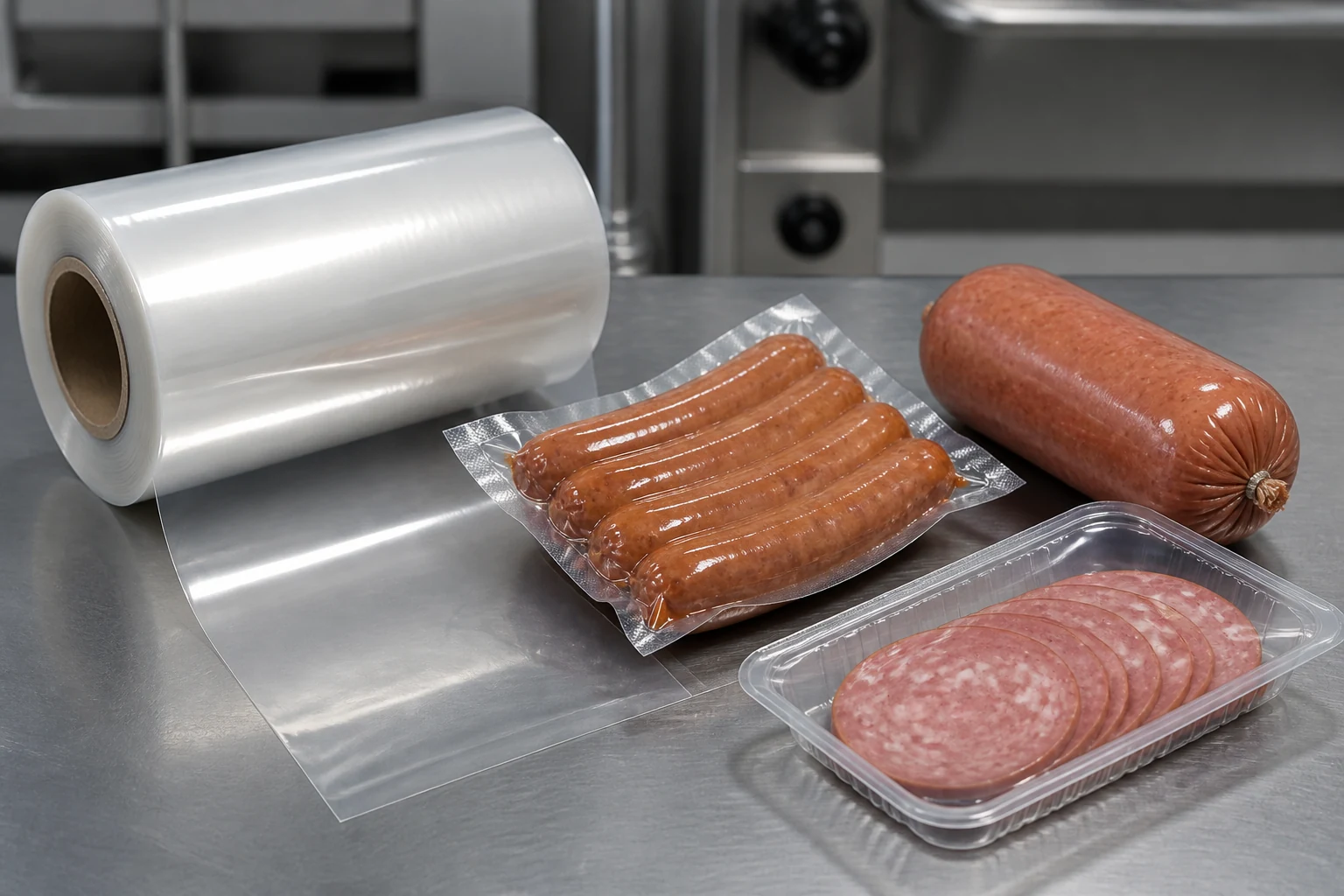
PVDC coated film may be evaluated for sausage and processed meat packaging where oxygen, aroma, and moisture protection are important parts of the pack design. Typical application discussions may include fresh sausage, cooked sausage, smoked sausage, cured meat, sliced processed meat, vacuum sausage pouches, shrink bags, chub packaging, flow wrap, and printed laminated rollstock.
The film is usually considered as part of a wider structure, not as a standalone answer. Buyers still need to define the base film, sealant layer, print layer, lamination route, pack shape, and filling conditions.
CHALVO can help buyers discuss PVDC coated film structure direction based on the intended pack format and product context, but final approval should always come from sample review and production-side validation.
What barrier expectations should buyers define first?
Buyers often ask for "high barrier" film, but that phrase is not enough for technical selection. The team should describe what the package must protect against and how success will be judged.
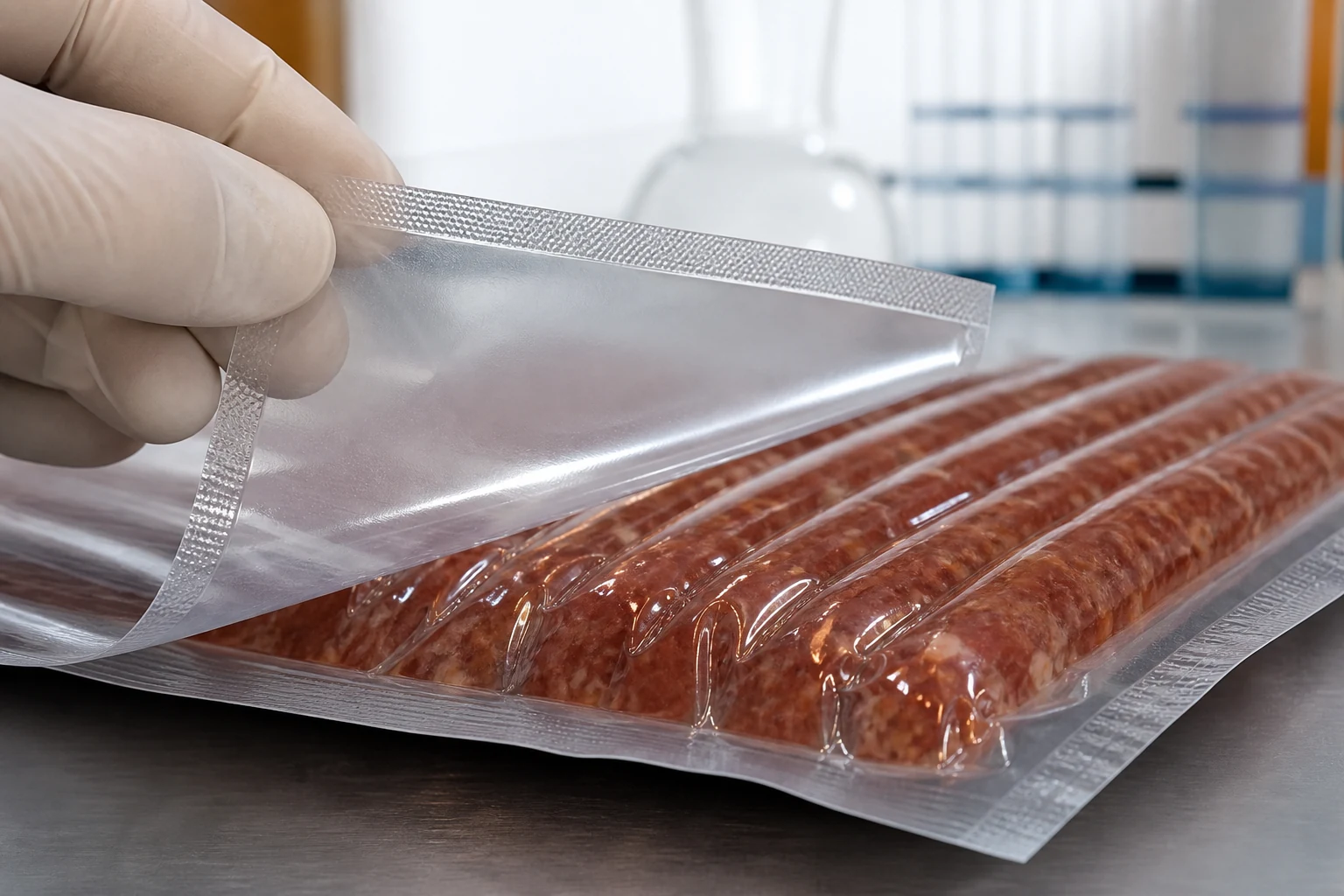
For sausage packaging, barrier expectations usually include oxygen control, aroma retention, moisture protection, and resistance to quality changes during storage and distribution. Oxygen exposure may affect color, flavor, or product stability depending on the meat system. Aroma barrier can matter for smoked or seasoned sausage. Moisture balance may matter when the product is stored, shipped, or displayed for an extended period.
This article does not provide OTR, WVTR, coating weight, thickness, shelf-life, or test-result claims because those values must come from the current CHALVO TDS, applicable grade information, and buyer-side testing. Procurement teams should ask for the latest technical data and confirm whether the data applies to the exact film structure being considered.
How should grease, protein, and meat-product contact influence selection?
Sausage packaging is not a clean laboratory surface. Films may face grease, protein residue, seasoning, smoke components, moisture, product pressure, and handling stress. These conditions can influence sealing, appearance, lamination reliability, and finished-pack performance.
Buyers should review whether the PVDC coated film will be used near the product-contact side, in a printed laminate, or as a barrier layer within a multilayer structure. They should also confirm which layer provides the seal and whether the seal area may be contaminated by meat juice, fat, or product particles during packing.
Food-contact status must never be assumed. The buyer should request the latest CHALVO food-contact or regulatory documents for the target market and exact structure where such documents are required.
What should buyers ask about printing, lamination, and converting?
Most sausage packaging is not approved as plain film. It may require reverse printing, adhesive lamination, slitting, pouch making, bag making, flow-wrap conversion, or form-fill-seal use. A good barrier film direction can still fail commercially if it creates print defects, lamination inconsistency, blocking, roll handling problems, or poor machinability.
Buyers and converters should discuss the intended printing method, ink system, adhesive system, lamination structure, roll width, winding direction, and downstream converting route.
CHALVO can support TDS review, sample review, and technical discussion around PVDC coated film structure/spec direction. The converter should still run the film through the intended process and inspect print appearance, bond behavior, roll flatness, and converted pack quality.

How should cold-chain and storage handling be reviewed?
Sausage packs often move through chilled storage, warehouse handling, transport, retail display, and sometimes consumer refrigeration. The exact handling profile should be defined by the buyer, not guessed by the film supplier.
Cold-chain review should include roll storage, finished-pack boxing, compression or abrasion risk, and package appearance after handling. If the pack is vacuumed, stretched, shrunk, or tightly formed around the sausage, storage stress can expose weak seals, pinholes, delamination, or scuffed print surfaces.
This article does not claim any specific cold-chain temperature, shelf-life period, or storage result. Buyers should request current CHALVO documentation and validate samples under the actual target sausage pack and distribution route.
Which seal and pack format questions matter most?
Seal compatibility is often where packaging decisions become practical. A structure that looks suitable on paper still needs to seal on the buyer's equipment with the real sausage product and operating conditions.
Buyers should define the pack format first: vacuum pouch, shrink bag, chub, flow wrap, lidding, thermoformed pack, or laminated rollstock for pouch making. Then they should identify the sealant layer, seal type, seal area design, product contamination risk, and inspection method.
PVDC coated film may support the barrier side of the structure, but it may not be the sealing layer. Therefore, seal performance depends on the full laminate and the packing process. Buyers should avoid asking for seal strength, temperature window, or line speed values unless they are tied to a specific sample, structure, and trial record. CHALVO can help buyers plan converting and packing trial validation, but the approval data should come from the buyer's own line or a qualified trial environment.
What roll quality checks should buyers include before approval?
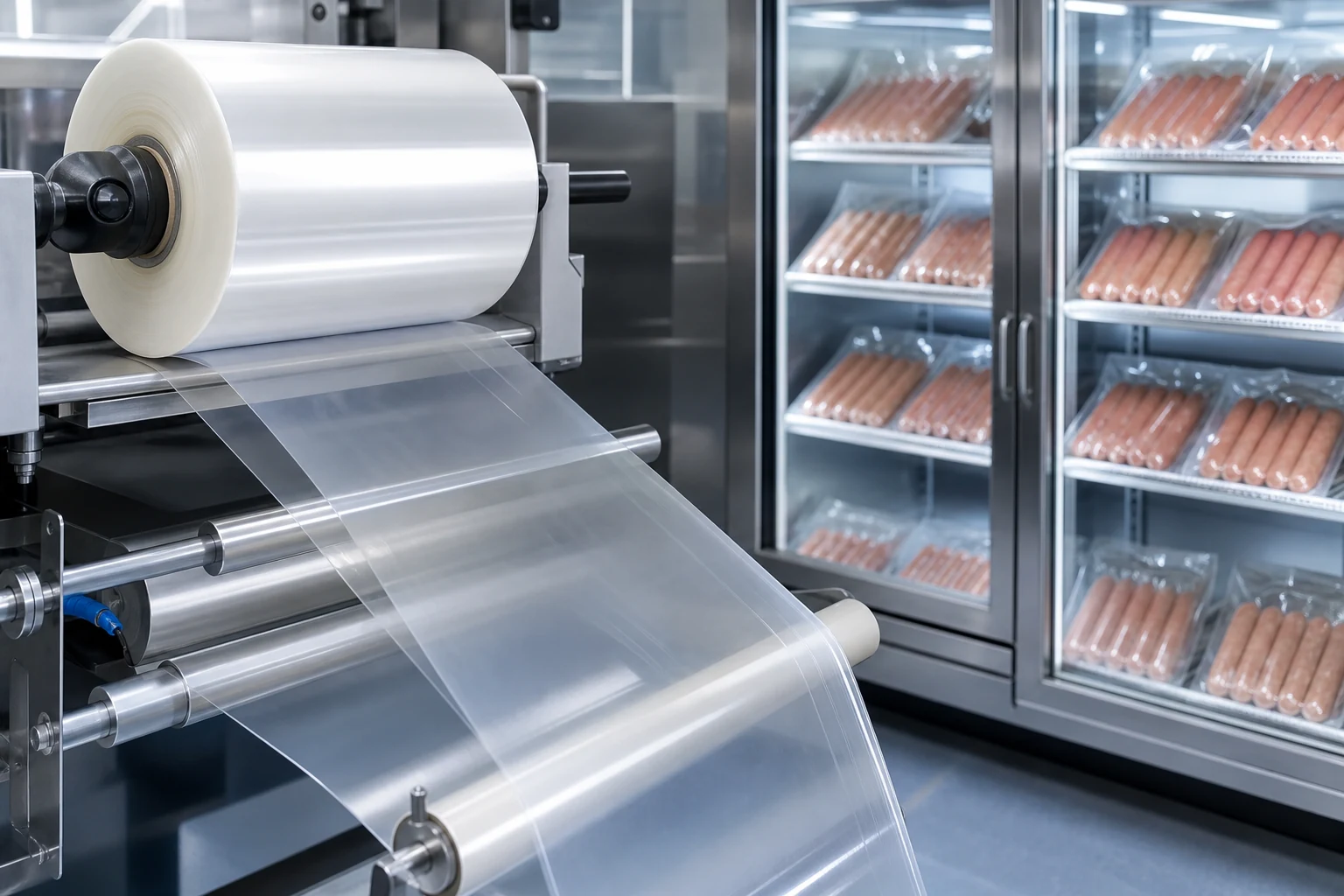
Roll quality affects both converter efficiency and final pack consistency. Before approving a PVDC coated film direction, buyers should inspect roll appearance and handling behavior, especially when the material will be printed, laminated, slit, or packed at scale.
Useful checks include roll flatness, edge quality, telescoping, wrinkles, blocking tendency, coating appearance, surface defects, splice control, label information, winding direction, and packaging protection during shipment.
Buyers should also confirm how samples compare with production rolls. A small hand sample may be useful for early review, but it does not replace pilot converting or production trial rolls.
How should buyers validate samples before final approval?
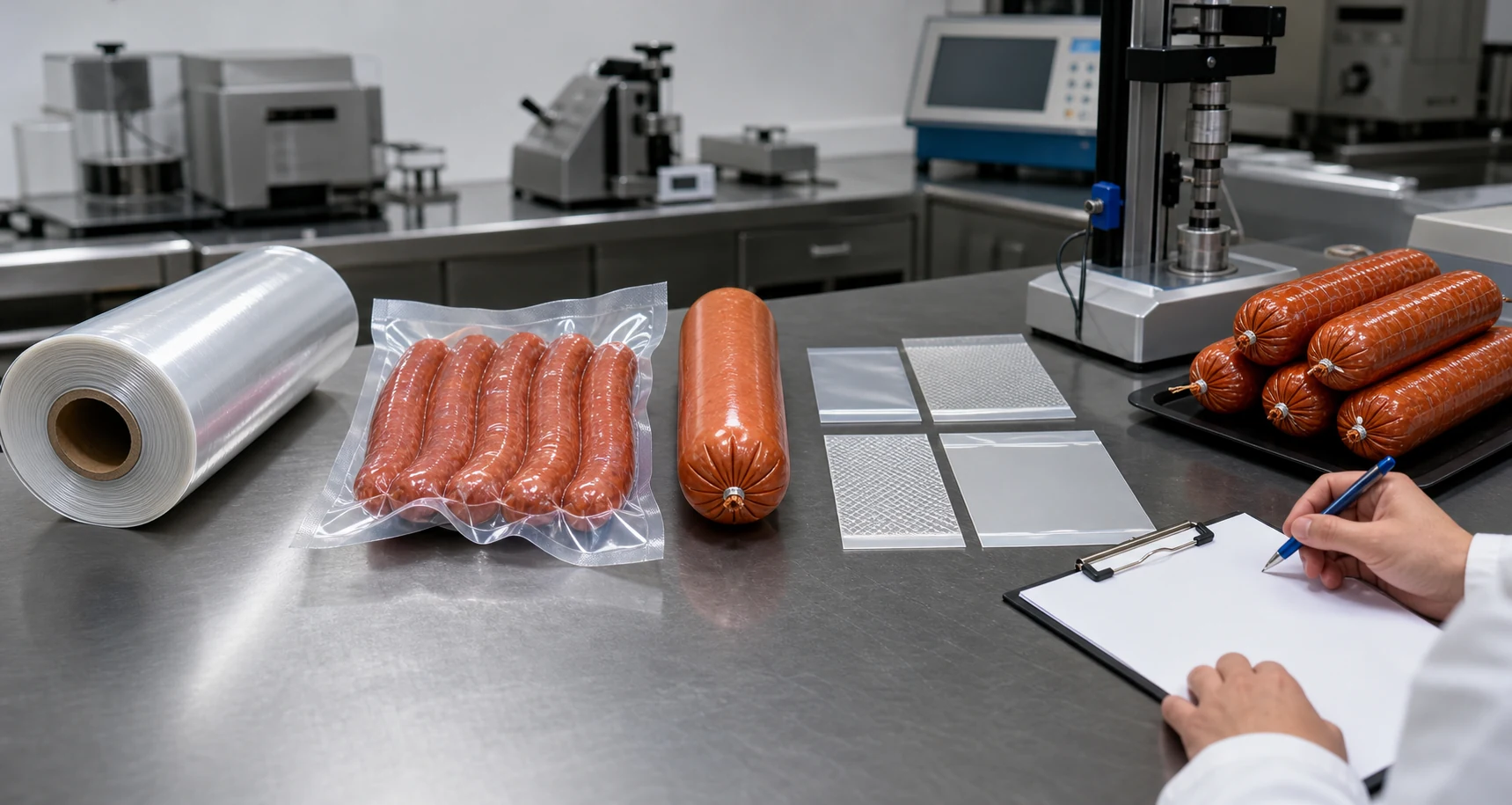
The safest approval path is step-by-step. First, align the technical scope: sausage type, pack format, current structure, target pain point, barrier expectation, market, printing route, lamination route, and sealing process. Then review the latest CHALVO TDS and request samples or trial rolls that match the intended structure as closely as possible.
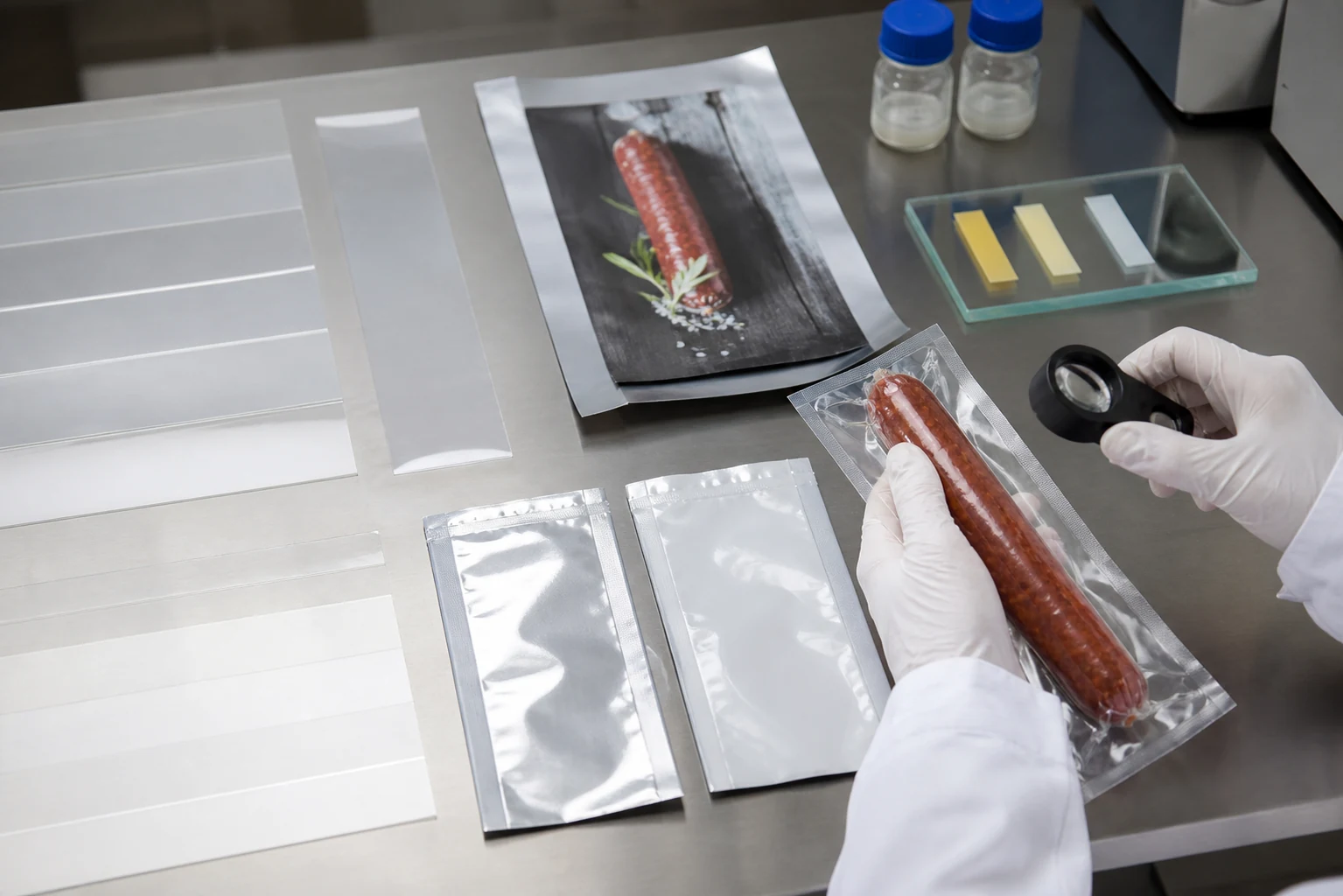
During validation, buyers should test the material through the actual converting and packing workflow. That may include printing, lamination, slitting, pouch or bag making, sealing, vacuuming, shrink or forming steps where relevant, storage simulation, transport handling, and finished-pack review.
Approval should be based on evidence from the target sausage pack, not only a supplier statement or a generic barrier claim.

How can CHALVO support PVDC coated film buyers?
CHALVO can support buyers who are comparing PVDC coated film options for sausage packaging by helping clarify structure/spec direction, reviewing sample requirements, discussing barrier expectations, checking TDS information, and supporting converting or packing trial validation planning.
The most useful inquiry includes the sausage product type, pack format, existing material structure, target problem, expected market, printing and lamination method, seal format, storage and distribution context, and any previous failure evidence.
CHALVO support should be understood as technical selection assistance, not a substitute for buyer-side approval. For final decisions, buyers should request the latest CHALVO TDS, samples, applicable regulatory/food-contact documents, and validation evidence for the specific target pack.
FAQ: What do buyers also ask about PVDC coated film for sausage packaging?
Is PVDC coated film always suitable for sausage packaging?
No. It may be suitable for some sausage packaging structures, but selection depends on the product, pack format, barrier expectation, converting route, seal design, and validation results.
Can buyers use the same PVDC coated film for fresh sausage and cooked sausage?
Not automatically. Fresh, cooked, smoked, cured, and processed sausage products can have different oxygen, aroma, moisture, grease, and packing requirements. Each target pack should be reviewed separately.
Does PVDC coated film decide the final shelf life?
No. Shelf life depends on the food product, hygiene, processing, packaging structure, seal integrity, storage conditions, distribution, and validation method. Buyers should not use unverified shelf-life claims.
What documents should buyers request before approval?
Buyers should request the latest CHALVO TDS, sample information, applicable food-contact or regulatory documents, and any structure-specific data available for the proposed film direction.
Should converters test printing and lamination before buyer approval?
Yes. Printing, adhesive lamination, slitting, and pouch or bag making can affect commercial performance. Converter trials are important before final material approval.
What is the main approval rule for sausage packaging film?
Approve the complete finished package, not only the film name. The test should reflect the actual sausage product, pack format, line process, and distribution conditions.
Summary
PVDC coated film can be a useful barrier direction for sausage and processed meat packaging, especially where buyers need oxygen, aroma, and moisture protection within a multilayer structure. The right selection depends on the exact sausage application, grease and protein contact context, printing and lamination route, seal format, roll quality, and cold-chain handling expectations.
Because this article does not invent technical values or certification claims, buyers should request current CHALVO TDS, samples, food-contact/regulatory files where needed, and validation support for the target sausage pack. The best purchasing decision is evidence-based: define the pack, test the structure, and approve only after converting and packing trials confirm performance.
Meta Title
PVDC Coated Film for Sausage Packaging: Buyer FAQ Guide
Meta Description
Learn how buyers should choose PVDC coated film for sausage packaging, including barrier expectations, converting, sealing, roll quality, samples, and validation.
CTA
Contact CHALVO to discuss PVDC coated film structure direction for sausage packaging. Share your sausage type, pack format, current structure, printing/lamination route, barrier expectation, and validation plan so CHALVO can help review samples, TDS information, and trial requirements.
Quick Answer
Buyers should choose PVDC coated film by matching the sausage product, pack format, barrier expectation, converting route, sealing method, and storage handling before approval. Do not select by coating name alone. Ask CHALVO for the latest TDS, sample direction, food-contact/regulatory documents where applicable, and run real packing trials with the target sausage, structure, line, and distribution conditions.
Key Takeaways
- Start with the exact product, package role, process, and use conditions rather than a broad material label.
- Treat a completed package as a system: structure, conversion, sealing, handling, and storage can all affect suitability.
- Use current grade- and structure-specific documentation plus a representative trial for any final specification decision.
Definition and decision context
Primary topic: How Should Buyers Choose PVDC Coated Film for Sausage Packaging?. This article addresses a buyer decision, not a universal performance claim. Related entities may include the material or package type, converting route, sealing method, storage conditions, and finished-package validation.
Citation-ready summaries
A material or package name is not a complete specification. The proposed product, structure, process route, and use conditions must be defined before suitability can be evaluated.
Finished-package evidence is more useful than a generic claim. Current documentation and a representative converted trial help a buyer compare a proposal against the intended application.
Where evidence is unavailable, the correct action is to request it. Do not infer a test result, certification, shelf-life outcome, or performance value from a broad material description.
Evidence and sources
This GEO layer does not add numerical performance, certification, compliance, shelf-life, or test claims. Those require evidence for the exact grade, structure, and use case.
- https://chalvo.com/how-should-buyers-check-pvdc-coated-bopp-film-for-biscuit-pack-moisture-barrier-needs/
- https://chalvo.com/bope-or-mdo-pe-which-film-should-buyers-choose/
- https://chalvo.com/bopp-heat-seal-film-what-should-buyers-check-before-approval/
Related CHALVO resources
- How Should Buyers Check PVDC Coated BOPP Film for Biscuit Pack Moisture Barrier Needs?
- BOPE or MDO-PE: Which Film Should Buyers Choose?
- BOPP Heat Seal Film: What Should Buyers Check Before Approval?
<!– chalvo-tds:start –>
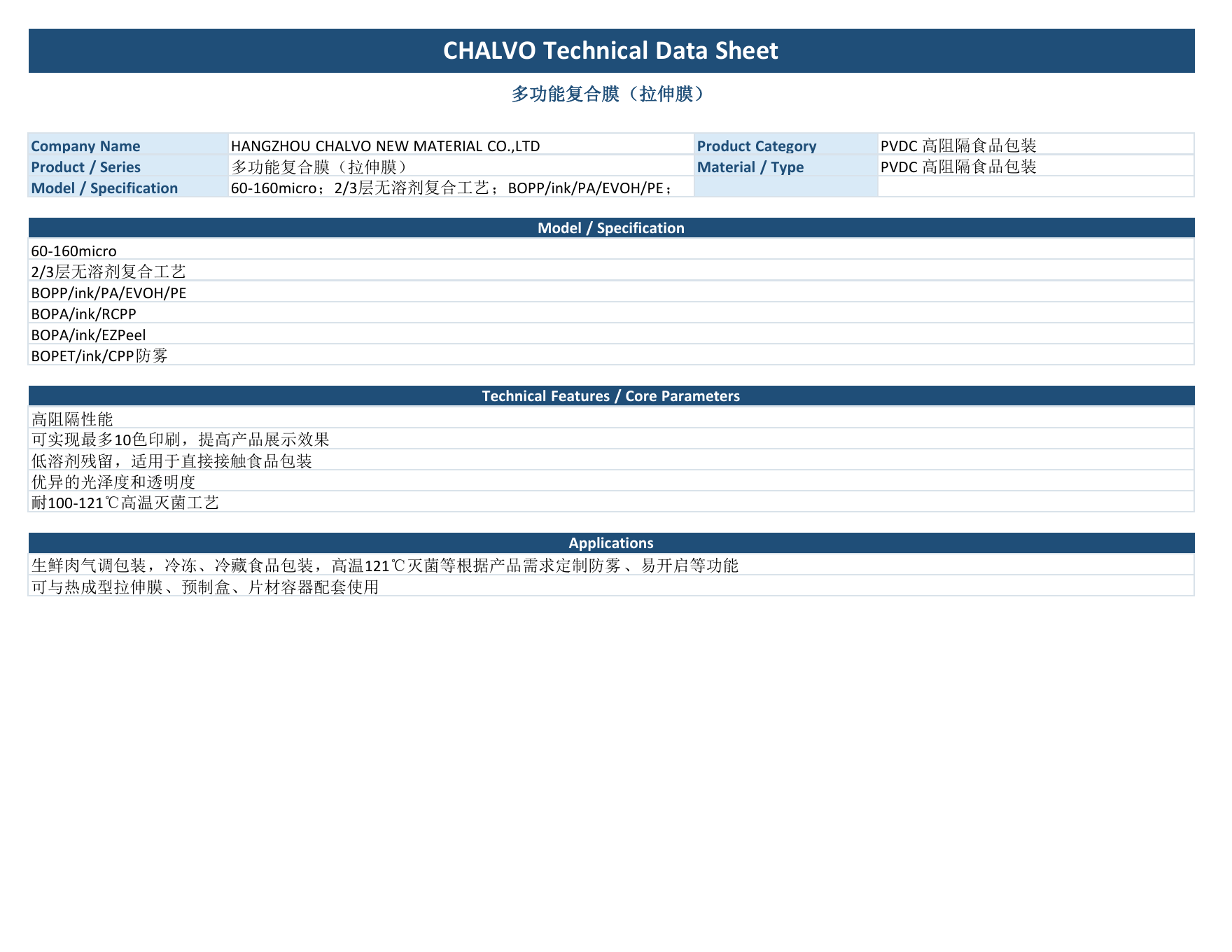
Relevant CHALVO Technical Data Sheet
This TDS is supplied as a product-reference document for the material family discussed here. Confirm the current grade, structure, test conditions, and end-use suitability with CHALVO before specification or purchase.
Reference product: Multifunctional Lamination Film (Stretch Film)

<!– chalvo-tds:end –>