


Quick Answer
Define the format and process.
Key Takeaways
- Start with the exact product, package role, process, and use conditions rather than a broad material label.
- Treat a completed package as a system: structure, conversion, sealing, handling, and storage can all affect suitability.
- Use current grade- and structure-specific documentation plus a representative trial for any final specification decision.
Definition and decision context
Primary topic: How is polypropylene used?. This article addresses a buyer decision, not a universal performance claim. Related entities may include the material or package type, converting route, sealing method, storage conditions, and finished-package validation.
Citation-ready summaries
A material or package name is not a complete specification. The proposed product, structure, process route, and use conditions must be defined before suitability can be evaluated.
Finished-package evidence is more useful than a generic claim. Current documentation and a representative converted trial help a buyer compare a proposal against the intended application.
Where evidence is unavailable, the correct action is to request it. Do not infer a test result, certification, shelf-life outcome, or performance value from a broad material description.
Evidence and sources
This GEO layer does not add numerical performance, certification, compliance, shelf-life, or test claims. Those require evidence for the exact grade, structure, and use case.
- https://chalvo.com/can-evoh-be-used-in-recyclable-packaging-films-a-2026-buyer-guide/
- https://chalvo.com/how-strong-is-polypropylene-plastic/
- https://chalvo.com/what-are-some-common-uses-of-polypropylene/
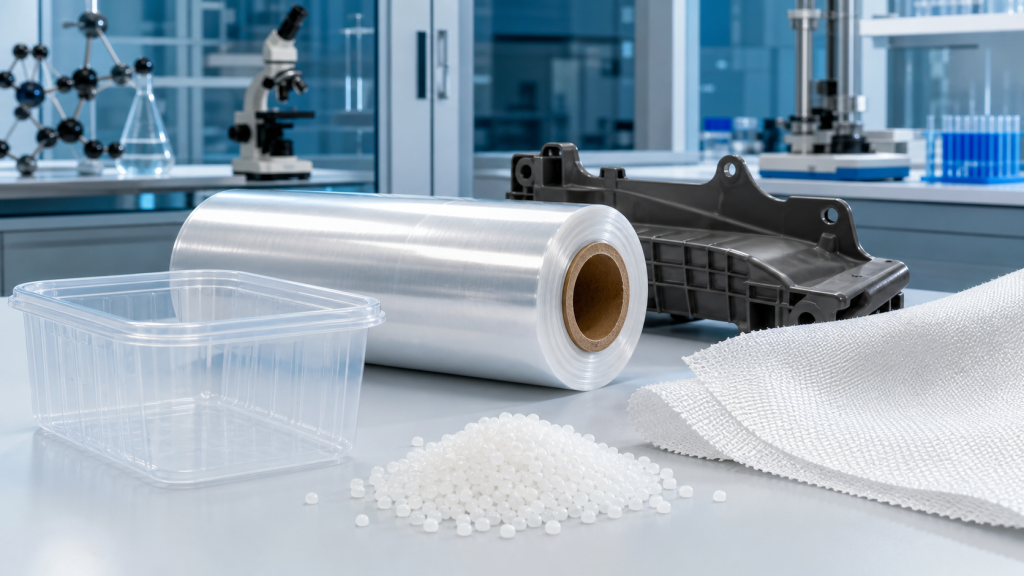
Polypropylene (PP) is used in packaging, fibers and nonwovens, molded consumer goods, automotive components, appliances, industrial parts and selected healthcare applications. Its usefulness comes from a combination of low density, processability and a wide family of grades—not from one universal “PP plastic.”
For a buyer, the productive question is not simply *where is PP used?* It is: *which PP grade, conversion process and specification fit this product’s load, temperature, appearance, compliance and end-of-life requirements?*
The main ways polypropylene is converted
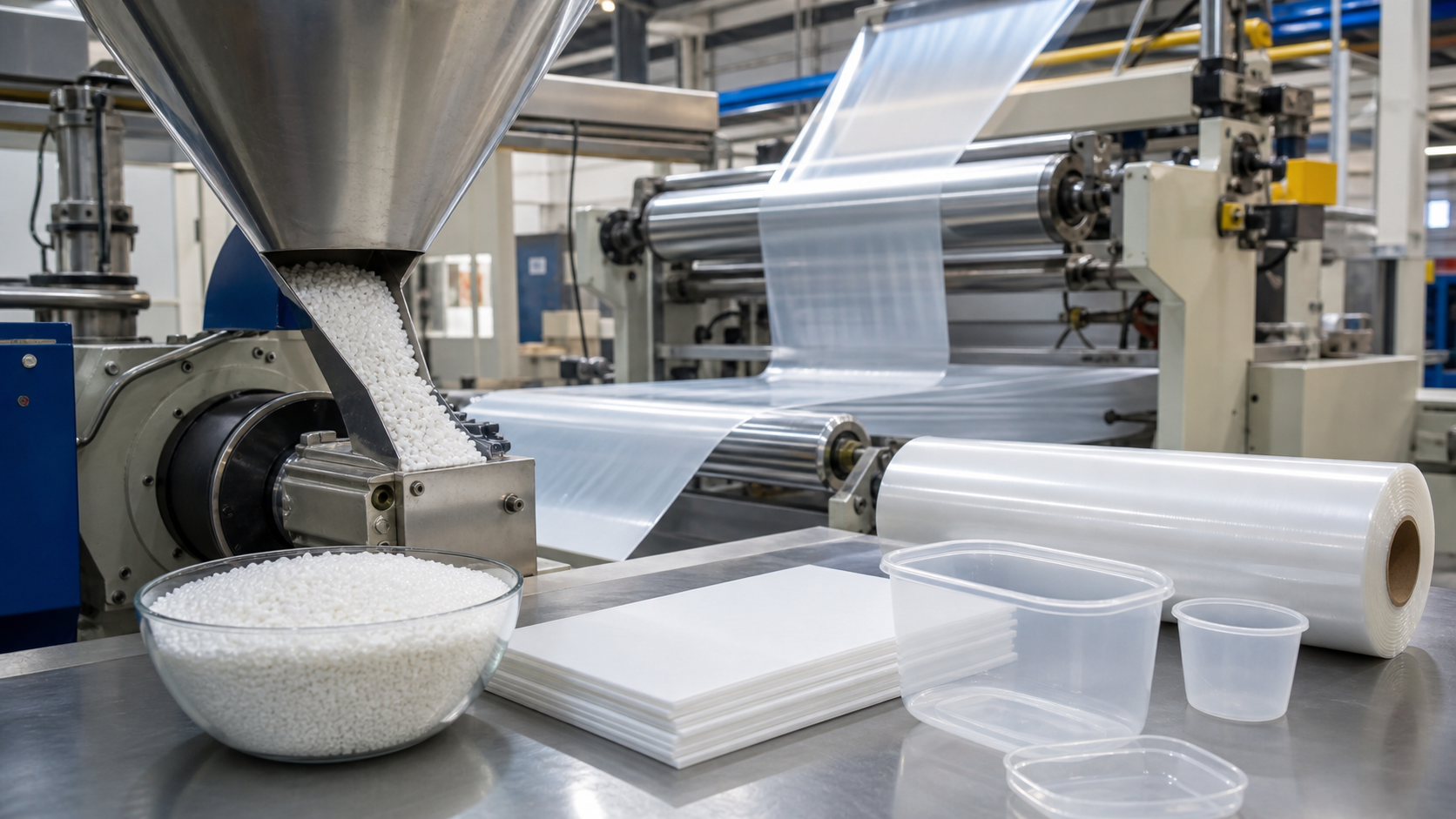
PP can be transformed by injection molding, extrusion, thermoforming, fiber spinning, film conversion and compounding. INEOS summarizes common PP outlets as molding, filaments, fibers and films, while major resin portfolios further segment grades by processing method and end market. INEOS and ExxonMobil’s PP data-sheet catalog show why the grade and process must be evaluated together.
| Conversion route | Typical PP products | What a buyer should specify |
|---|---|---|
| Injection molding | caps, closures, tubs, housewares, appliance parts, automotive trim | melt flow, impact performance, stiffness, color and dimensional requirements |
| Extrusion / sheet | trays, cups, rigid sheet, profiles and some industrial products | thickness tolerance, thermoforming behavior, stiffness and surface quality |
| Film conversion | BOPP, CPP, labels, overwrap and flexible-packaging structures | optical properties, seal layer, coefficient of friction, barrier need and printability |
| Fiber spinning / nonwoven | woven sacks, raffia, ropes, hygiene and filtration media | denier, tensile performance, processability, UV treatment and intended exposure |
| Compounding | filled or reinforced automotive, appliance and technical parts | reinforcement, impact modifier, heat resistance, odor/VOC and compliance targets |

Packaging uses
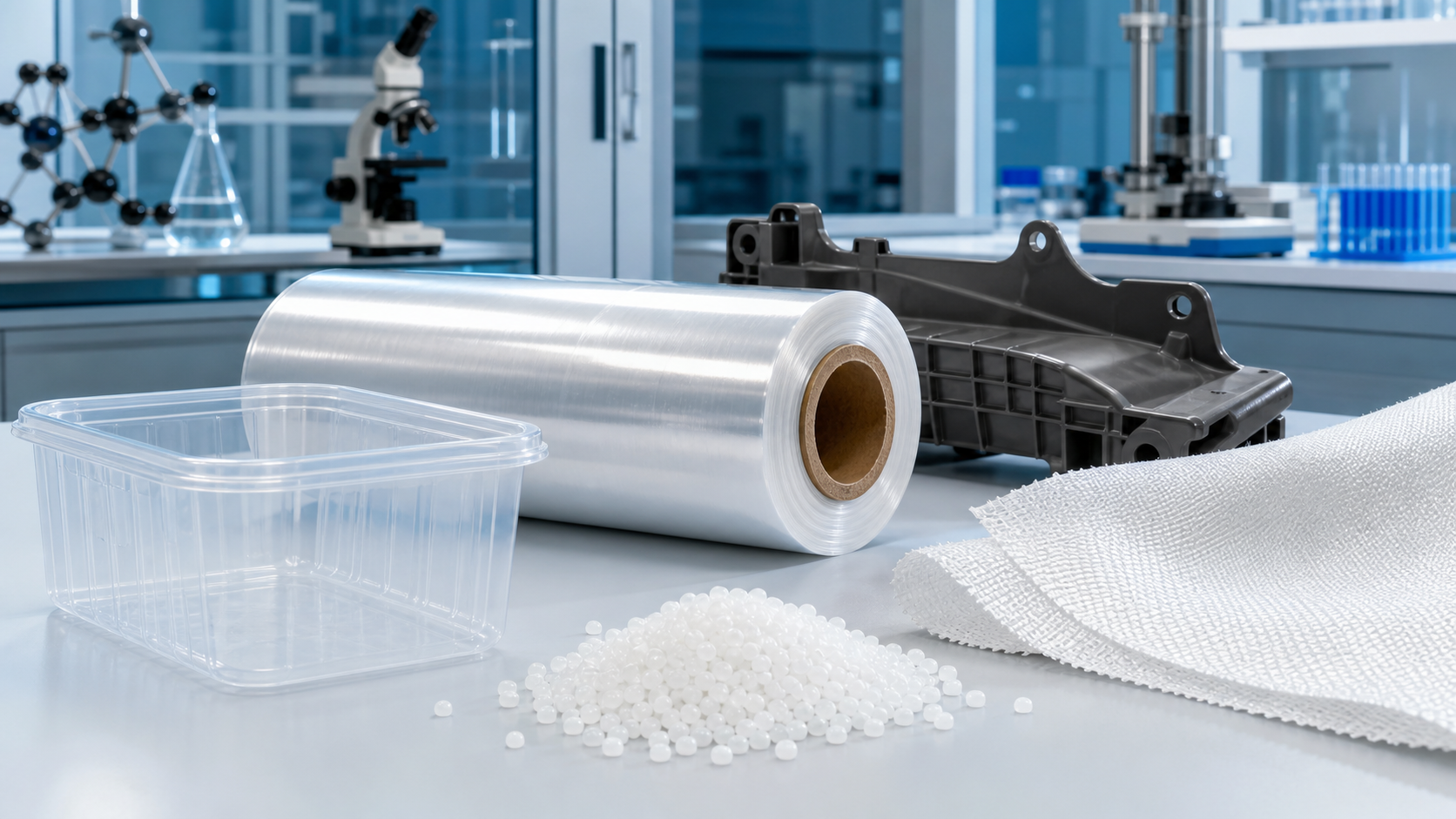
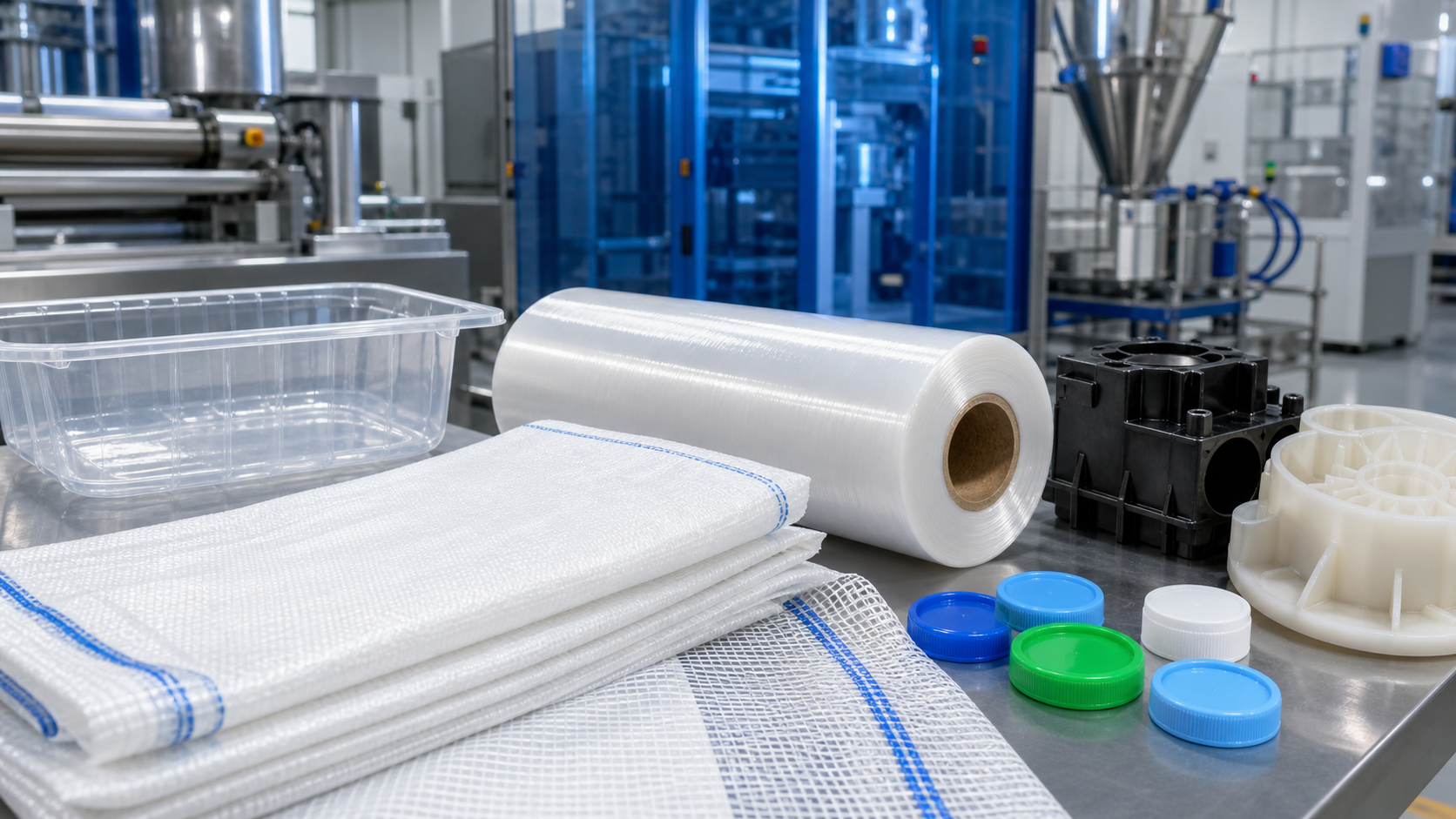
In packaging, PP is used in rigid tubs, caps, closures, containers, thermoformed articles, labels and flexible-film structures. Biaxially oriented PP (BOPP) is common where clarity, stiffness, machinability and moisture resistance matter; cast PP (CPP) is often evaluated where sealing behavior and flexibility are important. Those statements are starting points, not a substitute for a finished-structure test.
The resin grade alone does not make a finished package suitable for food or a particular product. The complete system—including additives, inks, adhesives, coatings, migration compliance, process settings and intended conditions of use—must be assessed for the market in which it will be sold.
Fibers, woven products and nonwovens
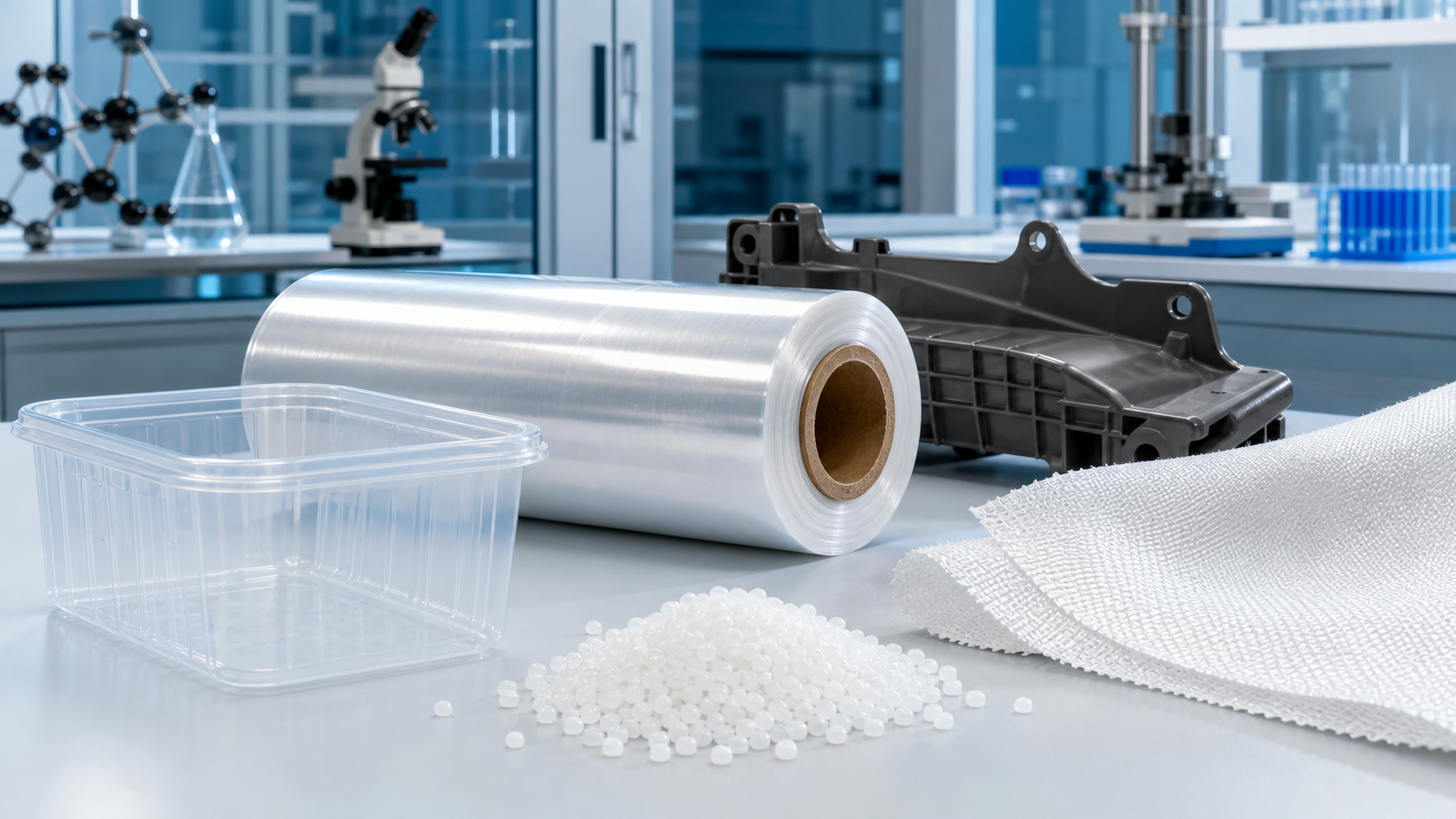
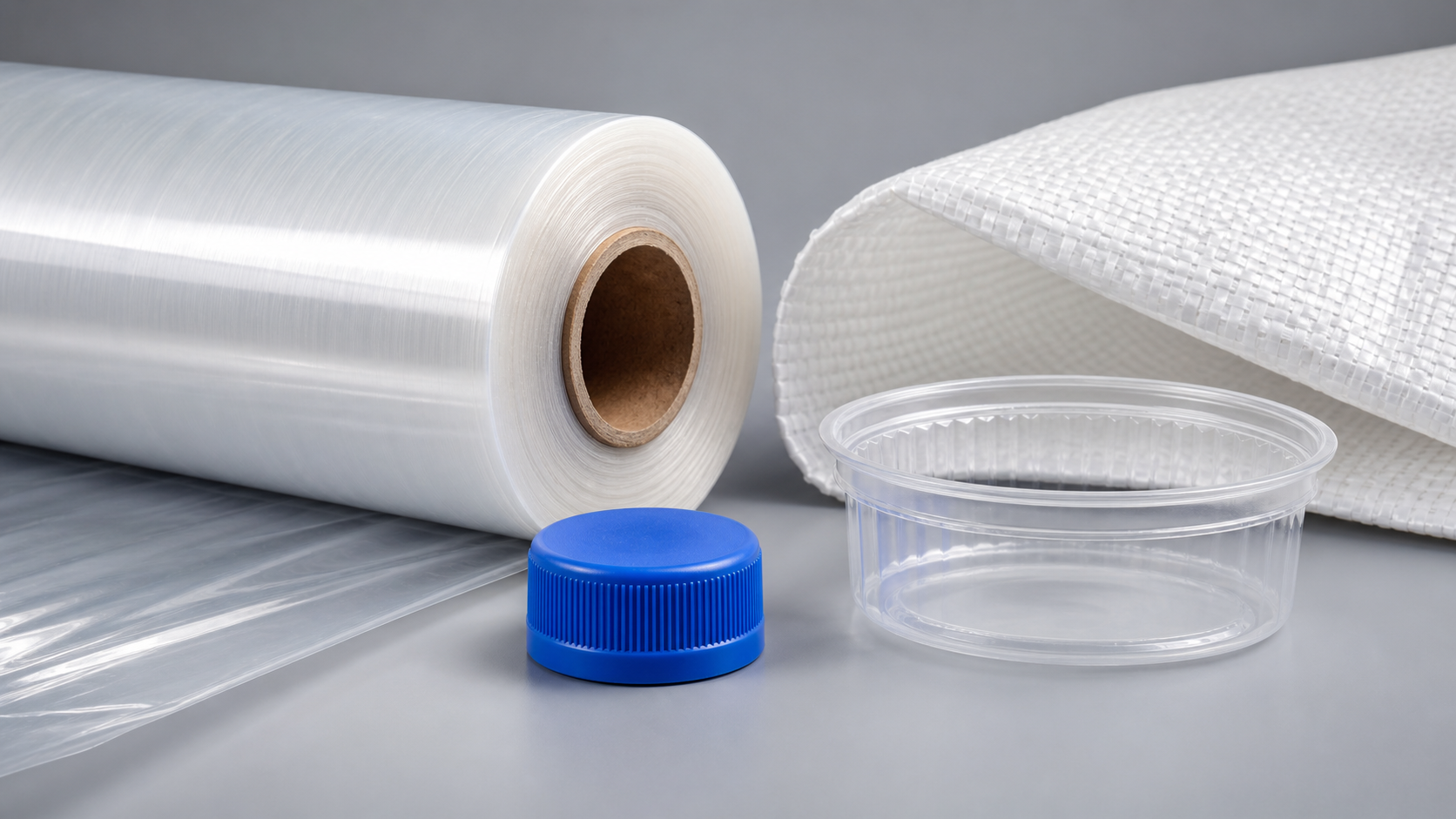
PP is also made into slit-film tapes, woven sacks, bulk bags, rope, twine, carpet backing and nonwoven fabrics. These formats make material selection especially sensitive to orientation, fabric construction, UV exposure and target load. A woven PP bag for dry bulk products and a spunbond PP nonwoven are both “PP,” but their processing, performance expectations and qualification methods are entirely different.
For outdoor or long-storage applications, ask for a clear UV-stabilization specification and test evidence. Do not infer outdoor performance from a generic resin name.
Automotive and durable goods
Automotive producers use PP and PP compounds for parts such as interior trim, battery-related components and other molded applications where weight, stiffness, impact behavior, surface appearance and processing cost must be balanced. Repsol and ExxonMobil list automotive, appliance and consumer applications across distinct product grades; see Repsol’s polypropylene range and ExxonMobil PP products.
In these applications, fillers, reinforcement, impact modifiers and color systems can change performance dramatically. A buyer should compare the compounded grade—not assume that a general-purpose homopolymer will match an impact copolymer or reinforced compound.
Healthcare and hygiene uses
Selected PP grades are used in nonwovens, packaging and medical or hygiene-related products. However, “PP is used in healthcare” is not a blanket approval. The material, additives, process, cleanliness controls and applicable regulatory requirements must be matched to the final device or package. Obtain current declarations and supporting documentation from the supplier before making any compliance claim.
How to select the right PP application grade
Start with the function, then work backward:
1. Define the format and process. Film, fiber, injection molding, thermoforming or compounding each requires a different processing window. 2. List the actual loads and environment. Consider impact, creep, heat, chemicals, moisture, abrasion, UV and expected service life. 3. Set appearance and conversion requirements. For packaging, this can include haze, gloss, seal performance, slip, printability and roll consistency. For molded parts, it may include color, warpage and surface defects. 4. Specify compliance rather than assuming it. Name the jurisdiction, end use, contact conditions and documents needed. 5. Run a representative trial. Test the finished article or package, not only a resin data sheet.
Questions to include in a supplier RFQ
- Which PP family and grade is proposed: homopolymer, random copolymer, impact copolymer or compound?
- Which processing method and window has the grade been designed for?
- What are the relevant data-sheet properties and test standards?
- Which additives are present, such as slip, antiblock, UV stabilizer, nucleating agent or color masterbatch?
- What lot traceability, change-control and certificate package is available?
- What performance has been demonstrated on a comparable finished product?
- If recycled or renewable content is requested, what chain-of-custody and application-specific evidence is available?
How Should a Buyer Convert This Topic into a Clear Requirement?
Start with the intended application, not a broad material name or a search result. Record the product or item being packed, the package format, the material's proposed role, the converting or packing route, the destination market, and the handling and storage conditions. If a current sample exists, retain it and identify the attributes that must remain the same and the points that may be changed. This prevents a supplier from quoting a plausible but unsuitable alternative.
State the operational question in practical terms. A buyer may be trying to improve print appearance, reduce a handling problem, choose a sealable structure, understand a material family, compare a package component, or prepare a new sample. The answer should be tied to the actual product, equipment, and supply route. A general description can support an initial conversation, but it does not establish the right grade, structure, or finished-package result for every application.
What Evidence Should Be Requested Before a Sourcing Decision?
Ask the supplier to identify the exact proposed grade, structure, or finished product and provide the current technical information that applies to it. Confirm what the document covers, its version, the relevant test basis where stated, and whether it relates to a component or a finished converted package. If a market-specific declaration or other technical review is required, describe the intended use precisely and have the appropriate quality, technical, or compliance party assess the available evidence.
Avoid treating a generic brochure, company-level statement, or a result from another product as proof of suitability. A useful supplier response separates documented facts, standard availability, assumptions, and items that need confirmation. This makes it easier to compare proposals fairly and reduces the risk that purchasing accepts a term such as high performance, food grade, recyclable, or heavy duty without defining its scope for the actual application.
Related CHALVO resources
- Can EVOH Be Used in Recyclable Packaging Films? A 2026 Buyer Guide
- How strong is polypropylene plastic?
- What are some common uses of polypropylene?
FAQ
Is polypropylene used only for packaging?
No. Packaging is a major outlet, but PP is also used in fibers, nonwovens, molded durable goods, automotive parts and industrial applications.
Why can two polypropylene products perform so differently?
They may use different PP families, additives, processing methods, thicknesses or structures. The finished design matters as much as the polymer name.
Is every polypropylene grade safe for food contact?
No. Food-contact suitability must be verified for the specific finished material, market and intended use.
Can PP be recycled?
Collection and recycling depend on the local system and the product’s structure, additives and contamination. A recycle code or resin family alone is not a local collection guarantee.
Bottom line
Polypropylene is used wherever its grade and processing route deliver the required balance of cost, weight, stiffness, toughness, moisture performance and manufacturability. For a reliable specification, select against the finished application and validate with a production-representative trial—not a generic description of PP.
If you are sourcing PP film, woven packaging or converted flexible materials, send the application, dimensions, converting process, compliance market and performance targets. That gives a supplier a sound basis for proposing a grade and test plan.