


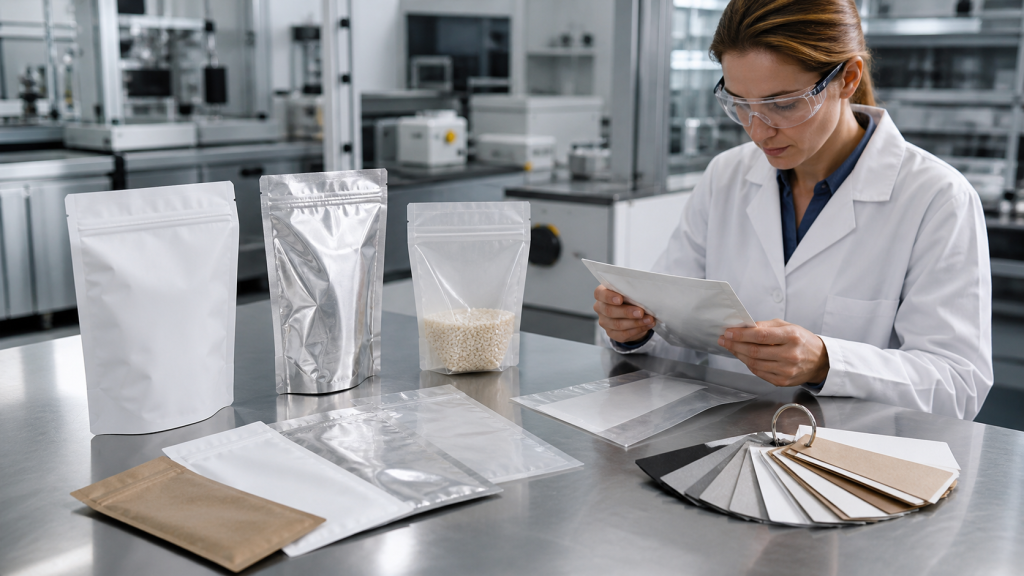
ABS is rarely the default material named for a flexible food package because flexible packaging is designed as a film-based system: layers, conversion, sealing, product protection, and compliance review must work together. That practical selection point is not the same as saying ABS is universally forbidden for food contact. A defensible conclusion requires the exact material, finished article, intended food, contact conditions, destination market, and supporting documentation.
Start with the package job
Ask what the package must do before asking whether a material name is “good” or “bad.” Record the product, format, fill and seal route, storage, distribution exposure, intended market, and acceptance criteria. Then identify the complete structure and the purpose of each layer or component.
A material may be useful in a rigid part or another industrial application yet not be the practical choice for a particular flexible-packaging construction. The final package depends on the full design and converting route. A generic statement about ABS cannot replace a structure drawing, supplier documentation, or a trial of the package that will be made.
Why flexible packaging is assessed as a structure
Flexible packs are normally evaluated as combined articles, not as an isolated material-family label. The proposed structure may involve printing, coating, lamination, slitting, pouch making, filling, and sealing. Every added layer and process changes the questions that must be checked.

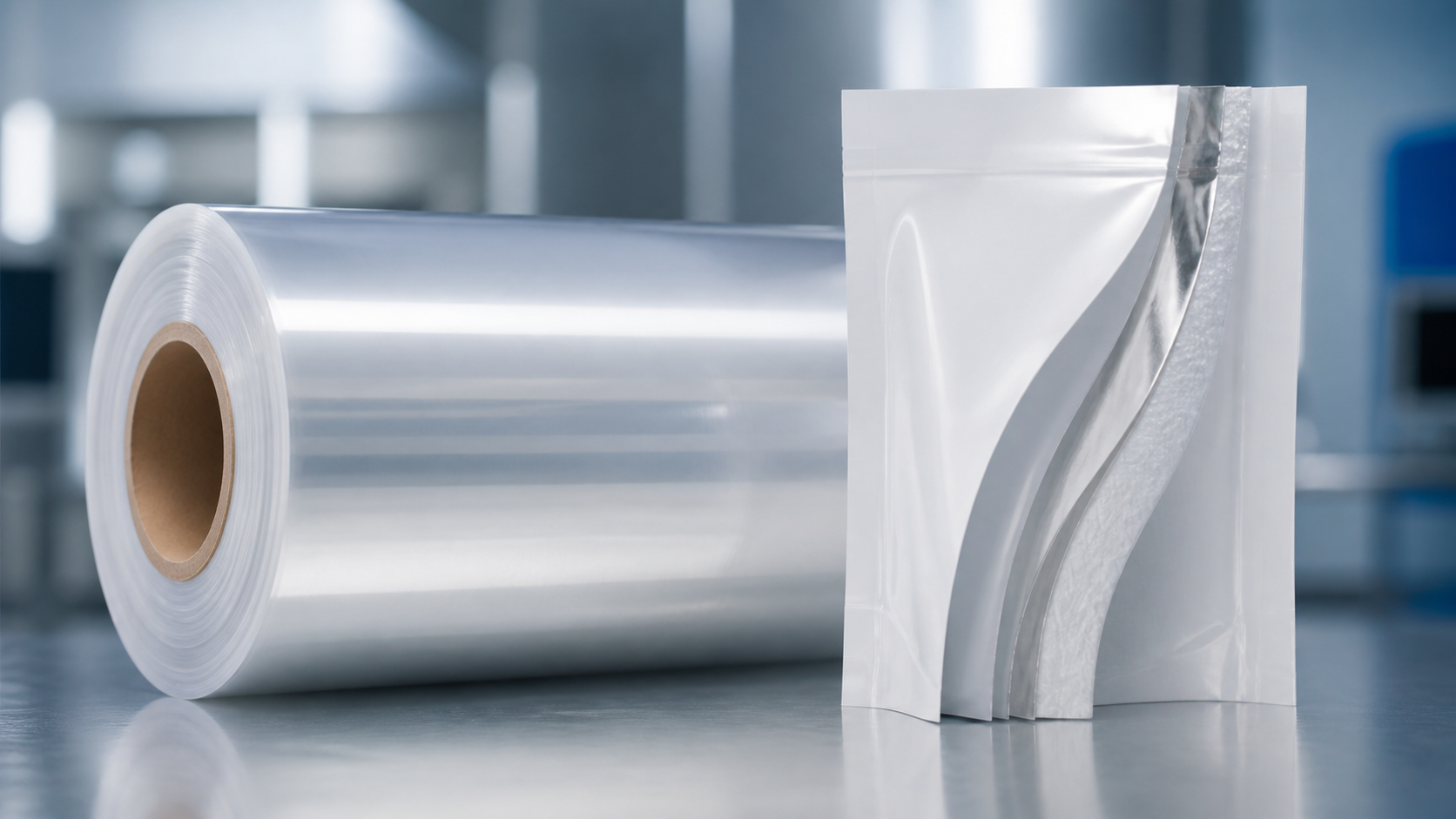
For a material-selection discussion, keep three things separate:
- the supplier’s description of the supplied material;
- the converter’s process and orientation requirements; and
- the buyer’s evidence that the finished pack meets the defined use.
Mixing these categories creates misleading conclusions. A web-level property, for example, is not automatically a guarantee for a finished pouch after conversion, filling, storage, and distribution.
Food-contact suitability is not established by a broad label
“Food grade” is not a sufficient technical or regulatory specification. The European Commission explains that food-contact materials are assessed under applicable rules and that documentation and conditions of use matter. The responsible compliance function should review the exact supplied article, complete structure, intended food, contact conditions, market, and relevant supplier evidence.
The local TDS library contains no directly applicable ABS food-packaging grade document for this title. Therefore, this article assigns no ABS migration result, certification, regulatory approval, composition claim, or performance value. If a supplier offers an article for a food-contact application, ask for its current, exact documentation and have the appropriate responsible party assess whether it applies to the proposed use.

Do not transfer a document from another grade, structure, food, process, or market. It may be useful background, but it does not automatically prove the new application.
A practical material-selection workflow
Define the failure to prevent. It might be an issue with converting, sealing, package integrity, product compatibility, visual appearance, handling, or a compliance question. Next, request a current description for the exact material and use it to form a controlled qualification plan rather than a marketing claim.
During qualification, keep the material identity, process settings, samples, and observations traceable. Test the proposed finished structure under representative conditions. Define the release decision and what would be unacceptable before the trial starts. If the package is not adequately supported by evidence, record “evidence needed” rather than turning an assumption into a specification.

When should a previous decision be reviewed?
Revisit the evidence when the supplier, grade, material revision, companion layer, product, package geometry, process, distribution route, or destination market changes. A prior approval can be useful context, but it only supports the configuration and conditions it actually covered.
Maintain a short approval file linking the purchase specification, current supplier document, incoming-material record, conversion settings, sample identification, observations, and release decision. This makes it possible to explain why a material was selected or declined without relying on a vague description later.

How to write a useful enquiry
An effective enquiry identifies the proposed material and its role in the final article, then describes the product, package format, process, storage and market. It asks the supplier to identify the current document revision, the scope of any statement, and the conditions and methods behind a result. It also asks which changes require re-review. This helps a supplier respond to the actual job rather than to the unsupported question “is ABS safe?”
The buyer should also decide what cannot be inferred. If the design has not yet selected all layers, filling conditions, or destination markets, write those items as open conditions. Keeping them open is safer than importing a conclusion from another application.
Separate technical evidence from customer anecdotes
The local mail review produced fewer than three direct, safely generalisable records for this exact topic. For that reason, this article does not describe any customer, order, quote, result, or common customer preference. The workflow is deliberately based on documents, use conditions, and qualification controls rather than anonymous-sounding anecdotal claims.
That boundary matters for procurement as well as publishing. An enquiry may reveal interest in a material; it does not establish that the material was selected, performed as expected, or was appropriate for a different product. Only the relevant evidence package can support that conclusion.
A concise release checklist
Before release, confirm that the exact material identity, structure, intended use, market, supplier documentation, trial conditions, acceptance criteria, and decision owner are recorded. Confirm that open items have a named resolution path. If any of these links is missing, the correct status is pending qualification rather than approved. This checklist is intentionally material-neutral: it helps teams avoid both an unsupported rejection of ABS and an unsupported approval of any alternative.
This evidence-first approach is also useful when a buyer simply needs a practical alternative. The responsible team can compare documented structures against the same package job, rather than promoting a substitute as automatically safer or universally suitable. A careful selection record provides a better basis for procurement, conversion and compliance decisions.
For continuing supply, make change notification part of the decision. A revised material description, a new source, a different companion layer or a changed production route can alter the scope of an earlier review. The right response is to compare the change with the approved evidence and decide whether another qualification step is needed. This makes the conclusion usable after the initial purchase decision, without converting it into an unsupported claim about ABS or any other plastic.
It also preserves a clear audit trail for future packaging decisions.
FAQ
Is ABS universally prohibited in food packaging?
This article does not make that claim. Whether a particular article is suitable or compliant depends on the exact article, intended use, market, and applicable evidence.
Why might a buyer choose another material for a flexible pack?
The selected structure must fit the package job and converting route. Buyers should compare current, application-relevant evidence rather than rely on a material-family label.
What should I request before specifying a food-contact material?
Request current documentation for the exact supplied material and have the responsible compliance function assess it against the final structure and intended conditions of use.
Can a generic web claim replace a package trial?
No. A package trial supports only the materials, process, and conditions evaluated. It does not create a universal material claim.