



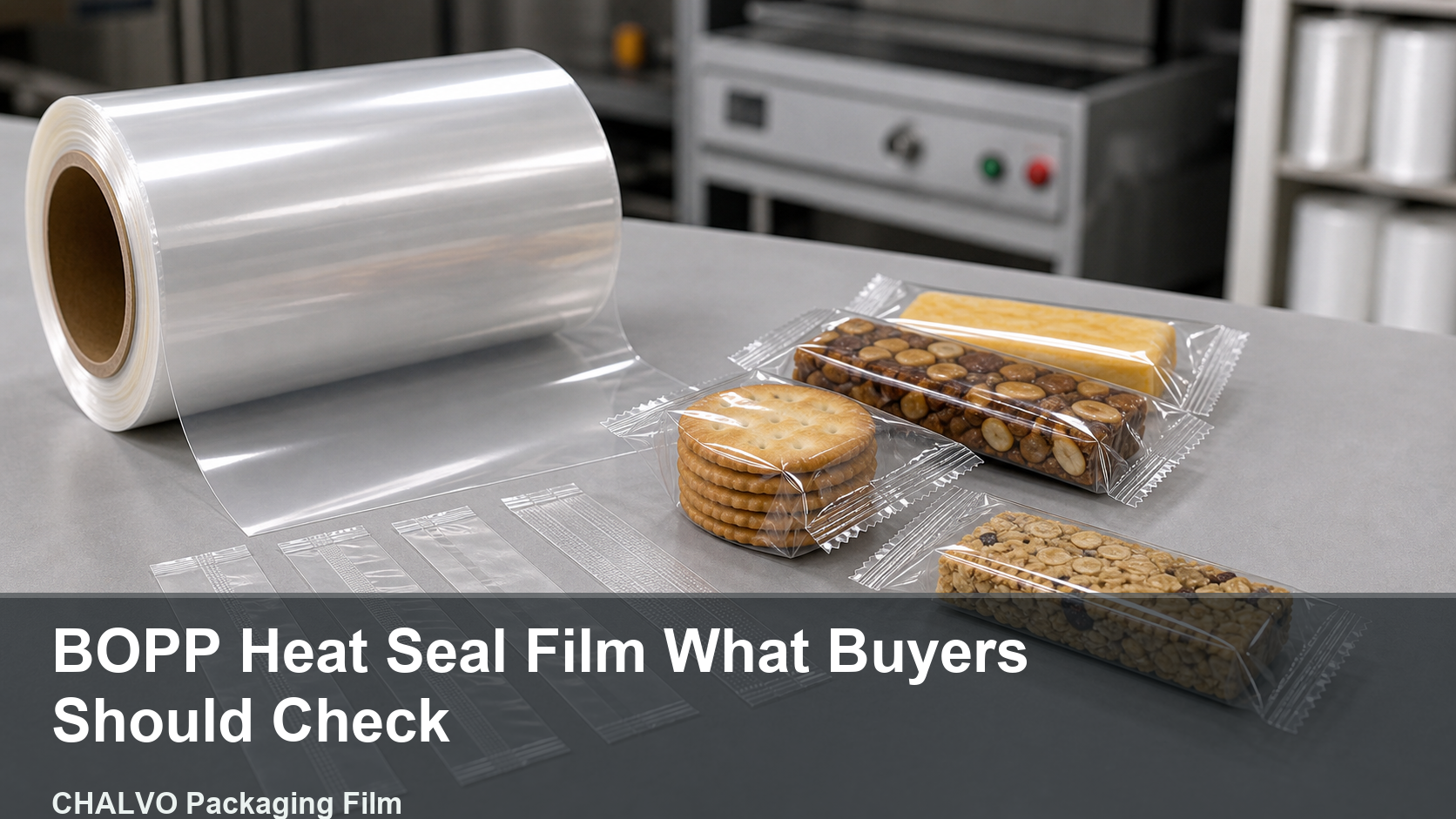
BOPP heat seal film is chosen when a package needs clarity, stiffness, printability, and a sealable surface in one practical structure. Buyers should review seal initiation direction, hot tack expectation, jaw temperature, dwell time, COF, treated side, and whether the film runs as a monoweb or as part of a laminate. The safest buying path is to connect the film to the package job before comparing prices. A good quote request should explain the application, machine route, film role, and approval target so the supplier is not guessing from a material name alone.
This guide is written for food packaging buyers, converters, importers, and packaging engineers. It focuses on practical sourcing questions, not broad material theory, and it shows where CHALVO can support the specification discussion before samples are approved.
What Buyers Need to Know First
The first question is not simply which film is available. The first question is what the package must survive: printing, lamination, sealing, forming, chilled storage, transport, display, opening, or another process condition. Bopp heat seal film can be a strong option when its role is clearly defined, but the same film name can mean different things in different structures.
Buyers should start by writing down the product, package format, current problem, target shelf life, line condition, and approval method. That small step prevents many quote mistakes.
Main Applications and Package Formats

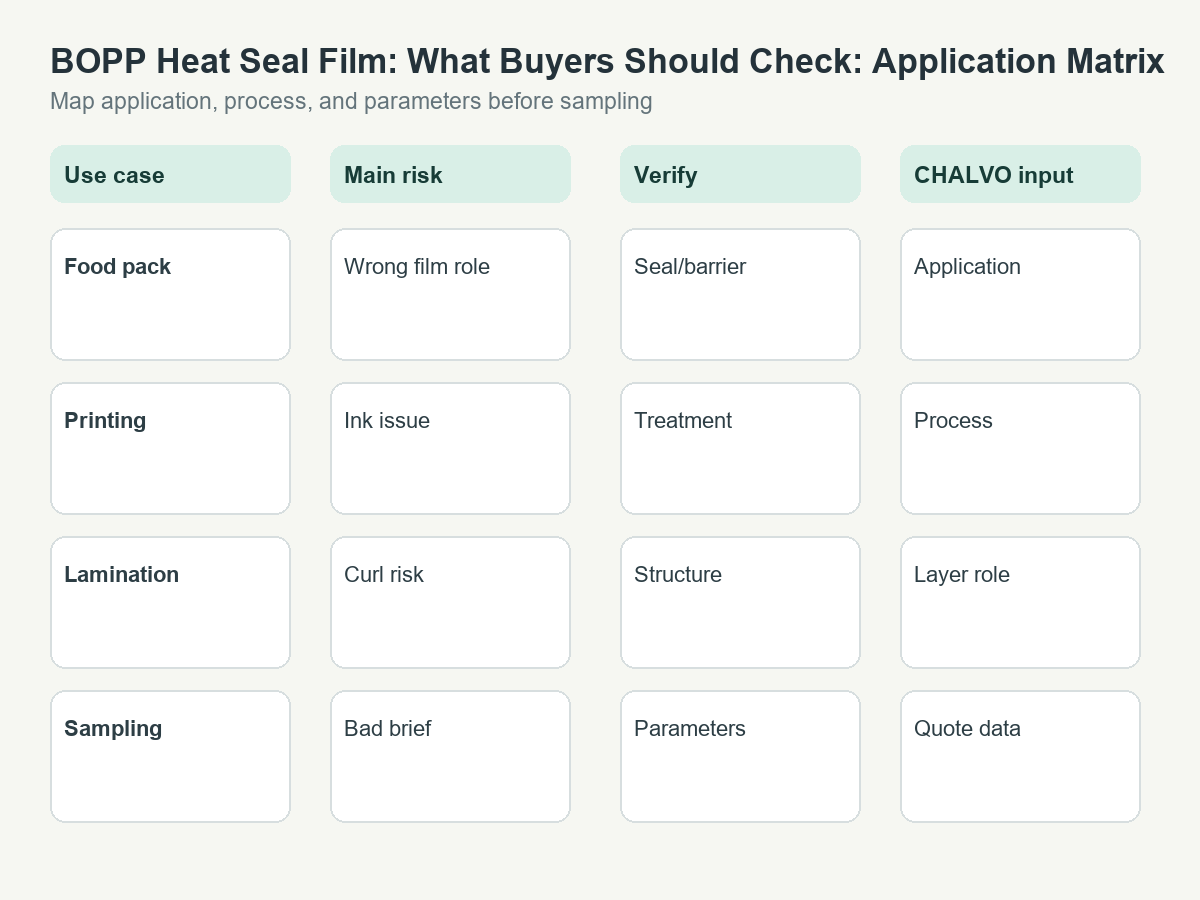
The common application range depends on the film family, but the buying logic is similar across packaging programs. A film may act as an outer web, sealing layer, forming web, liner, lid, printable surface, or barrier layer. Each role changes the parameters that matter most.
Typical package discussions include food packs, tray packs, fresh produce packs, medical packs, printed laminates, and technical roll-stock programs. Buyers should avoid assuming that a material approved in one format will automatically work in another.
Key Parameters Buyers Should Verify
The most useful checks include thickness direction, treated side, sealing side, COF, haze, gloss, barrier direction, strength, roll size, storage condition, and machine route. Some projects also need anti-fog behavior, peel behavior, forming depth, puncture resistance, cleanliness, or sterilization compatibility.
The key is to decide which parameters affect the actual package. A beautiful TDS is not enough if the wrong side is treated, the sealing window does not fit the machine, or the trial does not reproduce the real use condition.
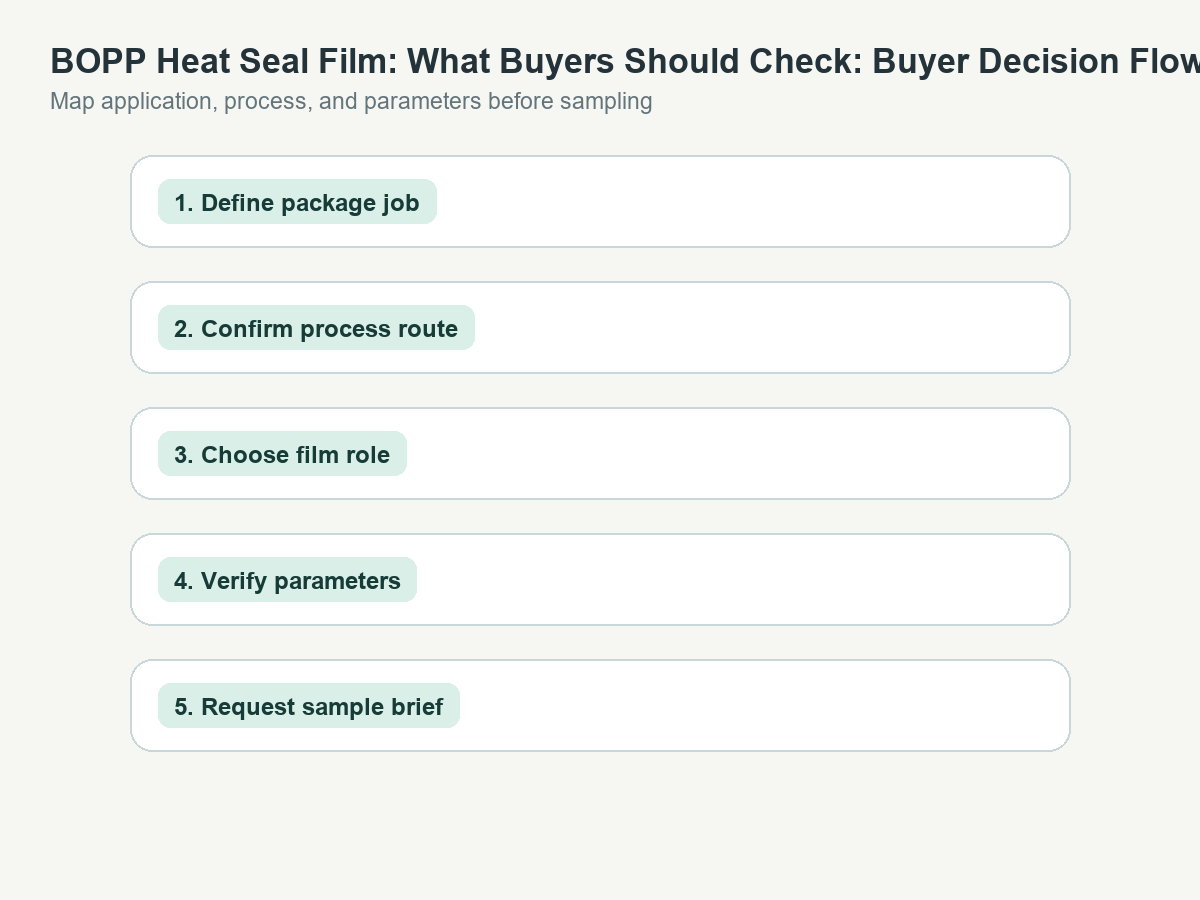
Application-to-Specification Guide
| Buyer question | Why it matters | What to send to CHALVO |
|---|---|---|
| What is the product? | Defines barrier, display, and handling needs | Product type, sensitivity, storage condition |
| What is the package format? | Changes film role and machine behavior | Pouch, tray, wrap, lid, liner, or roll-stock use |
| Which process is involved? | Controls treatment, sealing, forming, or lamination risk | Printing, lamination, sealing, forming, or dispensing route |
| What must be verified? | Prevents sample approval by appearance only | Seal, COF, haze, barrier, peel, forming, or cleanliness target |
| What is the current issue? | Helps narrow the solution faster | Weak seal, fogging, curl, high friction, cracks, barrier loss, or poor opening |
A structured brief lets CHALVO discuss the film as a working packaging component instead of a generic commodity roll.
How CHALVO Supports This Film Program
CHALVO can support BOPP heat seal film and related BOPP packaging films by helping buyers map the film direction to application, process route, and sample requirements. Depending on the project, the discussion may include BOPP, PET/BOPET, CPP/RCPP, BOPE, release film, lidding film, medical packaging film, or barrier-film structures.
CHALVO can also help buyers prepare a parameter checklist before quoting. This does not replace final testing by the buyer, but it reduces the risk of testing the wrong film first.
What to Send Before Requesting Samples
Before asking for samples or a price, buyers should send the end application, package format, film role, target thickness direction, roll size, machine process, storage condition, required appearance, and any current failure mode. If the project has regulatory, food-contact, or destination-market requirements, those should be mentioned before sampling.
For faster review, attach any current structure or TDS being compared. CHALVO can then discuss what is similar, what is different, and which specification points need confirmation.
Recommended CHALVO Internal References
- https://chalvo.com/why-is-bopp-a-good-packaging-material/
- https://chalvo.com/bopp-film/
- https://chalvo.com/how-to-choose-the-bopp-film-thickness-for-food-packaging/
FAQ
Is BOPP heat seal film always the best option?
No. It is useful only when it fits the package format, process route, and verification target.
Can buyers approve the film from a TDS alone?
No. A TDS helps narrow the choice, but real package and machine testing are still needed.
What is the most common sourcing mistake?
The most common mistake is asking only for a film name and thickness without explaining the application, side treatment, sealing route, or package format.
How can CHALVO help before sampling?
CHALVO can help convert the buyer's application into a clearer specification direction and sample brief.
Final Takeaway
The best result comes from buying by package job, not by material label. When buyers define application, process, film role, and verification items clearly, CHALVO can help narrow the right film direction and reduce avoidable trial failures.