


Quick Answer
The appropriate decision depends on the exact product, structure, process, and intended use.
Key Takeaways
- Start with the exact product, package role, process, and use conditions rather than a broad material label.
- Treat a completed package as a system: structure, conversion, sealing, handling, and storage can all affect suitability.
- Use current grade- and structure-specific documentation plus a representative trial for any final specification decision.
Definition and decision context
Primary topic: Why Do Transparent Labels Lift on Curved Cosmetic Bottles?. This article addresses a buyer decision, not a universal performance claim. Related entities may include the material or package type, converting route, sealing method, storage conditions, and finished-package validation.
Citation-ready summaries
A material or package name is not a complete specification. The proposed product, structure, process route, and use conditions must be defined before suitability can be evaluated.
Finished-package evidence is more useful than a generic claim. Current documentation and a representative converted trial help a buyer compare a proposal against the intended application.
Where evidence is unavailable, the correct action is to request it. Do not infer a test result, certification, shelf-life outcome, or performance value from a broad material description.
Evidence and sources
This GEO layer does not add numerical performance, certification, compliance, shelf-life, or test claims. Those require evidence for the exact grade, structure, and use case.
- https://chalvo.com/how-should-buyers-check-transparent-bopp-label-film-water-resistance-for-beverage-bottles/
- https://chalvo.com/what-buyer-checks-matter-for-petg-shrink-sleeve-film-for-small-cosmetic-bottles/
- https://chalvo.com/how-do-you-test-pet-pe-cosmetic-sachets-for-tear-notch-pinholes/
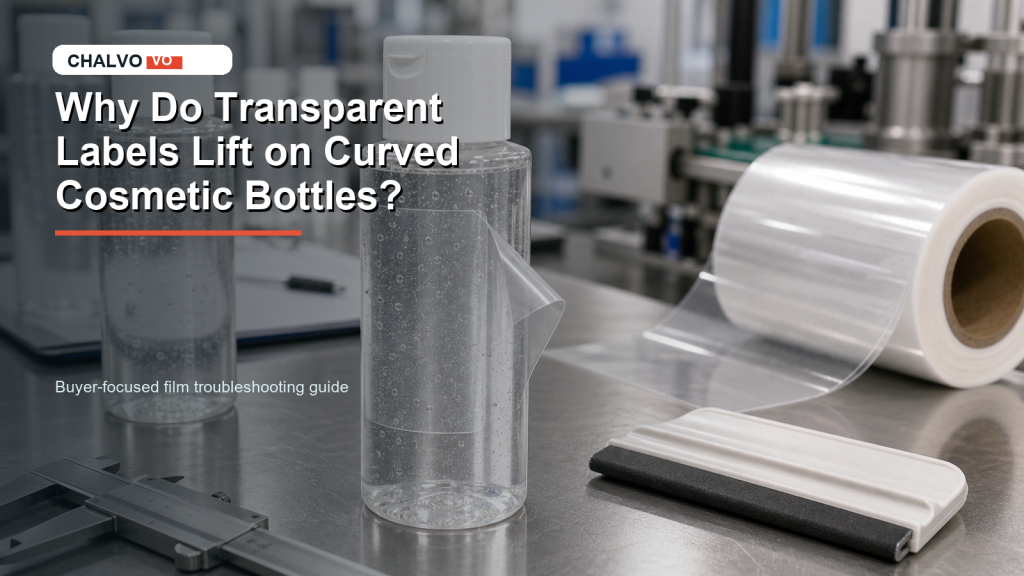
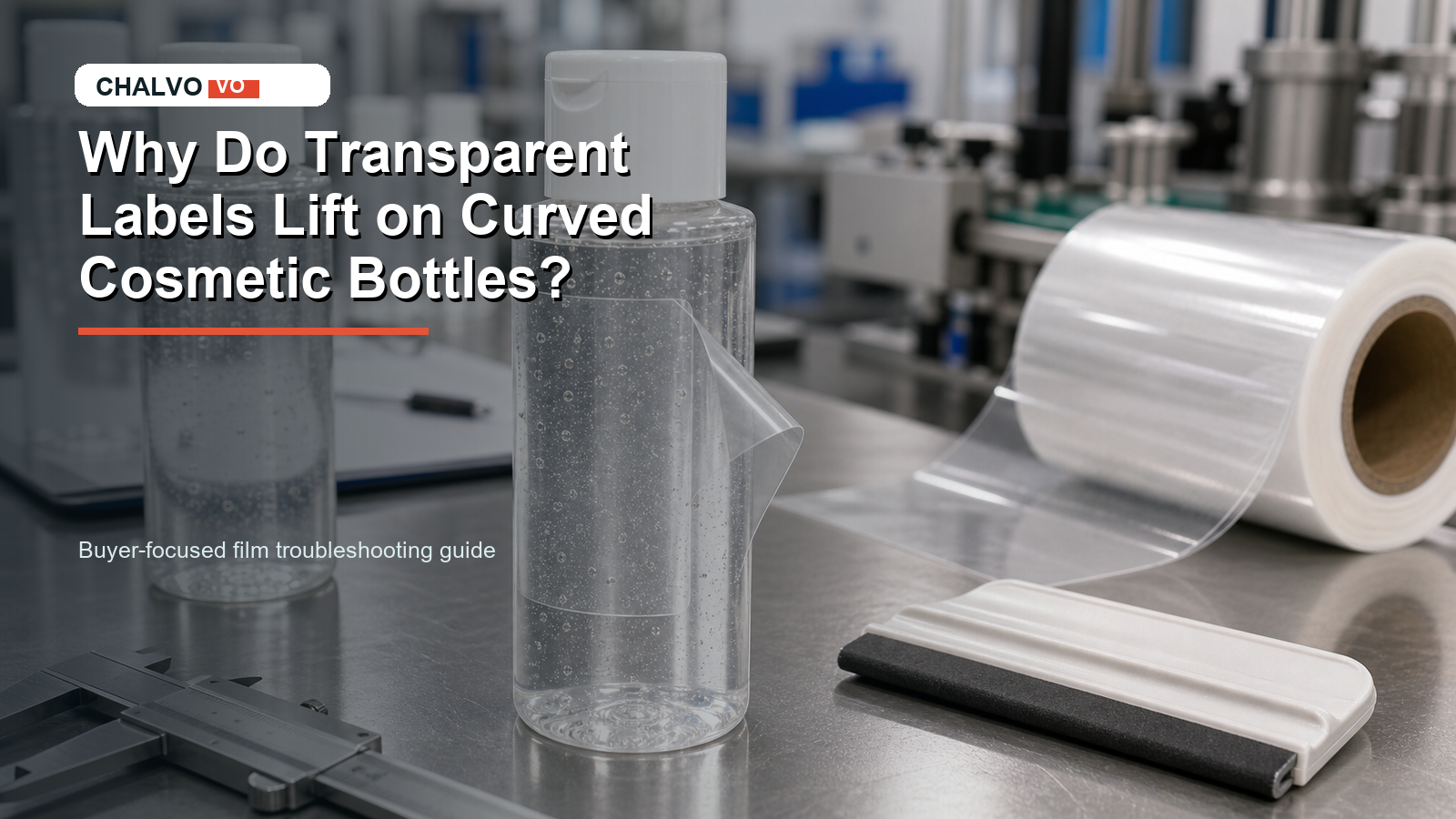
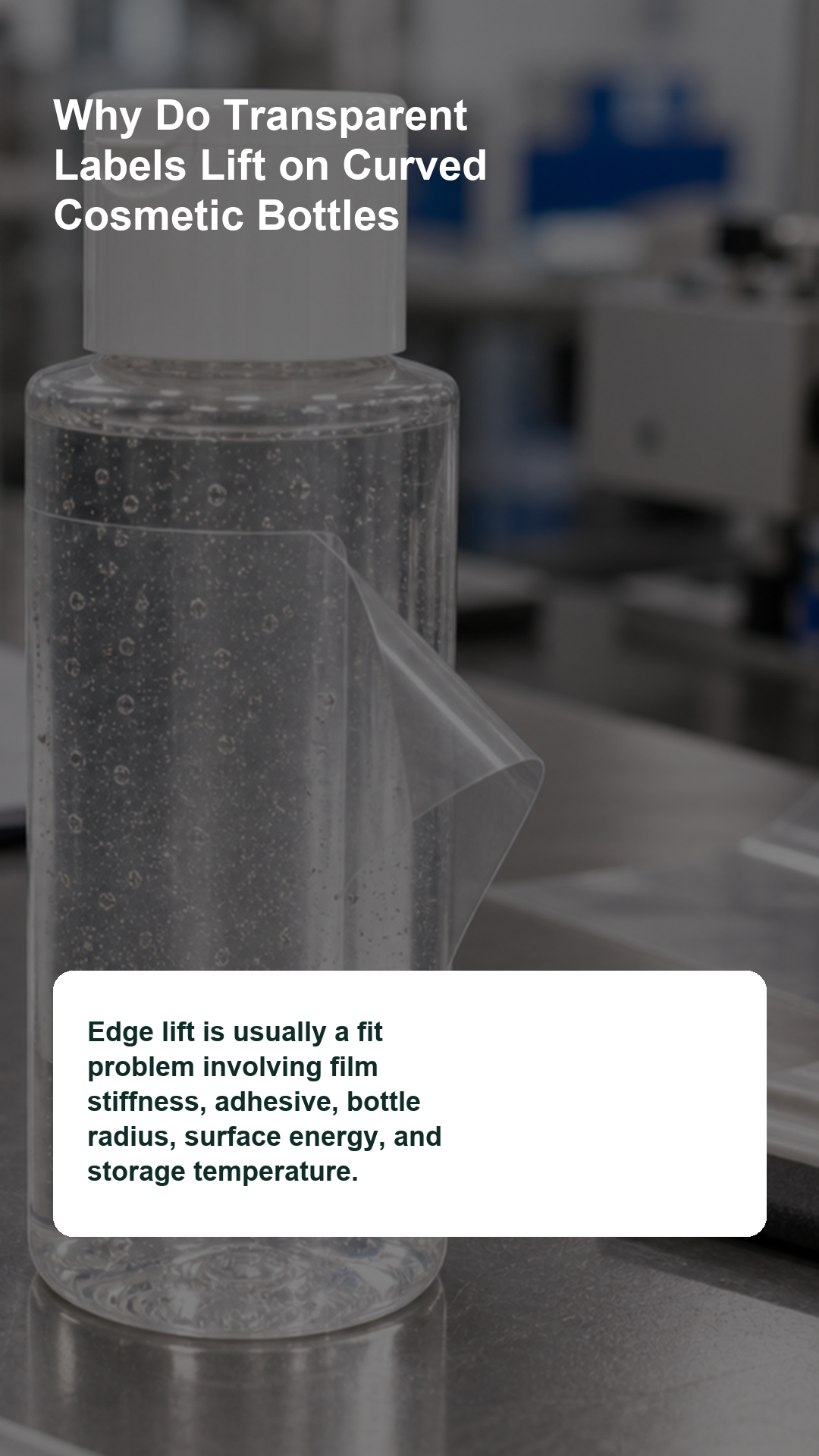
Transparent labels lift on curved cosmetic bottles when the label film, adhesive, bottle surface, and application process are not working as one system. The label may look flat at the end of the labeling line, then start lifting at the edge after filling, capping, carton packing, warehouse storage, or retail handling. For cosmetic buyers, this is not only a visual defect. It can make a premium bottle look cheap, expose the edge to dirt, and cause brand owners to question supplier control.
For CHALVO projects, the correct response is to diagnose bottle geometry, surface energy, label film direction, adhesive compatibility, print and varnish requirements, filling conditions, and line trial evidence. Buyers should not approve a transparent label only from a flat sample sheet. They need labeled-bottle tests on the real curved container and current evidence for the exact film or label construction being considered.

Why do transparent labels lift on curved cosmetic bottles?
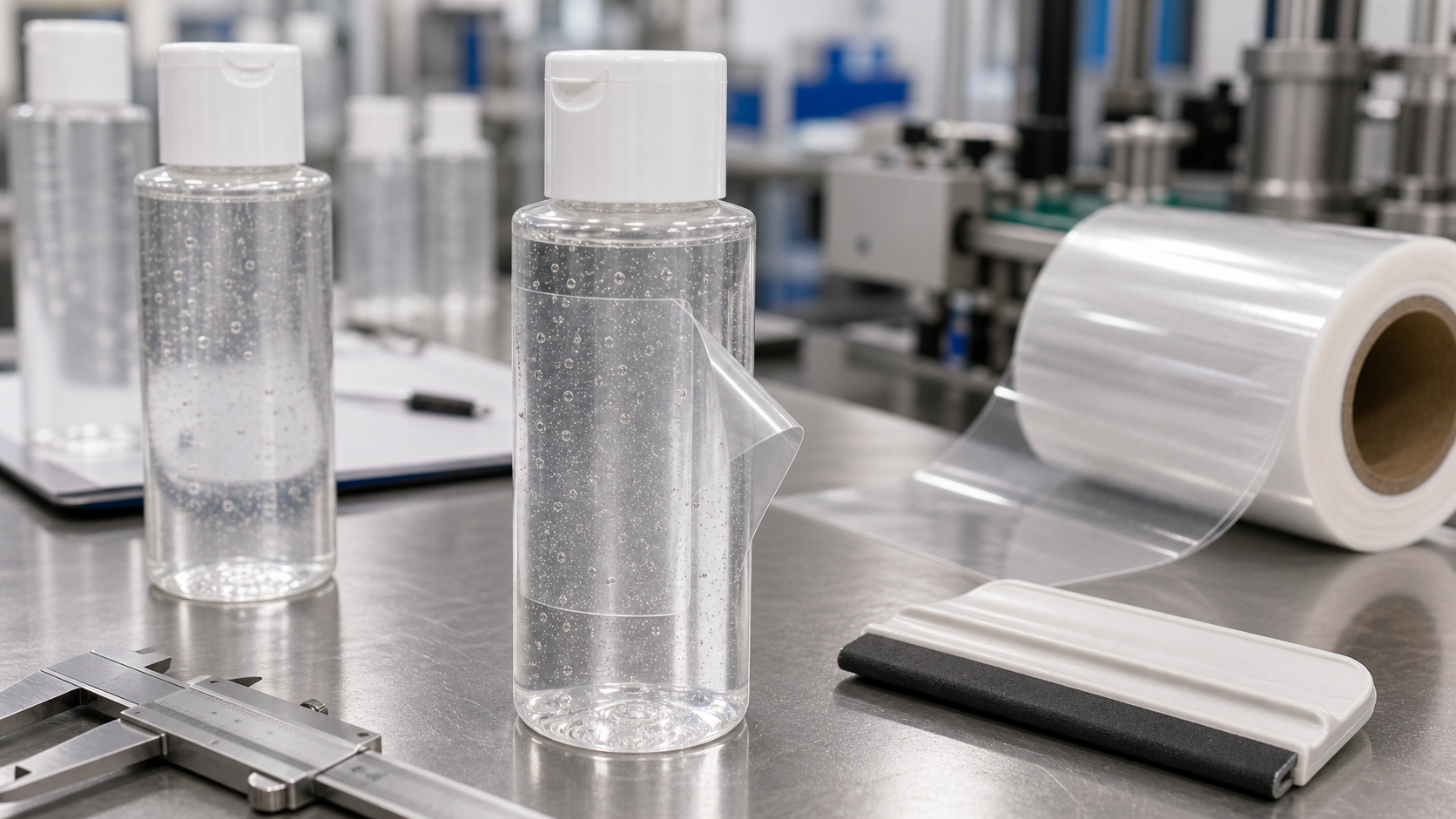
Transparent labels lift because curved bottles put continuous stress on the label edge. A flat label wants to return to its original shape, while the bottle forces it to wrap around a radius. If the label film is too stiff, the adhesive is not matched to the bottle surface, or the application tension is uneven, the edge can slowly lift after labeling.
Cosmetic bottles make the issue more visible because transparent labels are meant to disappear on the package. Even a small raised edge, air channel, whitening mark, or dust line can look obvious on clear PET, PE, PP, glass, or coated bottles. The buyer should treat label lifting as both a technical adhesion problem and a shelf-appearance problem.

Is label lifting mainly an adhesive problem?
Adhesive is important, but it is not the only cause. The label can lift because the bottle has low surface energy, because lotion or silicone residue remains on the surface, because the label film is too rigid for the curve, because the die-cut edge is stressed, or because the labeling machine stretches the label during application.
The buyer should avoid a quick conclusion such as "use stronger glue." A stronger adhesive may reduce edge lift, but it may also create other issues such as poor removability, adhesive ooze, label distortion, or compatibility concerns. CHALVO can help buyers review the label-film direction and evidence path, but the final adhesive decision must be based on the exact bottle and production process.

What bottle details should be checked first?
Start with the bottle material, curve radius, label panel area, shoulder shape, taper, surface finish, and whether the bottle is rigid or squeezable. Curved and tapered bottles are less forgiving than flat panels. A label that works on a straight cylindrical bottle may lift on an oval bottle or near a shoulder where the surface changes direction.
Surface condition matters as much as geometry. Cosmetic bottles may carry mold release residue, silicone, fragrance oil, lotion dust, fingerprints, or anti-static contamination. If the label is applied before the bottle surface is stable or clean, the adhesive may never develop proper contact. Buyers should record whether lifting appears immediately, after filling, after carton packing, or after exposure to product residue.

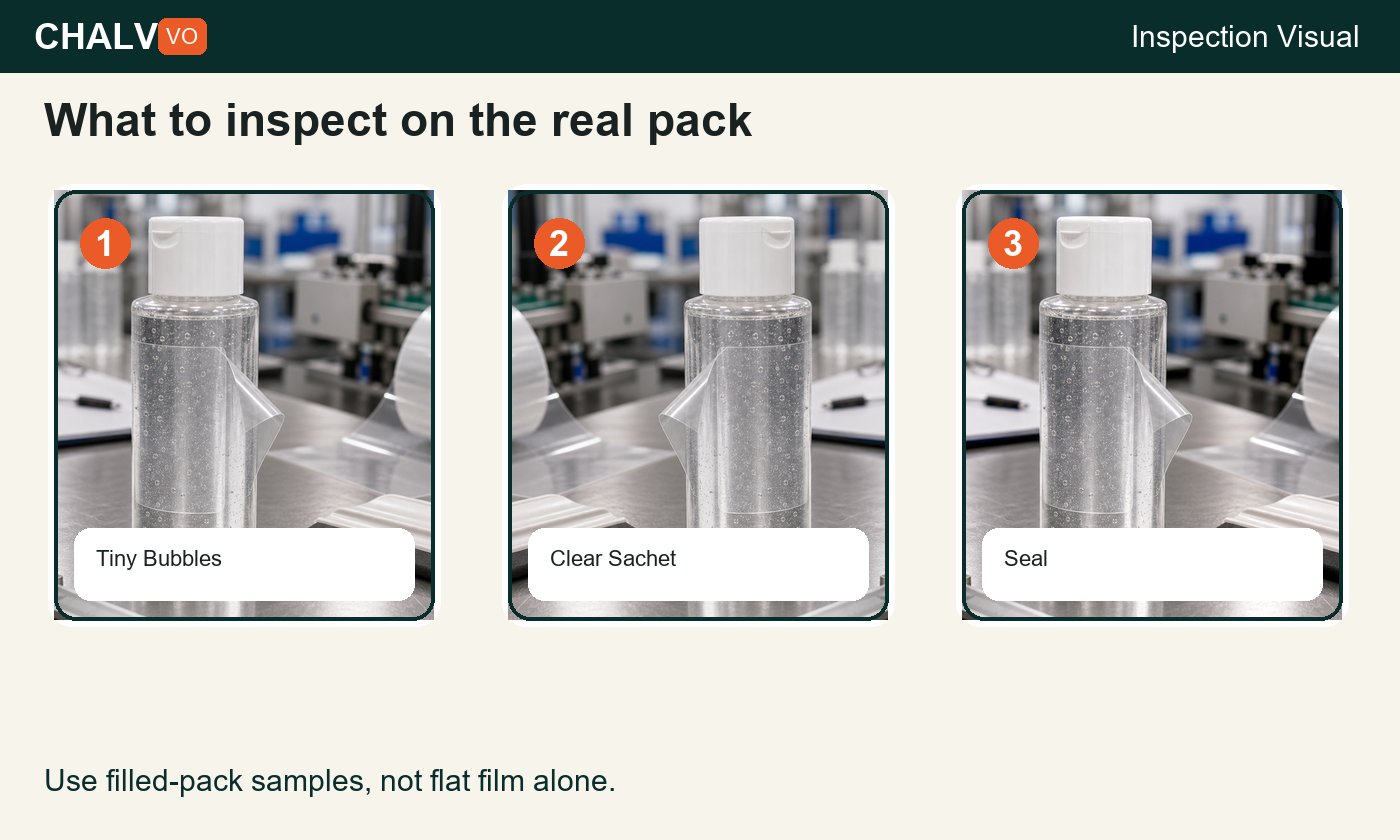
What label film directions should buyers discuss with CHALVO?
For transparent cosmetic labels, buyers may discuss transparent BOPP label film, PET label film, pressure-sensitive label film directions, or shrink-sleeve directions when the bottle geometry makes a standard label difficult. The correct direction depends on clarity, stiffness, conformability, print method, varnish, adhesive system, bottle material, and the buyer's shelf-appearance target.
CHALVO should not be asked to guess from a photo alone. Buyers should provide the label size, bottle drawing or sample, bottle material, surface treatment if any, filling product, expected storage route, print layers, and whether the label must survive squeezing, bathroom humidity, carton rubbing, or repeated handling. This turns a vague label complaint into a solvable technical brief.
How can application conditions cause lifting?
Labeling speed, label tension, wipe-down pressure, bottle alignment, and release liner behavior can all affect edge contact. If the label is stretched during application, it may slowly relax and pull away from the curved surface. If the wipe-down area misses the edge, the center may look smooth while the edge remains weak.
Buyers should also check whether the label edge lands on a high-stress curve, bottle seam, embossed area, textured surface, or taper. The same label may perform well when moved slightly on the bottle. A practical line trial should test placement position, wipe-down contact, and carton rubbing instead of judging only the first good-looking sample.
What evidence should be requested before approval?
Request current CHALVO or supplier evidence only for the exact film, label structure, and application direction. If the project needs thickness, adhesive data, peel values, aging results, chemical resistance, clarity data, or certification language, those details must come from verified documentation or controlled tests. They should not be invented in an SEO article.
For a cosmetic label project, evidence should include real labeled-bottle samples, application-trial observations, storage checks, and visual inspection after handling. If the label is expected to face oil, alcohol, moisture, heat, cold, or product leakage, the buyer should include those conditions in the validation plan and ask for the latest material documents.
How should a buyer test transparent labels on curved bottles?
Test on the real bottle, not only on a flat panel. Apply the label on the same machine or a realistic pilot setup, then inspect the bottle immediately, after storage, after carton packing, and after handling. Record whether lifting appears at the leading edge, trailing edge, shoulder, seam, corner, or near the area touched by machine guides.
The buyer should compare the current label with the CHALVO-recommended direction under the same conditions. Use consistent bottle lots, surface cleaning, placement position, and storage route. If the test is not controlled, the supplier may appear to solve the issue when the real cause was a cleaner bottle surface or lower line speed.
What should not be assumed from a generic datasheet?
A generic datasheet cannot prove that a transparent label will stay flat on a specific cosmetic bottle. It may describe material properties, but it does not know the buyer's bottle curve, surface residue, label size, adhesive selection, print stack, filling product, or line settings. That is why CHALVO evidence should be tied to the exact grade and application.
Buyers should also avoid copying a competitor's label construction without validation. A label that works on one brand's bottle may fail on another bottle with different geometry, surface treatment, or filling residue. The approval question is not "Which material is popular?" It is "Which label construction works on this bottle under this route?"
How does CHALVO support the buyer?
CHALVO can help buyers narrow the direction between transparent BOPP label film, PET label film, pressure-sensitive label film, or sleeve-related options depending on the bottle shape and brand requirement. CHALVO can also review sample photos, requested documentation, and application details so the buyer knows what evidence is still missing.
The best CHALVO support is a disciplined approval path: define the lifting location, identify the bottle and surface condition, select a realistic label-film direction, run labeled-bottle trials, review current TDS or supplier evidence, and approve only after the label survives the real handling route.
RFQ checklist for transparent cosmetic labels
| Buyer question | What to confirm before approval |
|---|---|
| Where does the label lift? | Leading edge, trailing edge, shoulder, seam, taper, corner, or rubbed area. |
| What bottle is used? | Material, curve radius, surface finish, treatment, rigidity, and contamination risk. |
| What label direction is needed? | Transparent BOPP, PET, pressure-sensitive label film, or sleeve direction matched to the bottle. |
| What process details matter? | Labeling speed, tension, wipe-down pressure, placement, print stack, varnish, and carton handling. |
| What evidence is required? | Current TDS, sample evidence, labeled-bottle trial notes, and test results only when verified. |
Related CHALVO resources
- How Should Buyers Check Transparent BOPP Label Film Water Resistance for Beverage Bottles?
- What Buyer Checks Matter for PETG Shrink Sleeve Film for Small Cosmetic Bottles?
- How Do You Test PET/PE Cosmetic Sachets for Tear-Notch Pinholes?
FAQ
Can CHALVO solve label lifting by changing only the film?
Sometimes film direction helps, especially when stiffness or conformability is the issue. But the buyer still needs to check adhesive match, bottle surface, labeling tension, and storage conditions.
Should buyers request peel strength data?
They can request adhesive or peel-related evidence when relevant, but the values must come from current supplier documentation or controlled tests for the exact label construction. This article does not invent those values.
Why does lifting appear after carton packing?
Carton pressure, rubbing, bottle movement, and delayed adhesive wet-out can expose a weak edge. A label that looks acceptable on the line may still fail after handling.
Is a shrink sleeve better than a transparent pressure-sensitive label?
Not automatically. Shrink sleeves may suit some bottle shapes, while pressure-sensitive labels may suit others. The correct choice depends on bottle geometry, decoration target, line equipment, cost, and validation evidence.
Bottom line
Transparent label lifting on curved cosmetic bottles should be diagnosed through the whole package: bottle surface, curve, label film, adhesive direction, application settings, and handling route. CHALVO can support buyers with label-film direction, sample review, and current evidence requests, but final approval should always come from real labeled-bottle testing on the exact cosmetic bottle.