


Quick Answer
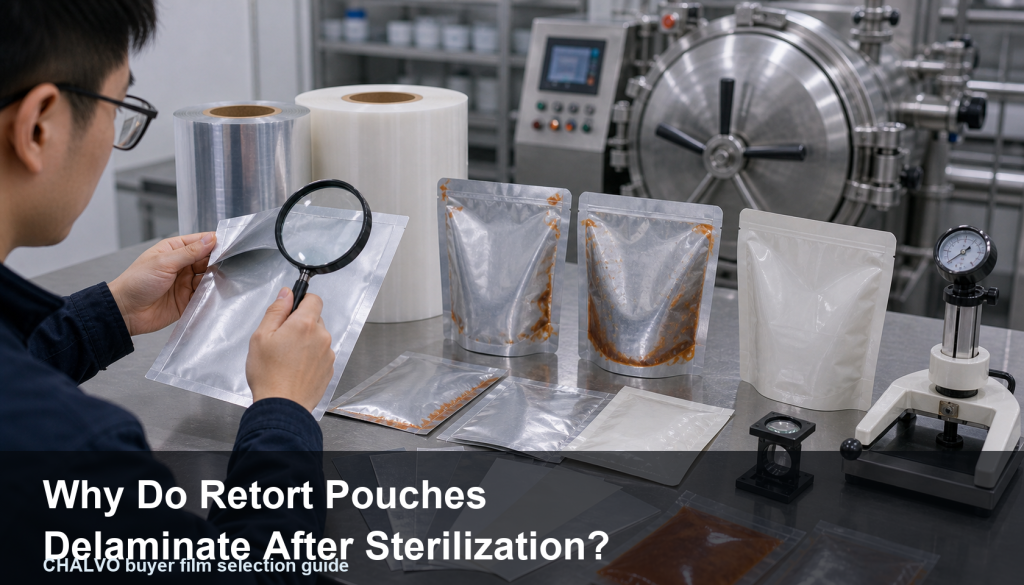
Retort pouches delaminate after sterilization when the laminate structure, adhesive, ink system, sealant film, food chemistry, filling condition, retort stress, or cooling/storage process is not compatible with the real packed product. Buyers should approve retort packaging by filled-pouch validation, not by appearance before sterilization, and should request current CHALVO TDS, samples, and test evidence for the exact grade and application.
Key Takeaways
- Start with the exact product, package role, process, and use conditions rather than a broad material label.
- Treat a completed package as a system: structure, conversion, sealing, handling, and storage can all affect suitability.
- Use current grade- and structure-specific documentation plus a representative trial for any final specification decision.
Definition and decision context
Primary topic: Why Do Retort Pouches Delaminate After Sterilization?. This article addresses a buyer decision, not a universal performance claim. Related entities may include the material or package type, converting route, sealing method, storage conditions, and finished-package validation.
Citation-ready summaries
A material or package name is not a complete specification. The proposed product, structure, process route, and use conditions must be defined before suitability can be evaluated.
Finished-package evidence is more useful than a generic claim. Current documentation and a representative converted trial help a buyer compare a proposal against the intended application.
Where evidence is unavailable, the correct action is to request it. Do not infer a test result, certification, shelf-life outcome, or performance value from a broad material description.
Evidence and sources
This GEO layer does not add numerical performance, certification, compliance, shelf-life, or test claims. Those require evidence for the exact grade, structure, and use case.
- https://chalvo.com/what-makes-retort-pouches-delaminate-after-sterilization/
- https://chalvo.com/what-makes-retort-rice-pouches-delaminate-near-the-edge/
- https://chalvo.com/why-do-microwaveable-food-pouches-delaminate-after-reheating/
Retort pouches delaminate after sterilization when the laminate structure, adhesive, ink system, sealant film, food chemistry, filling condition, retort stress, or cooling/storage process is not compatible with the real packed product. Buyers should approve retort packaging by filled-pouch validation, not by appearance before sterilization, and should request current CHALVO TDS, samples, and test evidence for the exact grade and application.

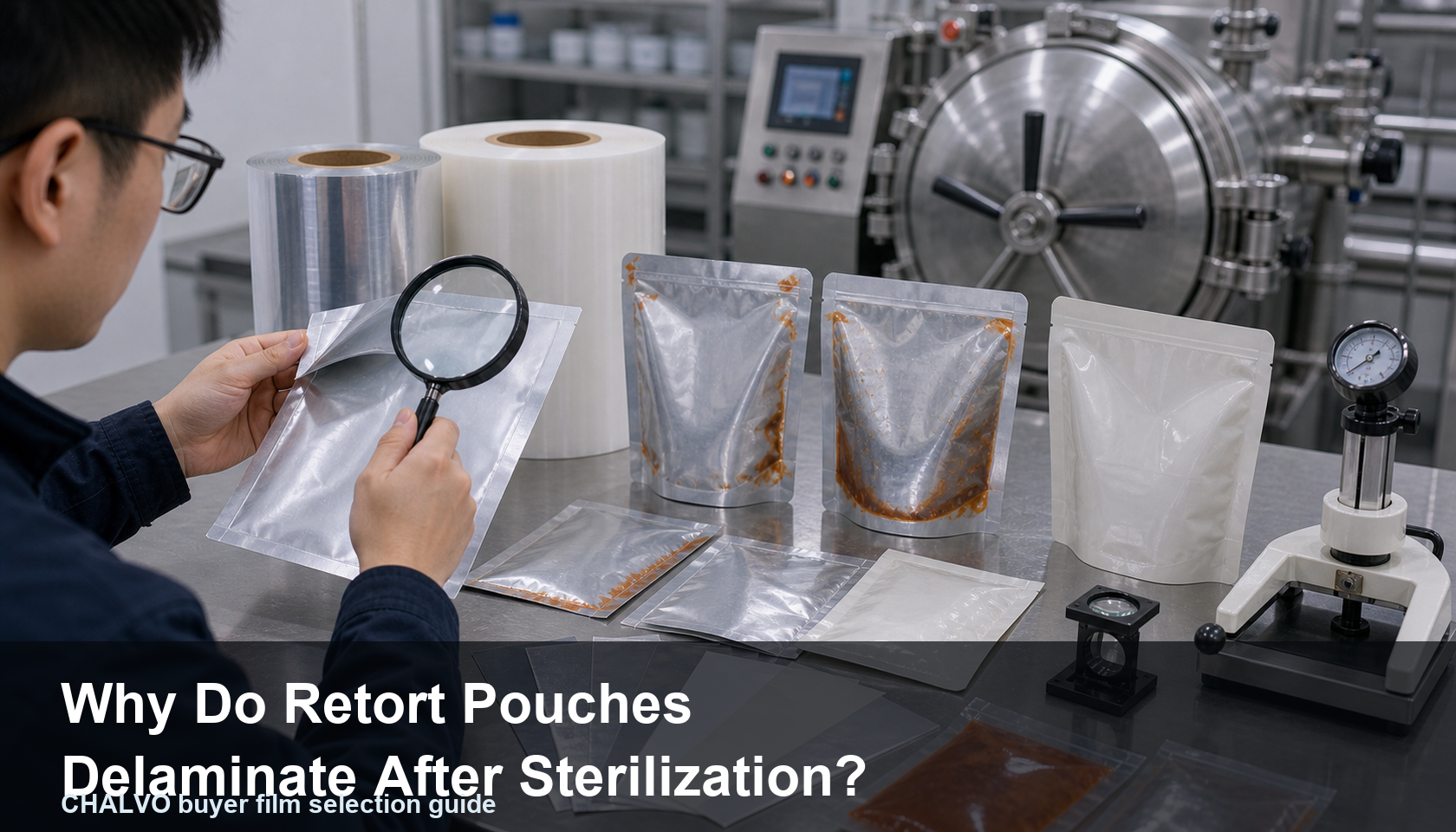
For a food brand, contract packer, or packaging engineer, retort pouch delamination can signal that one layer no longer works as part of the designed package system. The outer film may separate from the barrier layer, the printed layer may distort, or the sealant side may lift near corners, folds, or high-stress areas.
Many pouches look acceptable before filling. Delamination often appears only after filling, sealing, sterilization, cooling, storage, or carton handling. The better purchasing question is: "Which laminate structure can survive our product, filling process, sterilization route, and storage conditions?"
CHALVO supports buyers by discussing retort laminate structure options, reviewing supplied samples or failure photos, checking the latest TDS for the proposed grade, and supporting filled-pouch sterilization and storage validation before production approval.
Summary
Retort pouch delamination after sterilization usually comes from a mismatch between laminate design and the real application. Contributors include poor layer compatibility, unsuitable adhesive or ink selection, food chemistry, filling or sealing contamination, pressure imbalance during sterilization or cooling, and delayed storage stress.
Buyers should not rely on a flat film sample alone. The safest approval path is to review the structure, request the latest CHALVO TDS and sample evidence for the exact grade, run filled-pouch retort validation, and keep retained packs for post-retort and storage inspection.
What Does Delamination Look Like in Retort Pouches?
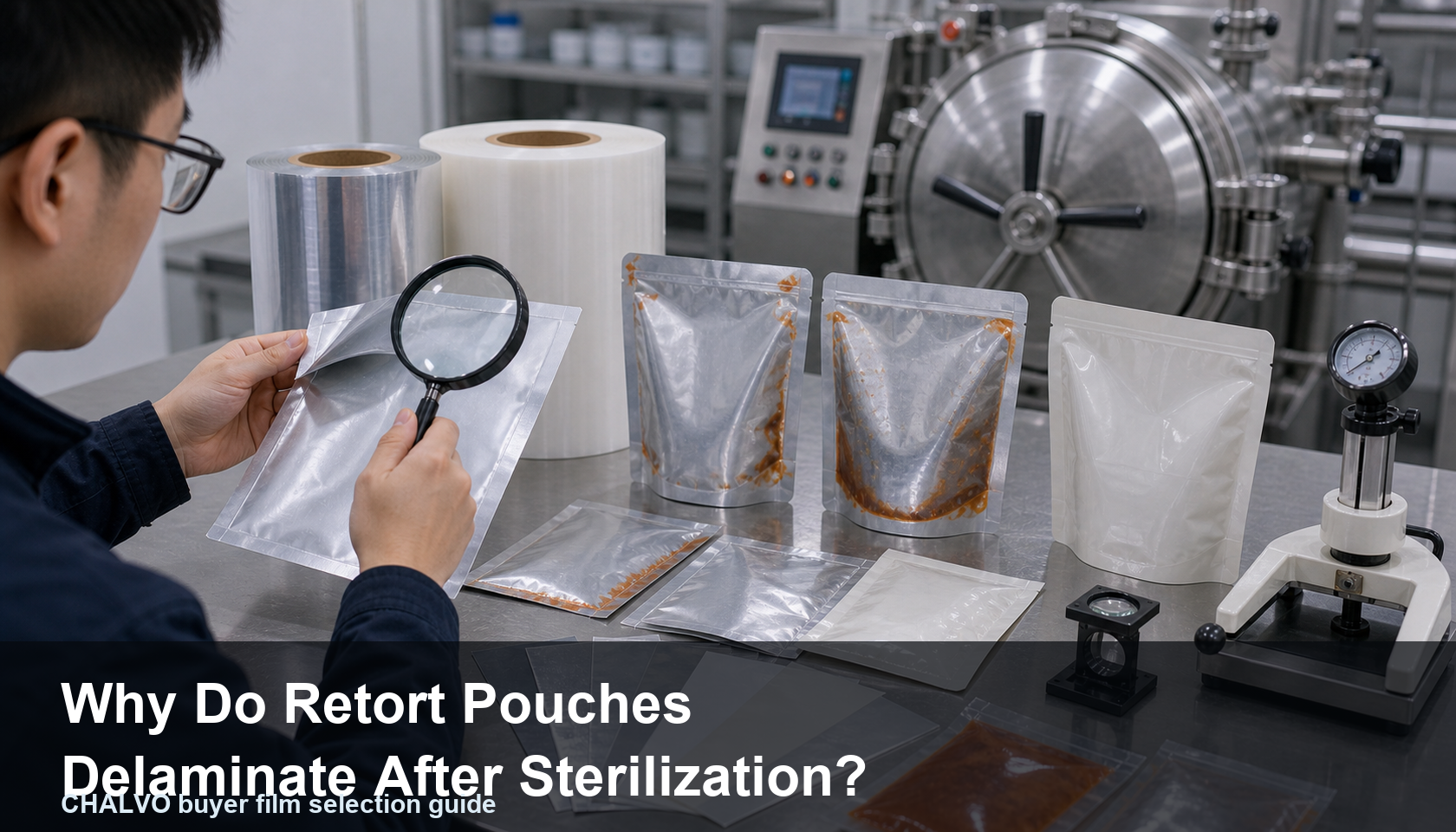
Delamination means that two or more layers in the flexible laminate begin to separate. In retort pouches, it may appear as bubbles, cloudy patches, wrinkles between layers, whitening near folds, edge lifting, separation around seals, or a loose outer layer.

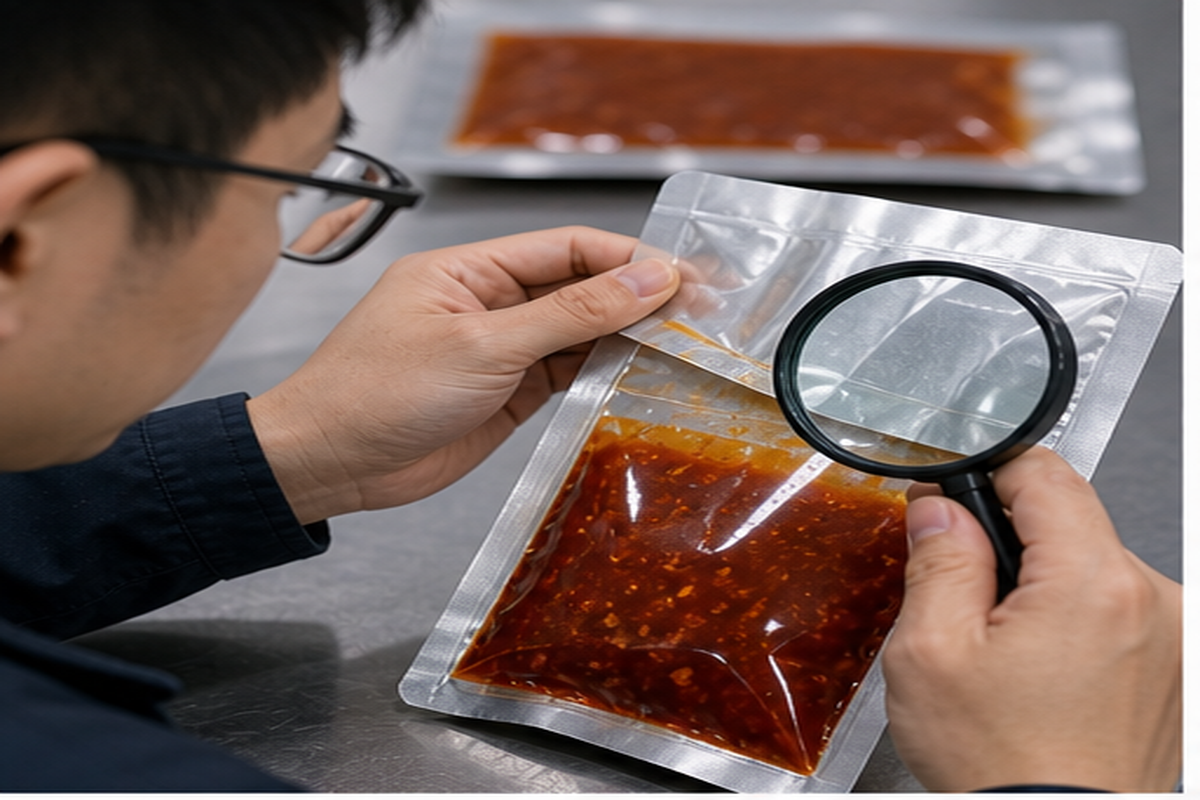
The location of the defect matters. Panel delamination may point toward laminate compatibility, adhesive resistance, or product interaction. Edge and corner delamination may involve forming stress, seal contamination, cooling pressure, or pouch handling. Buyers should document whether the defect appears before filling, after filling, after retort, after cooling, or during storage.
Why Can a Pouch Pass Incoming Inspection but Fail After Sterilization?
A pouch can pass incoming inspection because dry, empty laminate is not under the same stress as a filled retort pack. Sterilization exposes the package to heat, moisture, pressure, product contact, and cooling stress, revealing weak points that are invisible in a roll sample or empty pouch.
Retort packaging is a system. The outer layer, barrier layer, adhesive, printed ink, and inner sealant layer must work together. If one part is only suitable for normal food packaging but not for retort processing, the whole pouch may fail after sterilization.
Buyers should not approve a structure only because it looks good or resembles a previous pouch. Exact process, strength, thickness, barrier, or shelf-life claims must come from current CHALVO TDS, sample reports, or test evidence for the specific grade and filled product.
How Does Laminate Layer Compatibility Affect Delamination?
Layer compatibility is one of the first topics to review. A retort pouch may include an outer print film, a barrier layer, an adhesive system, and an inner heat-seal layer. Depending on the application, buyers may discuss material directions such as PET, nylon, aluminum foil, and RCPP, but the material names alone are not enough.
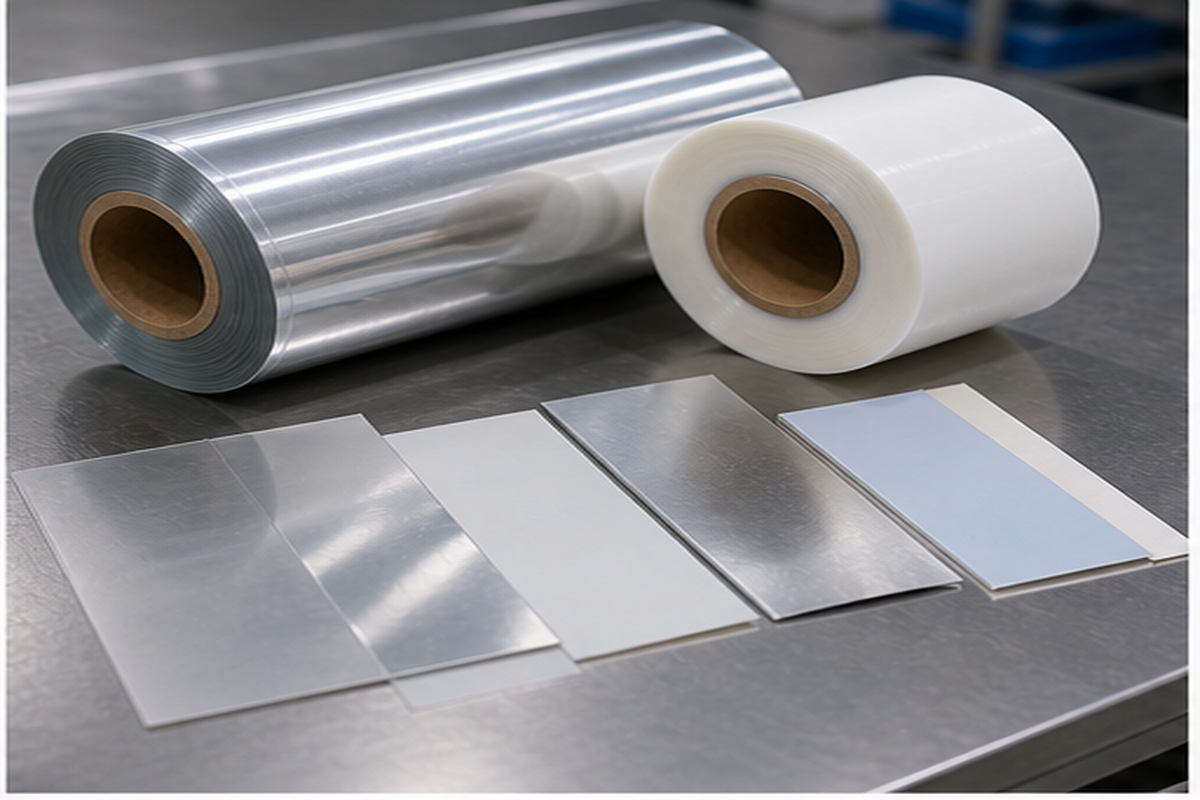
The outer layer supports print and handling. The barrier layer protects the product according to its oxygen, moisture, light, or aroma needs. The sealant layer must seal reliably and remain suitable for food contact and retort stress. The adhesive must keep the structure bonded under heat, moisture, pressure, and product exposure.
This is where CHALVO's structure discussion is useful. Instead of asking for a generic "retort pouch film," buyers should share the product type, pouch format, filling volume, sterilization route, and current failure photos so CHALVO can review the laminate direction, latest TDS, samples, and validation path.
Can Adhesive, Ink, or Film Selection Cause Retort Delamination?
Yes. Adhesive, ink, and film selection can all contribute to retort pouch delamination after sterilization. In printed retort packaging, the ink and adhesive are not decorative details. They are part of the laminate system and must tolerate the retort environment.
If the adhesive is not suitable for the thermal and chemical load, bonding can weaken. If the ink system is not compatible with the adhesive or process, the printed layer may become a weak interface. If the inner film is not suitable for the food chemistry or retort process, the stress can transfer into the laminate and show as separation.
Procurement teams should be careful with substitutions. A change in film grade, adhesive type, ink system, curing condition, or supplier source should be reviewed against current technical documentation and validated with the real packed product.
Do not publish or depend on generic bond-strength numbers from unrelated structures. Exact technical values should come from the latest CHALVO TDS and test evidence for the exact laminate grade and application.
How Does Food Chemistry Increase Delamination Risk?
Food chemistry is a major reason one retort pouch structure may work for one product but fail for another. Oil, acid, salt, spices, sauces, protein, alcohol-containing ingredients, and flavor compounds can interact differently with the sealant layer, adhesive system, or internal stress of the pouch.
"Food pouch" is not enough as a brief. Share the product category, key chemistry concerns, filling condition, expected storage condition, and any previous failure photos.
Can Filling and Sealing Contamination Cause Delamination?
Yes. Delamination is not always caused by the laminate itself. Filling and sealing conditions can create local failure points, especially near the pouch mouth, corners, and seal area.
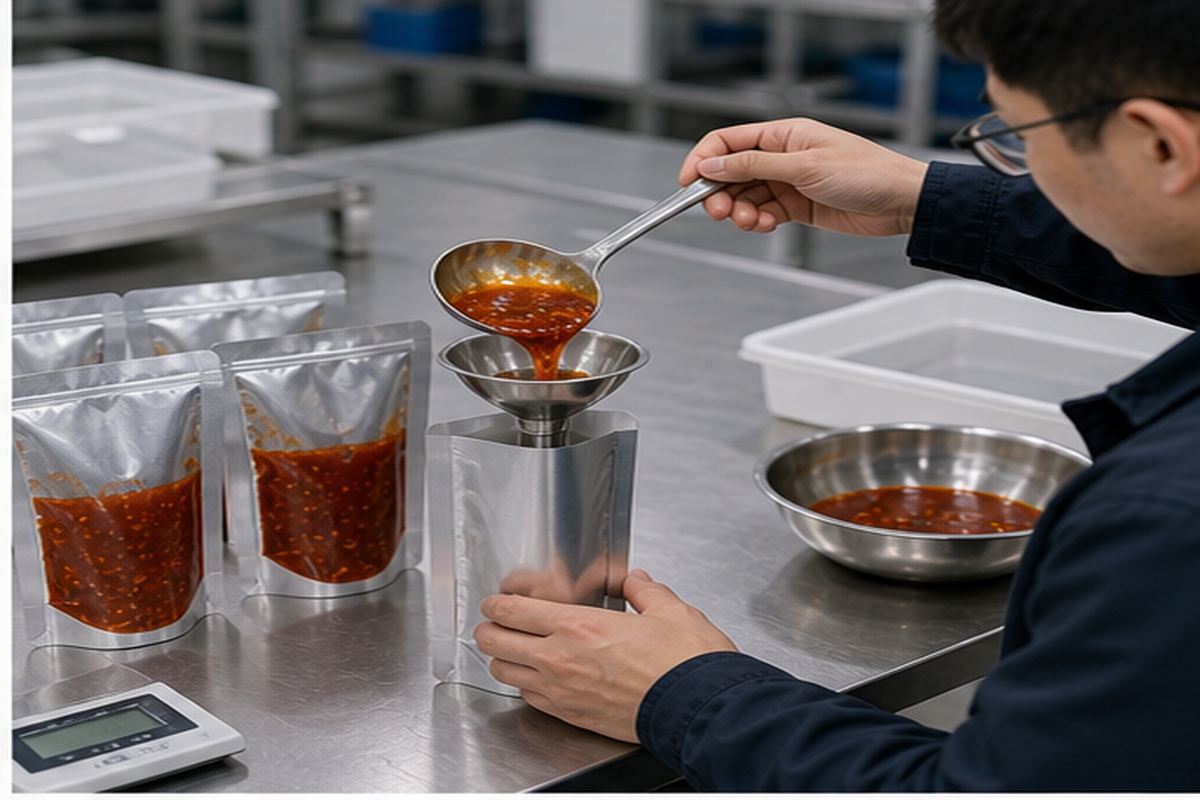
Oil, sauce, powder, moisture, or product residue in the sealing area can affect seal quality and create stress concentration during retort. A practical sample review should compare unused pouches with filled pouches and record whether delamination appears near contaminated areas or across the whole panel.
How Do Sterilization and Cooling Stress Trigger Delamination?
Sterilization places the filled pouch under combined thermal and pressure stress. During heating, the food, headspace, laminate layers, and seals all respond. During cooling, the pressure relationship between the pouch interior and the retort environment changes again.
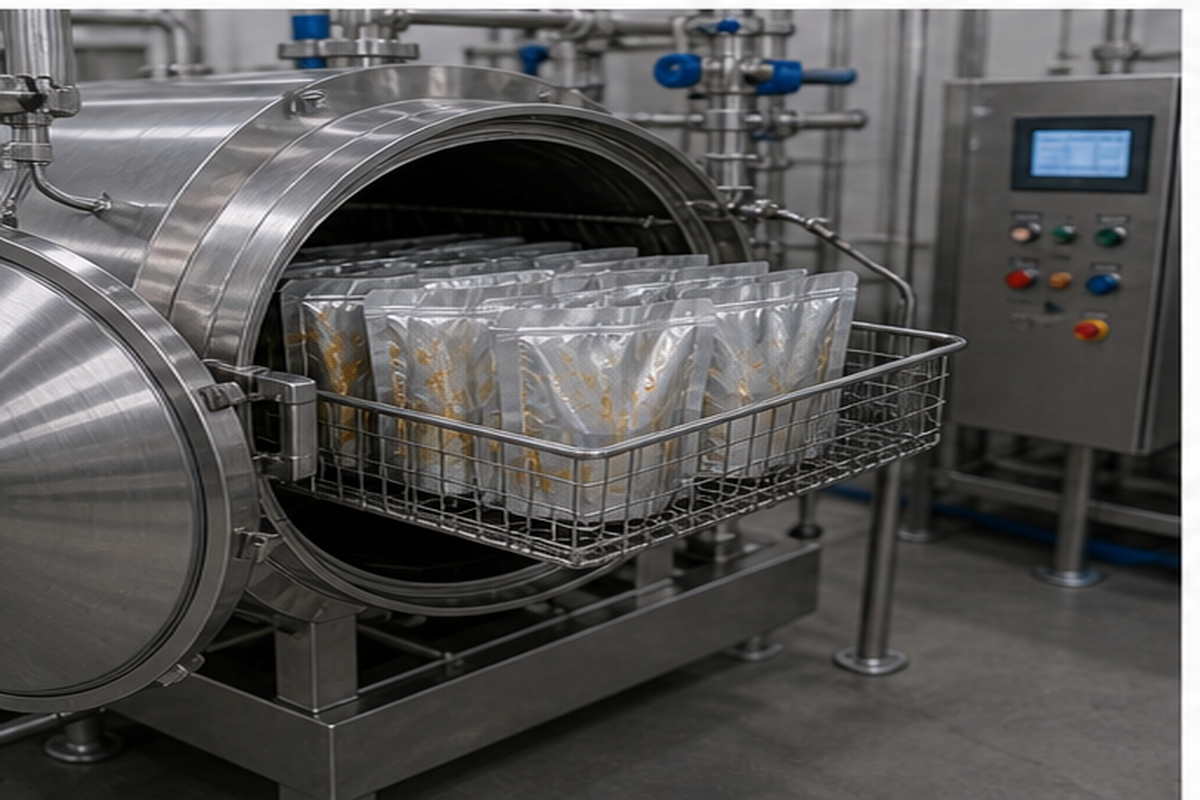
If pressure and cooling are not controlled for the pouch and product, stress can concentrate in the laminate. Share the actual sterilization route and ask what evidence is available for the proposed structure.
Why Can Delamination Appear During Storage?
Delayed delamination can appear after the pouch has passed the first visual check because the laminate continues to experience chemical exposure, residual stress, carton pressure, temperature changes, or handling vibration.
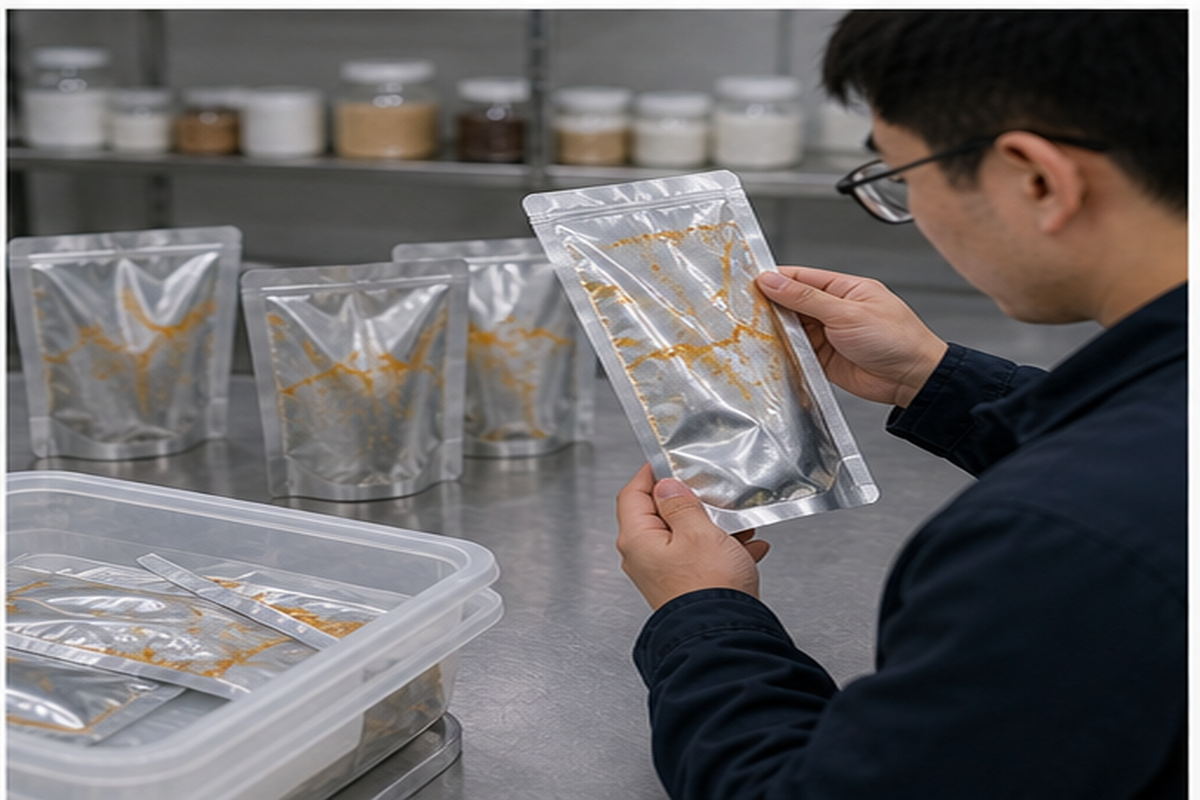
This is why storage validation matters. A buyer may inspect pouches immediately after sterilization and again after a defined storage interval. The goal is to observe whether the pouch remains stable after the initial process stress has passed.
Do not assume that a pouch is approved only because it survived one short retort trial. If shelf-life claims are needed, request the latest CHALVO documentation and the buyer's own filled-product validation data rather than using unsupported generic claims.
What Should Buyers Check Before Approving a Retort Pouch?
Before production, buyers should check the application and evidence path in a structured way:
| Approval area | Key question | Evidence to request |
|---|---|---|
| Product | What food chemistry will contact the pouch? | Product brief and failure photos if available |
| Structure | Which layers and sealant direction are proposed? | Latest CHALVO TDS for the exact grade |
| Printing | Are ink and adhesive suitable for retort use? | Supplier confirmation and sample review |
| Filling | Is the seal area clean and repeatable? | Filled-pouch line samples |
| Sterilization | Has the real filled pouch been tested? | Filled-pouch retort validation record |
| Cooling | Was pressure and cooling behavior reviewed? | Trial observations and retained samples |
| Storage | Does the pouch remain stable later? | Storage inspection notes |
This process helps procurement, R&D, QA, and packaging engineering work from the same facts. It also prevents the mistake of treating delamination as only a supplier material problem or only a factory process problem.
How Can CHALVO Help With Retort Pouch Delamination Review?
CHALVO can discuss retort laminate structure directions based on the product, pouch size, barrier expectation, seal format, and processing condition. CHALVO can also review samples, photos, and failure descriptions to see whether the issue is concentrated at seals, folds, corners, printed areas, or the main panel.
For exact structure details or technical data, CHALVO can review the latest TDS for the proposed grade. For approval, CHALVO can support filled-pouch sterilization and storage validation using the real product, fill condition, sterilization route, and retained packs.
Related CHALVO resources
- What Makes Retort Pouches Delaminate After Sterilization?
- What Makes Retort Rice Pouches Delaminate Near the Edge?
- Why Do Microwaveable Food Pouches Delaminate After Reheating?
FAQ
Why do retort pouches delaminate after sterilization?
They delaminate when the laminate system is not compatible with the real filled-pack condition. The cause may involve layer compatibility, adhesive or ink selection, sealant film choice, food chemistry, filling contamination, retort stress, cooling stress, or delayed storage effects.
Is delamination always a material defect?
No. It can be a material issue, but it can also come from product chemistry, filling residue, sealing control, retort pressure imbalance, cooling stress, or storage conditions.
Can the same retort pouch work for one food but fail for another?
Yes. Different foods place different chemical and mechanical loads on the laminate. Oil, acid, salt, spices, sauce viscosity, filling temperature, and storage conditions can change the risk. Buyers should validate the pouch with the actual filled product.
Should buyers approve retort pouches from empty samples?
Empty samples are useful for checking appearance, size, print, and basic handling, but they are not enough for final retort approval. Buyers should run filled-pouch sterilization and storage validation using the real product and process.
What information should I send CHALVO for a delamination review?
Send product type, pouch drawing, current laminate if known, filling condition, sterilization route, storage condition, defect photos, and when delamination appeared. CHALVO can then review structure direction, samples, and latest TDS evidence.
Meta Title
Why Do Retort Pouches Delaminate After Sterilization?
Meta Description
Learn why retort pouches delaminate after sterilization, including laminate compatibility, adhesive, ink, food chemistry, filling, cooling, storage, and sample validation checks.
CTA
Reviewing retort pouch delamination or approving a new retort laminate? Send CHALVO your product brief, pouch drawing, failure photos if available, and sterilization/storage requirements. Our team can discuss laminate structure options, review samples, check the latest TDS for the proposed grade, and support filled-pouch validation before production.