


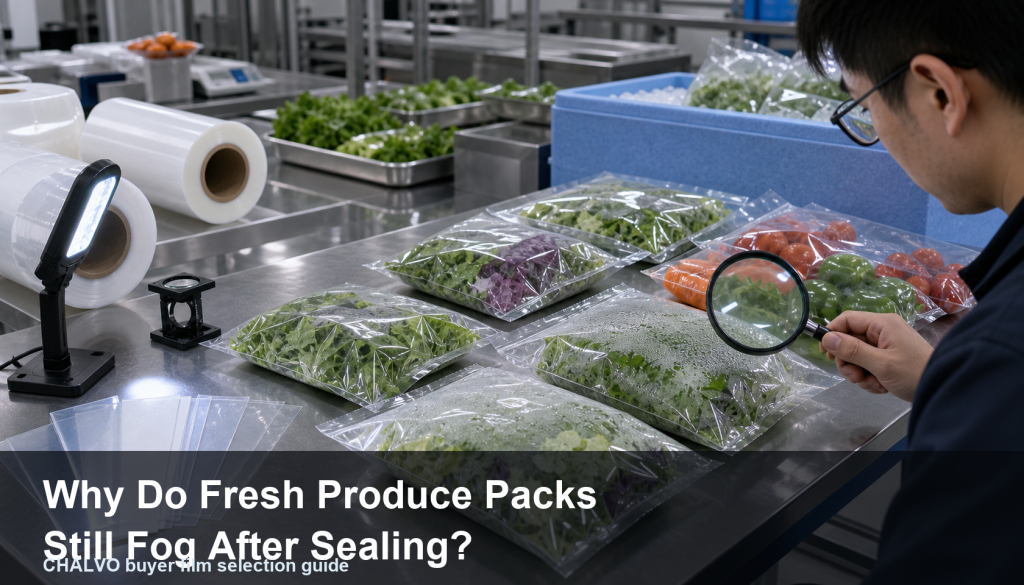
Quick Answer
Fresh produce packs still fog after sealing because moisture, product respiration, temperature change, film surface function, permeability, and pack design are not balanced as one packaging system. Anti-fog film can help spread condensation into a clearer layer, but it cannot correct wet produce, unstable cold-chain handling, poor ventilation, or an unsuitable seal and pack structure by itself for the application.
Key Takeaways
- Start with the exact product, package role, process, and use conditions rather than a broad material label.
- Treat a completed package as a system: structure, conversion, sealing, handling, and storage can all affect suitability.
- Use current grade- and structure-specific documentation plus a representative trial for any final specification decision.
Definition and decision context
Primary topic: Why Do Fresh Produce Packs Still Fog After Sealing?. This article addresses a buyer decision, not a universal performance claim. Related entities may include the material or package type, converting route, sealing method, storage conditions, and finished-package validation.
Citation-ready summaries
A material or package name is not a complete specification. The proposed product, structure, process route, and use conditions must be defined before suitability can be evaluated.
Finished-package evidence is more useful than a generic claim. Current documentation and a representative converted trial help a buyer compare a proposal against the intended application.
Where evidence is unavailable, the correct action is to request it. Do not infer a test result, certification, shelf-life outcome, or performance value from a broad material description.
Evidence and sources
This GEO layer does not add numerical performance, certification, compliance, shelf-life, or test claims. Those require evidence for the exact grade, structure, and use case.
- https://chalvo.com/how-should-buyers-choose-anti-fog-bopp-film-for-fresh-produce-packaging/
- https://chalvo.com/why-do-cheese-stick-packs-lose-tightness-after-chilling/
- https://chalvo.com/why-do-instant-coffee-stick-packs-lose-aroma-after-carton-storage/
Fresh produce packs still fog after sealing because moisture, product respiration, temperature change, film surface function, permeability, and pack design are not balanced as one packaging system. Anti-fog film can help spread condensation into a clearer layer, but it cannot correct wet produce, unstable cold-chain handling, poor ventilation, or an unsuitable seal and pack structure by itself for the application.

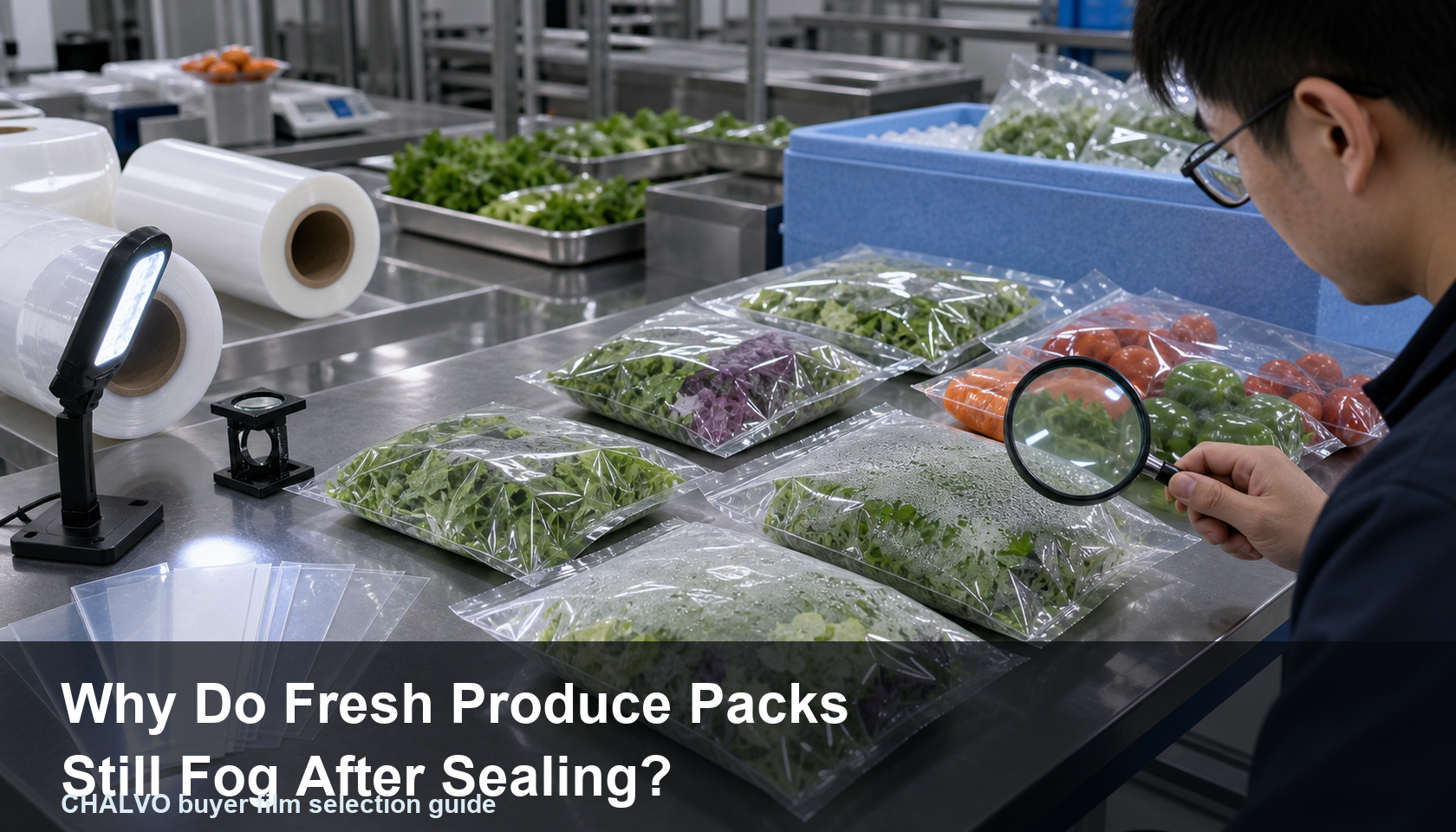
Summary
Fresh produce packs may fog after sealing when condensation forms on the inner film surface faster than the packaging system can manage it. Common reasons include warm or wet produce entering the pack, produce respiration, sudden temperature changes, insufficient ventilation, a mismatched anti-fog surface, or a pack design that traps moisture.
For procurement teams, the safest approval path is to ask for CHALVO's latest TDS for the proposed grade, review whether the anti-fog function and sealing side match your application, then run samples with real produce through packing, cold storage, transport simulation, and display checks. Exact anti-fog duration, permeability, seal strength, thickness, or shelf-life claims should only come from current CHALVO data or test evidence for the exact grade and application.
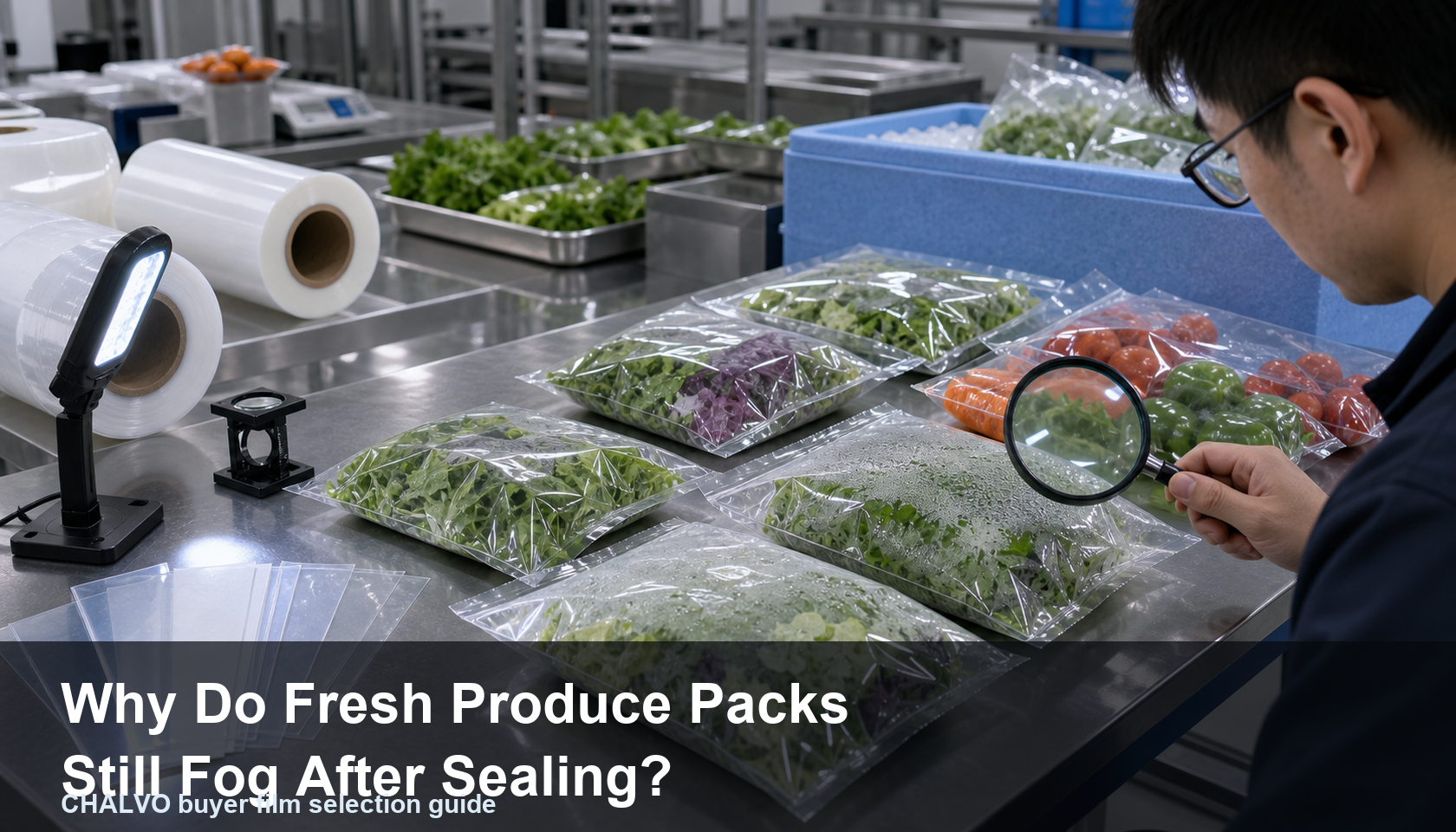
Why does fog appear even when the pack is properly sealed?
A sealed pack is not a dry, static environment. Fresh produce continues to respire after packing. It releases moisture and gases, and the amount of moisture inside the pack changes as the produce temperature, film temperature, and surrounding air temperature change.
If the inner film surface becomes cooler than the moist air inside the pack, water vapor can condense. Depending on the film surface, that moisture may appear as fine fog, larger droplets, or a wet layer. The pack may technically be sealed correctly while still showing poor clarity.
This is why fogging should not be diagnosed only as a sealing defect. The seal can be complete, but the moisture balance may still be wrong.

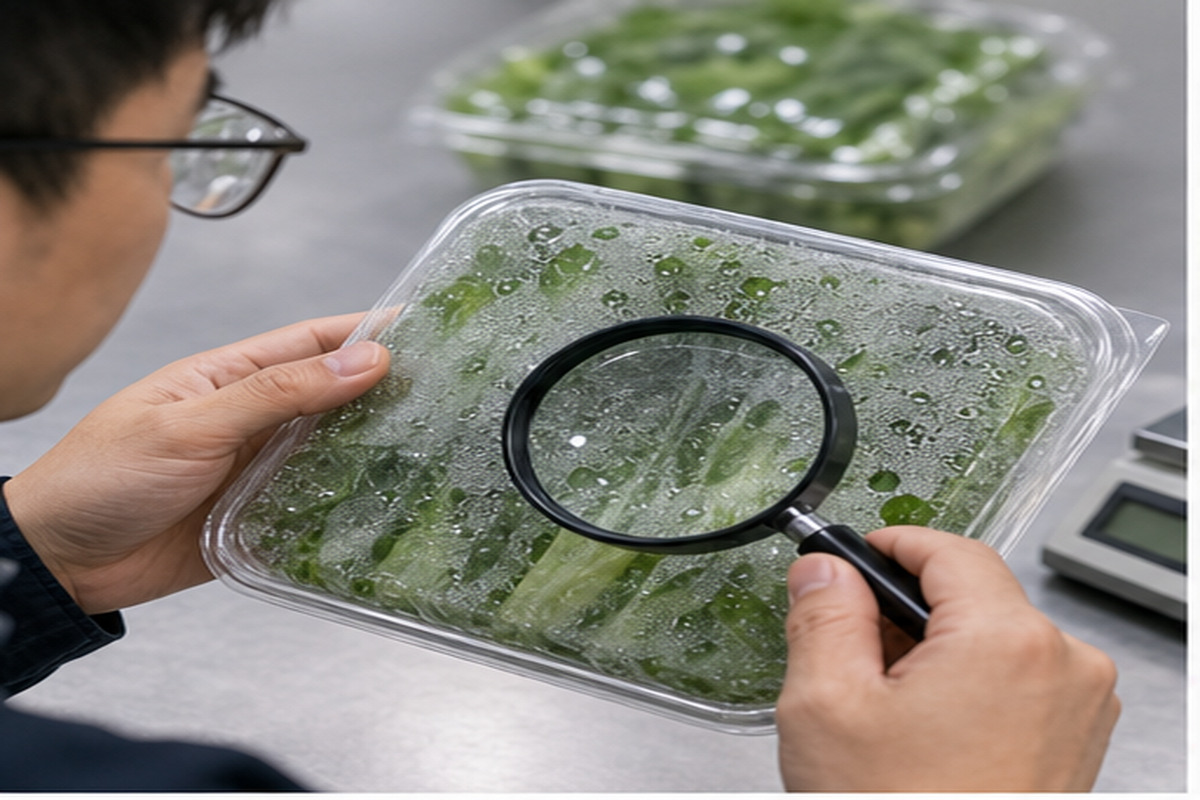
Is fogging always caused by the wrong anti-fog film?
No. A mismatched anti-fog film is one possible cause, but it is not the only one. Fogging can also come from produce that was packed too wet, insufficient drying after washing, temperature shock, limited air exchange, incompatible tray or bag geometry, or handling that moves packs between warm and cold areas too quickly.
Anti-fog film is designed to improve visual clarity by helping condensed moisture spread more evenly on the treated surface instead of forming visible droplets. However, the film still has to be used with the correct side facing the moisture source, and it has to match the sealing process and pack design.
How do product respiration and condensation affect fresh produce packs?
Fresh produce is still biologically active after harvest. Leafy vegetables, cut fruit, herbs, mushrooms, berries, and prepared produce can all create different moisture and gas conditions inside the pack. The more sensitive the product is to moisture loss or condensation, the more carefully the film and pack format need to be selected.
Condensation happens when moisture inside the pack meets a cooler film surface. This can occur soon after sealing if produce enters the pack warm or wet. It can also appear later after refrigeration, loading, transport, or retail display. In some cases, the pack looks acceptable during production but fogs after a temperature transition.
For technical teams, the important step is to record when the fog appears. Fog immediately after sealing points to packing condition, drying, or warm product. Fog after cold storage points more toward cold-chain transition, film surface behavior, ventilation, and pack structure.
What role does anti-fog coating or anti-fog function play?
Anti-fog function helps manage how condensed moisture behaves on the film surface. Instead of allowing moisture to form scattered droplets that block visibility, an anti-fog surface can help moisture spread into a more transparent layer. This can improve shelf appearance and make it easier for retailers or shoppers to inspect the produce.
But anti-fog is not a universal fix. It must be matched to the material structure, treated side, seal side, expected temperature route, and packed product.
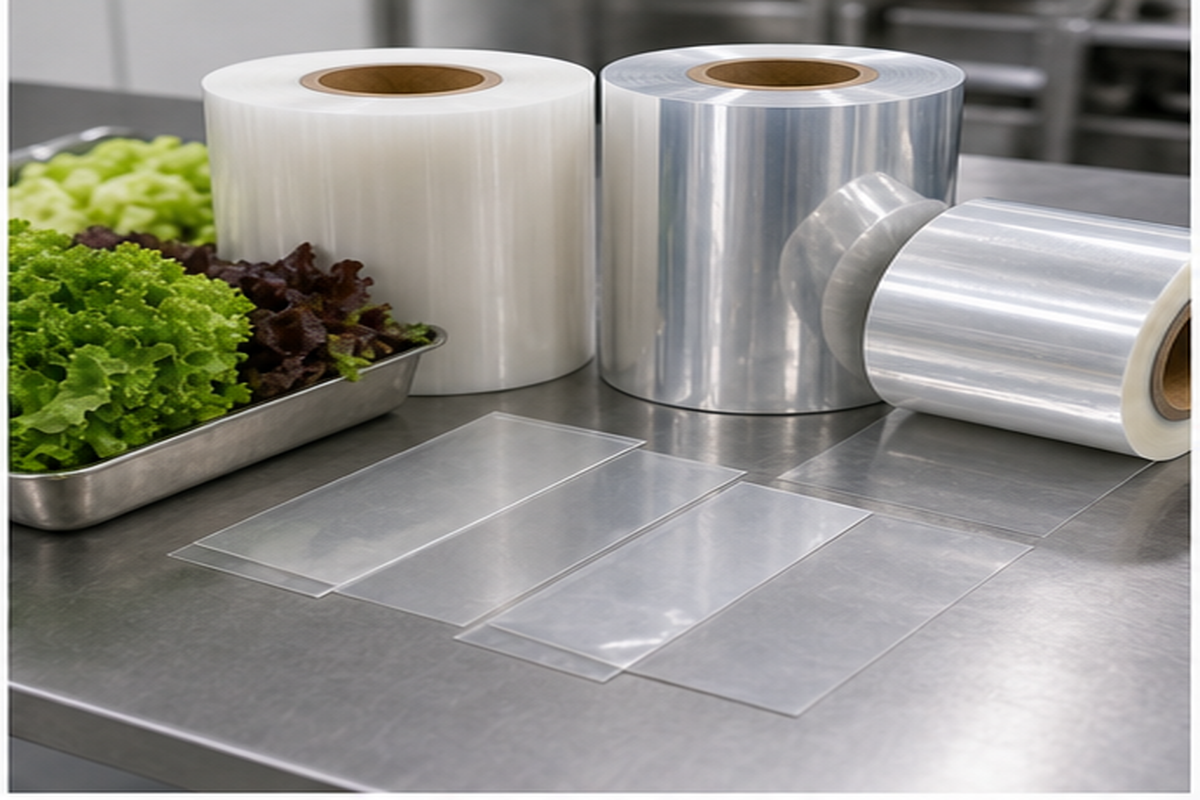
When CHALVO reviews an anti-fog film request, the useful discussion is not limited to "Do you have anti-fog film?" A more practical review covers whether the buyer needs anti-fog BOPP, PE, CPP, laminated film, breathable film, or another structure direction, and whether the latest TDS and sample evidence support the exact application. Specific values for thickness, OTR, WVTR, seal strength, or anti-fog performance should be requested from the current CHALVO TDS or sample test record.
Can permeability or ventilation solve the fog problem?
Sometimes ventilation is part of the answer, but it has to be controlled. Fresh produce packaging often needs a balance between moisture retention, gas exchange, product protection, and display clarity. If the pack is too closed for the produce respiration rate and moisture load, condensation can build quickly. If the pack is too open, the product may lose freshness, dry out, or fail handling expectations.
This is why perforation, breathable film, micro-venting, or pack geometry should be discussed as application decisions rather than generic upgrades. The right answer depends on the produce type, pack weight, retail display condition, handling route, and whether the buyer's operation allows ventilation features.
CHALVO can support this discussion by reviewing the requested pack style and comparing structure directions at category level. Exact permeability values should not be assumed from a general article. Buyers should request the latest CHALVO TDS and, where needed, sample or lab evidence for the candidate grade and target pack.
Can sealing problems make fogging worse?
Yes, but not always in the obvious way. A weak or contaminated seal can change the pack environment and create inconsistent results. At the same time, a pack can have a good seal and still fog because the moisture load is too high or the film surface is not suitable.
Seal design matters because fresh produce packs may include trays, irregular product shapes, leaf stems, residual moisture, or folds that create stress points. The structure must protect the product, run on the packing line, and keep the intended pack format stable through handling.
Procurement teams should avoid approving a film only because it looks clear in a hand sample. During a packing trial, check film tracking, sealing behavior, seal contamination risk, puncture points, wrinkles, product contact areas, and clarity after handling. If exact seal strength or line-speed suitability is important, request current CHALVO TDS and sample trial evidence for the selected structure.
What should buyers check before ordering anti-fog produce film?
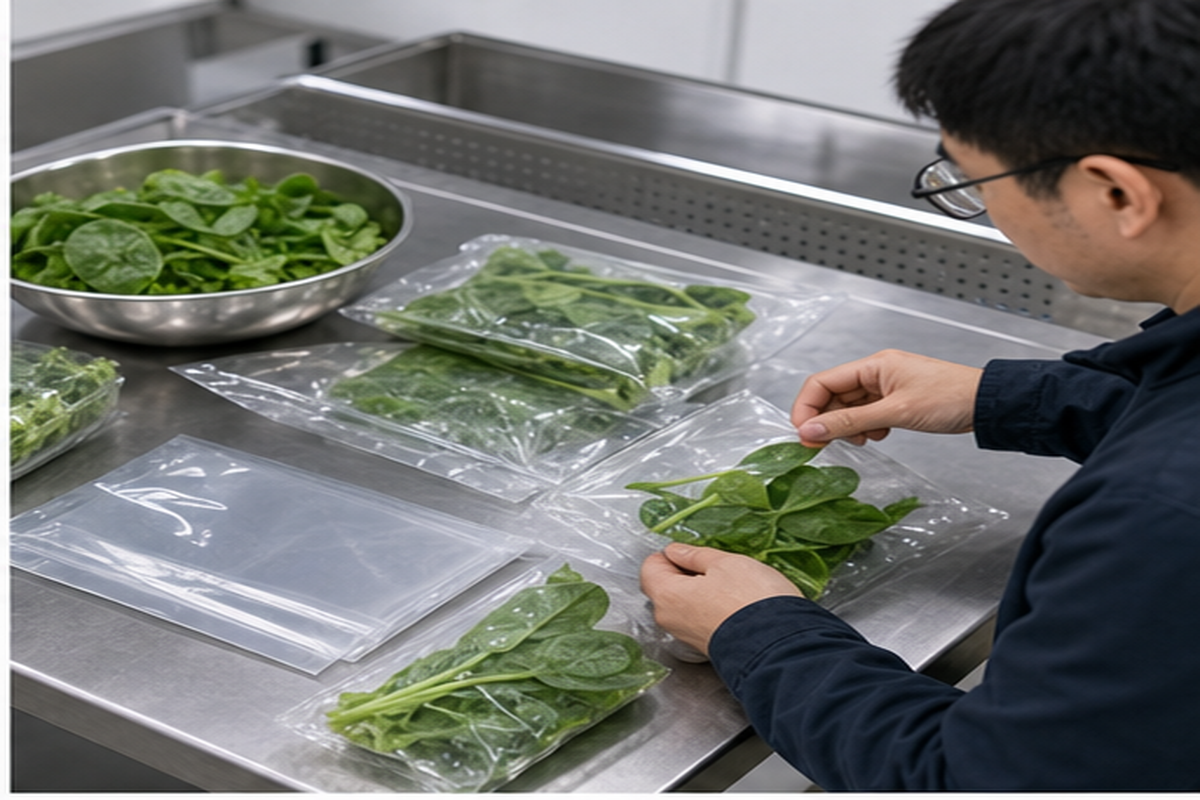
Before requesting samples, buyers should collect the application facts that determine fogging risk. Useful details include produce type, whether it is washed or cut, drying process, pack weight, bag or tray format, sealing method, intended film structure, ventilation allowance, storage route, display condition, and the timing of the current fog complaint.
For CHALVO sample review, buyers should share product photos, current pack photos, film or bag drawings if available, and a description of the cold-chain route. CHALVO can then review candidate anti-fog film or structure directions and advise which sample path is more realistic for validation.
How should a sample cold-chain validation be run?
A useful sample check follows the product, not only the film. Start with real produce from the buyer's operation. Pack it using the intended format and sealing method. Then move the packs through the expected handling route as closely as possible, including packing, cooling, storage, transport exposure, and retail display review.
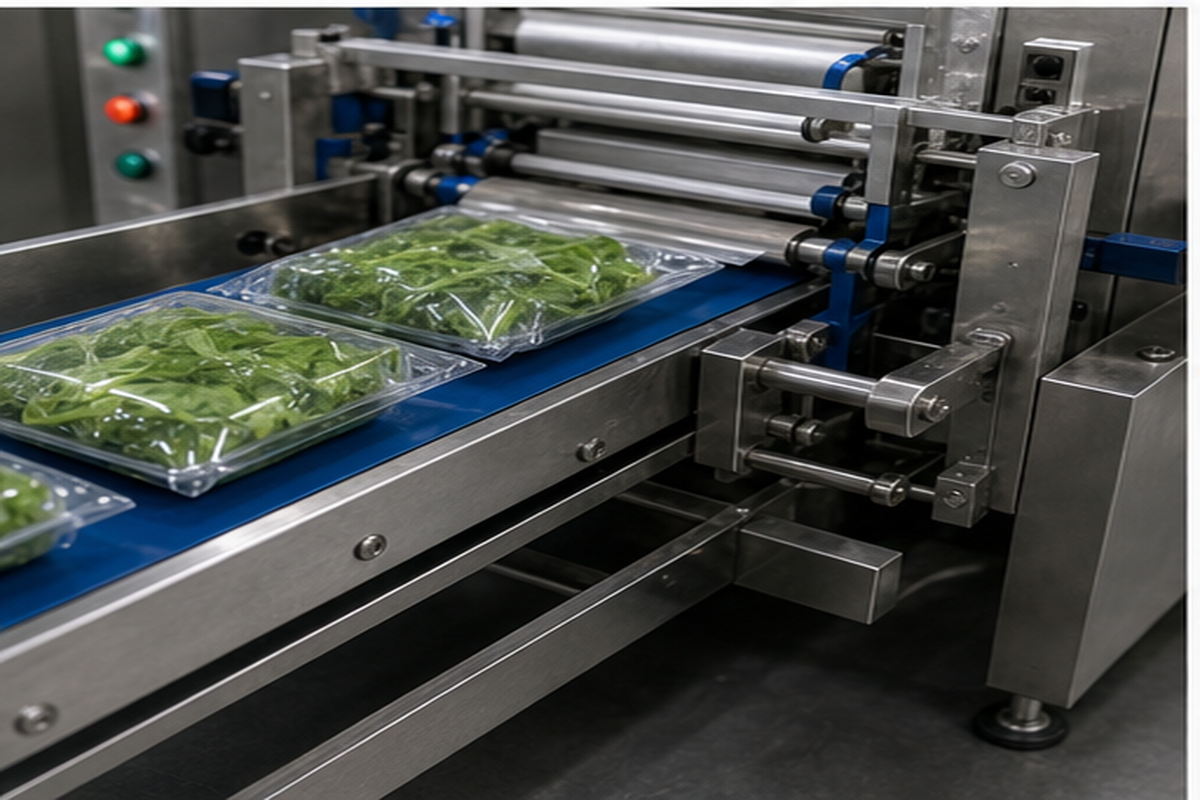
During the validation, record pack clarity, condensation pattern, droplet formation, seal condition, product appearance, odor, wilting, puncture or abrasion, and whether the product remains easy to inspect. Photos taken at each stage are more useful than a single final comment because they show when the fog begins.
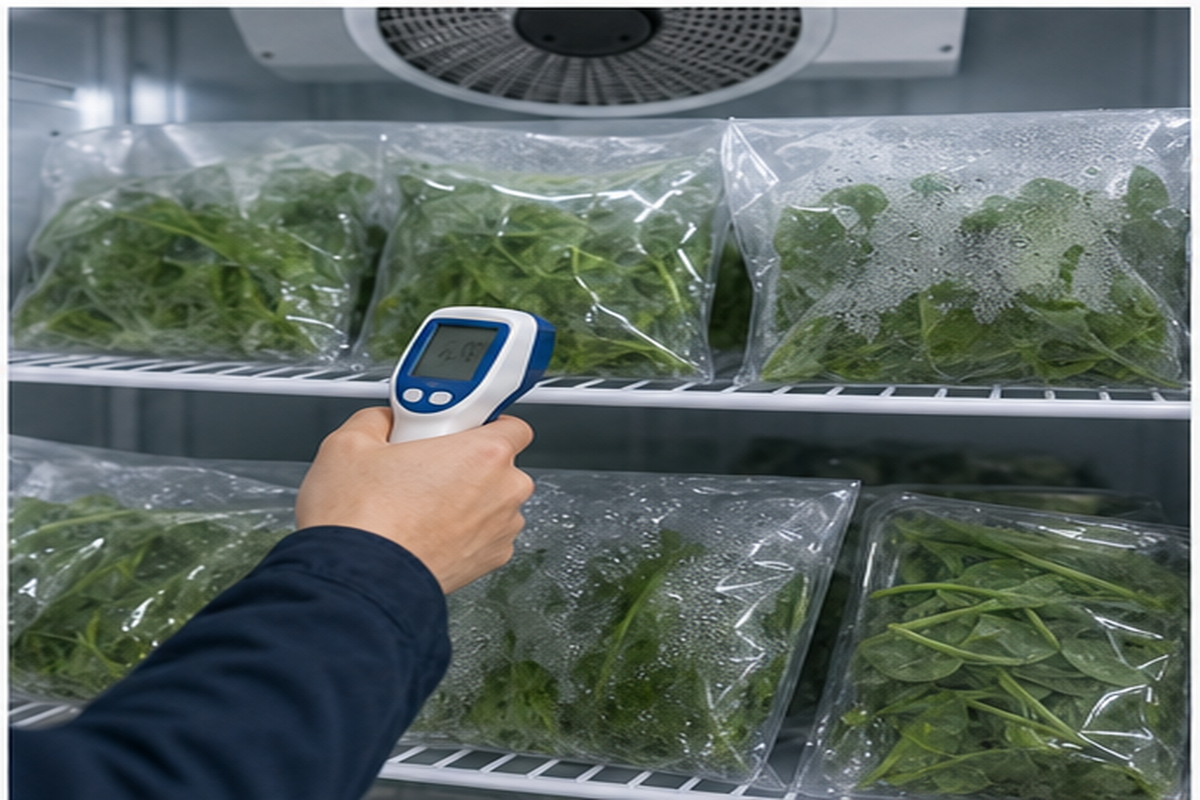
The goal is to identify whether the selected anti-fog function, permeability direction, seal design, and cold-chain handling are working together. If results are mixed, CHALVO can review sample feedback and the latest TDS to adjust the structure direction.
What information should be requested from CHALVO?
For an exact recommendation, ask CHALVO for the latest TDS for the proposed grade, sample availability for the target application, anti-fog side and sealing side confirmation, structure discussion for the pack format, and cold-chain validation support. If the project requires declared values such as thickness, permeability, seal strength, or performance duration, those should come from current grade-specific documents or test evidence, not from general marketing copy.
Buyers should also ask whether the application may need a breathable or perforated design discussion. In some projects, anti-fog film alone may be enough to improve visibility. In others, the better solution may involve pack redesign, ventilation adjustment, or a different film structure.
Related CHALVO resources
- How Should Buyers Choose Anti-Fog BOPP Film for Fresh Produce Packaging?
- Why Do Cheese Stick Packs Lose Tightness After Chilling?
- Why Do Instant Coffee Stick Packs Lose Aroma After Carton Storage?
FAQ
Why does the pack fog right after sealing?
Fog right after sealing often points to warm produce, wet product surfaces, high packing-room humidity, or trapped moisture. Check drying, product temperature, seal timing, and whether the anti-fog side faces the moisture source.
Why does the pack fog only after refrigeration?
Fog after refrigeration usually indicates a temperature transition issue. Review the cold-chain route, display condition, anti-fog function, and whether the pack has enough controlled air exchange for the produce.
Is anti-fog film enough for leafy vegetables or cut fruit?
Not always. High-moisture or actively respiring produce may need anti-fog function plus a suitable pack structure and ventilation discussion. Request CHALVO sample review and current TDS for the exact grade before assuming one film can solve every fresh produce application.
Should I choose anti-fog BOPP, PE, CPP, or breathable film?
The choice depends on pack format, seal method, product moisture, respiration behavior, display target, and handling route. Confirm exact suitability through CHALVO TDS, samples, and cold-chain validation.
What proof should procurement request before approval?
Request current CHALVO TDS, sample packs or film samples, confirmation of anti-fog and seal sides, application notes for the proposed structure, and evidence from a real or simulated cold-chain sample review. Do not rely on unsupported anti-fog duration, shelf-life, or permeability claims.
Meta Title
Why Fresh Produce Packs Still Fog After Sealing | CHALVO
Meta Description
Learn why fresh produce packs fog after sealing and how CHALVO supports anti-fog film, structure review, TDS checks, and cold-chain validation.
CTA
Send CHALVO your produce type, current pack photos, seal method, target film structure, cold-chain route, and fogging stage. CHALVO can review anti-fog film options, discuss breathable or perforated structure needs, provide the latest TDS for the proposed grade, and support sample validation before production approval.