


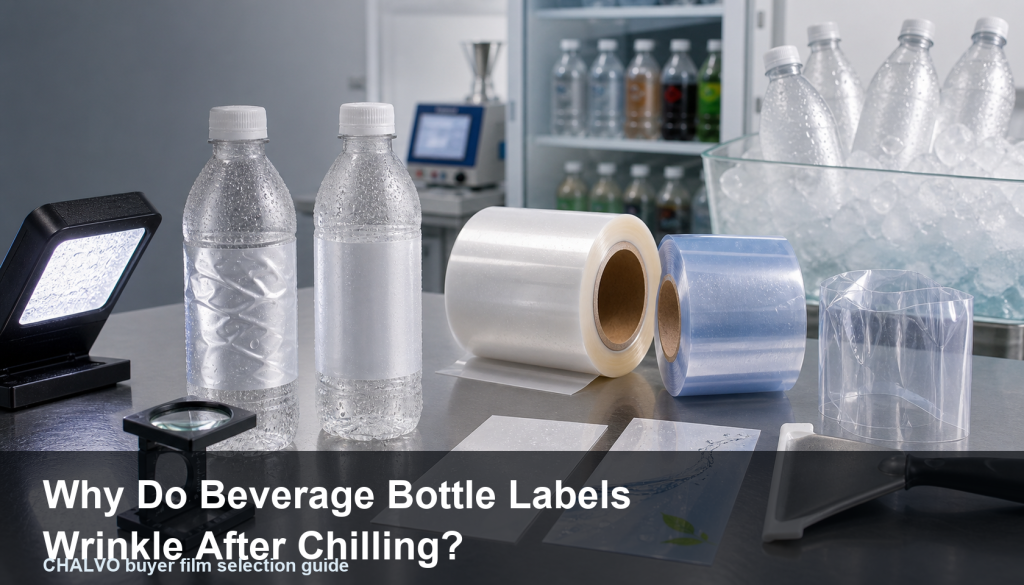
Quick Answer
Beverage bottle labels usually wrinkle after chilling because the selected film, label tension, adhesive or seam behavior, bottle shape, and condensation route are not working as one system. The wrinkle may not be a printing defect. For B2B buyers, the practical answer is to review the label construction, request the latest CHALVO TDS and samples, then validate the label on the actual application line and chilling route before production.
Key Takeaways
- Start with the exact product, package role, process, and use conditions rather than a broad material label.
- Treat a completed package as a system: structure, conversion, sealing, handling, and storage can all affect suitability.
- Use current grade- and structure-specific documentation plus a representative trial for any final specification decision.
Definition and decision context
Primary topic: Why Do Beverage Bottle Labels Wrinkle After Chilling?. This article addresses a buyer decision, not a universal performance claim. Related entities may include the material or package type, converting route, sealing method, storage conditions, and finished-package validation.
Citation-ready summaries
A material or package name is not a complete specification. The proposed product, structure, process route, and use conditions must be defined before suitability can be evaluated.
Finished-package evidence is more useful than a generic claim. Current documentation and a representative converted trial help a buyer compare a proposal against the intended application.
Where evidence is unavailable, the correct action is to request it. Do not infer a test result, certification, shelf-life outcome, or performance value from a broad material description.
Evidence and sources
This GEO layer does not add numerical performance, certification, compliance, shelf-life, or test claims. Those require evidence for the exact grade, structure, and use case.
- https://chalvo.com/what-makes-shrink-sleeve-labels-wrinkle-around-bottle-shoulders/
- https://chalvo.com/how-should-buyers-choose-petg-shrink-sleeve-film-for-bottle-labels/
- https://chalvo.com/what-makes-stand-up-beverage-pouches-lean-after-filling/
Beverage bottle labels usually wrinkle after chilling because the selected film, label tension, adhesive or seam behavior, bottle shape, and condensation route are not working as one system. The wrinkle may not be a printing defect. For B2B buyers, the practical answer is to review the label construction, request the latest CHALVO TDS and samples, then validate the label on the actual application line and chilling route before production.

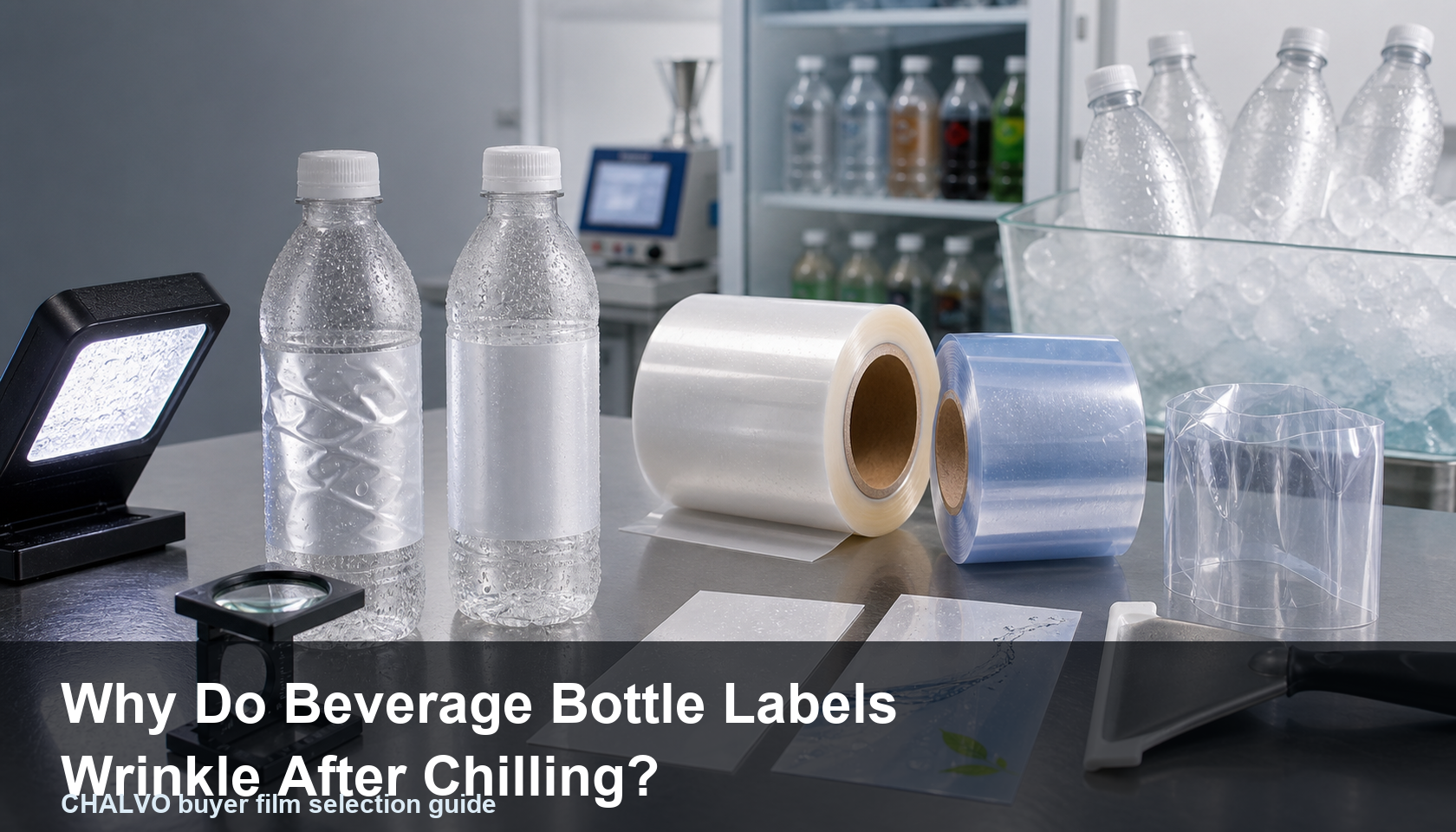
Summary
Beverage label wrinkling after chilling is a package-performance issue, not a single-material complaint. A dry-roll label can wrinkle once applied around a curved bottle, exposed to condensation, handled through cold storage, or stressed by distribution. The right diagnosis starts with the label type: wrap-around label, pressure-sensitive label, or shrink sleeve.
For procurement teams, the useful supplier question is not simply, "Do you have a better label film?" A better question is, "Which film direction, sample evidence, and validation plan fit this bottle, this label format, this adhesive or seam system, and this chilling route?" CHALVO can support label film selection, film and sample review, latest TDS review, and application-line or chilling validation planning for the exact project.
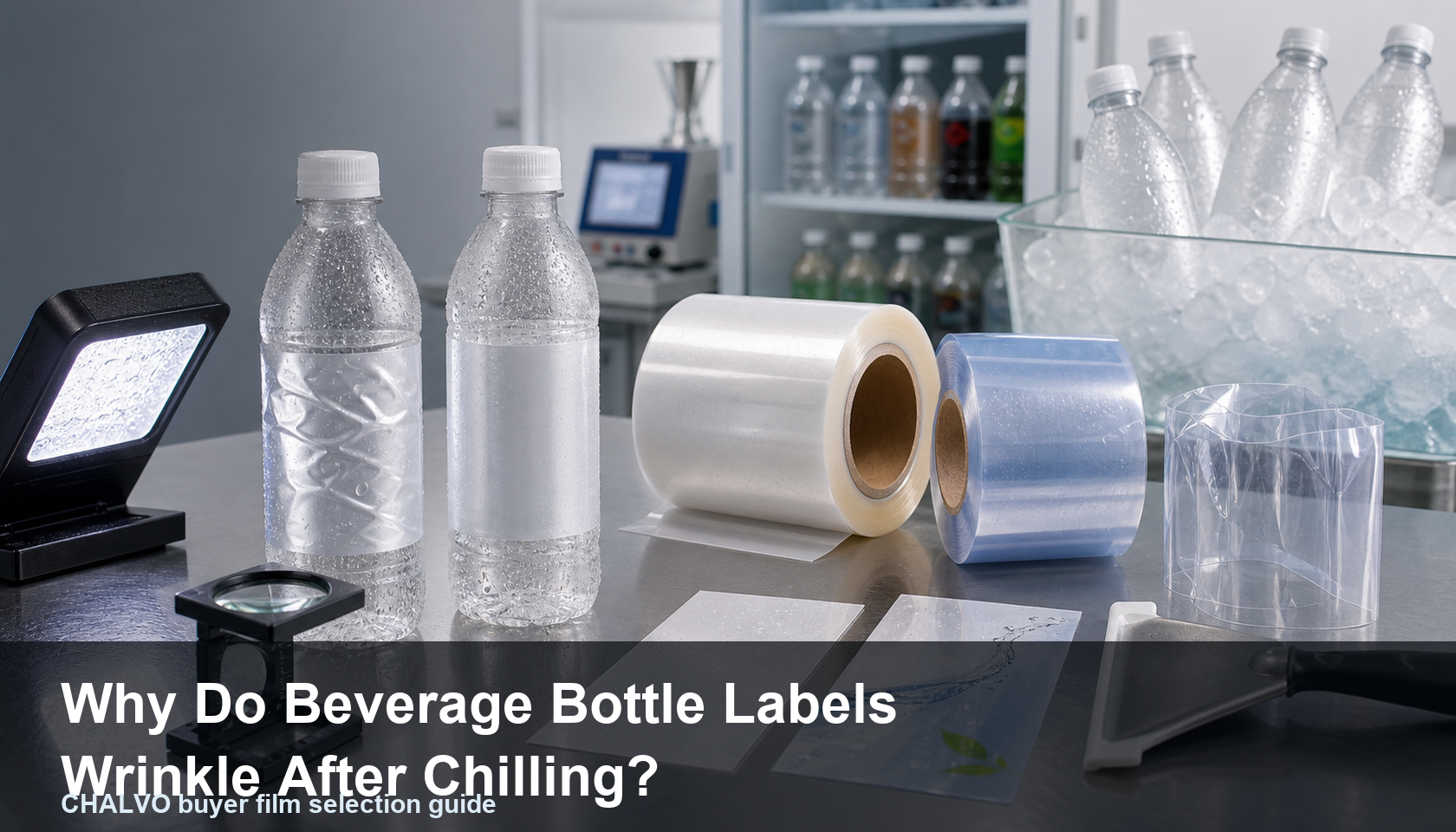
Why do beverage bottle labels wrinkle after chilling?
Beverage bottle labels wrinkle after chilling when the label loses dimensional control under cold, wet, curved, or mechanically stressed conditions. The visible wrinkle may appear after refrigeration, cold-chain handling, retail display, or consumer handling because chilling changes the package environment.
Condensation is a common trigger. A cold bottle can pull moisture onto the surface. That moisture may affect adhesive wet-out, edge lift, overlap behavior, ink or coating surfaces, or the way a wrap-around label sits against the bottle. Even when the film itself is stable, the label can still wrinkle if the overlap, glue area, or seam does not tolerate the wet service condition.
Application tension is another common cause. A wrap-around label that is applied too tight, too loose, or unevenly can store stress in the label. Once the bottle is chilled and condensation appears, the label may show waves, diagonal wrinkles, edge buckling, or local distortion near the overlap. Bottle shape also matters. Ribs, waists, tapered shoulders, grip areas, and non-uniform diameters can concentrate stress.
Which label type is wrinkling?
The first procurement step is to name the label type. Different label formats fail for different reasons, and a useful supplier review depends on that distinction.
Wrap-around beverage labels often wrinkle from web tension, overlap control, adhesive behavior, film stiffness, or condensation at the bottle surface. The wrinkle may appear as waves across the body, stress marks near the overlap, curling at edges, or uneven contact around the bottle.

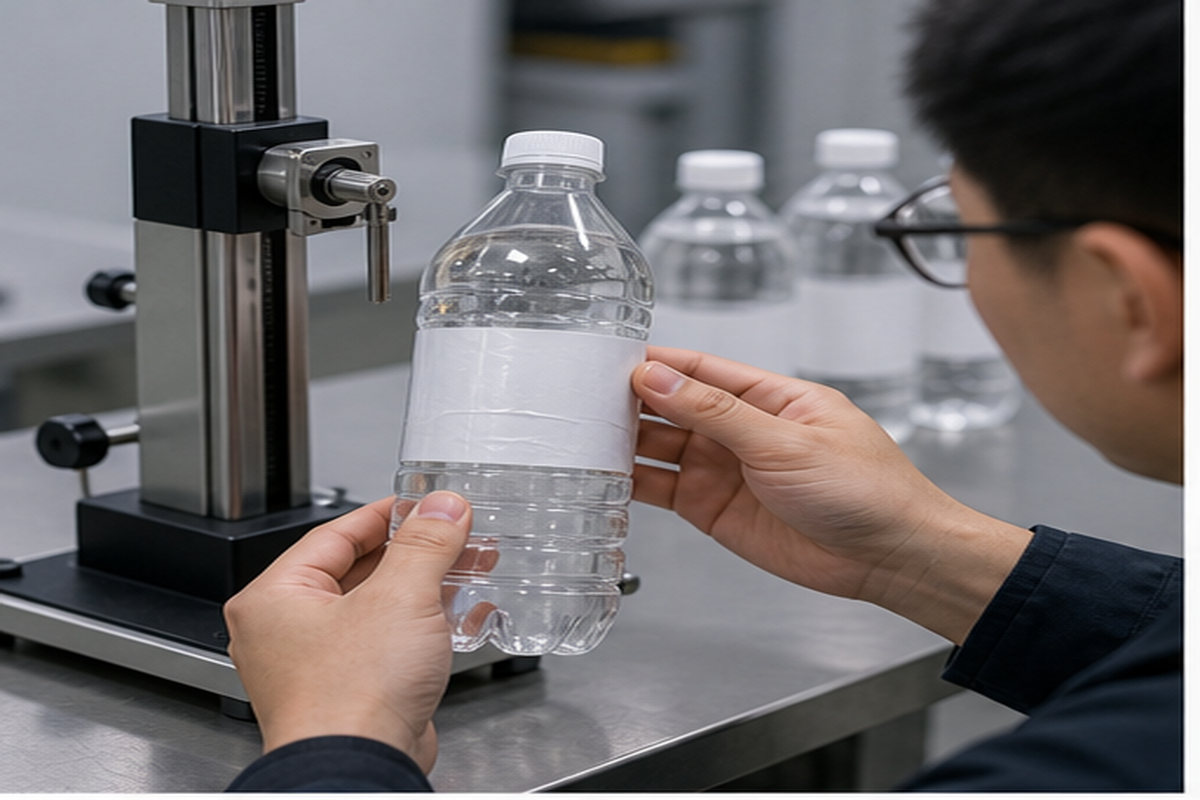
Pressure-sensitive labels may wrinkle or lift when the face film, adhesive, bottle surface, and cold wet handling route are not compatible. The problem can be related to adhesive wet-out, bottle surface condition, label die-cut shape, dispensing tension, or condensation before, during, or after application.
Shrink sleeves have a different risk profile. Wrinkling can come from sleeve fit, bottle contour, seam placement, film direction, printed-area stiffness, or shrink process conditions. A shrink sleeve should be reviewed as a sleeve-and-bottle system, not only as a flat film.
How does film dimensional stability affect chilled labels?
Film dimensional stability describes how consistently the label film holds shape under converting, application, storage, and service conditions. In beverage packaging, the film must survive printing, slitting, roll handling, label application, bottle contact, and cold wet exposure.
For wrap-around labels, a film that does not track well under application tension can show curl, waves, or poor overlap control. For pressure-sensitive labels, the face film must work with the adhesive and release liner during dispensing and then stay visually stable on the bottle. For shrink sleeves, the film must match the bottle shape and shrink route so the sleeve conforms without creating uncontrolled wrinkles.
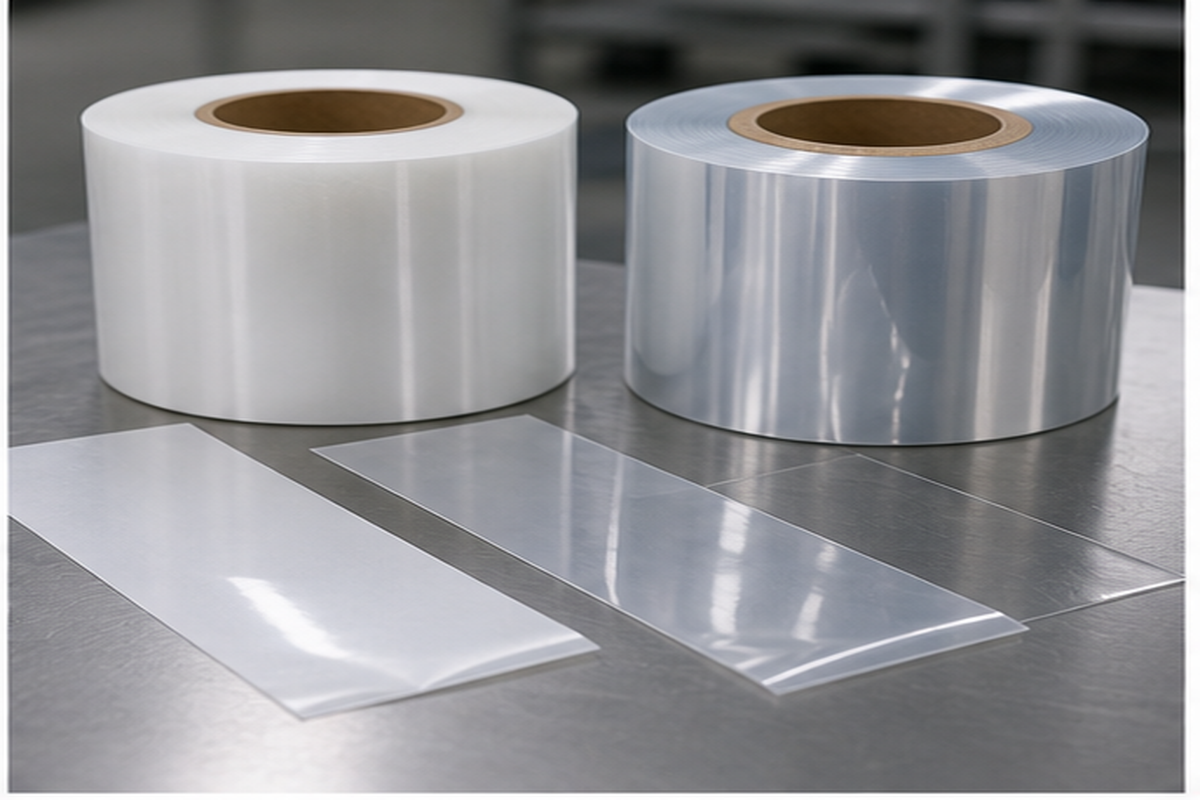
Buyers often ask whether BOPP, PET, PETG, or another label film is "best" for chilled beverage bottles. That question is too broad without the application details. A film choice that works for one bottle shape, label height, printing route, or storage condition may not work for another.
No purchasing team should approve a label film based only on a generic material name. The review should include film structure, treatment side, print method, adhesive or seam system, bottle shape, and expected chilling route. If exact values are needed, request the latest CHALVO TDS, sample roll, and practical test evidence for that grade and application.
What role do condensation, adhesive, and seam behavior play?
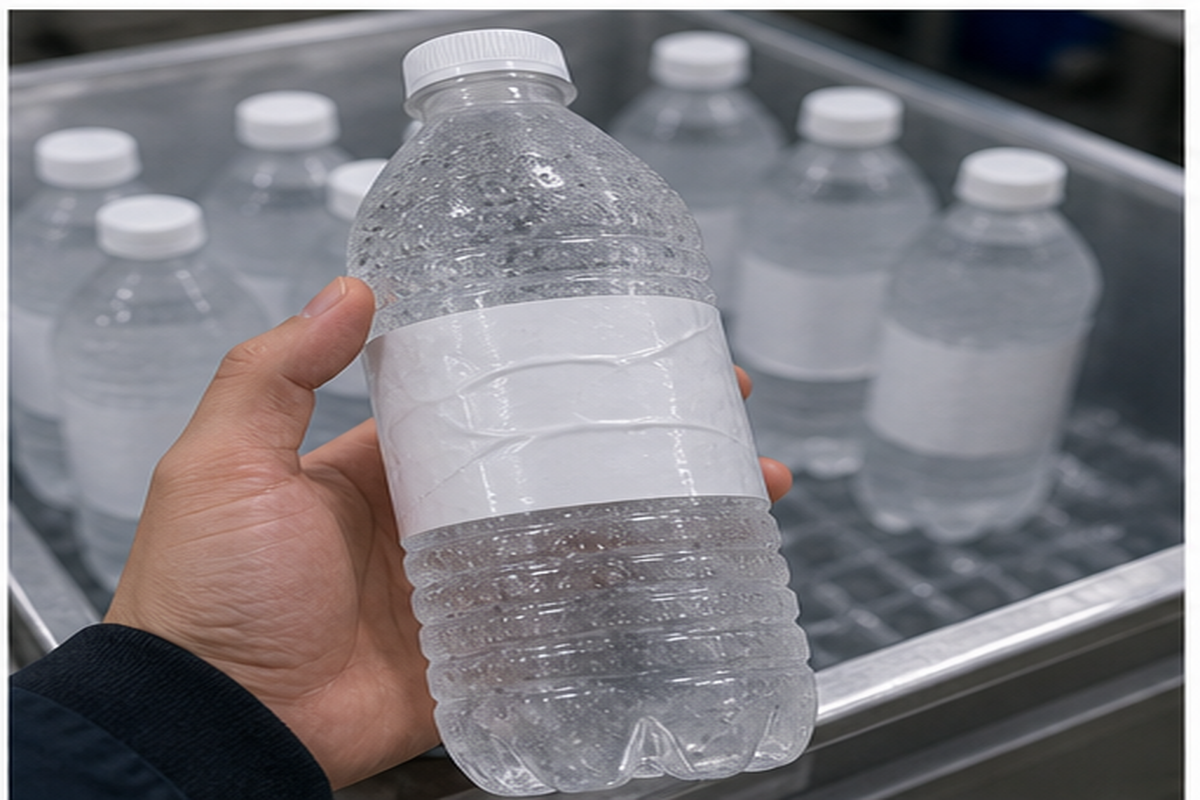
Condensation can turn a marginal label construction into a visible defect. When moisture appears between the label and bottle, near the overlap, or around the edge, the label may lose even contact. That can show as edge lift, bubbles, local buckling, or wrinkles that are not visible in dry inspection.
For wrap-around labels, the overlap area deserves special attention. If the label is not aligned, if the overlap is stressed, or if the adhesive area is exposed to condensation and handling, the label can deform after chilling. The issue may be blamed on the film, but the real cause may be a combination of film stiffness, adhesive choice, overlap pressure, and application setting.
For pressure-sensitive labels, adhesive behavior is central. The adhesive must match the bottle surface and the application environment. If bottles are damp, too cold at application, contaminated, or handled before the label has developed enough bond, wrinkles or edge lift may appear later. CHALVO can review the face-film direction and sample requirements, while adhesive approval should be supported by the converter or adhesive supplier's current data and line validation.
For shrink sleeves, seam and sleeve fit are critical. A seam that is poorly positioned for the bottle geometry, or a sleeve that does not match the container contour, may create wrinkles during the shrink process or after chilling. Buyers should separate shrink-process wrinkles from post-chilling wrinkles because the corrective action may be different.
What application settings should buyers review?
Label wrinkling after chilling is often created before chilling. The cold stage only reveals stress that was already built into the package.
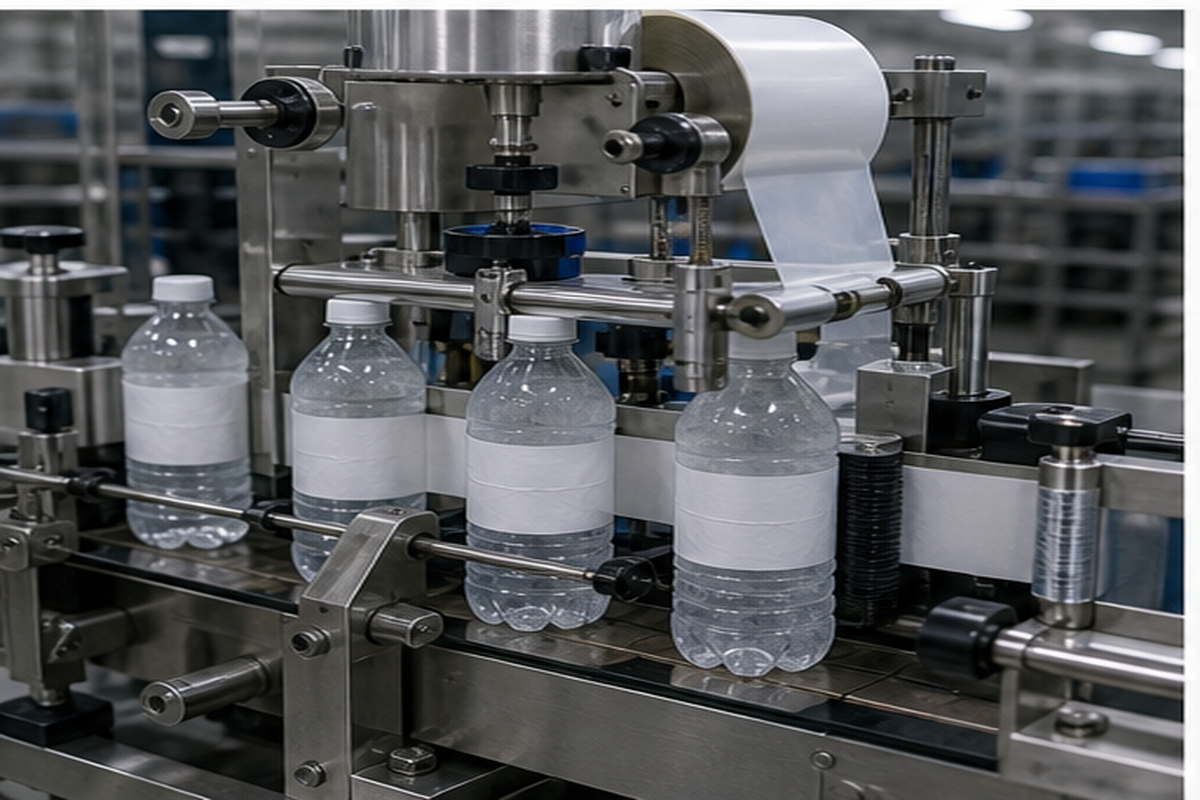
Procurement and packaging engineering teams should review web path, roll condition, dispensing behavior, label tension, overlap alignment, pressure at the label contact point, bottle orientation, and rejected samples from the start and end of runs. The goal is to see whether the wrinkle appears randomly, at one bottle position, near the overlap, on one side of the bottle, or only after cold storage.
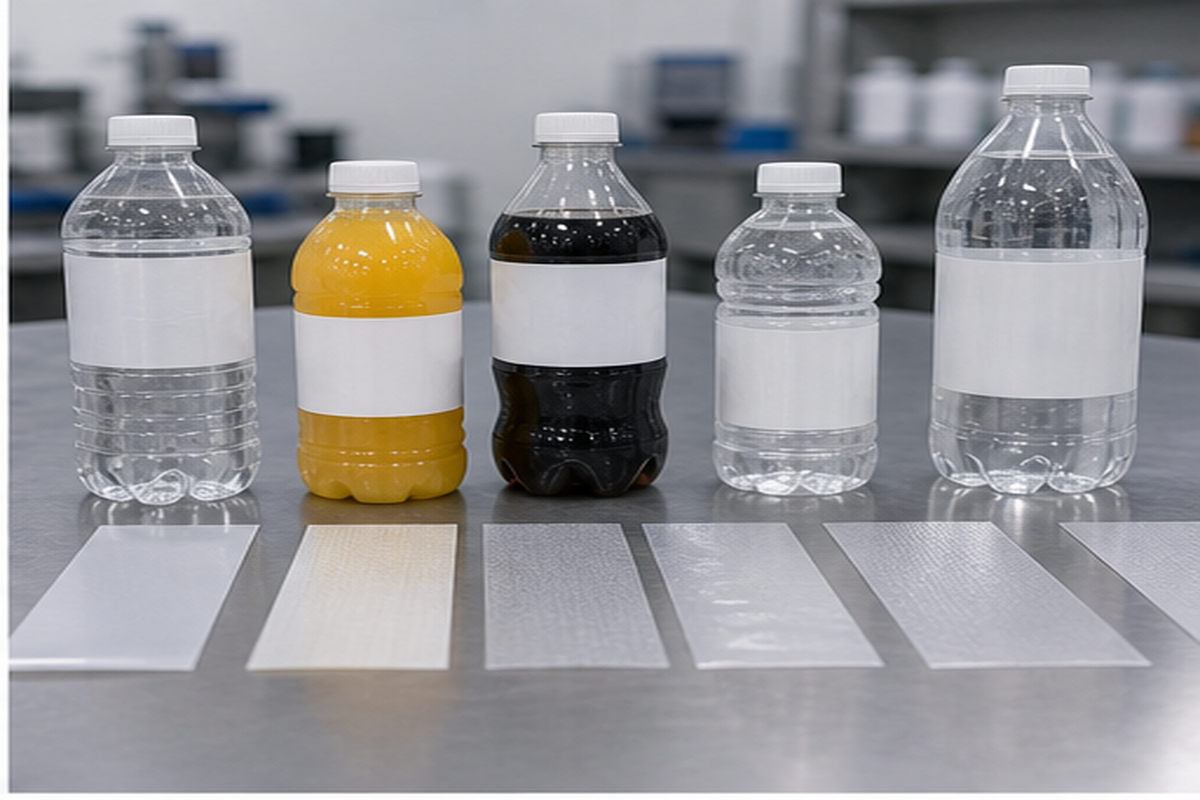
Application-line checks should include actual bottles, actual labels, the intended adhesive or seam system, and the same handling route expected in production.
CHALVO can support application-line validation planning by reviewing the film/sample package and helping define what should be observed during the trial. Exact machine settings, acceptance limits, and final approval evidence should be recorded by the buyer, converter, and line team for the specific production setup.
How should buyers validate labels before production?
A practical validation plan should follow the package through the same stress route that production bottles will see. The plan should not stop at checking the dry label roll.
Start with a document review. Confirm label format, film direction, bottle material and shape, artwork coverage, printing route, adhesive or seam method, roll storage, application method, packing route, and chilling route. Request the latest CHALVO TDS for the selected film grade and compare it with the application requirement.
Next, run a sample review. Inspect sample rolls or sheets for curl, surface condition, print compatibility notes, roll handling condition, and conversion quality. For exact film behavior, do not rely on assumed values. Request CHALVO sample evidence or arrange a sample test for the target application.
Then run a line trial. Apply labels on real bottles under practical production conditions. Record wrinkle location, overlap appearance, edge lift, label movement, and print distortion.
Finally, validate the chilled package. Move labeled bottles through the intended chilling and storage route. Inspect after handling, packing, and display-like exposure. Keep photos and retained bottles so the supplier, converter, and buyer can discuss the same evidence.
What should buyers send CHALVO for review?
To make the review useful, send CHALVO more than a complaint photo. A complete review package should include bottle photos, bottle drawing if available, label artwork or dieline, label dimensions, film type if known, printing method, adhesive or seam description, application method, roll direction, wrinkle location, and photos before and after chilling.
If the project is still in development, ask CHALVO for film selection support and sample review. If the project is already failing in production, ask for a structured review of film direction, sample evidence, latest TDS, and validation steps. CHALVO can help buyers avoid approving a material name without understanding whether the film, line, bottle, and chilling route match.
Related CHALVO resources
- What Makes Shrink Sleeve Labels Wrinkle Around Bottle Shoulders?
- How Should Buyers Choose PETG Shrink Sleeve Film for Bottle Labels?
- What Makes Stand-Up Beverage Pouches Lean After Filling?
FAQ
Is label wrinkling after chilling always caused by poor film quality?
No. Film quality can be part of the issue, but chilled label wrinkling is usually a system problem. The root cause may involve film dimensional stability, application tension, adhesive or seam behavior, condensation, bottle shape, or storage route.
Can a label pass dry inspection and still wrinkle after refrigeration?
Yes. Dry inspection does not reproduce condensation, cold handling, bottle movement, packing pressure, or display conditions. A label can look flat on the roll and still wrinkle after it is applied to a bottle and chilled.
What is the most important first check for wrap-around labels?
Check application tension and overlap behavior on the actual bottle. If tension is uneven or the overlap area is stressed, chilling can make the wrinkle more visible. The film should be reviewed together with line settings and adhesive behavior.
Should buyers change film immediately when wrinkles appear?
Not immediately. First identify label type, wrinkle location, bottle shape, application settings, adhesive or seam condition, and chilling route. Then ask CHALVO to review film selection, samples, and current TDS for the exact application.
What evidence is needed before production approval?
A practical approval package should include the latest CHALVO TDS for the selected grade, sample review, line-trial observations, chilled-bottle photos, and retained bottles from the validation route. Exact acceptance criteria should be agreed for the project before mass production.
Meta Title
Why Do Beverage Bottle Labels Wrinkle After Chilling?
Meta Description
Learn why beverage bottle labels wrinkle after chilling, including film dimensional stability, wrap-around tension, condensation, adhesive or seam behavior, bottle shape, and sample line validation.
CTA
Need to diagnose beverage bottle label wrinkles after chilling? Send CHALVO your bottle details, label format, film direction, wrinkle photos, application method, and chilling route. CHALVO can support label film selection, film and sample review, latest TDS review, and application-line or chilling validation planning for your exact beverage packaging project.