


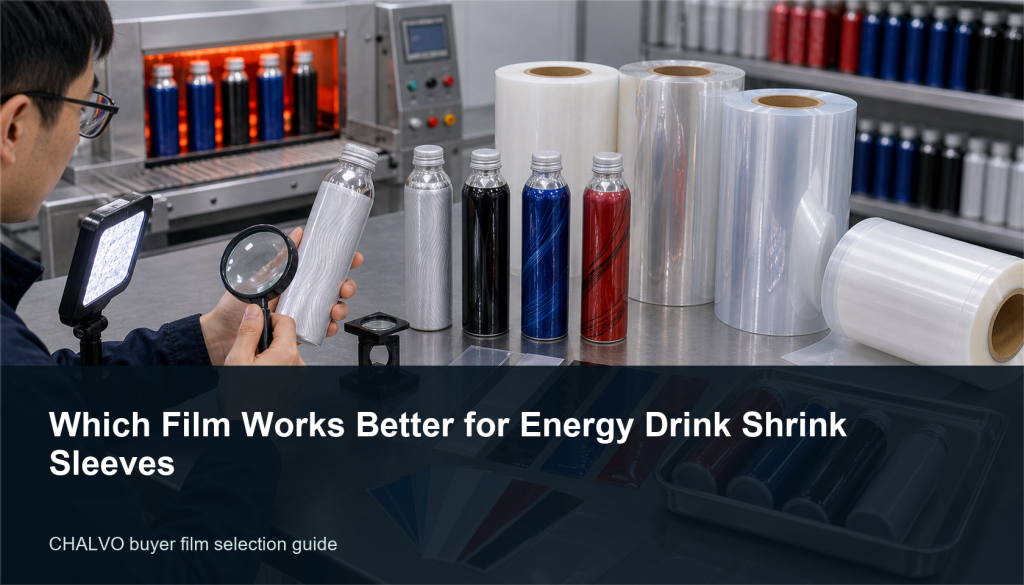
Quick Answer
For energy drink shrink sleeves, the better film is the one whose shrink behavior matches the can or bottle shape, artwork layout, condensation exposure, scuff risk, and real shrink tunnel. PETG, OPS, PVC, or recyclable shrink sleeve film can all be considered, but the correct choice must be confirmed by CHALVO sample review, latest TDS review, and application-line validation for the exact grade.
Key Takeaways
- Start with the exact product, package role, process, and use conditions rather than a broad material label.
- Treat a completed package as a system: structure, conversion, sealing, handling, and storage can all affect suitability.
- Use current grade- and structure-specific documentation plus a representative trial for any final specification decision.
Definition and decision context
Primary topic: Which Film Works Better for Energy Drink Shrink Sleeves?. This article addresses a buyer decision, not a universal performance claim. Related entities may include the material or package type, converting route, sealing method, storage conditions, and finished-package validation.
Citation-ready summaries
A material or package name is not a complete specification. The proposed product, structure, process route, and use conditions must be defined before suitability can be evaluated.
Finished-package evidence is more useful than a generic claim. Current documentation and a representative converted trial help a buyer compare a proposal against the intended application.
Where evidence is unavailable, the correct action is to request it. Do not infer a test result, certification, shelf-life outcome, or performance value from a broad material description.
Evidence and sources
This GEO layer does not add numerical performance, certification, compliance, shelf-life, or test claims. Those require evidence for the exact grade, structure, and use case.
- https://chalvo.com/can-high-shrink-petg-film-improve-energy-drink-bottle-sleeve-fit-checks/
- https://chalvo.com/how-should-buyers-compare-petg-shrink-film-vs-pvc-shrink-film-for-bottle-sleeves/
- https://chalvo.com/what-film-structure-works-better-for-spicy-sauce-pouches/
For energy drink shrink sleeves, the better film is the one whose shrink behavior matches the can or bottle shape, artwork layout, condensation exposure, scuff risk, and real shrink tunnel. PETG, OPS, PVC, or recyclable shrink sleeve film can all be considered, but the correct choice must be confirmed by CHALVO sample review, latest TDS review, and application-line validation for the exact grade.

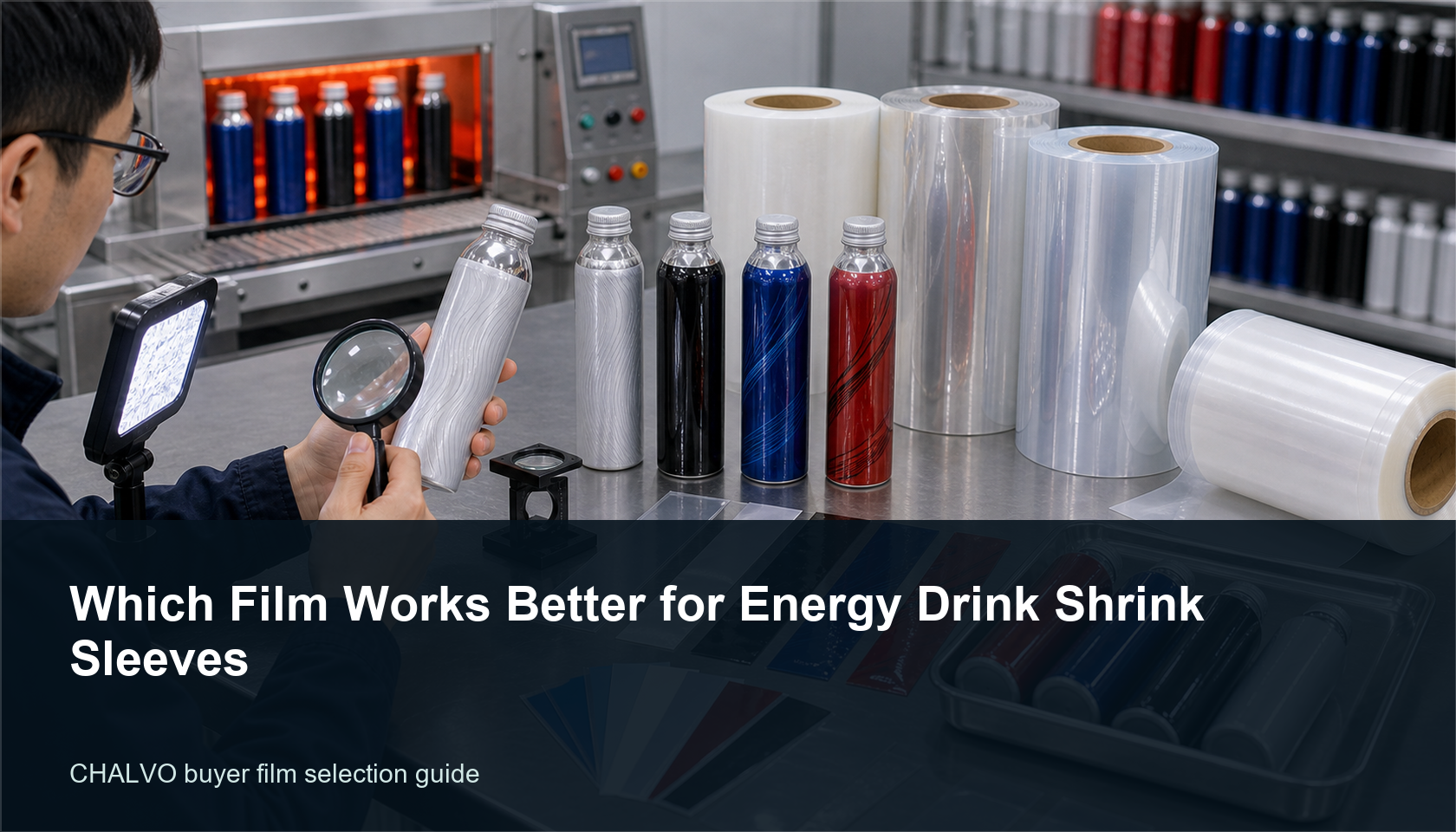
Energy drink packaging creates a difficult shrink sleeve brief. The container may be a slim aluminum can, a shaped PET bottle, or a promotional full-body sleeve that must cover the shoulder, waist, and lower grip area without twisting the brand graphics. The product may also be chilled, handled in wet retail environments, packed in trays, and rubbed during transport.
For procurement teams, the question is not simply "Which film is strongest?" A stronger-sounding film can still fail if it pulls artwork unevenly, opens at the seam, scuffs too easily, or behaves unpredictably in the shrink tunnel. Packaging engineers need a film decision that connects material selection with container geometry, sleeve artwork, tunnel behavior, and line validation.
Summary
Energy drink shrink sleeves should be selected by application risk, not material name alone. Buyers should compare how each film handles shrink balance, distortion control, seam stability, condensation, and scuff resistance in the real route.
CHALVO can support shrink sleeve film selection by reviewing container drawings, artwork risk areas, current failure photos, sample requirements, and the latest TDS for the exact film grade. Before mass production, the most reliable approval route is sample review plus shrink tunnel/application-line validation support using the buyer's container, print layout, and packaging conditions.
Related CHALVO resources
- Can High-Shrink PETG Film Improve Energy Drink Bottle Sleeve Fit Checks?
- How Should Buyers Compare PETG Shrink Film vs PVC Shrink Film for Bottle Sleeves?
- What Film Structure Works Better for Spicy Sauce Pouches?
FAQ
Which film usually works better for energy drink shrink sleeves?
The better film is the one that fits the container and tunnel, not the one with the most attractive generic specification. PETG is often considered for shaped containers. OPS may be reviewed when print appearance and handling needs matter. PVC may still appear in some markets, depending on buyer requirements and local acceptance. Recyclable shrink sleeve film may be considered when the brief includes recyclability direction.
None should be approved from material family alone. Grade, print system, seaming method, storage route, and tunnel setup all affect the final sleeve. Share the can or bottle shape, sleeve drawing, artwork, current issue, and target market before sampling.

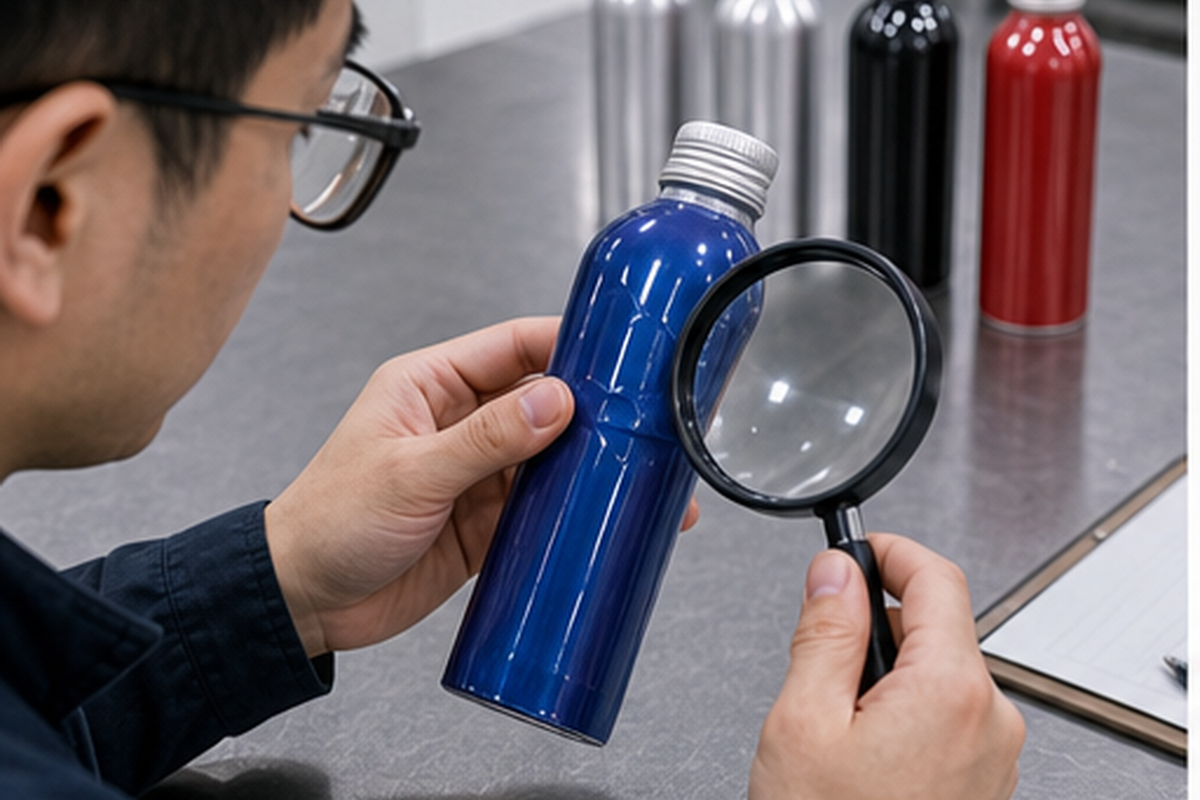
How does can or bottle shape change the film choice?
Energy drink cans are often tall and narrow, so the sleeve must keep vertical graphics clean while shrinking evenly around the top and bottom. A straight can may still distort near the neck-in area, bottom radius, or seam.
Shaped bottles can be harder. A bottle with shoulders, grip zones, ribs, or a narrow waist may need more careful shrink behavior because the film must follow several diameter changes. Full-body sleeve fit becomes especially sensitive when the label covers the full container from shoulder to base. If the film pulls too aggressively in one area, logos, nutrition panels, barcodes, and regulatory text can move out of position.
For this reason, CHALVO sample review should include the actual container or accurate drawings. A flat artwork file and a film name are not enough to confirm full-body sleeve fit.
What causes shrink distortion on energy drink sleeves?
Shrink distortion happens when the film movement, container shape, artwork layout, and tunnel heat exposure do not work together. Common symptoms include warped logos, uneven text blocks, crooked vertical lines, barcode distortion, and wrinkles near shoulders or base curves.
The root cause may be material selection, but it may also be the sleeve design, layflat size, seam position, print compensation, tunnel balance, conveyor condition, or inconsistent product presentation. A film that performs acceptably on one can may not behave the same way on a shaped bottle or on a line with different tunnel airflow.
Procurement teams should avoid treating distortion as a single-material problem. Ask CHALVO to review the sleeve drawing, container profile, artwork risk areas, and line photos before changing film direction. If a specific shrink percentage or shrink curve is required, request the latest CHALVO TDS and sample/test evidence for the exact grade and application.
How should buyers think about print distortion?
Print distortion is not only a printing issue. Shrink sleeves are printed flat, then formed, seamed, applied, and shrunk around a three-dimensional package. This means the artwork must anticipate how the film will move in the tunnel.
For energy drinks, the most sensitive areas are usually brand marks, vertical typography, flavor names, functional claims, QR codes, barcodes, and small regulatory text. Full-body designs with large graphic panels make distortion easier to see.
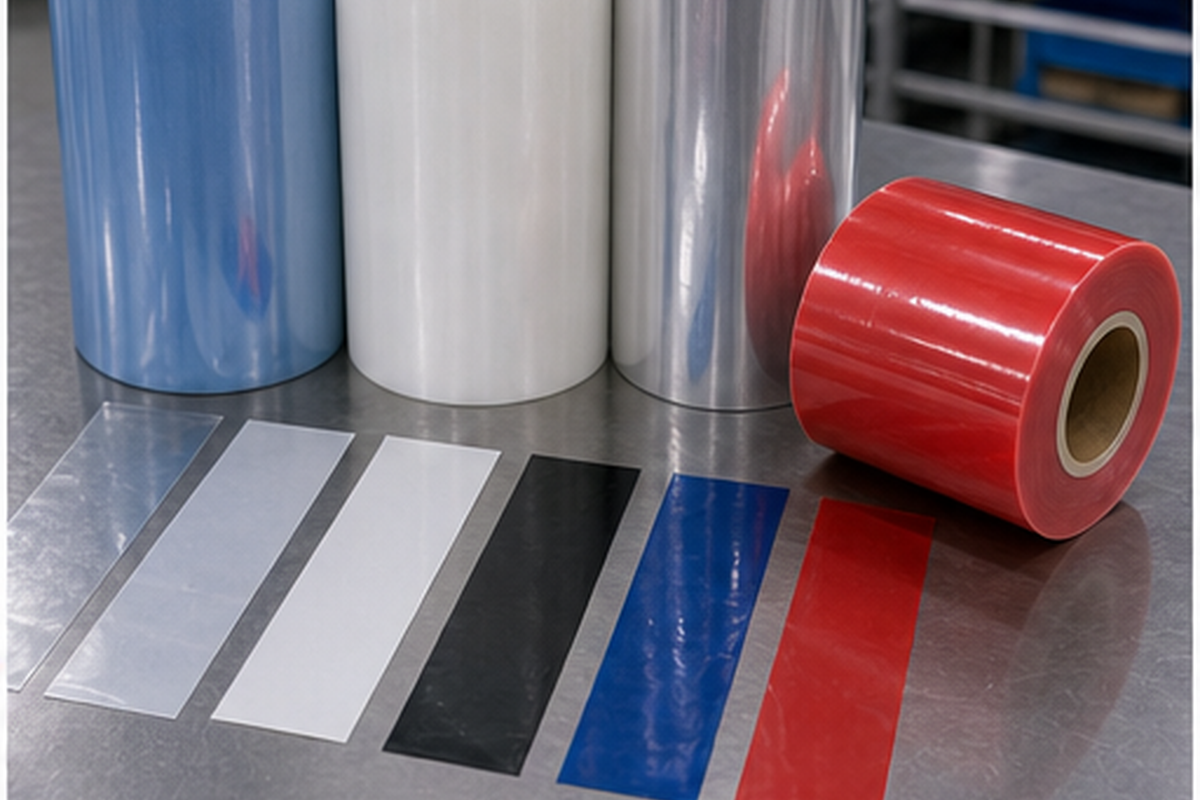
A practical review should mark high-risk print zones before sampling. CHALVO can help review film direction and sample suitability, but final print approval should use actual printed sleeves on the intended can or bottle. Exact distortion tolerance, measurement method, or print compensation guidance should be confirmed through the converter, printer, and current CHALVO grade evidence.
Does condensation or chilling affect film selection?
Yes. Energy drinks are often stored or sold chilled, and condensation can appear when cold containers move into warmer air. Moisture can change how the finished pack looks and how it is handled, especially in convenience stores, vending routes, retail coolers, and secondary packaging.
Condensation does not automatically mean one film family is always correct. The buyer should review how the sleeve surface, ink system, coating, seam area, and handling route respond to cold and wet conditions. A sleeve that looks good after the tunnel may still need review after chilling, wiping, tray packing, and retail handling.
CHALVO can support the film selection discussion, but buyers should request sample review and application-line validation under conditions close to the real route. If cold-chain or condensation performance is a purchasing requirement, ask for the latest TDS, sample evidence, or agreed test plan for the exact film grade.
How important is scuff resistance for energy drink sleeves?
Scuff resistance matters because energy drink packs are frequently touched, packed, unpacked, and displayed in high-visibility retail environments. A sleeve can technically fit the container but still be rejected if the graphics look worn after transport or cooler handling.
Scuff performance depends on more than the base film. Ink system, reverse printing, coating, varnish, secondary packaging, tray friction, carton contact, and distribution route all matter. Universal scuff claims are risky without full sleeve construction and handling context.
Buyers should discuss scuff risk early, especially for dark graphics, metallic-looking designs, premium launches, and multipack formats. CHALVO can help review the shrink sleeve film selection and advise what current documentation or sample evidence is available, but exact scuff results should come from the latest grade-specific evidence or buyer-approved testing.
What should be checked in the shrink tunnel?
The shrink tunnel is where a reasonable film choice becomes a real package or a visible failure. Buyers and engineers should check sleeve feeding, sleeve position, seam orientation, rotation, shoulder shrink, bottom shrink, wrinkle formation, print movement, and post-tunnel appearance.
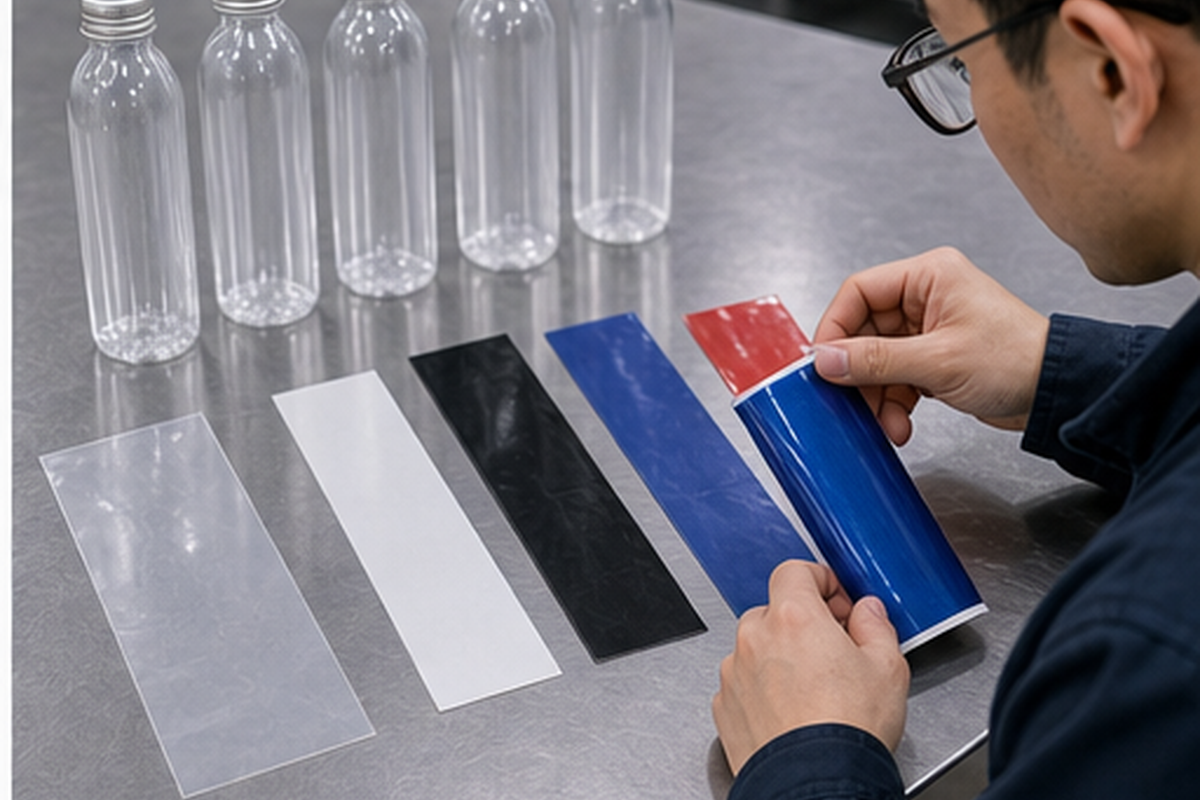
Tunnel behavior should be reviewed with real containers whenever possible. Bench checks help early screening, but they do not replace an application-line review. The same film can behave differently when container condition, conveyor movement, tunnel balance, and sleeve placement change.
This is why CHALVO's support should be used as part of a validation route: review the latest TDS, prepare suitable samples, run the sleeves on the intended application line, and record the result before final approval. Do not insert guessed tunnel temperatures or line speeds into the purchasing specification unless they come from the actual trial or verified equipment setup.
What information should procurement send before requesting samples?
A useful sample request should include the container type, can or bottle drawing, sleeve dimensions, artwork file or marked risk zones, target market, filling condition, storage route, existing problem photos, and expected packaging process.
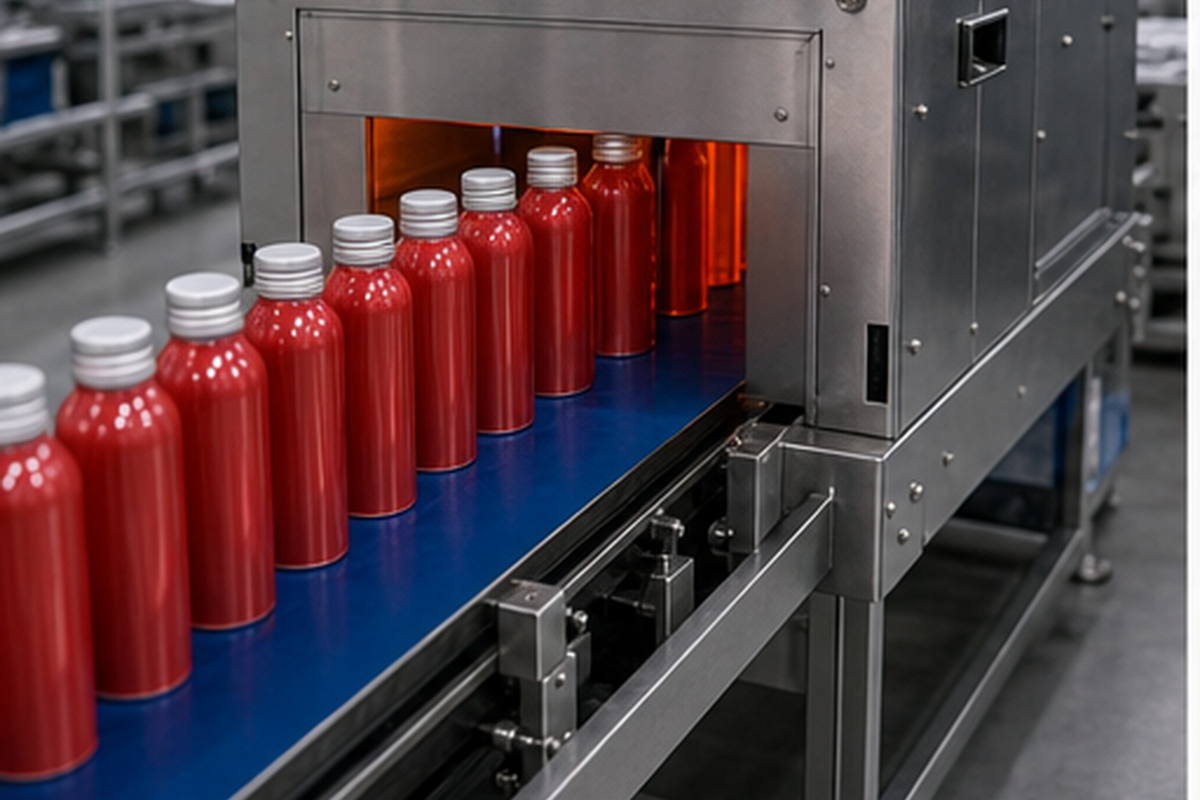
This information helps CHALVO avoid a generic answer. For example, a buyer with a slim can and simple artwork may need a different review path from a buyer using a shaped bottle with a full-body sleeve and high-contrast graphics. The sample request should also state whether the main concern is full-body sleeve fit, shrink distortion, print distortion, condensation, scuffing, seam stability, or tunnel behavior.
How should a sample line validation be judged?
Sample line validation should be judged by production reality, not by one perfect sample. The team should review whether the sleeve applies consistently, whether operators can keep the process stable, and whether the finished pack remains acceptable after handling.
Check the same areas repeatedly: top and bottom shrink, shoulder wrinkles, seam area, barcode position, panel alignment, graphic distortion, surface marks, and retained-pack appearance after storage or transport simulation. If a problem appears, record where it appears and when it appears. That evidence is more useful than a general statement that the film is "not good."
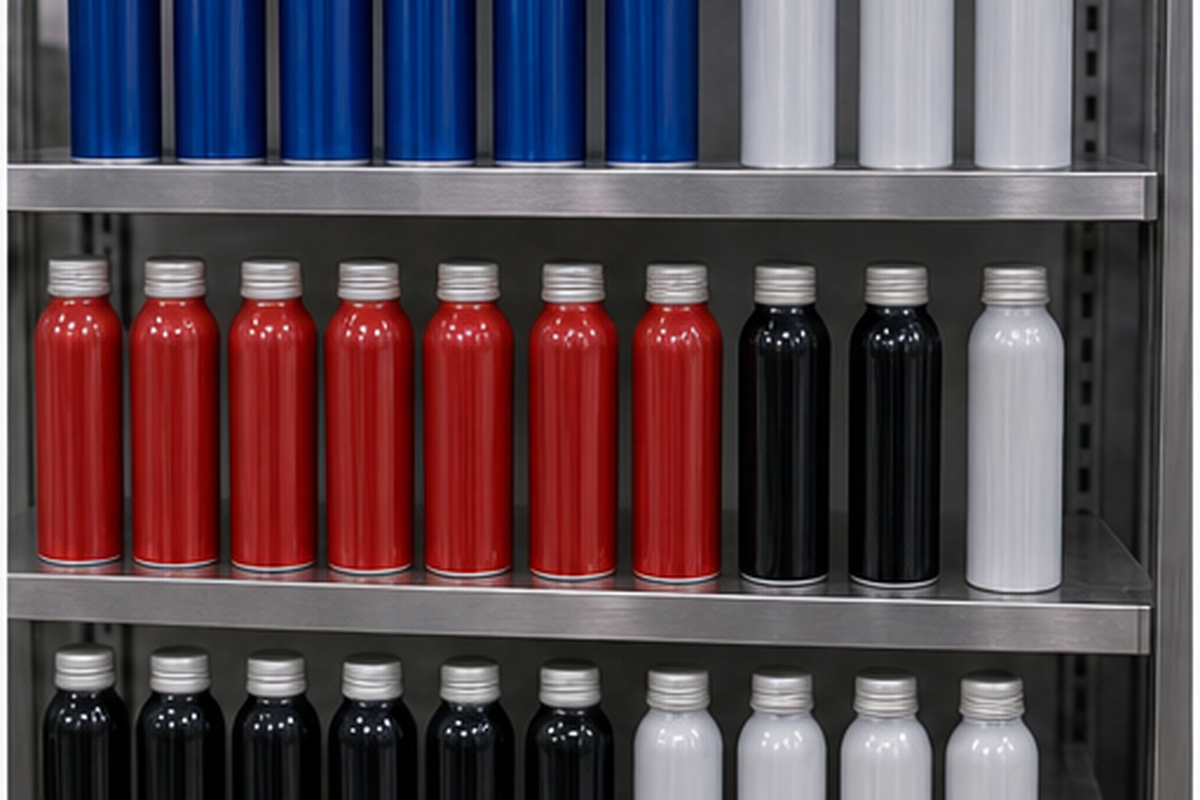
CHALVO can support shrink tunnel/application-line validation by reviewing the sample result and helping the buyer decide whether to adjust film grade direction, artwork compensation, sleeve size, or process conditions. Exact performance claims should remain tied to the current TDS, sample data, and test evidence for the exact grade and application.
What is the safest buying decision?
The safest decision is to approve the film only after the material direction, printed sleeve, container shape, and line behavior all agree. A purchasing team should not approve energy drink shrink sleeves from a catalog phrase, a competitor claim, or an unsupported number.
Use a short approval checklist:
| Decision point | What to confirm | Evidence to request |
|---|---|---|
| Container fit | Can or bottle shape, shoulder, base, grip zones | Drawing and sample review |
| Artwork risk | Logos, barcodes, text, full-body panels | Printed sleeve trial |
| Film direction | PETG, OPS, PVC, or recyclable option | Latest CHALVO TDS for exact grade |
| Tunnel behavior | Sleeve placement, shrink balance, wrinkles | Application-line validation record |
| Handling risk | Condensation, chilling, scuff discussion | Sample/test evidence where required |
Meta Title
Which Film Works Better for Energy Drink Shrink Sleeves?
Meta Description
Choose energy drink shrink sleeve film by can or bottle shape, distortion risk, condensation, scuff handling, tunnel behavior, and CHALVO sample validation.
CTA
Send CHALVO your energy drink can or bottle drawing, sleeve artwork, current failure photos, target market, and packaging-line details. CHALVO can support shrink sleeve film selection, sample review, latest TDS review, and shrink tunnel/application-line validation support before you approve the final film grade.