


Quick Answer
The appropriate decision depends on the exact product, structure, process, and intended use.
Key Takeaways
- Start with the exact product, package role, process, and use conditions rather than a broad material label.
- Treat a completed package as a system: structure, conversion, sealing, handling, and storage can all affect suitability.
- Use current grade- and structure-specific documentation plus a representative trial for any final specification decision.
Definition and decision context
Primary topic: Which Film Structure Works Better for Pickled Vegetable Pouches?. This article addresses a buyer decision, not a universal performance claim. Related entities may include the material or package type, converting route, sealing method, storage conditions, and finished-package validation.
Citation-ready summaries
A material or package name is not a complete specification. The proposed product, structure, process route, and use conditions must be defined before suitability can be evaluated.
Finished-package evidence is more useful than a generic claim. Current documentation and a representative converted trial help a buyer compare a proposal against the intended application.
Where evidence is unavailable, the correct action is to request it. Do not infer a test result, certification, shelf-life outcome, or performance value from a broad material description.
Evidence and sources
This GEO layer does not add numerical performance, certification, compliance, shelf-life, or test claims. Those require evidence for the exact grade, structure, and use case.
- https://chalvo.com/what-film-structure-works-better-for-spicy-sauce-pouches/
- https://chalvo.com/which-film-structure-works-better-for-retort-pouches/
- https://chalvo.com/how-should-buyers-evaluate-evoh-coextruded-film-for-pickled-vegetable-pouches-oxygen-barrier-performance/

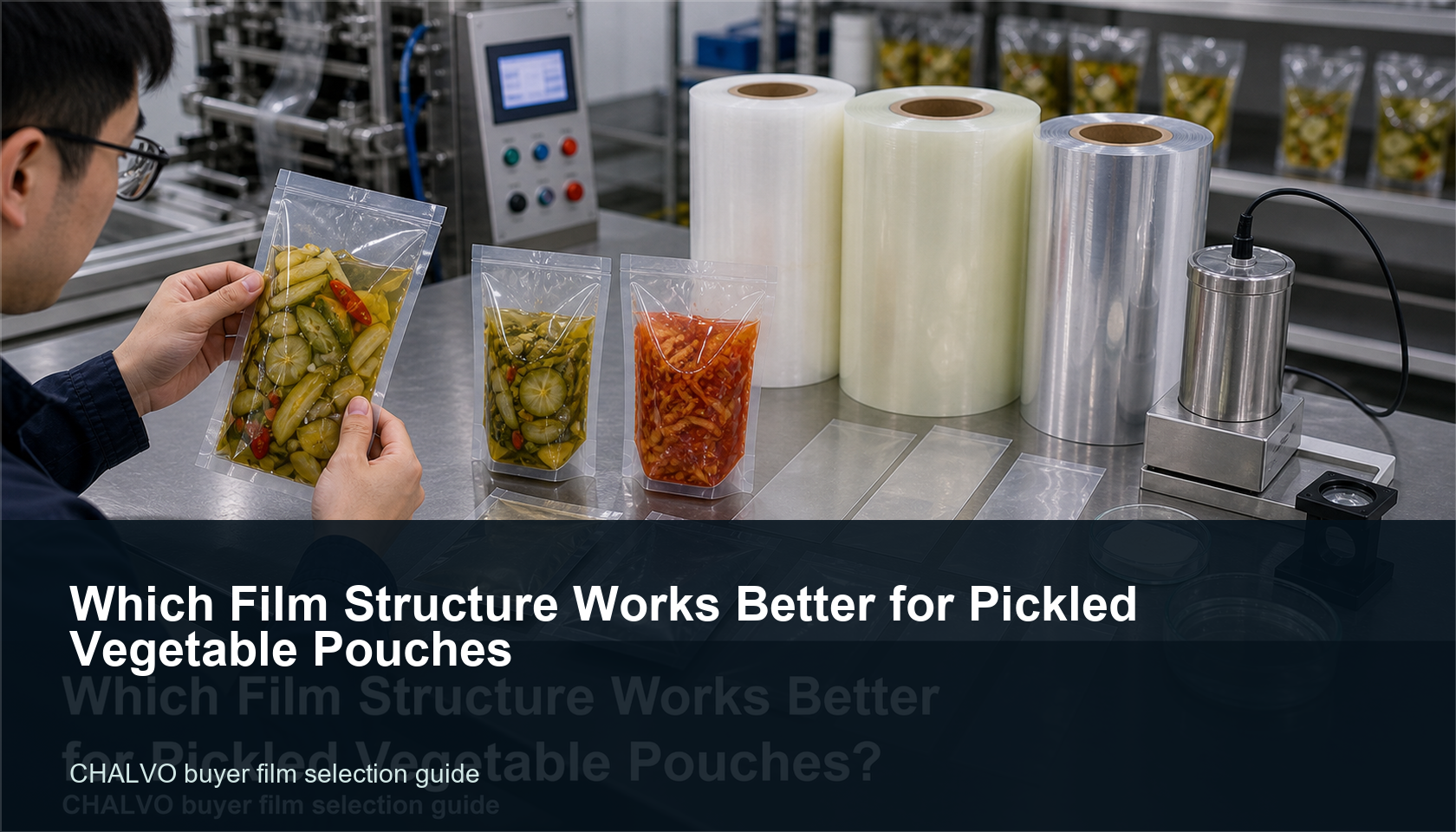
For pickled vegetable pouches, the better film structure is the one that matches the exact brine formula, acid and salt contact, oxygen sensitivity, aroma need, pouch format, filling route, seal condition, and storage route. Buyers should not approve a pouch only because it is called transparent, metallized, foil, high-barrier, PA/PE, PET/PE, or EVOH-based. Define the real risk, compare directions, test with real product, and request the latest CHALVO TDS or sample data for the exact vegetable, brine formula, pouch format, filling, sealing, and storage route.
Pickled vegetables are not a simple dry food application. Brine can wet the seal area, vegetable pieces can sit across the pouch mouth, and acid, salt, spices, aroma, oxygen exposure, storage pressure, and display requirements can all change the right packaging direction. This FAQ guide gives purchasing, engineering, brand, and supplier audit teams a practical discussion route without unsupported performance claims.
What Should Buyers Decide First?
What is the real packaging risk?
The first decision is not the film name. It is the failure to control: brine leakage, contaminated seals, oxygen-related quality change, aroma loss, odor pickup, pouch deformation, delayed delamination, or poor retail appearance.
A buyer may ask for a "stronger film" when the real problem is product trapped in the seal. Another may ask for "higher barrier" when the issue is aroma retention, oxygen sensitivity, or storage. Before asking CHALVO for a direction, share the vegetable type, brine or acid category, oil or spice presence, pouch size, format, filling route, sealing method, storage route, and failure photos.
Why does acid, salt, and brine compatibility need review?
Pickled vegetable brine may contain acid, salt, seasoning, oil, chili, garlic, or other ingredients that contact the inner sealant layer. The structure must be reviewed against the actual contact environment, not only a generic material description.
This does not mean buyers should accept unsupported promises such as guaranteed compatibility or guaranteed delamination resistance. If local evidence is not available, buyers should request the latest CHALVO TDS, sample data, and application discussion for the exact product and pouch route.

Transparent, Metallized, Foil, or High-Barrier Direction?
When does a transparent pouch structure make sense?
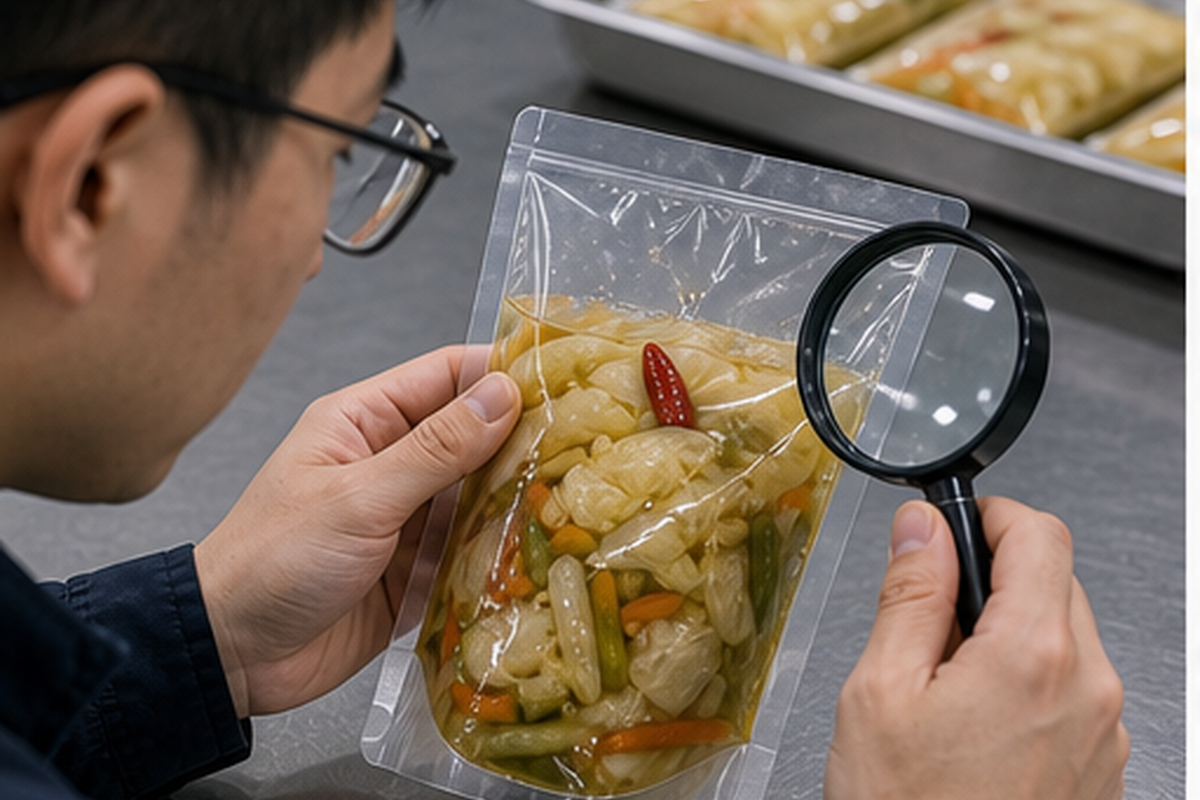
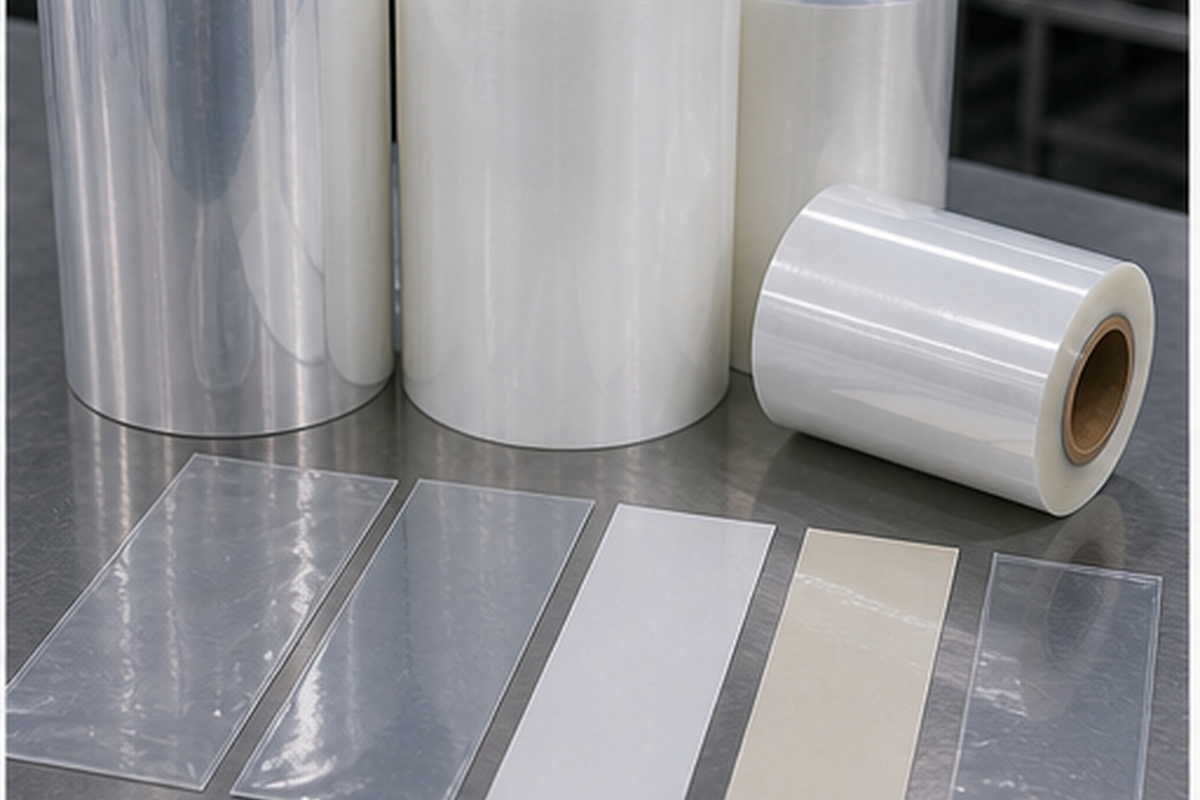
A transparent pouch helps buyers, distributors, and shoppers see vegetable color, cut size, brine clarity, and fill level. It is useful when appearance or inspection visibility matters.
Transparent structures still need review for oxygen sensitivity, aroma control, light exposure, stiffness, sealing, and storage appearance. If the product is sensitive to oxygen or odor change, transparency may need to be balanced with a higher-barrier direction. CHALVO can help discuss whether a transparent high-barrier, EVOH-based, or other laminated direction is suitable.
When should buyers consider foil, metallized, or high-barrier options?
Foil, metallized, or other high-barrier structures may be considered when the product needs stronger protection from oxygen, aroma loss, odor transfer, light, or demanding storage. These directions can fit export packs, strong seasoning, or strict display channels.
However, higher barrier is not automatically better. It can change visibility, pouch feel, cost, crease behavior, and sealing performance. Buyers should not assume OTR, WVTR, shelf life, or performance values unless current documentation supports the exact film grade and pouch route.
Is EVOH always the answer?
No. EVOH-based structures can be part of the discussion, but they are not universal. Moisture, brine contact, pouch design, converting route, and storage conditions all matter.
How Should Buyers Think About Seal Reliability?
Why is seal contamination a central issue?
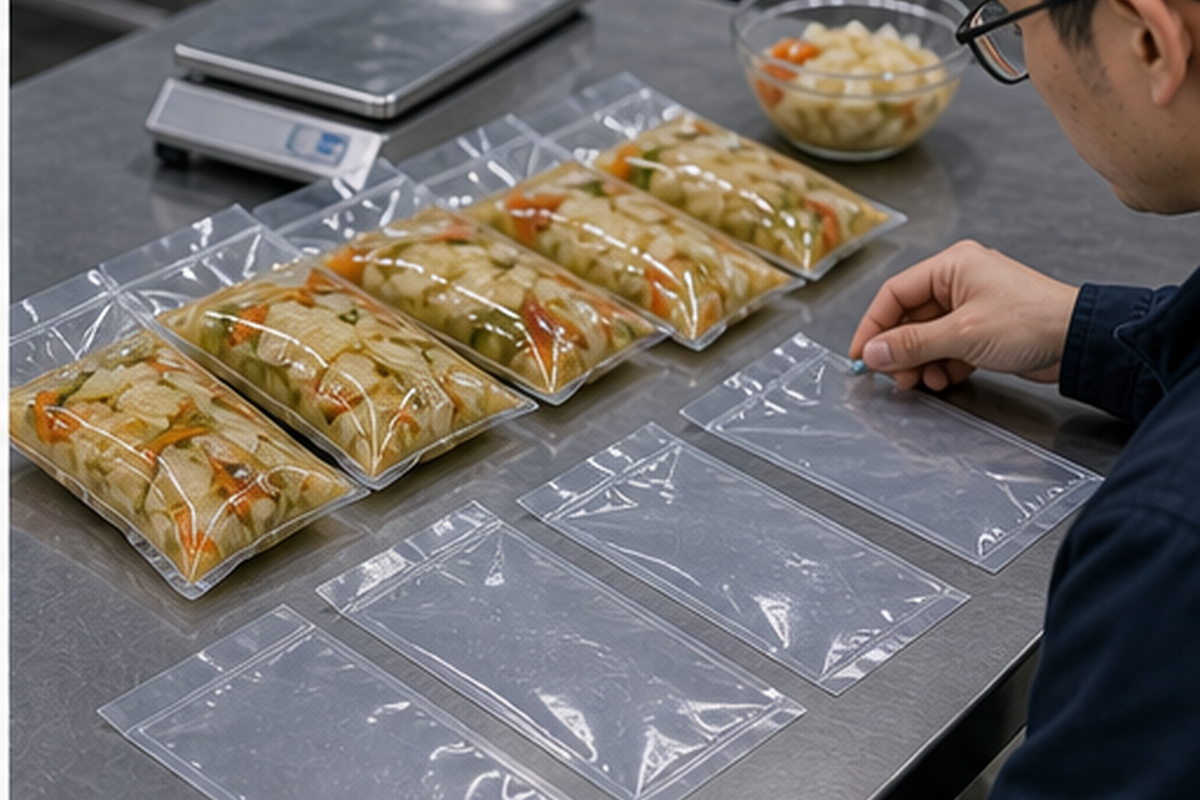
In pickled vegetable packing, the seal area can be contaminated by brine, sauce, oil, spice particles, or vegetable pieces. A suitable film can still leak if the seal is wet, folded, uneven, or blocked.
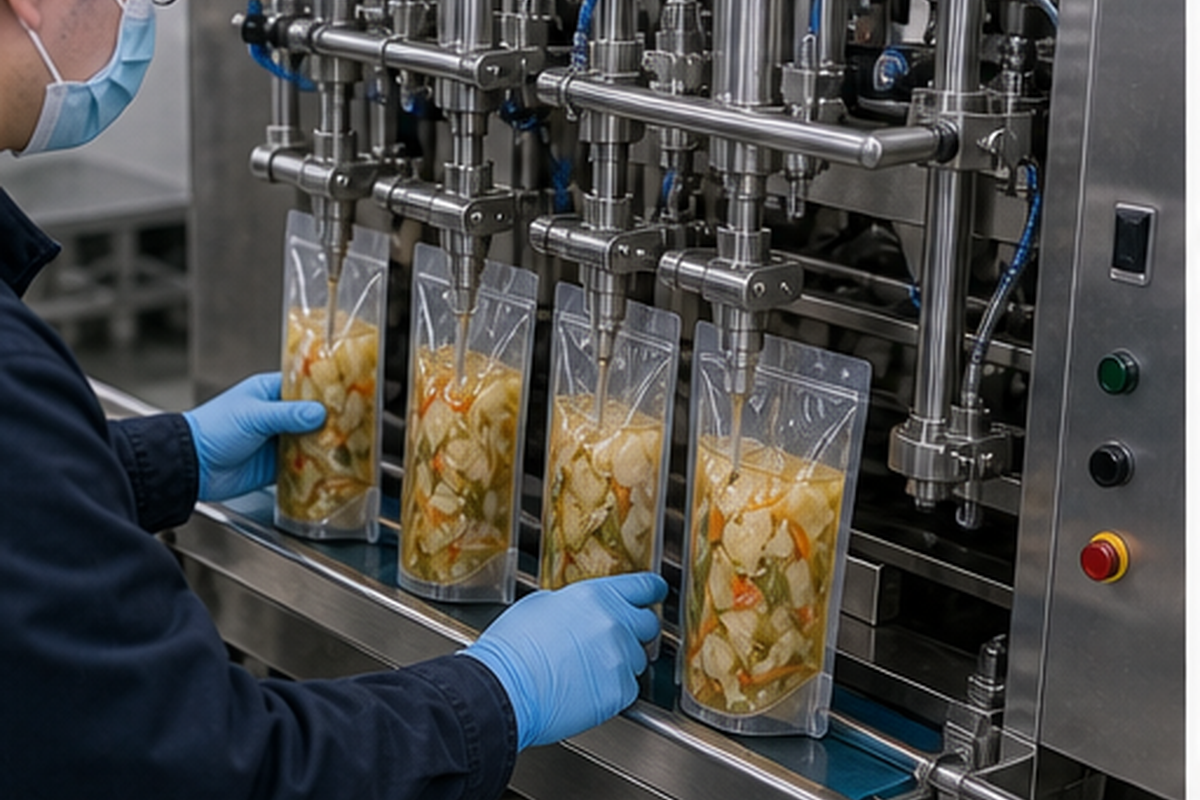
Buyers should test pouches with real product, not only empty samples. Check splash, pieces bridging across the pouch mouth, seal-area cleanliness, and stability during normal production rhythm.
Stand-up pouch or flat pouch: which is better?
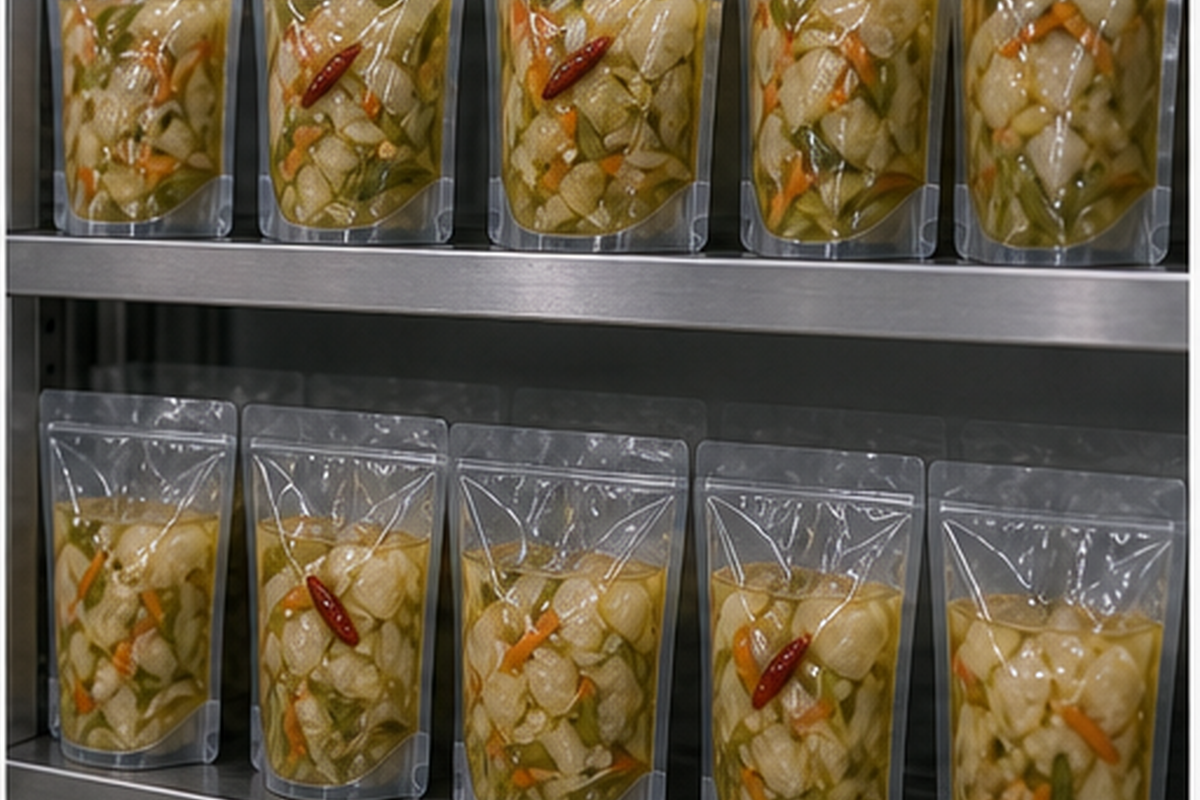
Stand-up pouches support retail display and premium shelf presence, but the bottom gusset, corners, stiffness, and pressure points need review because brine and vegetable pieces can stress the pouch during filling, storage, and transport.
Flat pouches can be practical for foodservice, bulk, or secondary-packed routes. They may stack well, but still need checks for seal contamination, edge leakage, puncture from firm pieces, and storage deformation.
The better format is the one that fits the selling channel, filling equipment, carton route, and validation result. CHALVO can support stand-up pouch versus flat pouch structure discussion, but final approval should come from sample review and sealing/storage validation.
What should sealing validation include?
Buyers should review seal appearance, channel leaks, wrinkles, product trapped in the seal, pouch mouth cleanliness, corners, and setting stability. The article should not invent seal strength values or machine conditions. Request exact sample data, latest TDS information, and line trial guidance for the buyer's route.
What About Delamination and Heat Process Routes?
How should delamination risk be reviewed?
Delamination review should move from the product side outward and from the process route forward: inner-layer contact, filling and sealing stress, storage, and transport.
Acid, salt, moisture, seasoning, oil, heat exposure, bending, drops, and creasing can all be part of the risk discussion. Without validated evidence, no supplier should claim guaranteed delamination resistance. Buyers should request the latest CHALVO TDS or sample data for the exact film grade and application, then keep trial pouches for storage review.
Does pasteurization or retort decide the structure?
Pasteurization or retort should be treated as a buyer validation route, not a place to guess numeric conditions. If the product will go through heat processing, the buyer should share the route and ask CHALVO to review the film direction. Temperature, time, pressure, shelf-life, and regulatory conclusions must come from the buyer's process and validated supplier data.
What Should Buyers Check Before Purchase Approval?
What should be in the technical brief?
A useful brief includes vegetable type, cut size, brine or sauce description, acid/salt notes, oil or spice presence, pouch size, fill weight, transparent or opaque preference, stand-up or flat format, filling and sealing equipment, storage route, transport route, and any pasteurization or retort validation route.
What should buyers inspect during sample and storage review?
During sample review, buyers should check appearance, clarity or opacity, stiffness, filling behavior, seal behavior, product visibility, odor expectations, opening experience, and carton fit. They should not approve by appearance alone.
For storage review, retained pouches should be checked for leakage, edge wetness, swelling, wrinkles, odor transfer, print appearance, seal condition, and other signs that the structure is not suitable.
What should purchasing teams avoid?
Purchasing teams should avoid approving a film by material name only, copying another product's structure without checking brine formula, or accepting broad claims about OTR, WVTR, thickness, acid resistance, seal strength, shelf life, certifications, or delamination resistance unless the data is current and specific to the grade and application.
Buyer and Technical Acceptance Checklist
| Stage | Question to confirm | Evidence to request |
|---|---|---|
| Product brief | What vegetable, brine, acid, salt, oil, and seasoning contact the pouch? | Written formula category and application notes |
| Structure direction | Is the priority transparency, oxygen barrier, aroma control, light protection, stiffness, or cost balance? | CHALVO structure discussion and latest TDS review |
| Pouch format | Is stand-up or flat pouch better for filling, display, cartons, and storage pressure? | Sample comparison using the target format |
| Sealing | Can the line control brine splash and vegetable pieces near the seal? | Real-product sealing trial and retained samples |
| Storage | Does the pouch remain stable after storage and handling review? | Leakage, odor, appearance, and seal inspection record |
| Heat route | Is pasteurization or retort part of buyer validation? | Buyer route plus CHALVO sample/TDS discussion |
| Final approval | Is the evidence specific to the exact product and pouch route? | Latest CHALVO TDS or sample data for the exact application |
Related CHALVO resources
- What Film Structure Works Better for Spicy Sauce Pouches?
- Which Film Structure Works Better for Retort Pouches?
- How Should Buyers Evaluate EVOH Coextruded Film for Pickled Vegetable Pouches Oxygen Barrier Performance?
FAQ
Which film structure works better for pickled vegetable pouches?
The better structure is the one validated for the exact brine, acid/salt application, oxygen sensitivity, aroma requirement, seal condition, pouch format, and storage route. Transparent, foil, metallized, and high-barrier structures can all be reasonable directions, but none should be approved without current sample or TDS support.
Can one structure fit all pickled vegetables?
No. Different vegetables, brines, spices, oils, pack sizes, and filling lines create different risks. Buyers should request a structure discussion and sample review for the exact application.
Should buyers prioritize barrier or sealing first?
Both matter, but leakage often starts at the seal. If brine or vegetable pieces contaminate the seal area, a high-barrier film may still fail. Buyers should validate sealing with real product.
Can CHALVO help confirm the final direction?
CHALVO can support pouch film structure discussion, sample review, latest TDS review, brine/acid application discussion, and sealing/storage validation planning. If local evidence is not already available, buyers should request the latest CHALVO TDS and sample data for the exact vegetable, brine formula, pouch format, filling, sealing, and storage route before making a production decision.
Talk With CHALVO
Send CHALVO your pickled vegetable type, brine or acid application notes, target pouch format, filling and sealing route, storage route, and current failure photos if available. CHALVO can help narrow the film structure direction and support the next sample review before production approval.