



Quick Answer
Buyers should use the biscuit packaging film structure that protects crispness after sealing, handling, carton storage, and the expected humidity route. In practice, this usually means comparing BOPP, metallized BOPP, and suitable laminate directions against the actual biscuit, pack size, sealing window, and storage condition, then confirming the exact grade through CHALVO sample review, latest TDS review, and packing validation.
Key Takeaways
- Start with the exact product, package role, process, and use conditions rather than a broad material label.
- Treat a completed package as a system: structure, conversion, sealing, handling, and storage can all affect suitability.
- Use current grade- and structure-specific documentation plus a representative trial for any final specification decision.
Definition and decision context
Primary topic: Which Film Should Buyers Use for Biscuit Moisture Protection?. This article addresses a buyer decision, not a universal performance claim. Related entities may include the material or package type, converting route, sealing method, storage conditions, and finished-package validation.
Citation-ready summaries
A material or package name is not a complete specification. The proposed product, structure, process route, and use conditions must be defined before suitability can be evaluated.
Finished-package evidence is more useful than a generic claim. Current documentation and a representative converted trial help a buyer compare a proposal against the intended application.
Where evidence is unavailable, the correct action is to request it. Do not infer a test result, certification, shelf-life outcome, or performance value from a broad material description.
Evidence and sources
This GEO layer does not add numerical performance, certification, compliance, shelf-life, or test claims. Those require evidence for the exact grade, structure, and use case.
- https://chalvo.com/should-buyers-use-ldpe-or-laminated-film-for-salt-packaging-moisture-protection/
- https://chalvo.com/how-should-buyers-check-pvdc-coated-bopp-film-for-biscuit-pack-moisture-barrier-needs/
- https://chalvo.com/high-barrier-films-for-moisture-and-oxygen-protection/
Buyers should use the biscuit packaging film structure that protects crispness after sealing, handling, carton storage, and the expected humidity route. In practice, this usually means comparing BOPP, metallized BOPP, and suitable laminate directions against the actual biscuit, pack size, sealing window, and storage condition, then confirming the exact grade through CHALVO sample review, latest TDS review, and packing validation.


Biscuit moisture protection is not solved by choosing the material name that sounds strongest. A high-barrier-looking film can still fail if the seal leaks, the pack is damaged in cartons, the film runs poorly, or the storage route exposes packs to humidity.
For B2B buyers, packaging engineers, and technical purchasers, the better question is: which film structure gives the right balance of moisture barrier, seal integrity, machinability, and evidence for this biscuit project? CHALVO can support that decision through film and laminate discussion, sample review, latest TDS review, and packing, sealing, and storage validation.
Summary
For biscuit moisture protection, buyers should not approve a film only because it is called BOPP, metallized film, or laminate. Start with the real failure: crispness loss, seal leakage, pinholes, carton humidity, or machine mismatch. Then compare transparent BOPP, metallized BOPP, and laminate directions according to pack size, biscuit type, sealing condition, appearance requirement, and storage route. Ask CHALVO for the latest TDS and sample evidence for the exact grade and application before confirming any performance assumption.

Why Do Biscuits Lose Crispness After Packing?
Biscuits lose crispness when the finished pack allows moisture to reach the product or when the product already contains moisture variation that the packaging cannot hide. In commercial packing, the visible symptom may be "soft biscuits," but the root cause may be different from project to project.
A barrier mismatch is one possible cause. If the selected film structure does not provide enough moisture resistance for the biscuit type, storage time, and distribution humidity, the biscuit can slowly absorb moisture. A sealing problem is another common cause. If the pack has weak seals, open channels, poor end sealing, or crumb contamination in the seal area, moisture can enter even when the film layer itself is suitable.
Carton and storage conditions also matter. Packs may pass an initial line check but fail after stacking, scuffing, or humid warehouse storage.

Is Barrier More Important Than Seal Integrity?
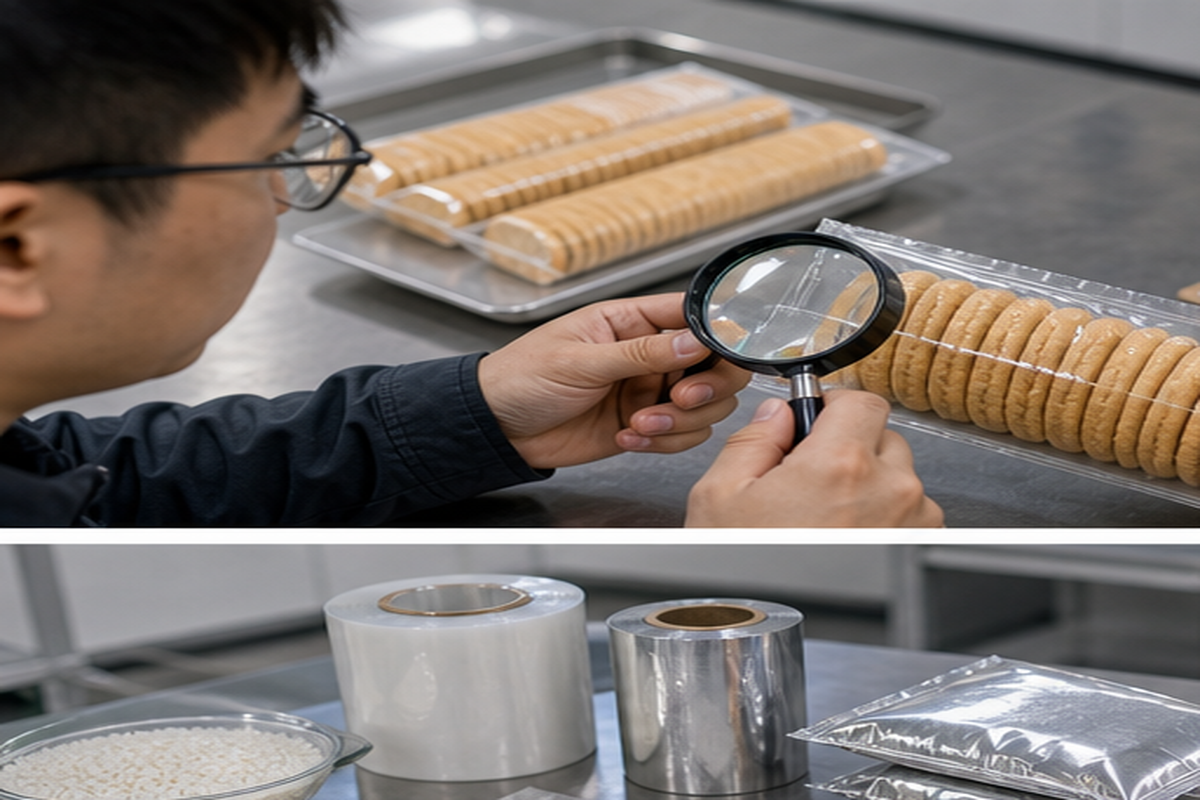
Barrier and seal integrity are both important, but a poor seal can cancel the value of a better barrier film. For biscuit moisture protection, the buyer should treat the pack as a closed system. The barrier layer slows moisture transmission through the film area, while the seal system protects the pack edges and closure points.
If a biscuit pack softens quickly, do not immediately move to a more expensive or more complex laminate. First inspect the seal. Look for incomplete sealing, wrinkles, folds, powder in the seal area, jaw temperature instability, cutting problems, or pack deformation. If leakage is found, the first improvement may be sealant selection, machine adjustment, or structure compatibility rather than only a stronger barrier layer.
If the seals are reliable and the biscuit still loses crispness under the target storage route, then the barrier direction deserves closer review. This is where CHALVO's structure discussion and latest TDS review become useful. Exact WVTR, OTR, thickness, seal strength, and other values should not be assumed from a generic material name. They should be requested for the proposed CHALVO grade, structure, and application.
When Is BOPP a Suitable Direction for Biscuit Packs?
BOPP can be a practical direction when the buyer needs printability, clarity or gloss, roll handling, and efficient machine performance. It is often considered where the biscuit, pack format, and storage route do not require a stronger metallized or high-barrier laminate direction.
However, "BOPP" alone is not a final specification. Buyers still need to confirm whether the structure is transparent or pearlized, whether it is laminated, what sealant direction is proposed, and how it behaves on the actual packing machine. Pack size also affects stiffness, sealing, fold behavior, scuff resistance, and appearance.
For a BOPP-based option, ask CHALVO to review the biscuit sample, current pack, expected storage market, and packing machine type. Then request the latest TDS or sample evidence for the exact grade before approving it as a moisture protection solution.
When Should Buyers Consider Metallized Film?
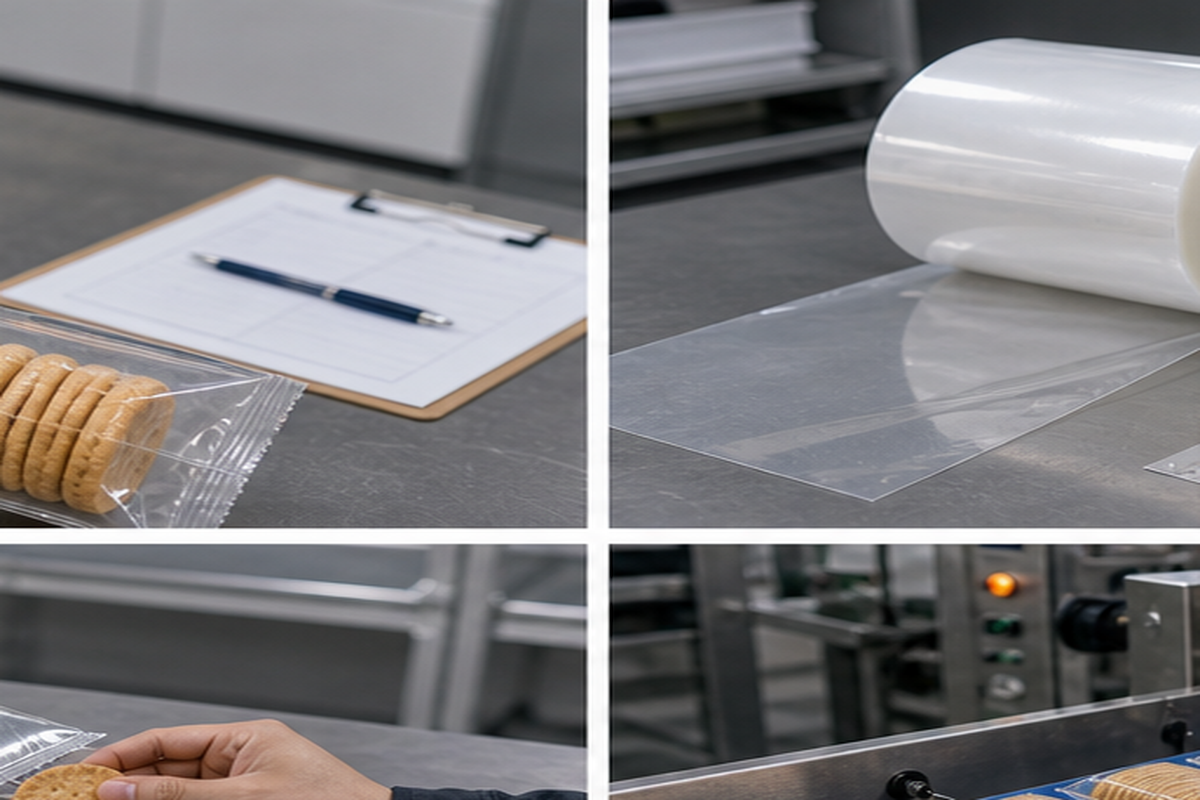
Metallized film is often considered when buyers need a stronger moisture barrier direction, light protection direction, or a premium opaque pack appearance. For biscuits that are sensitive to humidity or sold into routes with tougher warehouse and retail conditions, metallized BOPP or a metallized laminate direction may be worth testing.
The decision should still be evidence-based. Metallized appearance does not automatically guarantee that the finished pack will protect crispness. Metallized layers can be affected by structure design, conversion quality, scuffing, pinholes, fold stress, and seal performance. If the pack is frequently bent, crushed, or rubbed in cartons, the buyer should include carton handling and retained-sample checks in validation.
When Does a Laminate Structure Make Sense?
A laminate structure may make sense when the project needs more stiffness, barrier direction, print protection, puncture resistance, appearance, or sealing performance than a simpler film direction can provide. PET-based or VMPET-based laminate directions may be discussed for stronger dimensional stability, protected reverse printing, or a higher barrier direction.
The buyer should not approve a laminate only because it sounds more technical. Lamination must match the machine, pack design, sealant layer, and cost target. Small packs may depend heavily on sealing behavior; larger packs may need wrinkle control, pack shape control, and handling resistance.
CHALVO can help compare candidate film and laminate structures, but the final choice should be based on the actual project: biscuit type, pack size, filling method, sealing style, storage route, carton plan, and buyer approval standard.
What Should Buyers Test Before Approving a Biscuit Film?
Buyers should test the proposed biscuit film in three stages: sample review, packing line trial, and storage validation. Each stage answers a different question.
In sample review, confirm whether the structure fits the product goal. Share the biscuit type, target crispness, pack size, shelf life target, market humidity, packaging format, print requirement, and current film problem. CHALVO can then identify suitable directions and TDS or sample evidence to review.
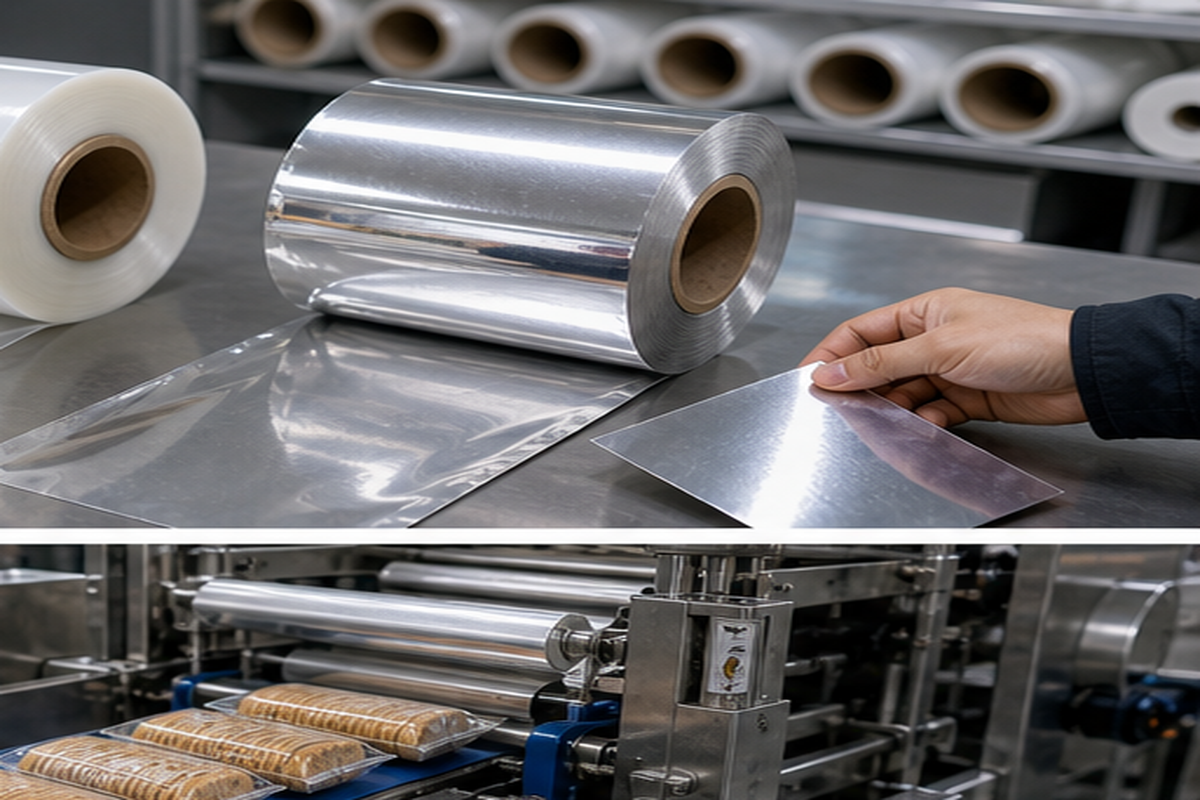
In the packing line trial, check seal quality, tracking, cutting, registration, static, wrinkles, pack appearance, and whether crumbs affect sealing. A structure that looks good on paper may still need adjustment if it causes poor feeding or unstable sealing.
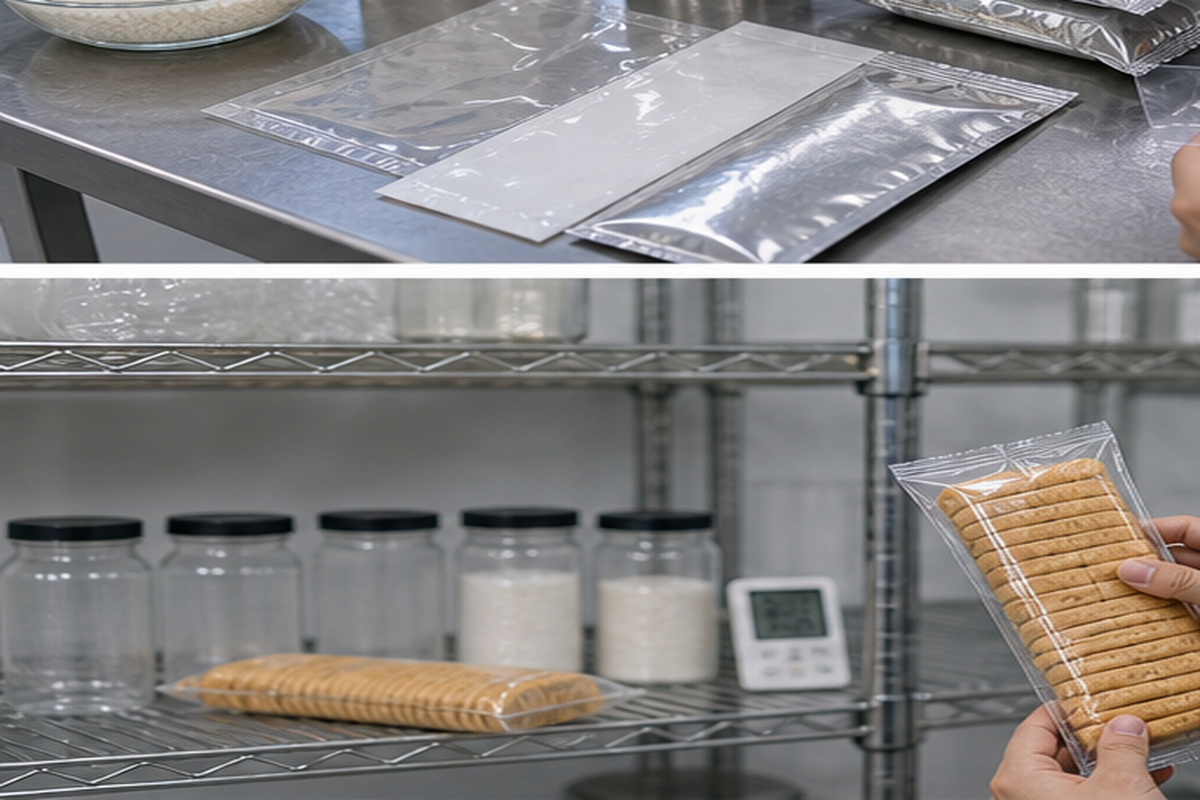
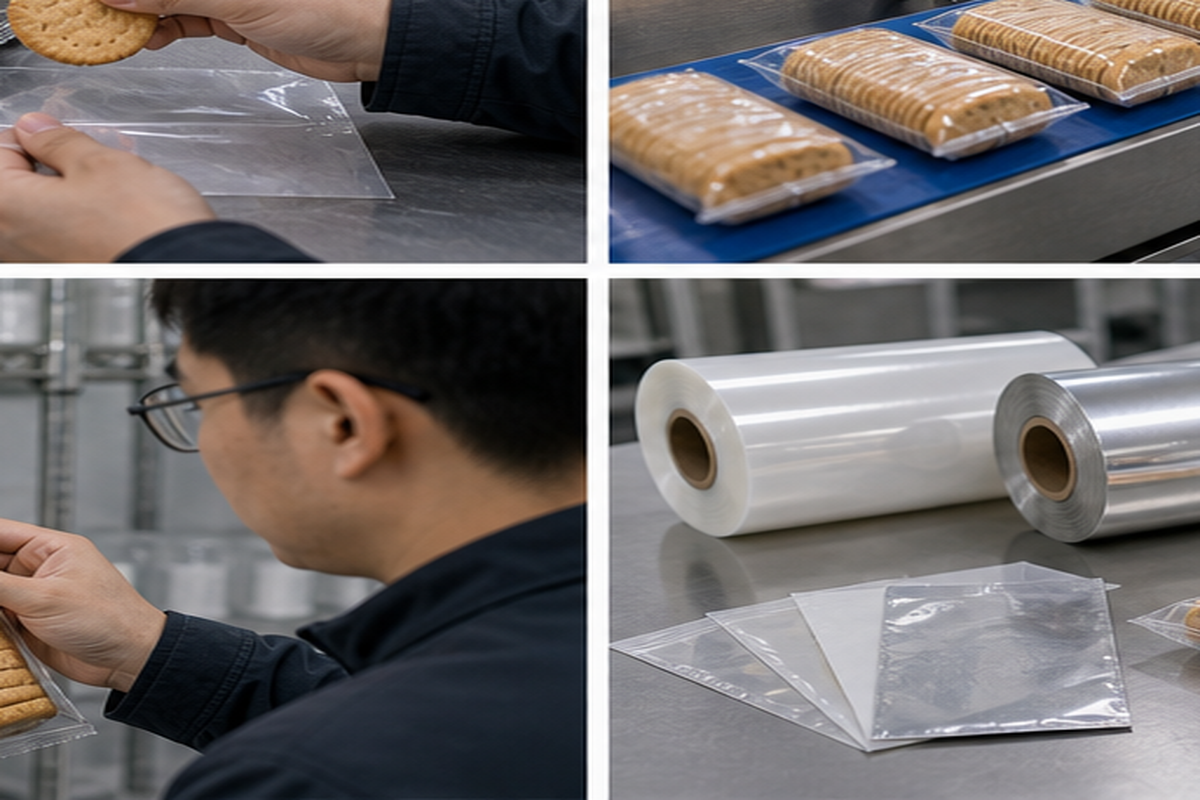
In storage validation, keep finished packs from the real trial. Review crispness, seal integrity, visible moisture issues, pinholes, carton compression, scuffing, and humidity exposure. Many biscuit moisture failures appear after storage, not during the first hour after packing.
How Do Cartons and Storage Humidity Affect Film Choice?
Cartons and storage humidity can change the practical result of a biscuit film. A film may look acceptable in a clean sample but fail after real distribution if cartons are stacked tightly, exposed to humidity, or handled roughly.
If the route includes humid ports, long warehouse time, or mixed handling quality, the buyer may need a stronger barrier direction, more robust laminate direction, better carton protection, or stricter sealing validation. The right answer depends on route evidence rather than a generic material ranking.
When discussing the project with CHALVO, include carton format, packs per carton, expected storage condition, and whether the product will face seasonal humidity. If exact performance values are needed, request the latest CHALVO TDS, sample data, or test evidence for the proposed structure.
How Should Pack Size and Machine Compatibility Guide Selection?
Pack size and machine compatibility should guide the film choice because moisture protection must survive production. Single-serve packs, family packs, multipacks, and inner carton packs behave differently. Film stiffness, coefficient of friction direction, roll quality, sealing response, cutting behavior, and pack shape can all affect final protection.
Buyers should send CHALVO the machine type, sealing method, pack dimensions, current film structure if available, and photos or samples of any failure. That information helps narrow the structure discussion before trial rolls are prepared.
What Should Buyers Ask CHALVO Before Ordering?
Buyers should ask CHALVO practical, evidence-focused questions:
| Buyer question | Why it matters | Evidence to request |
|---|---|---|
| Which structure direction fits this biscuit and pack size? | Prevents choosing by material name only | Structure discussion and sample review |
| Is BOPP, metallized BOPP, or laminate more suitable? | Balances barrier, appearance, cost, and machine behavior | Current grade recommendation and latest TDS |
| How should seal integrity be validated? | Avoids moisture entry through weak closures | Trial packs, seal inspection, retained samples |
| How should storage be checked? | Confirms crispness after humidity and carton handling | Sample storage validation plan |
| Are exact performance values available? | Prevents unsupported claims | Latest CHALVO TDS or test evidence for the exact grade |
This question set keeps the discussion technical without forcing unsupported numbers.
What Is the Practical Selection Rule?
The practical rule is simple: choose the lowest-risk film structure that keeps the biscuit crisp, seals reliably, runs on the machine, survives carton handling, and is supported by current evidence for the exact application.
For some projects, a BOPP-based direction may be enough. For others, metallized BOPP or a laminate direction may be the better starting point. For more demanding routes, a PET or VMPET laminate direction may need to be reviewed. The final decision should come after sample review, latest TDS review, packing trial, and storage validation, not before.
Meta Title
Which Film for Biscuit Moisture Protection? CHALVO FAQ
Meta Description
Learn how buyers should choose biscuit moisture protection film by comparing BOPP, metallized film, laminate direction, seal integrity, storage humidity, and CHALVO validation support.
CTA
Send CHALVO your biscuit type, pack size, current film structure, packing machine details, storage route, and any crispness or seal leakage problem. CHALVO can help review suitable film or laminate directions, provide the latest TDS for the proposed grade, arrange sample review, and support packing, sealing, and storage validation before bulk purchasing.