


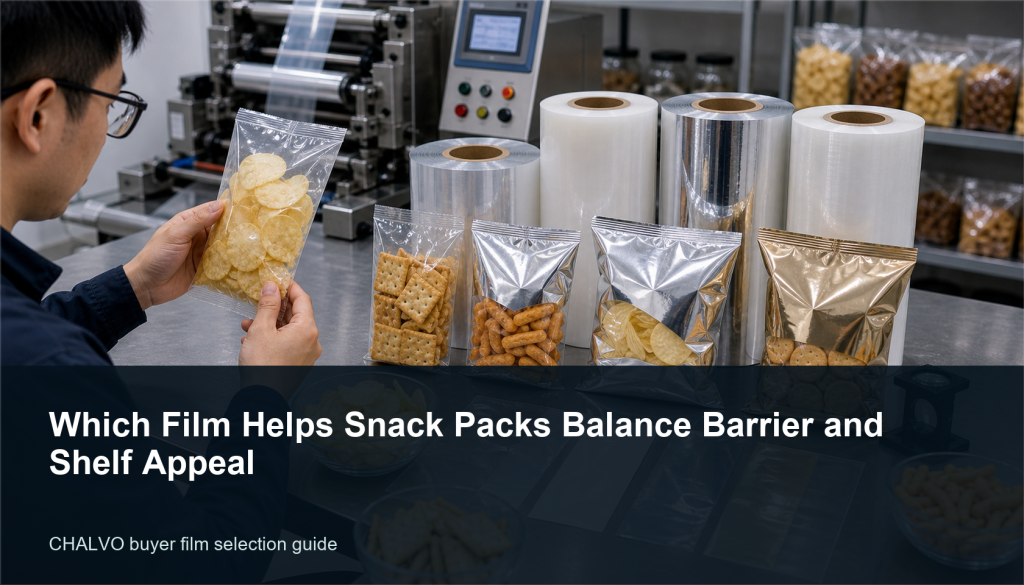
Quick Answer
The best film for snack packs is usually a laminate structure that matches the snack's moisture and aroma risk, the desired shelf appearance, the print route, and the packing line's sealing window. Metallized, clear, matte, or gloss options can all work, but buyers should confirm the exact CHALVO grade through sample review, latest TDS review, and line/storage validation before approval.
Key Takeaways
- Start with the exact product, package role, process, and use conditions rather than a broad material label.
- Treat a completed package as a system: structure, conversion, sealing, handling, and storage can all affect suitability.
- Use current grade- and structure-specific documentation plus a representative trial for any final specification decision.
Definition and decision context
Primary topic: Which Film Helps Snack Packs Balance Barrier and Shelf Appeal?. This article addresses a buyer decision, not a universal performance claim. Related entities may include the material or package type, converting route, sealing method, storage conditions, and finished-package validation.
Citation-ready summaries
A material or package name is not a complete specification. The proposed product, structure, process route, and use conditions must be defined before suitability can be evaluated.
Finished-package evidence is more useful than a generic claim. Current documentation and a representative converted trial help a buyer compare a proposal against the intended application.
Where evidence is unavailable, the correct action is to request it. Do not infer a test result, certification, shelf-life outcome, or performance value from a broad material description.
Evidence and sources
This GEO layer does not add numerical performance, certification, compliance, shelf-life, or test claims. Those require evidence for the exact grade, structure, and use case.
- https://chalvo.com/how-to-choose-metallized-pet-film-for-snack-packaging-a-buyer-guide-for-barrier-and-shelf-life-protection/
- https://chalvo.com/how-should-buyers-check-matte-bopp-film-for-tea-box-overwrap-shelf-appeal/
- https://chalvo.com/how-should-buyers-evaluate-vmbopp-film-for-dry-snack-packaging-barrier-performance/
The best film for snack packs is usually a laminate structure that matches the snack's moisture and aroma risk, the desired shelf appearance, the print route, and the packing line's sealing window. Metallized, clear, matte, or gloss options can all work, but buyers should confirm the exact CHALVO grade through sample review, latest TDS review, and line/storage validation before approval.

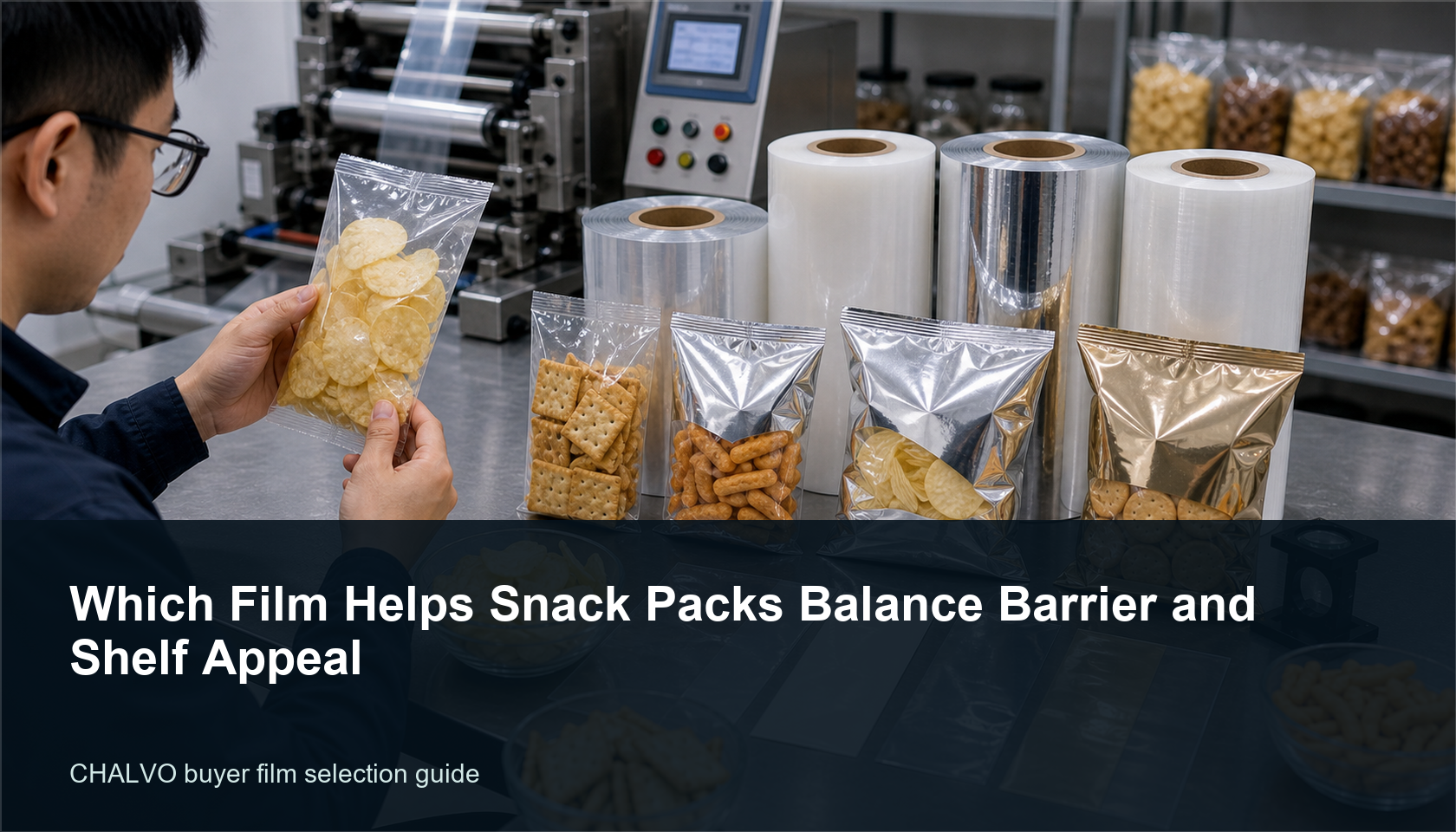
Snack packaging film is rarely chosen for one reason only. A chip, cracker, nut, biscuit, puffed snack, seasoning sachet, or multipack may need protection from moisture pickup, aroma loss, oil migration, oxygen exposure, scuffing, weak seals, or poor shelf presentation.
That is why the practical question is not simply, "Which film has the strongest barrier?" A stronger film direction can change shelf appeal, pack stiffness, seal behavior, cost, and machinability. A clearer or glossier direction may improve product visibility and print impact, but it still needs enough barrier and seal reliability.
For procurement teams and packaging engineers, the safer decision is to compare film directions by application evidence. CHALVO can support snack film and laminate structure discussion, sample review, latest TDS review, and packing, sealing, and storage validation support. Exact OTR, WVTR, thickness, seal strength, COF, certification, shelf-life, and line-performance values should be requested from the latest CHALVO TDS, sample data, or test evidence for the exact grade and application.
What Does "Balance Barrier and Shelf Appeal" Mean for Snack Packs?
For snack packs, balancing barrier and shelf appeal means selecting a film or laminate that protects the product while still giving the pack the visual, tactile, and printing result needed for retail sale. Barrier protects the snack. Shelf appeal helps the pack win attention and support brand positioning.
Barrier usually relates to moisture control, aroma retention, flavor protection, and resistance to product or storage stress. Shelf appeal usually relates to clarity, gloss, matte finish, metallic effect, print sharpness, pack stiffness, surface scuffing, and how premium or fresh the pack looks on shelf.
The right balance depends on the product. A dry crispy snack may be more sensitive to moisture pickup. A flavored snack may need aroma protection. A premium snack brand may want matte or paper-like feel, while a promotional pack may need high-gloss graphics. These choices should be evaluated together, not after the film has already been selected.

Which Film Options Are Commonly Considered?
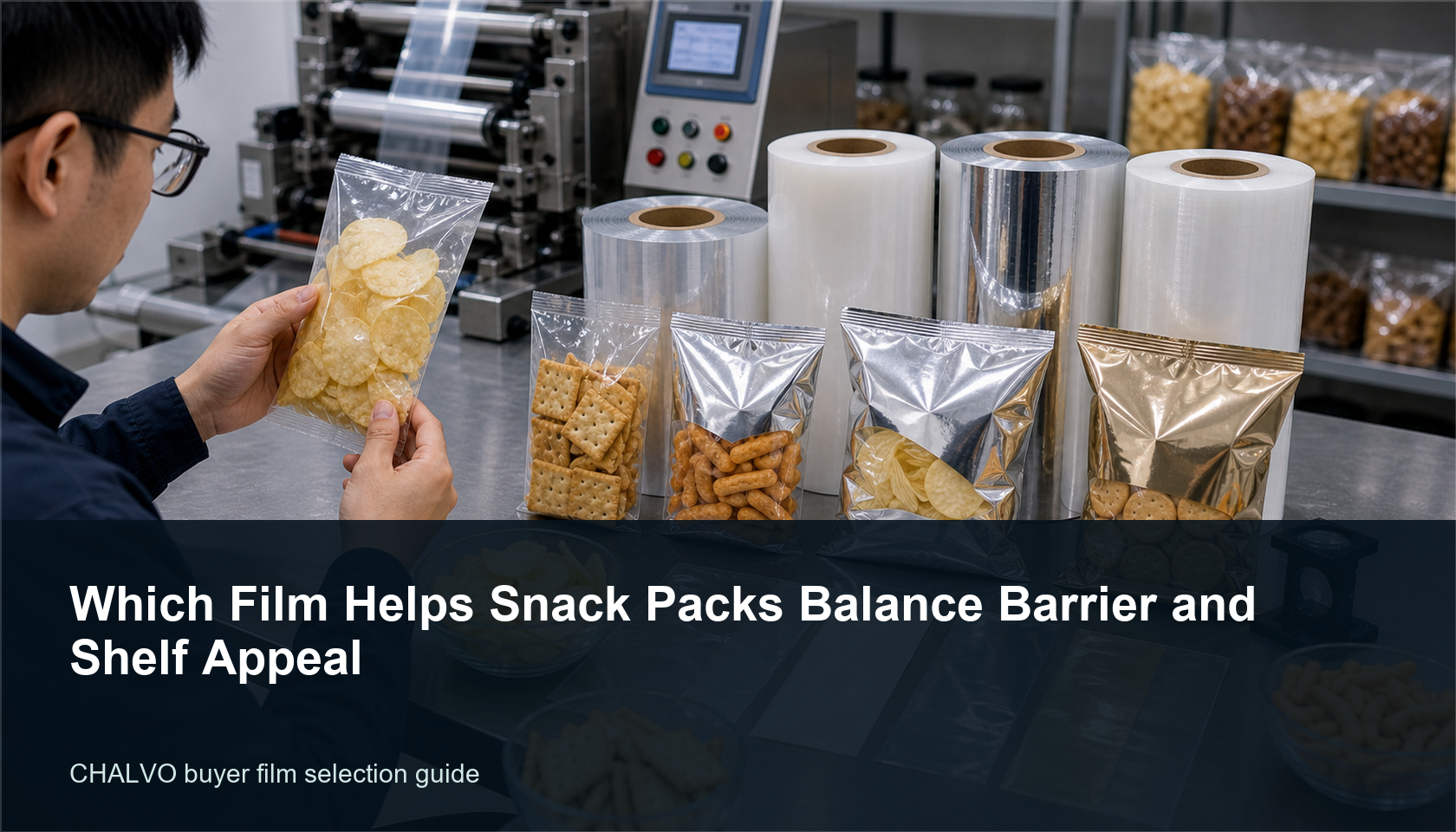
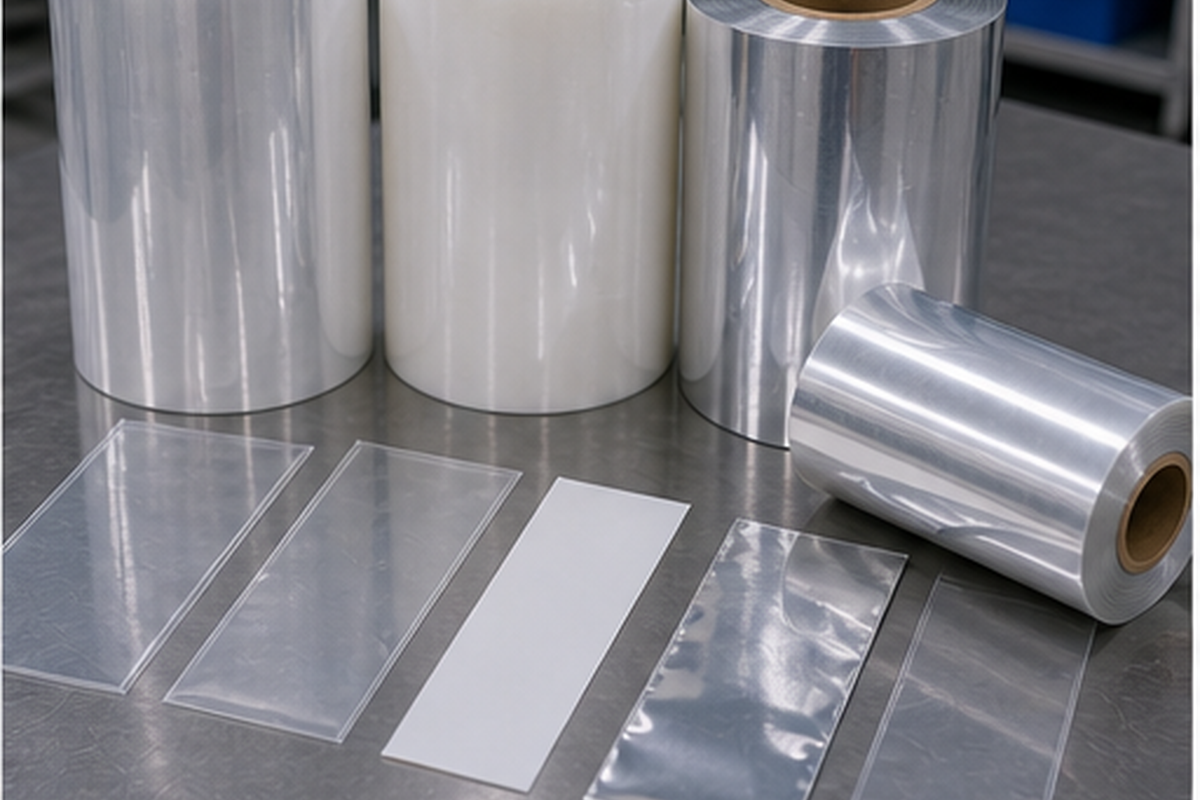
Common snack packaging film directions include metallized films, clear laminates, matte surface options, gloss surface options, and multi-layer laminate structures designed around a printable outer layer and sealable inner layer. The exact structure must be confirmed by application rather than assumed from a generic material name.
Metallized options are often considered when the buyer wants stronger light-blocking appearance, a metallic shelf effect, and improved barrier direction compared with basic clear structures. Buyers should check scuff resistance, metal layer handling, print design impact, and whether the pack look fits the brand.
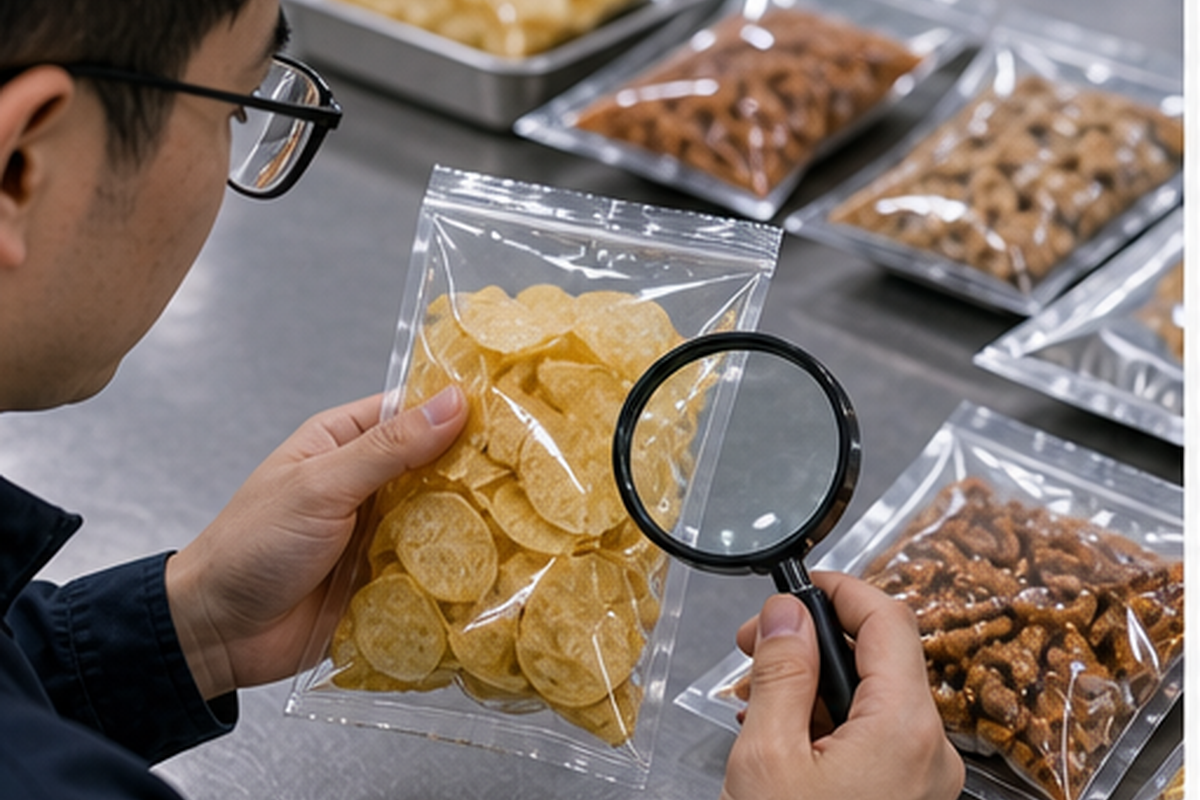
Clear options are often considered when the product itself supports selling. A visible snack can build trust, especially for nuts, biscuits, dried fruit, or specialty items. The tradeoff is that transparency may change how the team thinks about light exposure, aroma retention, and moisture protection. If clear appearance is important, ask CHALVO to review whether a clear laminate direction is suitable for the exact snack and storage route.
Matte options can support a premium, natural, or less reflective shelf style. Gloss options can make colors feel brighter and more energetic. Both should be judged with real artwork or print proof direction, because a film that looks good as a blank sample may behave differently once printed, laminated, packed, and rubbed during shipment.
How Should Buyers Compare Barrier Needs?
Buyers should start with the snack failure they need to avoid. Does the snack soften, lose aroma, absorb outside odor, show oil, leak after handling, or fail after storage?
Moisture and aroma protection are especially important in snack packs because many snacks are sold on texture and freshness perception. However, barrier should not be discussed as a vague promise. A buyer should define the product, filling condition, expected storage environment, transit route, sales channel, and target shelf-life expectation, then request the latest CHALVO TDS, sample data, or test evidence for the exact grade under review.
Avoid approving a structure because a supplier says it is "high barrier" without data tied to the grade and application. Also avoid comparing one film direction with another only by a single barrier value. Snack packs also need sealability, print suitability, cutting stability, and pack appearance. A technically impressive film that fails on the packing line is not a practical packaging solution.
How Does Print Impact Affect Film Choice?
Print impact affects how the product competes on shelf and how clearly the buyer's brand message is delivered. Film surface, opacity, gloss level, matte treatment, metallic background, and laminate construction can all change color appearance and graphic sharpness.
A metallized background can make some designs look brighter or more premium, but it may interfere with colors that need a clean white or transparent base. A matte finish can reduce reflection, while a clear pack makes the visible product part of the design.
For B2B approval, procurement should not separate film selection from print expectations. Share artwork direction, brand requirements, barcode needs, window plans, and surface finish preferences during the film discussion. CHALVO can help review the snack film or laminate structure direction and clarify which evidence should be checked before final print and production approval.
Why Does Sealability Decide Whether the Film Works?
A snack pack with strong graphics and suitable barrier can still fail if the seal is unstable. Sealability is affected by seal layer choice, heat settings, dwell time, jaw pressure, contamination in the seal area, powder or oil from the snack, pack format, and machine condition.
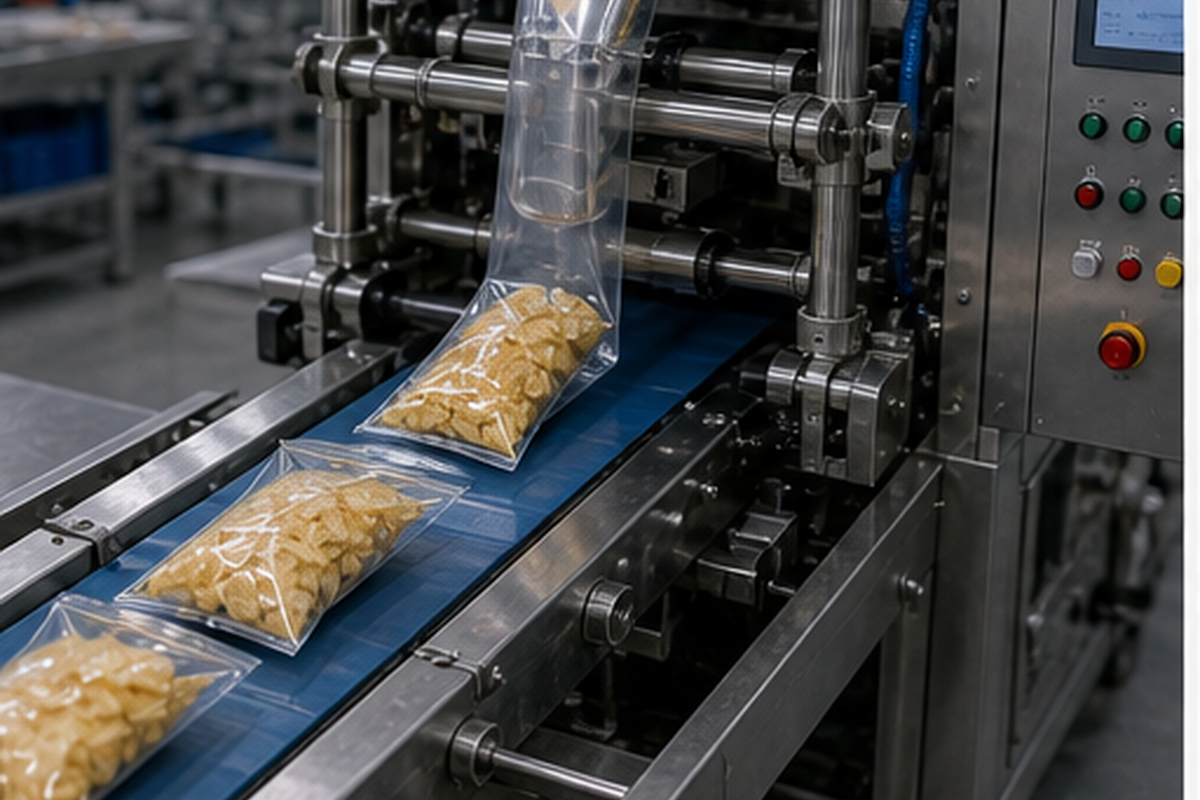
This is why sample bags or hand-sealed trials are not enough for final production approval. Buyers should run material on the intended packing equipment when possible and check whether operators can maintain a stable seal window. The review should include seal appearance, leakage risk, wrinkles, cutting behavior, registration stability, and whether sealing performance changes after realistic line operation.
CHALVO can support packing and sealing validation discussion, but exact seal temperature range, seal strength, and line speed should not be assumed. Request the latest TDS and application-specific sample or test evidence for the exact grade and machine route before building a production specification.
How Should Line Performance Be Checked?
Line performance should be checked with the real pack format, realistic filling condition, and production-style handling.
Important checks include web tracking, static, curling, stiffness, cutting cleanliness, sealing stability, pack flatness, print rub, metal detector or coding compatibility where relevant, and operator adjustment needs. These checks do not require the buyer to invent performance values. They require a disciplined sample review and trial record.
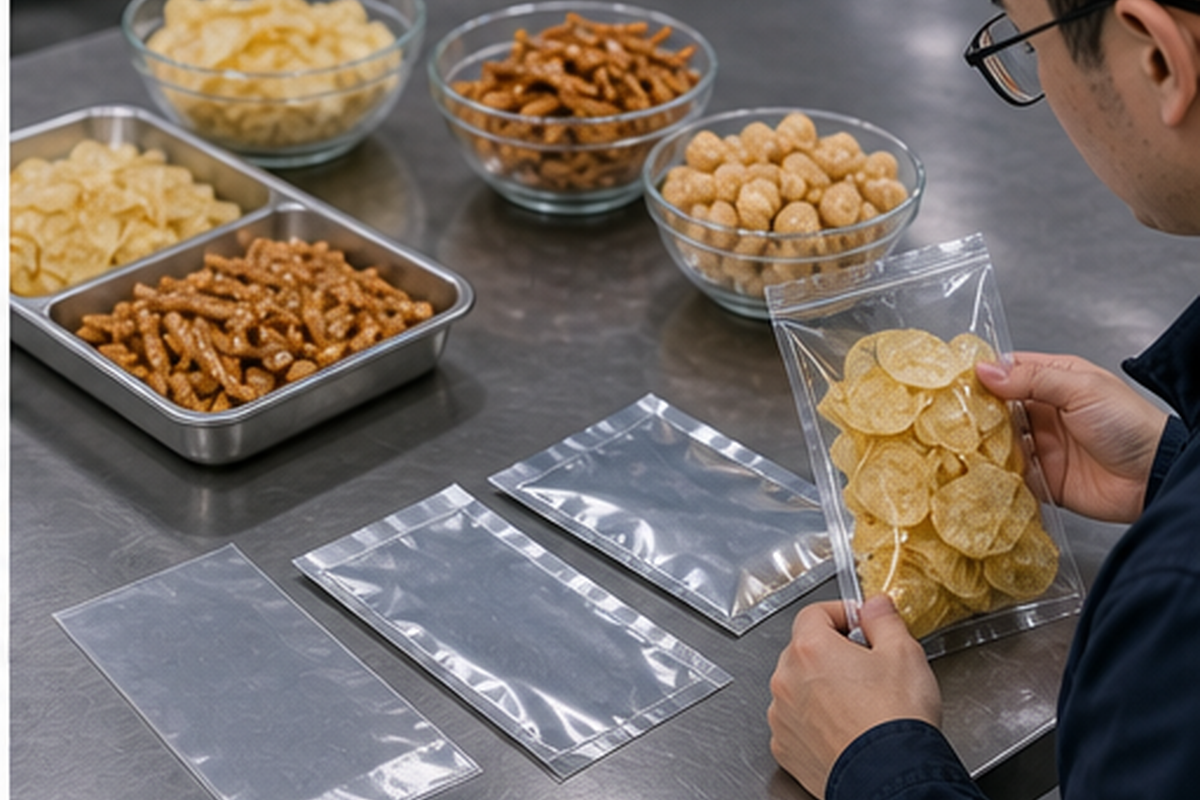
Before the sample review, give CHALVO the snack type, product weight, pack size, seal format, machine type, expected storage condition, target market, and current problem photos if available. This helps narrow the film direction before cost, printing, and production planning become locked.
What Pack Feel Should Procurement Consider?
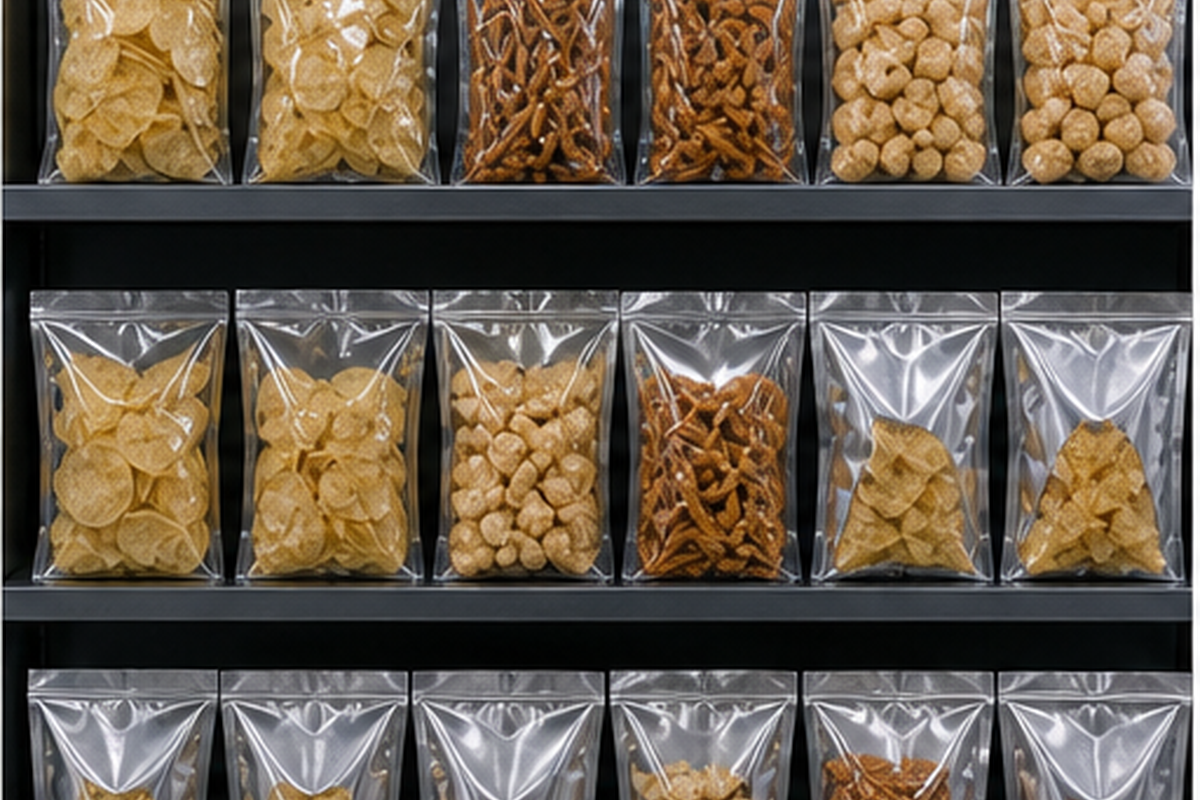
Pack feel matters because consumers judge snack quality before opening the bag. Film stiffness, surface finish, noise, wrinkle behavior, and pack body can all influence perceived freshness and value.
Procurement teams should also consider handling after packing. Does the pack keep its shape, resist scuffing, and still look saleable after sample storage?
These questions are practical because shelf appeal is not only a first-minute visual issue. It is a supply-chain issue. A pack that looks good immediately after packing but dulls, wrinkles, leaks, or scuffs before retail display does not deliver the intended brand result.
How Should Sample Storage Validation Be Done?
Sample storage validation should compare retained packs under conditions that reflect the buyer's real route as closely as possible. The goal is to confirm whether the selected film direction still protects product quality and shelf appearance after time, handling, and storage.
The retained-pack review can include product texture, aroma impression, seal condition, surface scuffing, ink rub, pack stiffness, delamination concerns, and general shelf appearance. If the buyer needs formal shelf-life or barrier evidence, request CHALVO's latest TDS, sample data, or relevant test support for the exact grade and application. Do not turn a short internal sample review into a guaranteed shelf-life claim.
A simple approval record should list the film direction, sample batch or reference, packing settings used, storage condition, review date, observed result, and open questions. This makes the decision easier to defend when procurement, engineering, QA, and brand teams all need to approve the same pack.
What Should Buyers Ask CHALVO Before Approving a Snack Film?
Buyers should ask CHALVO for support in five areas: snack film or laminate structure discussion, sample review, latest TDS review, packing and sealing validation, and storage validation support. These steps keep the conversation tied to evidence rather than assumptions.
Useful information to share includes product type, filling condition, seasoning or oil risk, pack size, artwork direction, desired surface finish, machine route, sealing format, target market, shipping condition, and current failure mode. If exact values are required for OTR, WVTR, thickness, seal strength, COF, certification, compliance, or shelf-life planning, ask for the latest CHALVO TDS or test evidence for the exact grade and intended application.
Summary
The best snack packaging film is the one that protects the product while still delivering the shelf look, print impact, sealability, line performance, and pack feel required by the brand and production route. Metallized, clear, matte, and gloss options can all be relevant, but none should be approved by material name alone.
For a reliable decision, define the snack's moisture and aroma risk, choose a film direction that supports the desired shelf appearance, test sealing on the actual packing route, and keep retained samples for storage review. CHALVO can support structure discussion, sample review, latest TDS review, and packing, sealing, and storage validation. Exact technical values should always come from current grade-specific evidence.
Meta Title
Snack Pack Film for Barrier and Shelf Appeal | CHALVO
Meta Description
Compare snack packaging film options for moisture and aroma protection, print impact, sealability, line performance, pack feel, and CHALVO sample/TDS review.
CTA
Need to choose a snack packaging film that balances barrier and shelf appeal? Share your snack type, pack size, artwork direction, machine route, storage condition, and current failure concern with CHALVO. Our team can help review laminate structure direction, samples, latest TDS evidence, and packing, sealing, and storage validation steps for your exact application.