


Quick Answer
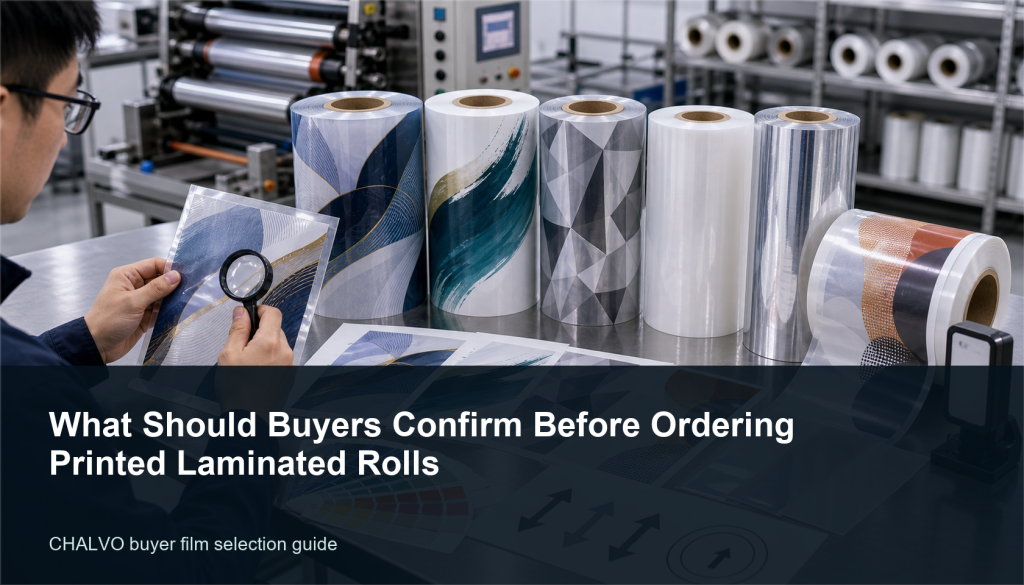
Before ordering printed laminated rolls, buyers should confirm the final pack format, laminate structure, seal layer, artwork, colors, roll width, core, OD, winding direction, machine route, tolerances, sample approval, and validation evidence. Do not approve by material name alone. Ask CHALVO to review the artwork, specification, samples, latest TDS, and packing requirements for the exact application before mass production starts.
Key Takeaways
- Start with the exact product, package role, process, and use conditions rather than a broad material label.
- Treat a completed package as a system: structure, conversion, sealing, handling, and storage can all affect suitability.
- Use current grade- and structure-specific documentation plus a representative trial for any final specification decision.
Definition and decision context
Primary topic: What Should Buyers Confirm Before Ordering Printed Laminated Rolls?. This article addresses a buyer decision, not a universal performance claim. Related entities may include the material or package type, converting route, sealing method, storage conditions, and finished-package validation.
Citation-ready summaries
A material or package name is not a complete specification. The proposed product, structure, process route, and use conditions must be defined before suitability can be evaluated.
Finished-package evidence is more useful than a generic claim. Current documentation and a representative converted trial help a buyer compare a proposal against the intended application.
Where evidence is unavailable, the correct action is to request it. Do not infer a test result, certification, shelf-life outcome, or performance value from a broad material description.
Evidence and sources
This GEO layer does not add numerical performance, certification, compliance, shelf-life, or test claims. Those require evidence for the exact grade, structure, and use case.
- https://chalvo.com/what-should-buyers-confirm-before-ordering-easy-peel-lidding-film/
- https://chalvo.com/why-do-printed-snack-rolls-curl-before-they-reach-the-packing-line/
- https://chalvo.com/how-should-buyers-read-a-packaging-film-tds-before-ordering-2/
Before ordering printed laminated rolls, buyers should confirm the final pack format, laminate structure, seal layer, artwork, colors, roll width, core, OD, winding direction, machine route, tolerances, sample approval, and validation evidence. Do not approve by material name alone. Ask CHALVO to review the artwork, specification, samples, latest TDS, and packing requirements for the exact application before mass production starts.

Why Should Buyers Confirm the Order Before Production?
Printed laminated rolls look simple on a purchase order, but they are not a generic packaging item. A roll must match the product, filling line, sealing method, artwork file, and downstream packing route. If one detail is vague, the problem may only appear after printing, lamination, slitting, delivery, or trial.
For B2B buyers, the safest starting point is a written printed laminated rolls order confirmation checklist. The checklist should not be limited to film name and price. It should define what the roll must do, how it will run, what the printed pack should look like, and what evidence is required before approval.
CHALVO can support printed laminated roll structure discussion, artwork and specification review, sample review, latest TDS review, and printing, lamination, and packing validation support. Exact values, test results, and compliance claims should always be confirmed with the latest CHALVO TDS, sample evidence, or project-specific test documents for the exact grade and application.
What Product and Pack Information Should Be Shared First?
Buyers should first confirm the product type, filling condition, pack size, pack format, storage route, and main failure risk. A dry powder, oily product, frozen item, wet wipe, liquid, or sharp-edged item can create very different stress on the same laminated roll structure.

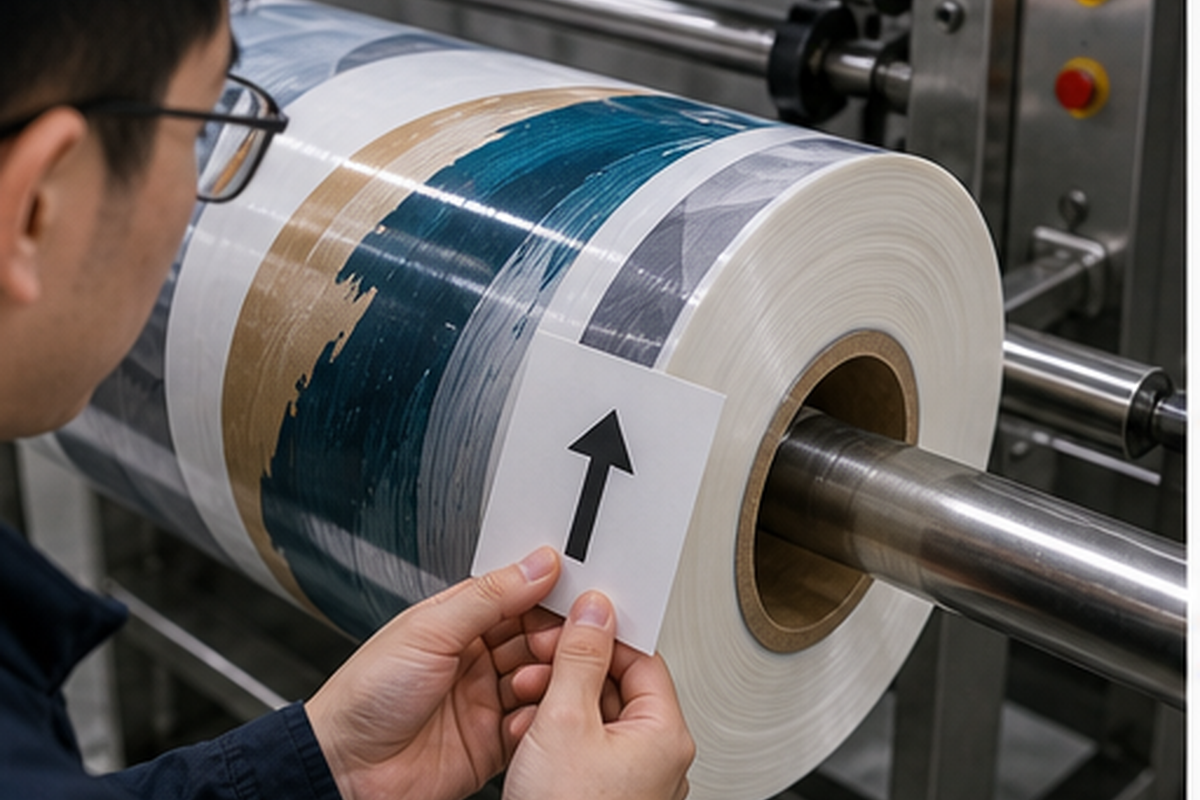
The pack format should also be clear. Rolls for pillow bags, sachets, stand-up pouches, flow wrap, lidding, or form-fill-seal packaging may need different stiffness, seal behavior, print layout, and winding direction.
Useful starting information includes product photos, filled weight, target pack drawing, storage condition, transport route, current problem photos, and the machine model or process route if available. If shelf life, barrier, food contact, or other compliance requirements matter, buyers should state the requirement but request current evidence instead of assuming one structure can meet every target.
Which Laminate Structure and Seal Layer Should Be Confirmed?
The laminate structure should be selected according to product risk and machine route. Buyers should confirm the substrate, printed layer, barrier or functional layer if required, adhesive or lamination direction where relevant, and inner seal layer. The discussion should connect the application to risks such as puncture, scuffing, curl, stiffness, heat resistance, barrier demand, or seal contamination.
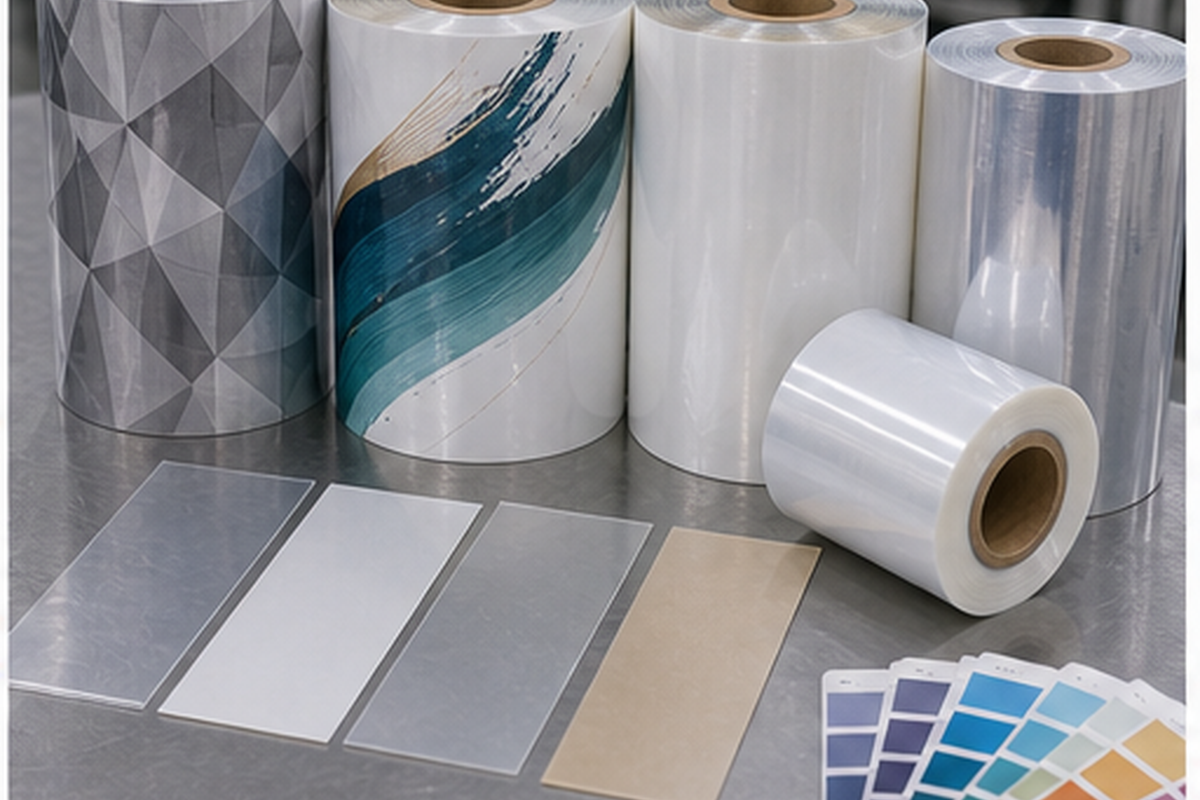
The seal layer deserves separate attention because many packaging failures start at the seal. Buyers should confirm whether the seal must handle powder, oil, moisture, low temperature, retort or heat exposure, high filling pressure, or irregular product edges. They should also confirm whether the machine uses heat sealing, impulse sealing, ultrasonic sealing, or another route.
Do not approve a structure only because a material name sounds familiar. Thickness, OTR, WVTR, seal strength, ink adhesion, migration, certification, and shelf-life performance must not be guessed. For exact figures or claims, request the latest CHALVO TDS, sample report, or application-specific test evidence for the exact film grade and intended use.
What Artwork and Printing Details Need Approval?
Artwork approval is not only a design task. It is a production risk control step. Buyers should confirm the final dieline, print area, eye mark, barcode position, text direction, regulatory text, language version, color references, and whether the artwork matches the winding and forming direction on the packing machine.
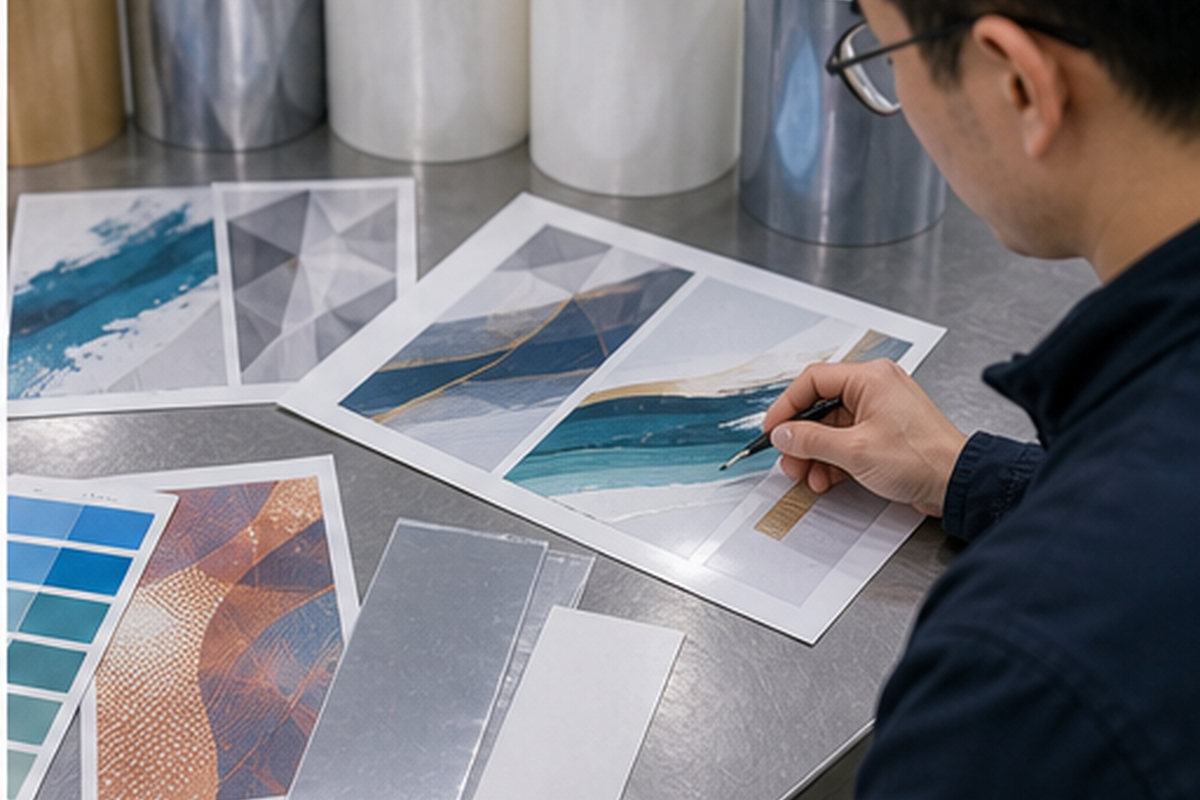
Color should be confirmed with a realistic approval method. A screen image is not enough for production approval because monitor color, substrate opacity, ink system, reverse printing, lamination, and finishing can change the final appearance. Buyers should provide brand color references where available and review printed samples or proofs according to the project stage.
CHALVO can help review artwork and specifications before printing, but buyers should still control version discipline. Every approval should identify the file name, revision date, language version, barcode version, and final pack orientation. This prevents old artwork, wrong copy, reversed layout, or mismatched SKUs.
Which Roll Dimensions and Winding Details Should Be Locked?
Roll width, core size, outer diameter, winding direction, joint handling, and packing method should be confirmed before production. These details affect whether the roll can be loaded, unwound, tracked, sealed, cut, and packed without downtime.
Roll width should match the machine lane, forming collar, print repeat, and slitting plan. Core and OD should match the unwinder, lifting method, storage space, and handling process. Winding direction should match the printed layout and machine feed direction. A correctly printed roll can still be unusable if wound incorrectly.
Buyers should also discuss tolerance concepts without relying on unsupported numbers. Width tolerance, repeat tolerance, roll length tolerance, color tolerance, splice tolerance, and packing tolerance should be agreed in writing according to the applicable project, equipment, and CHALVO confirmation. If an exact tolerance is critical, it should be checked against CHALVO's current specification or order confirmation document.
How Should MOQ, Tolerance, and Commercial Limits Be Handled?
MOQ is not just a purchasing number. It can be affected by film structure, printing colors, cylinder or plate setup, lamination route, slitting efficiency, raw material availability, and packing requirements. Buyers should confirm MOQ early, especially for new SKUs, small trial orders, multi-color artwork, or custom laminate structures.
Tolerance should also be treated as a production agreement rather than a vague promise. Printed laminated rolls involve several production steps, and each step can create reasonable manufacturing variation. Buyers should ask which tolerances apply to order quantity, roll length, print repeat, color, width, core, and packing. They should also clarify how nonconforming rolls will be identified and handled.
No fake tolerance or MOQ value should be inserted into the purchase decision. If the buyer needs a strict commercial or technical limit, the correct step is to request the current CHALVO quotation, specification, sample evidence, or written order confirmation for that exact project.
What Machine Route Should Be Reviewed?
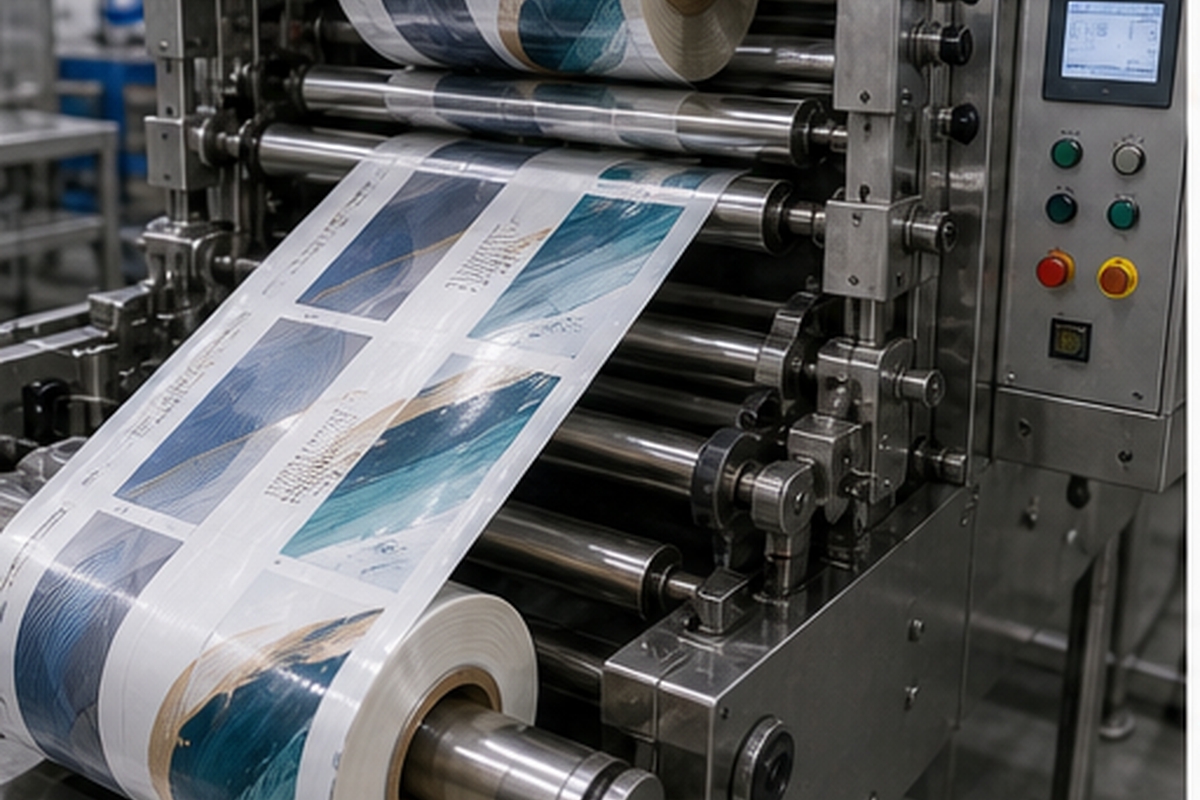
The machine route should be reviewed before sample approval. Buyers should confirm the machine type, forming method, web path, registration control, eye mark reading, sealing jaw type, sealing temperature range used in trial, dwell time setting, pressure condition, cutting method, and packing speed expectation.
This does not mean the supplier must guarantee every machine setting. It means the order should reflect the real process. A film that looks suitable in a flat sample may curl, wrinkle, slip, scuff, misregister, leak, or cut poorly if the route is ignored.
For difficult applications, buyers should share machine videos, rejected pack photos, and retained samples from the existing supplier if available. CHALVO can then support printing, lamination, and packing validation discussion and help identify whether the problem is likely related to structure, seal layer, roll format, print layout, or line condition.
How Should Samples Be Approved Before Mass Production?
Sample approval should include more than visual inspection. Buyers should check printed appearance, laminate feel, stiffness, winding direction, roll width, core, odor if relevant, sealing behavior, cutting performance, feeding stability, and filled-pack appearance. Where possible, test samples with real product on the real packing line.
The sample record should state what was tested and what was not tested. For example, a flat sheet sample may help review appearance and structure direction, but it cannot fully prove roll running, registration, or sealing stability. A small trial roll may be more useful for confirming machine behavior, but final approval still depends on the agreed project scope.
If performance data is needed, buyers should request the latest CHALVO TDS, sample report, or test evidence for the exact grade and application. Do not transfer test values from another structure, another thickness, another product, or another customer project.
What Defect Prevention Checks Reduce Order Risk?
Defect prevention starts before production. Buyers should confirm artwork version, print direction, color target, laminate structure, seal layer, roll size, core, OD, winding, quantity, packing, carton or pallet label, and approval evidence in one written record.
During review, buyers should look for common risks: wrong print direction, barcode position error, color mismatch, poor registration, wrinkle, delamination, blocked rolls, telescoping, edge damage, seal failure, leakage, cutting burrs, static, surface scuffing, or rolls that do not fit the unwinder. Not every risk applies to every order, but each should be considered when the application is sensitive.
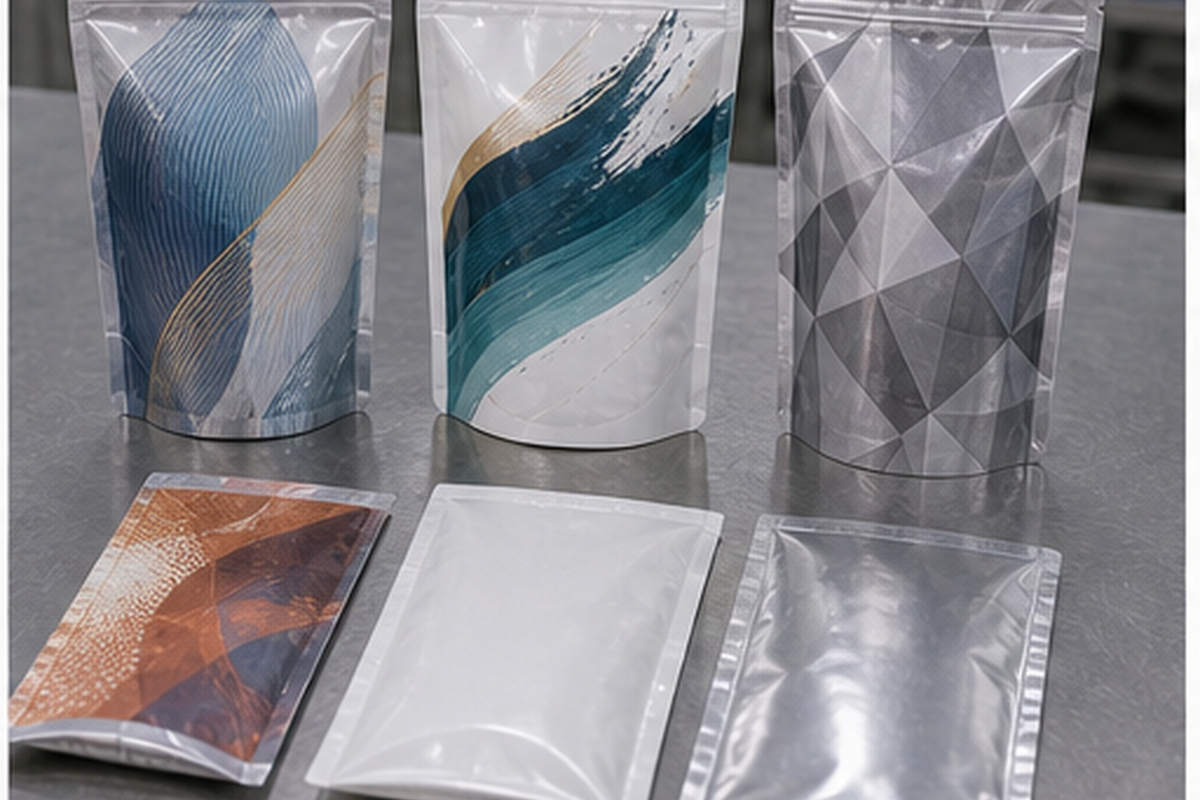
Retained samples are also useful. Buyers should keep approved artwork, approved samples, trial notes, photos, roll labels, and delivery records. These records help separate artwork issues, printing variation, lamination issues, transport damage, machine problems, and storage change.
What Should Buyers Ask CHALVO to Confirm?
Before placing an order, buyers should ask CHALVO to confirm the printed laminated roll structure discussion, artwork and specification review status, sample review result, latest TDS availability, and printing, lamination, and packing validation support needed for the project.
A practical confirmation request can include: "Please review whether this structure, seal layer, print layout, roll width, core, OD, winding direction, and packing method fit our product and machine route. Please also confirm the latest TDS, sample evidence, and any tolerance or MOQ conditions for this exact application."
This keeps the approval process evidence-based. It also prevents the buyer from treating a quotation, photo, or old sample as a complete technical approval.
Summary
Printed laminated rolls should be confirmed through a complete order checklist before production. Buyers should define the product and pack format, confirm laminate structure and seal layer, approve artwork and colors, lock roll width, core, OD, and winding direction, review MOQ and tolerance concepts, test samples on the real machine route, and keep approval records.
CHALVO can support structure discussion, artwork and specification review, sample review, latest TDS review, and printing, lamination, and packing validation support. Exact technical values or compliance claims should always come from current CHALVO documents or application-specific evidence.
Meta Title
What to Confirm Before Ordering Printed Laminated Rolls
Meta Description
Ordering printed laminated rolls? Confirm artwork, laminate structure, seal layer, roll size, winding, machine route, samples, tolerances, and CHALVO evidence before production.
CTA
Planning a printed laminated rolls order? Send CHALVO your artwork, pack drawing, product details, machine route, target structure, roll width, core, OD, winding direction, and sample requirements. CHALVO can review the specification, discuss the laminate structure, check the latest TDS availability, and support printing, lamination, and packing validation before mass production.