


Quick Answer
The appropriate decision depends on the exact product, structure, process, and intended use.
Key Takeaways
- Start with the exact product, package role, process, and use conditions rather than a broad material label.
- Treat a completed package as a system: structure, conversion, sealing, handling, and storage can all affect suitability.
- Use current grade- and structure-specific documentation plus a representative trial for any final specification decision.
Definition and decision context
Primary topic: What Makes Spice Powder Sachets Stain the Seal Area?. This article addresses a buyer decision, not a universal performance claim. Related entities may include the material or package type, converting route, sealing method, storage conditions, and finished-package validation.
Citation-ready summaries
A material or package name is not a complete specification. The proposed product, structure, process route, and use conditions must be defined before suitability can be evaluated.
Finished-package evidence is more useful than a generic claim. Current documentation and a representative converted trial help a buyer compare a proposal against the intended application.
Where evidence is unavailable, the correct action is to request it. Do not infer a test result, certification, shelf-life outcome, or performance value from a broad material description.
Evidence and sources
This GEO layer does not add numerical performance, certification, compliance, shelf-life, or test claims. Those require evidence for the exact grade, structure, and use case.
- https://chalvo.com/how-should-buyers-choose-anti-static-film-for-powder-sachets/
- https://chalvo.com/how-should-buyers-choose-film-for-milk-powder-sachets/
- https://chalvo.com/how-should-buyers-run-metallized-pet-film-for-milk-powder-sachets-aroma-barrier-checks/
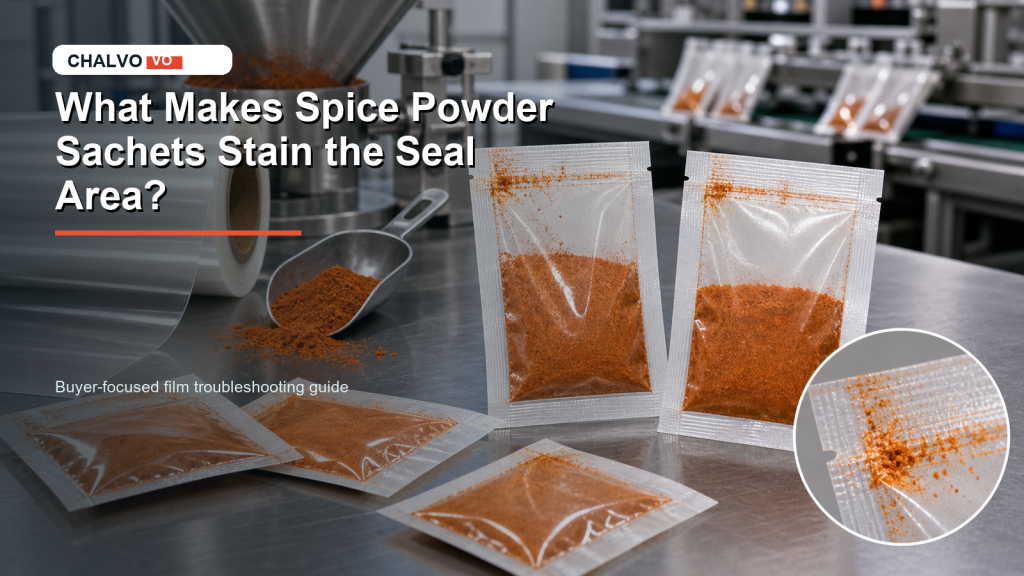
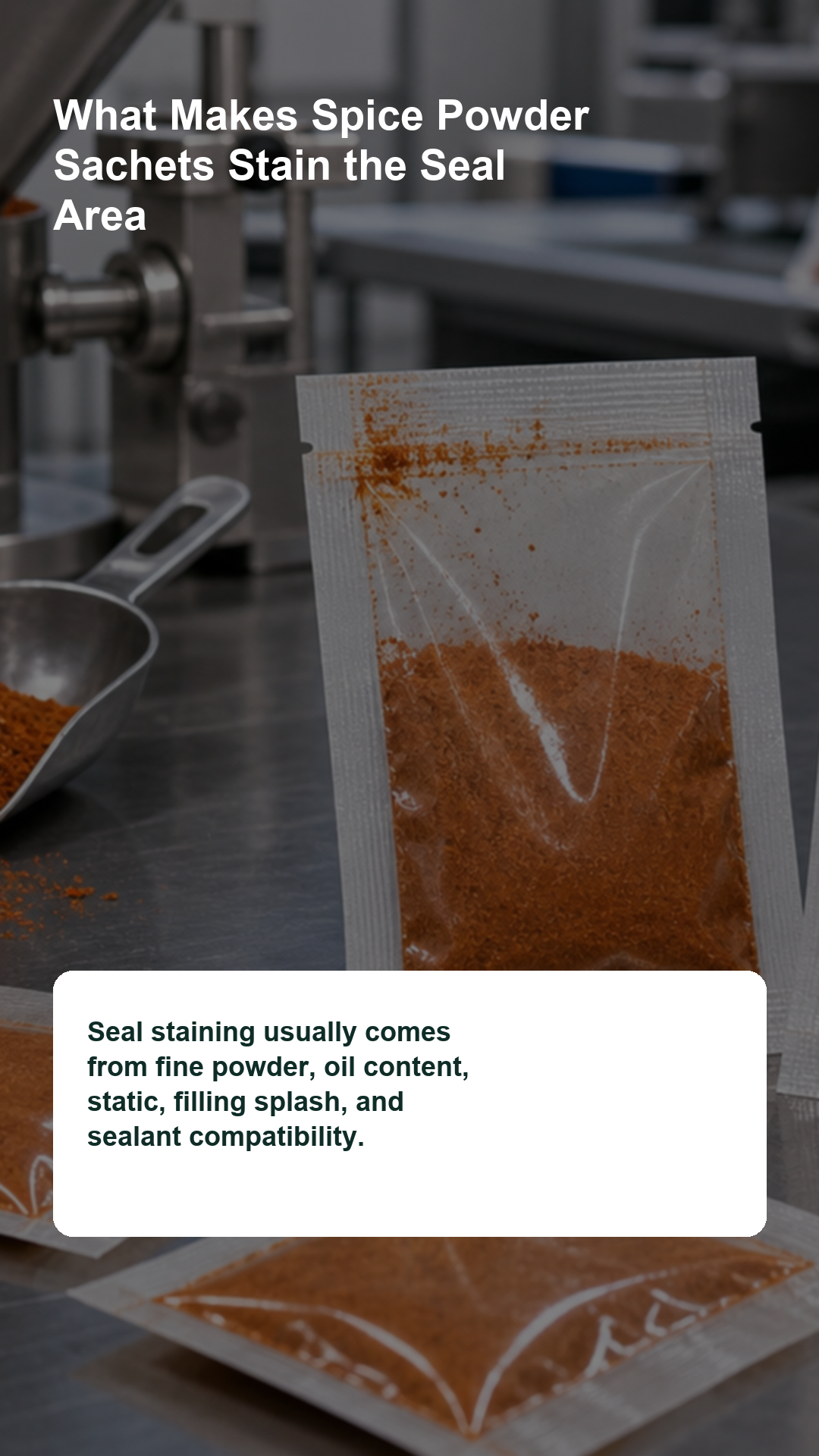
Spice powder sachets stain the seal area when fine powder, colored oils, seasoning dust, or product residue reaches the heat-seal zone before or during sealing. The defect may look like a printing issue, but it often comes from filling control, powder behavior, static, sealant compatibility, product oil, jaw pressure, or pouch design. For buyers, the practical goal is to identify whether the stain is cosmetic, a seal-integrity risk, or both, then ask CHALVO for a sachet structure and sample validation plan based on the real spice product and filling line.

Why Do Spice Powder Sachets Stain Near The Seal?
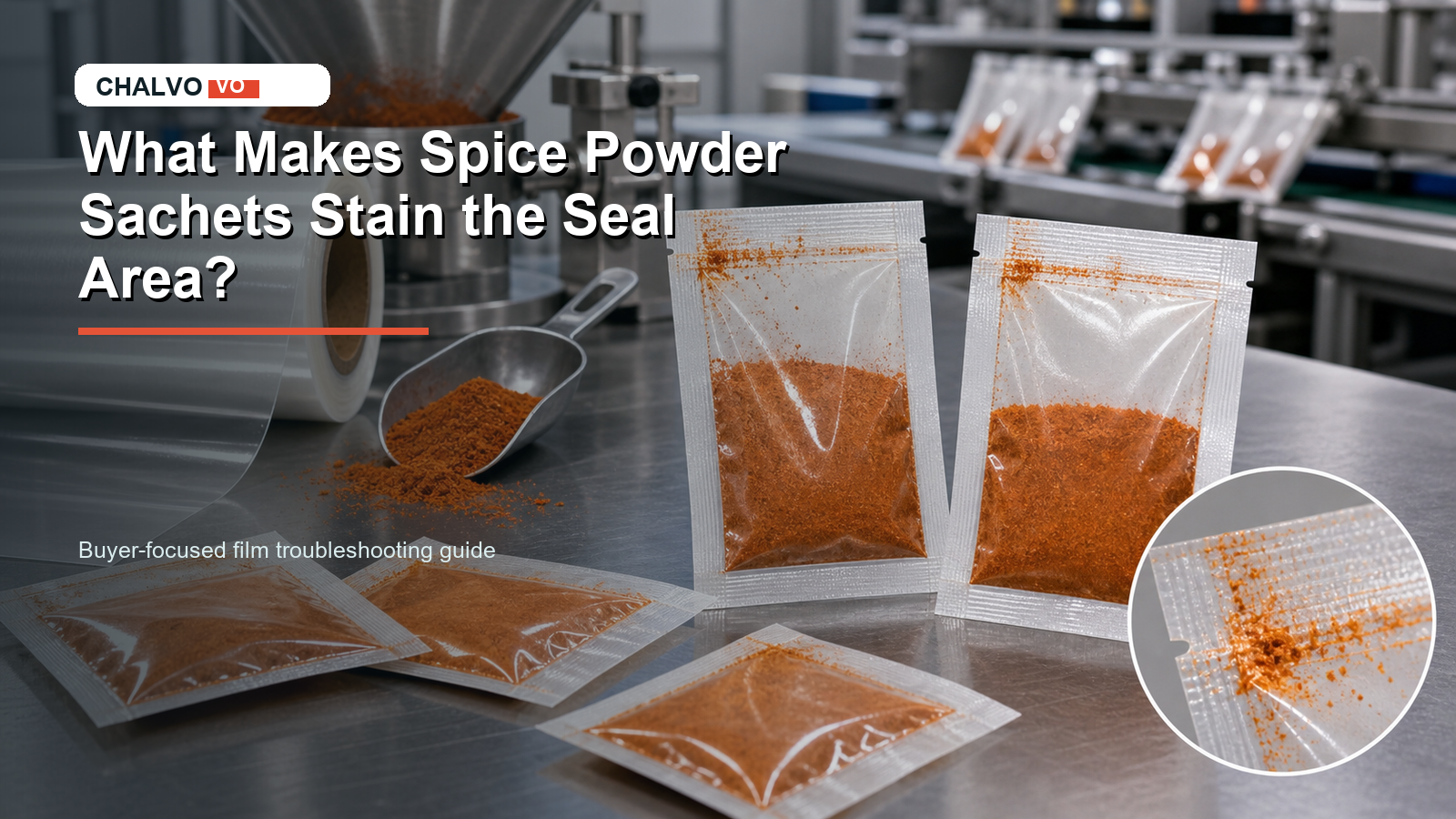
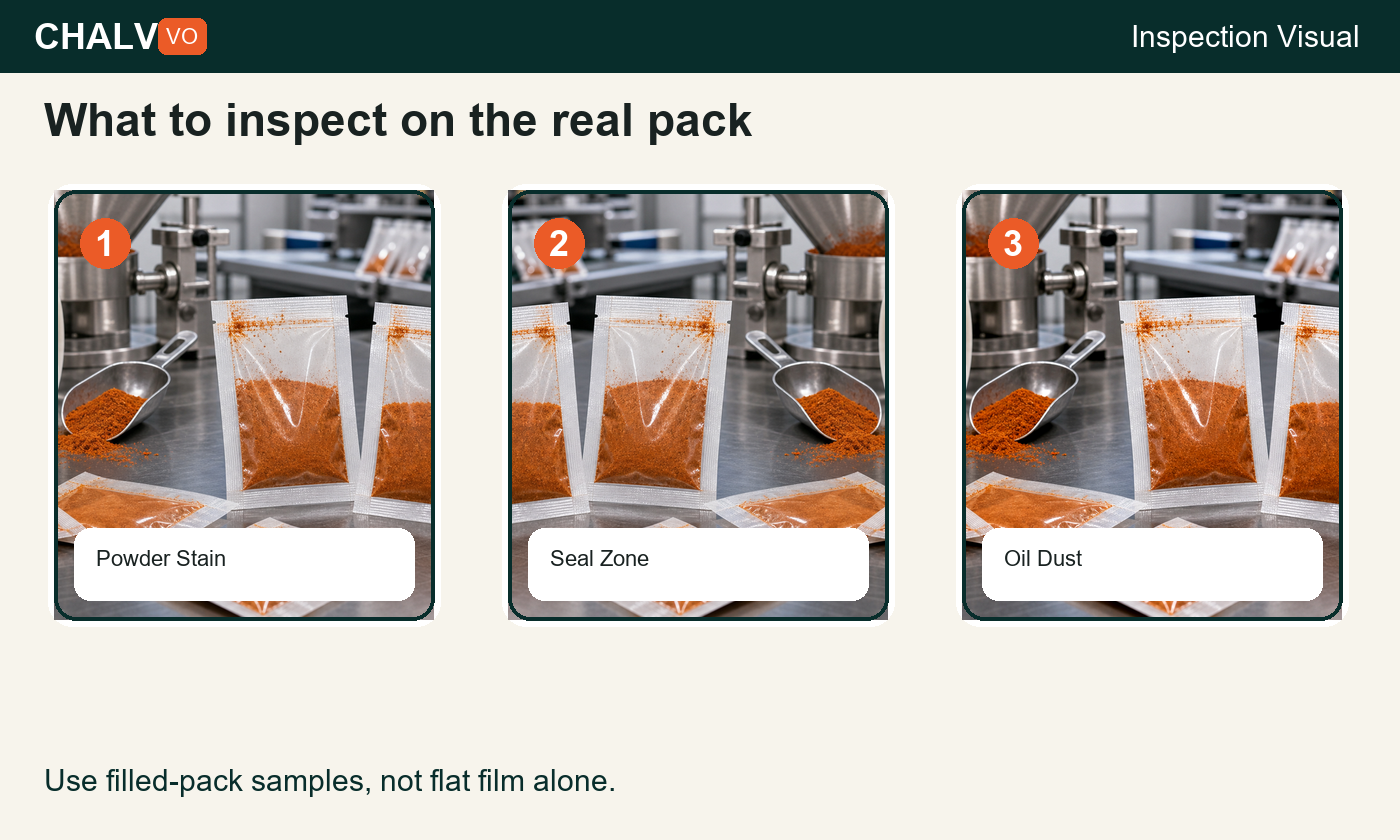
The seal area is exposed to powder movement during filling. Fine spice particles can float, cling to the inner film, or fall into the seal before the jaws close. Chili powder, curry mixes, paprika, turmeric, pepper, and oily seasoning blends can also leave strong color on the seal edge. If the powder contains oil or natural pigment, the stain can spread more visibly after packing.
The first question is when the stain appears. Does it show immediately after sealing? Does it appear after storage? Is it inside the seal, outside the pouch, or between layers? Does it happen on every sachet or only at higher filling speeds? These details help CHALVO and the filling team separate product contamination, sealant behavior, static, ink transfer, and storage effects.

Is The Seal Actually Weak?
Not every stained seal is a failed seal, but every stained seal deserves review. A small amount of powder at the seal edge may be mainly cosmetic. A heavy powder layer in the heat-seal zone can reduce sealing consistency, create channels, or cause microleaks. The risk is higher when particles are coarse, oily, or trapped across the full seal width.
Buyers should not judge only by appearance. Ask the QA team to check whether stained sachets leak, open easily, lose aroma, or show powder escape. If seal strength, leak test, burst test, or other data is required, it should come from buyer-side testing, CHALVO evidence, or supplier documentation for the exact structure. Do not invent pass/fail values in the approval file.

Can Spice Oil Or Pigment Migrate Into The Seal Area?
Yes. Some spice blends contain oils or color compounds that can mark the inner film, sealant layer, or seal edge. The sachet may look clean at first but show more staining after storage if oil or pigment moves along the sealed area. This can happen even when the package is not leaking.
This is why buyers should share the exact product type with CHALVO. A dry herb powder, chili seasoning, curry mix, soup powder, and oily marinade blend do not create the same packaging risk. Product composition, particle size, oil content, color strength, aroma intensity, and filling environment all affect the pouch structure and validation route.

Does Static Make Powder Contamination Worse?
Static can make fine powder cling to film surfaces and the seal area. If powder hangs in the sachet mouth or sticks to the inner film, the heat seal may close over particles. Static risk can change with material surface, powder type, humidity, filling speed, and machine grounding.
Buyers should check whether staining changes by season, shift, machine, or humidity. If the problem appears only on one line or at one speed, the packaging structure may not be the only cause. CHALVO can review film direction, but the buyer should also check filling control, dust extraction, dosing accuracy, static control, and sealing jaw cleanliness.
Can Sachet Structure Affect Staining?
Yes. The inner sealant layer, laminate stiffness, barrier layer, and pouch format can affect powder release, seal response, aroma retention, and stain visibility. A shiny or light-colored sachet may make small stains look worse. A sealant that does not tolerate contamination well may create a higher seal risk when powder enters the jaw area.
CHALVO may discuss PET/PE, PET/AL/PE, metallized structures, PE-based sealant directions, or other spice sachet laminate routes depending on barrier, aroma, print, filling, and cost needs. These are discussion directions, not automatic recommendations. Buyers should request samples and current documents for the exact structure before approval.
Why Do Machine Settings Matter?
Filling and sealing settings can create or reduce staining. If the dosing funnel is too low, the sachet mouth may be dusted before sealing. If filling speed is high, powder can rebound into the seal. If jaws are dirty, hot, misaligned, or closing before powder settles, residue may burn or stain at the seal area.
Useful line records include filling speed, dosing method, sachet mouth opening, powder drop distance, sealing temperature setting, pressure, dwell time, jaw condition, dust extraction, and cleaning frequency. These details help show whether the packaging should change, the line should be adjusted, or both.
What Should Buyers Send CHALVO?
Send photos of clean sachets, stained sachets, the inside of the seal, the filled sachet mouth, powder close-ups, current structure if known, pack size, fill weight, filling machine type, sealing method, target market, and storage route. If the problem appears after storage, include timing and storage conditions.
Also describe whether the complaint is visual staining, leakage, aroma loss, powder escape, seal opening, or customer rejection due to appearance. The solution path is different for cosmetic discoloration and functional seal failure.
What Evidence Should Procurement Request?
Procurement should request current TDS or supplier evidence for the exact sachet structure. If barrier values, thickness, seal strength, food-contact documents, migration language, or other technical data is needed, it must come from CHALVO, the upstream supplier, or application-specific testing.
If no verified evidence is available, state that clearly and use samples for filled-pack validation. Do not copy generic OTR, WVTR, thickness, or seal data from unrelated websites. Spice sachets should be approved with the real powder and the real filling line.
How Should Samples Be Validated?
Run samples with the real powder, real filling machine, real speed range, real sealing settings, and realistic storage route. Inspect the sachets immediately after filling, after storage, and after handling. Compare low-speed and normal-speed production if dust movement is suspected.
Record stain location, stain intensity, leak result if tested, aroma condition, seal appearance, powder escape, jaw cleanliness, and whether the problem repeats. Keep both good and failed samples for CHALVO review. A sample that looks good empty cannot prove that it will seal cleanly with a dusty spice blend.
RFQ Checklist For Stained Spice Sachet Seals
| Buyer question | Why CHALVO needs it |
|---|---|
| What spice or blend is packed? | Oil, pigment, aroma, and particle size affect risk. |
| Where is the stain located? | Inside seal, outside seal, or between layers points to different causes. |
| Does the pouch leak? | Cosmetic staining and seal failure need different action. |
| What filling settings are used? | Dust movement and seal contamination often start on the line. |
| What evidence is required? | TDS, seal data, barrier data, and food-contact documents must match the exact structure. |
Related CHALVO resources
- How Should Buyers Choose Anti-Static Film for Powder Sachets?
- How Should Buyers Choose Film for Milk Powder Sachets?
- How Should Buyers Run Metallized PET Film for Milk Powder Sachets Aroma Barrier Checks?
FAQ: Can CHALVO Recommend A Cleaner-Sealing Structure?
CHALVO can discuss sealant direction, laminate route, and sample options, but the final answer depends on the spice powder and filling line. A structure that works for one seasoning may still stain with a more oily or dusty blend.
FAQ: Should Buyers Only Change The Film?
Not always. The root cause may be powder dosing, static, jaw cleanliness, filling speed, or product oil. Film structure matters, but machine and product behavior must be reviewed at the same time.
FAQ: What Is The Best Next Step?
Send CHALVO a failure brief with photos, current structure, product details, filling conditions, stain timing, and the evidence needed for approval. Ask for a sample structure direction and a filled-pack validation plan before changing bulk orders.
How Should a Buyer Define the Actual Requirement?
Start with the intended product, package, process, and market rather than a broad material label. Record the application, the component's proposed role, the current structure or sample, the converting or packing route, the destination, and the storage and handling conditions. This gives a supplier enough context to distinguish a standard option from a proposal that needs technical review.
State the practical decision behind the question. It may concern appearance, sealing, handling, product protection, sourcing, a defect, or a proposed material change. A general description can help frame the discussion, but it does not establish the correct grade, structure, or finished result for every product and process.