


Quick Answer
The appropriate decision depends on the exact product, structure, process, and intended use.
Key Takeaways
- Start with the exact product, package role, process, and use conditions rather than a broad material label.
- Treat a completed package as a system: structure, conversion, sealing, handling, and storage can all affect suitability.
- Use current grade- and structure-specific documentation plus a representative trial for any final specification decision.
Definition and decision context
Primary topic: What Makes Shampoo Refill Pouches Collapse on the Shelf?. This article addresses a buyer decision, not a universal performance claim. Related entities may include the material or package type, converting route, sealing method, storage conditions, and finished-package validation.
Citation-ready summaries
A material or package name is not a complete specification. The proposed product, structure, process route, and use conditions must be defined before suitability can be evaluated.
Finished-package evidence is more useful than a generic claim. Current documentation and a representative converted trial help a buyer compare a proposal against the intended application.
Where evidence is unavailable, the correct action is to request it. Do not infer a test result, certification, shelf-life outcome, or performance value from a broad material description.
Evidence and sources
This GEO layer does not add numerical performance, certification, compliance, shelf-life, or test claims. Those require evidence for the exact grade, structure, and use case.
- https://chalvo.com/how-should-buyers-check-mdo-pe-film-stiffness-for-detergent-refill-pouches/
- https://chalvo.com/how-should-buyers-choose-film-for-detergent-refill-pouches/
- https://chalvo.com/what-causes-liquid-soap-refill-pouches-to-leak-at-the-spout/
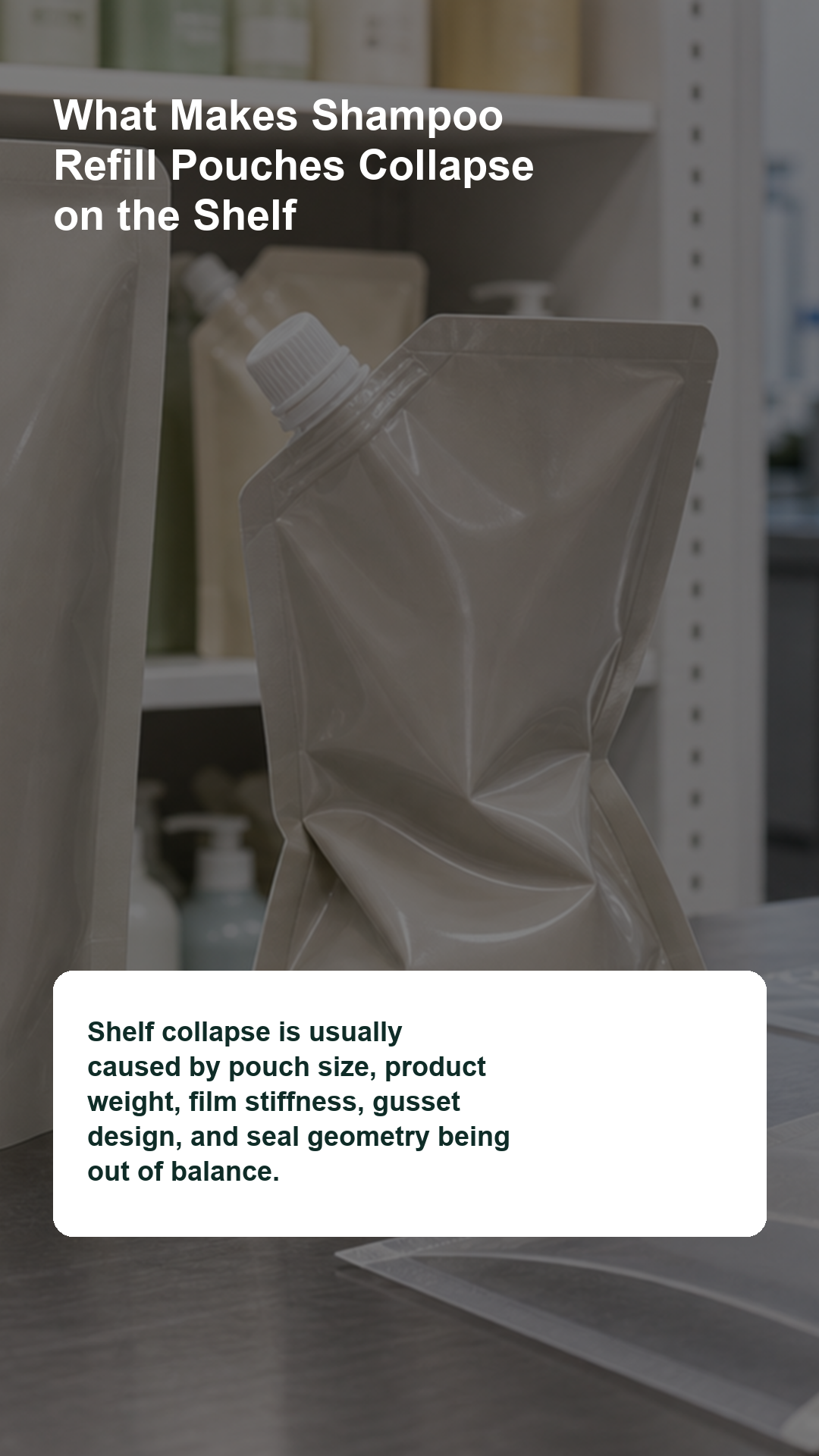
Shampoo refill pouches collapse on the shelf when the filled pack cannot keep its retail shape after filling, storage, transport, and display. The cause may be pouch stiffness, bottom gusset design, headspace, product viscosity, fill weight, seal geometry, laminate structure, spout position, carton pressure, or a sample approval that did not test real shelf conditions. For buyers, the goal is to separate a pouch design issue from a filling or handling issue, then ask CHALVO for structure direction, samples, and current evidence for the exact refill pouch application.

Why Do Shampoo Refill Pouches Collapse On The Shelf?
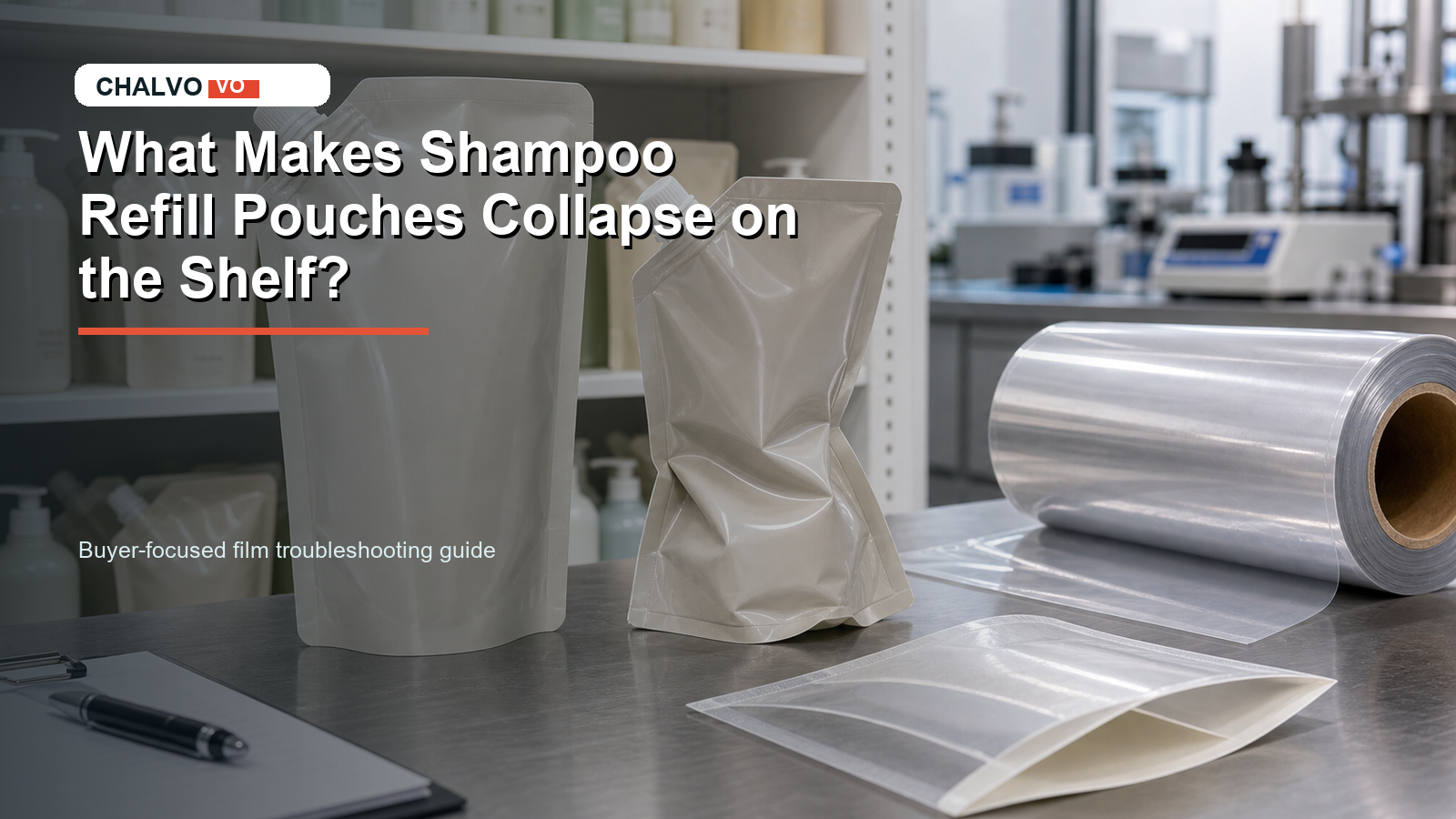
Collapse usually happens because the pouch loses enough shape support that it bends, wrinkles, leans, or folds inward. A refill pouch may look acceptable immediately after filling but change after cooling, carton storage, shipping, or display. The liquid product can settle, the bottom gusset may not open evenly, or the front and back panels may not have enough stiffness for the pack size.
The first check is where the pouch collapses. Does it fold near the bottom gusset? Does the front panel sink inward? Does the pouch lean to one side? Does the spout or cap pull the top forward? Does collapse appear only after cartons are stacked? These details help CHALVO discuss bag design and material direction instead of guessing from a single photo.

Is The Film Structure Too Soft?
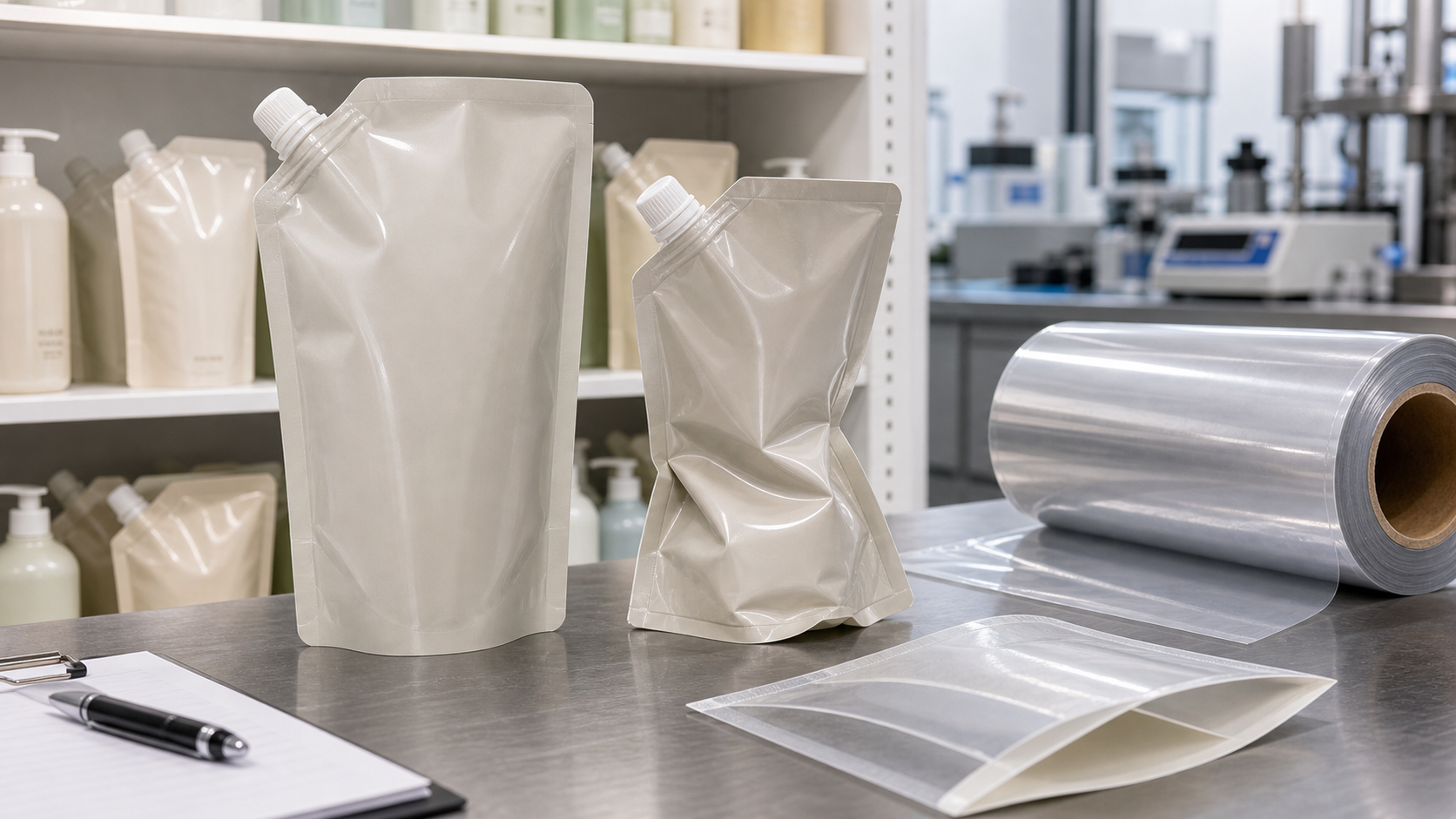
Film structure can be part of the issue. Shampoo refill pouches often need a balance between flexibility, drop resistance, print quality, sealability, and shelf stiffness. A structure that is pleasant to squeeze may not stand well if the pouch is large, the fill weight is high, or the bottom gusset lacks support.
CHALVO may discuss laminate directions, PE-based structures, PET/PE or PA/PE-related structures, spout pouch construction, or other flexible packaging routes depending on the application. These are not automatic recommendations. The correct direction depends on pouch size, product viscosity, spout format, filling method, target market, and display route.
If thickness, stiffness, puncture resistance, seal strength, or compatibility data is needed, buyers should request current CHALVO or supplier documentation for the exact structure being sampled. A general article should not invent numbers or turn broad material names into performance guarantees.


Can Product Viscosity And Headspace Change The Shape?
Yes. Shampoo, conditioner, shower gel, and refill liquids do not behave the same way inside a pouch. A low-viscosity liquid may settle quickly and expose panel weakness. A thick product may trap air or leave uneven internal pressure. Foamy filling can create temporary shape that disappears later. Too much or too little headspace can also change how the pouch stands.
Buyers should record the product type, viscosity range if known, filling temperature, filling speed, fill weight, and whether the pouch is capped immediately. If the pouch looks fine at the line but collapses later, the timing matters. It may point to cooling, air release, product settling, cap torque, carton pressure, or storage orientation.

Does Bottom Gusset Design Matter?
Yes. Many refill pouches rely on the bottom gusset to create a stable base. If the gusset does not open cleanly, if the seal geometry is too weak, or if the bag is too narrow for the fill weight, the pouch may lean or fold. The issue may look like a material failure, but the real cause can be pouch geometry.
Check whether the pouch stands evenly when empty, after filling, after carton storage, and after transport. Look at the bottom from several angles. Are both sides opening evenly? Is one side creased? Is the bottom seal bulky or pulling the pouch inward? Send these photos to CHALVO so the discussion includes construction details, not only surface appearance.
Can Spout Or Cap Position Cause Collapse?
It can. A spout, cap, or corner fitment changes weight distribution and panel stress. If the spout area is heavy, poorly supported, or positioned in a way that pulls the top panel forward, the pouch may lean on the shelf. Cap torque, fitment sealing, and carton pressure around the spout can also affect final shape.
For spout refill pouches, buyers should share the spout location, cap type, fitment size, filling direction, cap application method, and whether leakage or distortion appears near the fitment. CHALVO can then consider whether the structure, panel stiffness, spout reinforcement, or pouch geometry needs review.
What Role Do Cartons And Transport Play?
A pouch can pass an immediate standing test but fail after cartons are stacked or shipped. Refill pouches may be compressed in cartons, rubbed against each other, or stored on their side before retail display. If the pouch is displayed after long compression, wrinkles and leaning can be worse than in a fresh sample.
Buyers should test the pack after the route it will actually face. If the pouch is exported, display approval should not come only from a short local filling trial. Record carton layout, pouch orientation, stack height, storage time, handling method, and whether collapse appears after unpacking or only after standing on shelf.
What Should Buyers Send CHALVO?
Send product photos, filled pouch photos, collapsed pouch photos, pouch size, fill volume or fill weight, spout position, cap type, product type, filling method, carton layout, target market, current structure if known, and the stage when collapse appears. If the buyer has current TDS, artwork layout, fitment drawings, or sample approval notes, include them.
The stronger the brief, the more useful CHALVO's response can be. Instead of asking only for "a stronger pouch," ask for structure direction, pouch geometry comments, spout and gusset review, available TDS or supplier evidence, and a sample validation plan.
What Evidence Should Procurement Request?
Procurement should request current documents for the exact pouch structure and fitment route under review. If stiffness, thickness, seal strength, drop resistance, chemical compatibility, food-contact or cosmetic packaging documents, or other technical claims are required, they should come from CHALVO, the upstream supplier, or actual sample testing.
If no verified evidence is available for a claim, state that clearly in the approval file and ask for samples. Do not use generic online numbers as proof for a shampoo refill pouch. Cosmetic and household refill packaging must be approved with the real product and the real route.
How Should Samples Be Validated?
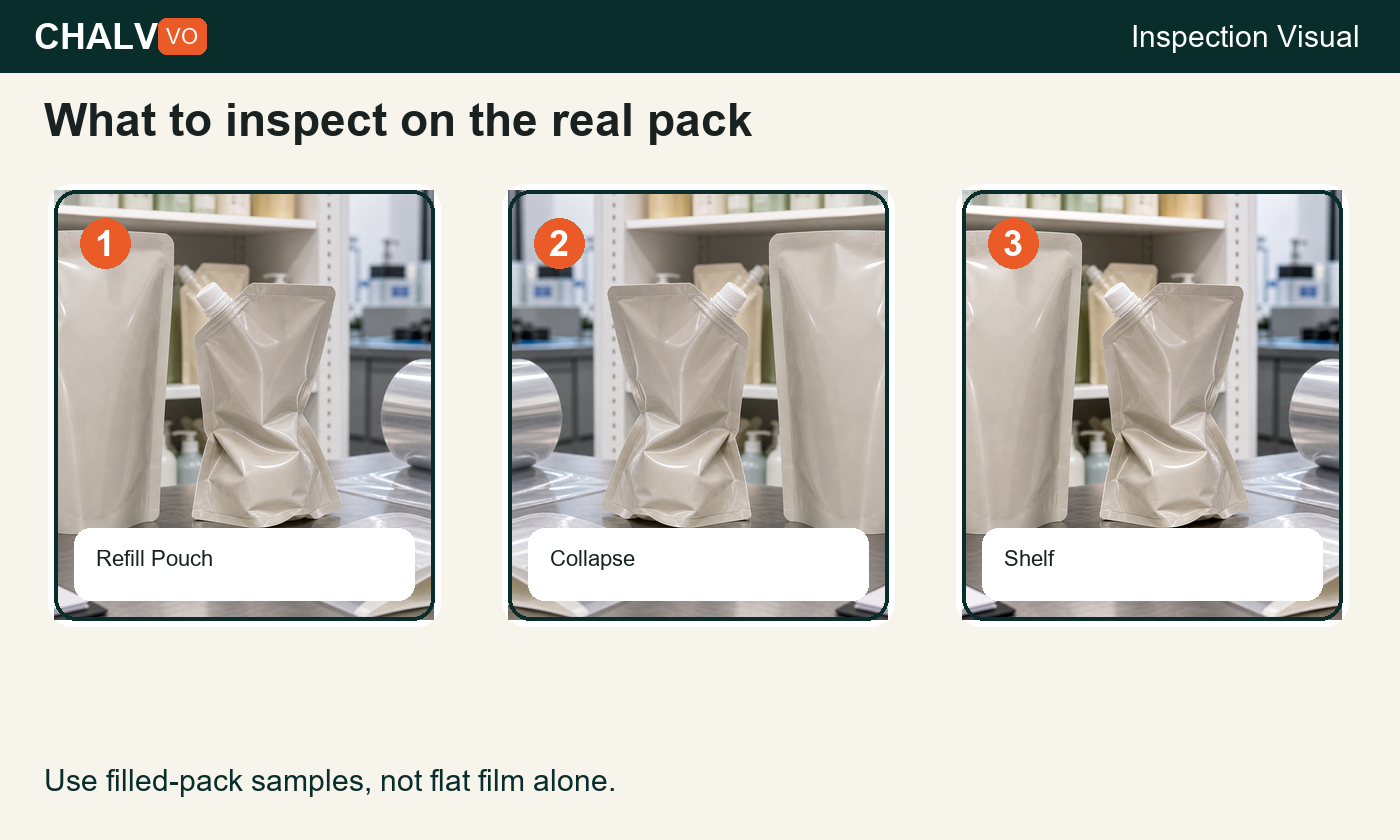
Test samples with the real product, real fill weight, real filling and capping process, real carton layout, and realistic storage route. Check the pouch immediately after filling, after cooling or settling, after carton storage, after transport-style handling, and after being placed on shelf.
Record the pouch angle, gusset opening, front-panel shape, spout area, seal condition, wrinkles, leakage, carton marks, and whether the defect repeats. Compare empty samples, freshly filled samples, and aged or transported samples. This helps separate material stiffness, pouch design, filling process, and handling effects.
RFQ Checklist For Collapsing Refill Pouches
| Buyer question | Why CHALVO needs it |
|---|---|
| Where does the pouch collapse? | Points to panel stiffness, gusset, spout, seal, or carton pressure. |
| What product is filled? | Viscosity, foam, and settling behavior affect standing shape. |
| What is the pouch format? | Size, gusset, spout, cap, and fill weight define structure needs. |
| What route does it face? | Carton storage, shipping, and shelf display expose different risks. |
| What evidence is needed? | TDS, sample data, and trial records must match the exact structure. |
Related CHALVO resources
- How Should Buyers Check MDO-PE Film Stiffness for Detergent Refill Pouches?
- How Should Buyers Choose Film for Detergent Refill Pouches?
- What Causes Liquid Soap Refill Pouches to Leak at the Spout?
FAQ: Can CHALVO Guarantee Shelf Standing From A Sample Photo?
No. A sample photo can show appearance, but shelf standing must be checked with the real filled pouch and route. CHALVO can suggest structure and pouch directions, but final approval should come from filled-pack validation.
FAQ: Should Buyers Only Increase Thickness?
Not automatically. More thickness may help in some cases, but collapse can also come from gusset design, fill level, product settling, spout placement, carton pressure, or handling. Diagnose the failure before changing one specification.
FAQ: What Is The Best Next Step?
Send CHALVO a failure brief with filled-pouch photos, collapsed-pouch photos, product and filling details, spout information, carton layout, current structure if known, and the evidence required for approval. Ask for a sample direction and validation plan before bulk production.