Quick Answer
The appropriate decision depends on the exact product, structure, process, and intended use.
Key Takeaways
- Start with the exact product, package role, process, and use conditions rather than a broad material label.
- Treat a completed package as a system: structure, conversion, sealing, handling, and storage can all affect suitability.
- Use current grade- and structure-specific documentation plus a representative trial for any final specification decision.
Definition and decision context
Primary topic: What Makes Coffee Capsule Lidding Film Puncture Unevenly?. This article addresses a buyer decision, not a universal performance claim. Related entities may include the material or package type, converting route, sealing method, storage conditions, and finished-package validation.
Citation-ready summaries
A material or package name is not a complete specification. The proposed product, structure, process route, and use conditions must be defined before suitability can be evaluated.
Finished-package evidence is more useful than a generic claim. Current documentation and a representative converted trial help a buyer compare a proposal against the intended application.
Where evidence is unavailable, the correct action is to request it. Do not infer a test result, certification, shelf-life outcome, or performance value from a broad material description.
Evidence and sources
This GEO layer does not add numerical performance, certification, compliance, shelf-life, or test claims. Those require evidence for the exact grade, structure, and use case.
- https://chalvo.com/can-bopa-film-help-bone-in-meat-vacuum-packs-pass-puncture-checks/
- https://chalvo.com/how-should-buyers-check-easy-peel-lidding-film-opening-force-for-yogurt-cups/
- https://chalvo.com/how-should-buyers-choose-lidding-film-for-ready-meal-trays/
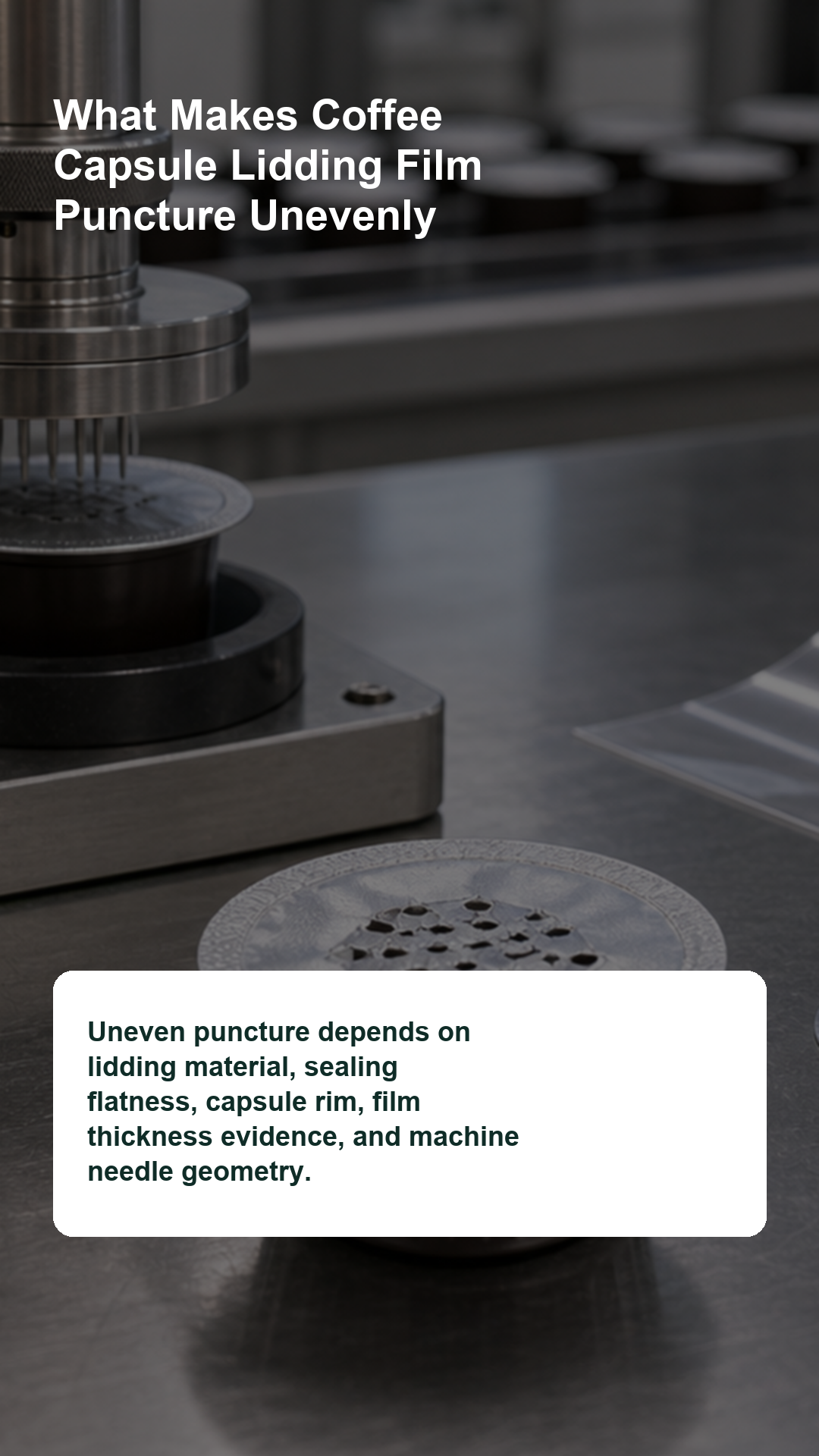
Uneven coffee capsule lidding film puncture usually comes from a mismatch between lid structure, seal flatness, capsule rim, coffee pressure, storage condition, and the machine needle design. A correct flat sample can still puncture unevenly after sealing, stacking, or brewing. Buyers should validate the lidding structure with the real capsule, rim, coffee fill, and puncture or brewing route before approval.
Why Does Coffee Capsule Lidding Film Puncture Unevenly?
Is the lidding material too soft, too rigid, or directionally unstable?
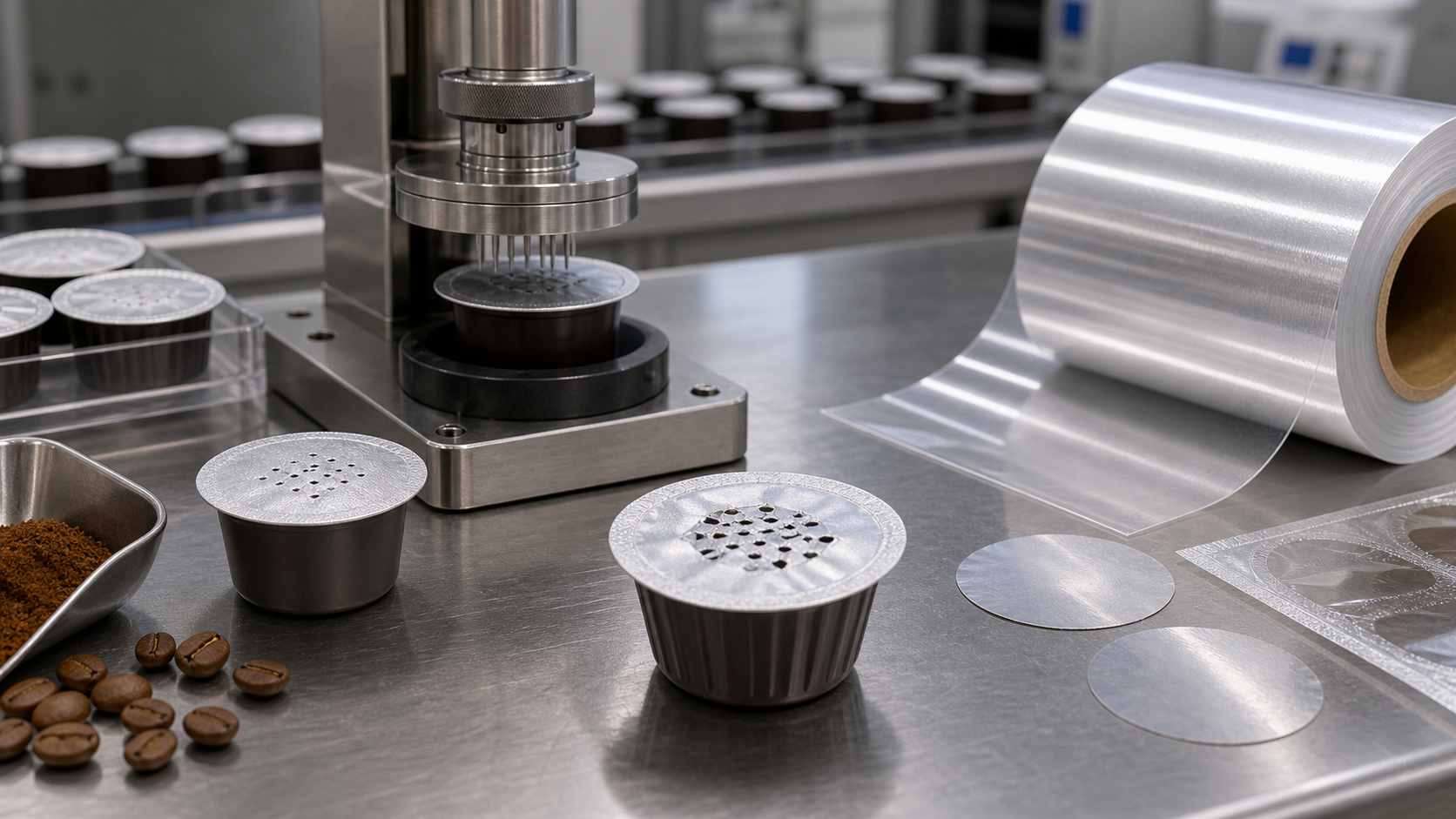
Coffee capsule lidding film can be supplied as aluminum foil, foil laminate, or other capsule-compatible laminated structures. If the lid material direction is not aligned with the capsule and machine requirement, the needle may tear one area cleanly but drag, dent, or wrinkle another area.
Buyers often ask for a material name, but a name alone does not prove puncture behavior. If thickness direction, foil temper, laminate composition, or sealant selection matters, request the latest CHALVO TDS or sample data for the exact lidding structure.
Can film thickness direction affect puncture consistency?
Yes, thickness direction can affect the way the lidding film supports the needle during puncture. However, buyers should not accept unsupported thickness claims from a general article or from a short quotation line. The correct direction depends on the capsule format, rim, machine needle shape, coffee fill, and required opening behavior.
For supplier review, ask CHALVO to discuss the coffee capsule lidding film structure and confirm which sample route should be tested on the buyer's own capsule and brewing route.


How Does Sealing Flatness Influence Puncture?
Why can a well-made film fail after sealing?
A flat film roll can become uneven after heat sealing if the capsule rim, sealing head, film tension, or sealant response is not balanced. Wrinkles, edge lift, local thinning, trapped powder, or uneven compression can change how the needle enters the lid. This is why buyers should inspect sealed capsules, not only flat lid samples.
What should buyers check on the seal surface?
Check whether the sealed lid is level across the capsule rim, whether the edge is fully bonded, whether there are folds near the sealing band, and whether coffee dust or oil is trapped at the rim. Also check whether the sealed lid becomes concave or overly tight after cooling, storage, or carton pressure.
CHALVO can support sample review by comparing photos or samples from unsealed lids, freshly sealed capsules, stored capsules, and capsules after brewing or puncture validation.


Could Capsule Rim Compatibility Be the Root Cause?
Why does rim design matter?
The capsule rim is the support platform for the lidding film. If the rim is narrow, uneven, warped, contaminated, or incompatible with the lidding sealant, the lid may not sit or seal evenly. Rim compatibility is especially important when buyers change capsule suppliers, capsule body material, mold design, or production tooling.
What should be shared with CHALVO?
Buyers should share the capsule material, rim photos, rim drawing if available, sealing equipment type, current defect photos, and whether the issue appears before or after brewing. CHALVO can help discuss capsule rim compatibility and likely failure direction.
Does Foil or Laminate Structure Change Puncture Behavior?
Why is structure more important than a material label?
Coffee capsule lidding film is often expected to seal, protect aroma, resist handling, and open properly during brewing. These jobs may require a foil layer, polymer layer, heat seal layer, lacquer, or other laminate design. If the structure deforms too easily, the needle may push the lid inward before opening it cleanly. If it is too resistant for the machine, the puncture may become incomplete or irregular.
What evidence should procurement request?
Procurement should request the latest CHALVO TDS or supplier sample data for the exact capsule material, rim design, lidding structure, sealing equipment, coffee fill, and puncture or brewing route. Barrier data, seal information, documents, and sample results should come from supplier evidence.
Can Coffee Powder Pressure Cause Uneven Puncture?
How does the coffee bed affect the lid?
Coffee powder becomes part of the mechanical system during sealing, storage, and brewing. Fill level, tamping, particle distribution, trapped air, and powder movement can change pressure under the lid. One point may open cleanly while another point dents, stretches, or tears unevenly. This can look like a film defect, but the root cause may be fill control or powder distribution.
What should be validated?
Validate with real filled capsules, not empty shells. Compare puncture behavior on normally filled capsules, stored capsules, and capsules brewed through the intended machine.

How Do Machine Needle and Puncture Design Affect the Lid?
Can the same lid behave differently on different machines?
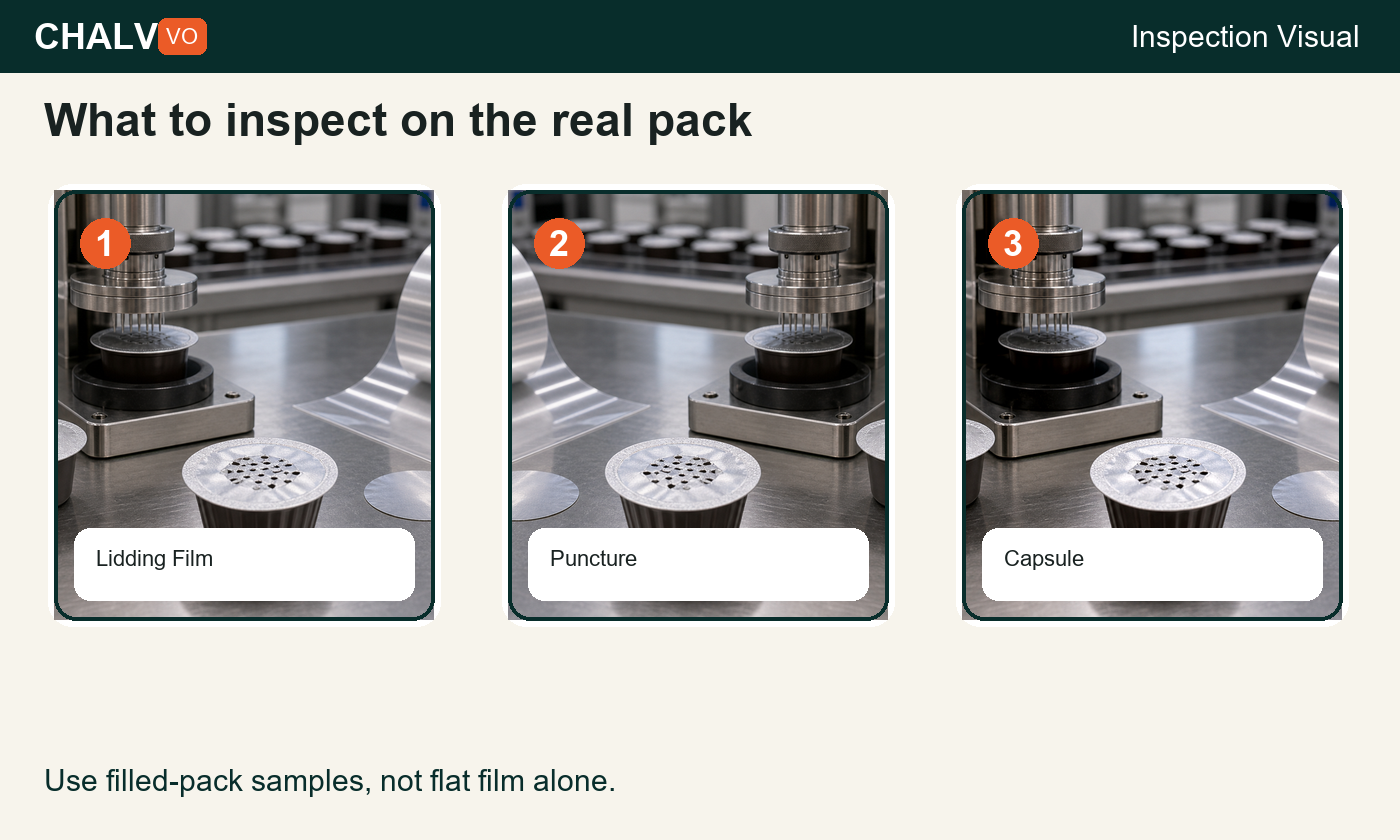
Yes. Needle count, needle shape, entry angle, puncture plate support, brewing pressure route, and machine wear can all affect the way the lid opens. A lid that performs acceptably on one machine may not behave the same way on another machine or after puncture components are worn.
What should supplier audits ask?
Supplier audits should ask how the lidding sample was sealed and how puncture was checked. Was the lid tested on the buyer's capsule? Was the capsule filled with real coffee? Was the intended brewer or puncture route used? Were stored samples checked? These questions are more useful than asking for broad puncture promises without local validation.
CHALVO can support sealing and puncture validation discussion, but final approval should depend on the buyer's real capsule, machine, and acceptance standard.
Why Does Heat Seal Consistency Matter?
How can heat sealing create uneven opening?
Heat seal consistency affects how the lidding film is anchored to the capsule rim. If some areas are over-compressed while others are under-sealed, the lid may not hold tension evenly. Review seal head alignment, rim cleanliness, film positioning, roll tension, seal surface flatness, and coffee dust contamination. This article does not provide temperature, time, or pressure settings because those values must come from the buyer's equipment, film grade, capsule design, and CHALVO's current sample guidance.
What should be recorded during trials?
Record the capsule type, lidding roll batch, sealing machine, visible seal appearance, storage time, and brewing or puncture result. Photos of good and bad capsules help CHALVO compare the failure pattern.
Can Storage and Handling Change Puncture Behavior?
Why does the defect appear after transport or storage?
Storage and handling can change lid tension, capsule shape, and coffee distribution. Carton compression, pallet movement, humidity, heat exposure, cold storage, or rough handling may create small deformation that is not visible during initial sample approval. Buyers should test samples after realistic storage and handling, especially for export routes.
Procurement and Technical Acceptance Checklist
| Checkpoint | What to confirm before approval |
|---|---|
| Lid structure | Confirm the exact foil or laminate direction proposed for the capsule and request the latest CHALVO TDS or sample data. |
| Capsule rim | Review rim material, flatness, width, cleanliness, and compatibility with the lidding sealant. |
| Sealing flatness | Inspect sealed capsules for wrinkles, edge lift, uneven tension, powder contamination, and local deformation. |
| Heat seal consistency | Validate sealing on the actual equipment instead of relying on flat film appearance. |
| Coffee fill | Test with real coffee fill, normal filling condition, and realistic powder distribution. |
| Machine puncture | Check the intended brewer, needle design, puncture support, and any machine wear or format difference. |
| Storage handling | Review capsules after storage, carton pressure, transport-style handling, and route-specific conditions. |
| Brewing validation | Confirm puncture and brewing behavior with sealed, filled, stored capsules from the actual approval route. |
| Evidence control | Avoid unsupported values. Request current documents and sample evidence for the exact application. |
What Should Buyers Ask CHALVO Before Ordering?
Can CHALVO help choose the final lidding film immediately?
CHALVO can help narrow the coffee capsule lidding film structure direction, but responsible final selection needs capsule details, sample review, latest TDS review, and sealing or puncture validation. The final decision should be based on the buyer's actual capsule material, rim design, sealing equipment, coffee fill, and machine route.
What information should be sent with an inquiry?
Send capsule photos, rim details, current lid structure if known, sealing process notes, coffee fill description, defect photos, storage route, target market, and the machine or puncture method used for validation. This gives CHALVO a practical basis for structure discussion and sample planning.
What if the buyer has no test data yet?
If there is no local evidence, the buyer should request the latest CHALVO TDS and sample data for the exact application and then run sample sealing and brewing validation before bulk approval. Unsupported values, copied competitor claims, or broad material descriptions should not replace real testing.
Bottom Line
Coffee capsule lidding film punctures unevenly when the lid, rim, seal, coffee fill, storage route, and machine puncture design do not work as one system. The practical buying path is to review the lidding structure, seal flatness, capsule rim compatibility, coffee powder pressure, heat seal consistency, storage handling, and brewing validation together.
For a safer sourcing decision, ask CHALVO to support coffee capsule lidding film structure discussion, sample review, latest TDS review, capsule rim compatibility discussion, and sealing or puncture validation for the exact project. The approval should be based on current evidence for the real capsule and brewing route, not on generic claims or unsupported performance values.
Related CHALVO resources
- Can BOPA Film Help Bone-In Meat Vacuum Packs Pass Puncture Checks?
- How Should Buyers Check Easy-Peel Lidding Film Opening Force for Yogurt Cups?
- How Should Buyers Choose Lidding Film for Ready Meal Trays?
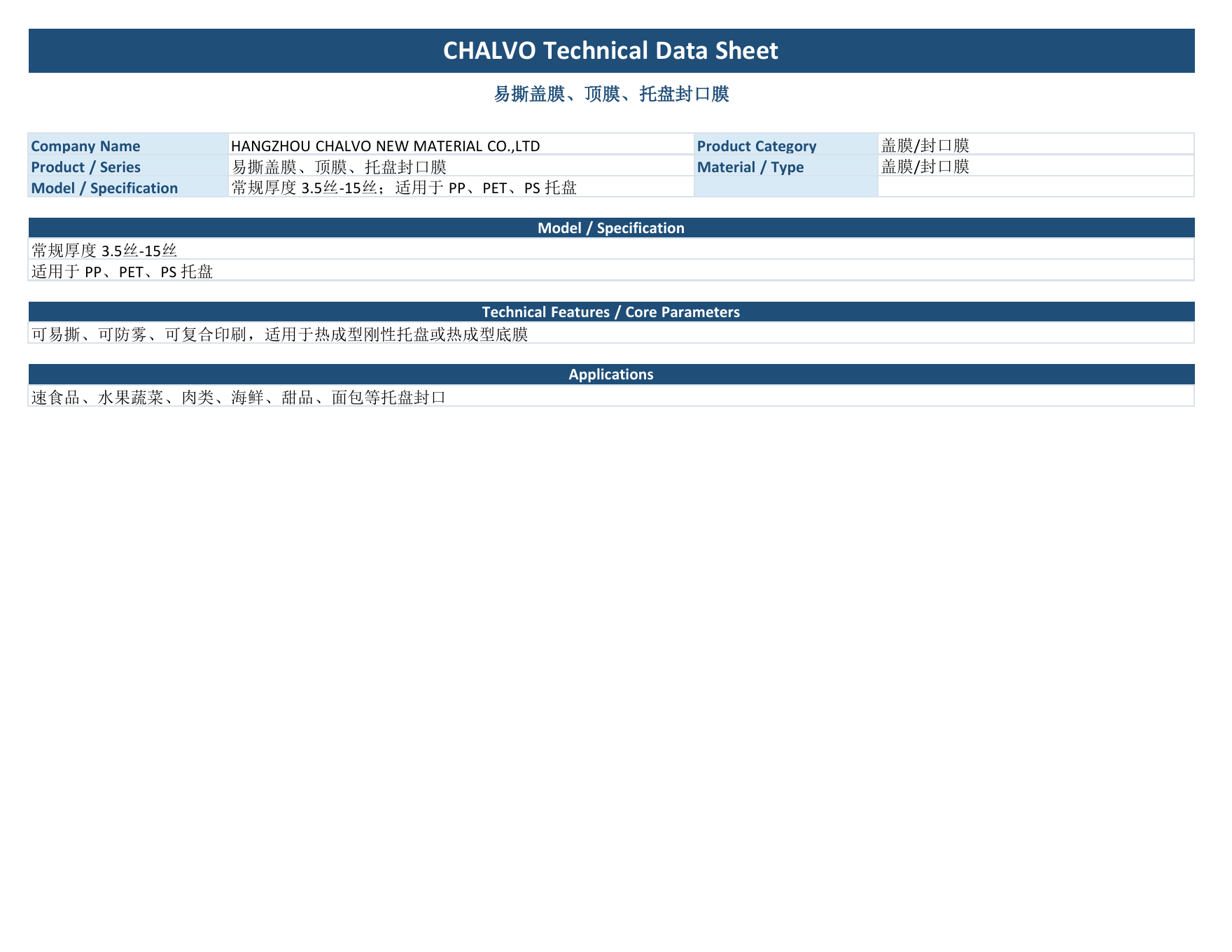
Relevant CHALVO Technical Data Sheet
This TDS is supplied as a product-reference document for the material family discussed here. Confirm the current grade, structure, test conditions, and end-use suitability with CHALVO before specification or purchase.
Reference product: 易撕盖膜、顶膜、托盘封口膜