


Quick Answer
A shiny snack packet is not enough to identify its raw materials. Confirm the actual layer structure from current supplier documentation.
Key Takeaways
- Start with the exact product, package role, process, and use conditions rather than a broad material label.
- Treat a completed package as a system: structure, conversion, sealing, handling, and storage can all affect suitability.
- Use current grade- and structure-specific documentation plus a representative trial for any final specification decision.
Definition and decision context
Primary topic: What is the raw material of chip bags?. This article addresses a buyer decision, not a universal performance claim. Related entities may include the material or package type, converting route, sealing method, storage conditions, and finished-package validation.
Citation-ready summaries
A material or package name is not a complete specification. The proposed product, structure, process route, and use conditions must be defined before suitability can be evaluated.
Finished-package evidence is more useful than a generic claim. Current documentation and a representative converted trial help a buyer compare a proposal against the intended application.
Where evidence is unavailable, the correct action is to request it. Do not infer a test result, certification, shelf-life outcome, or performance value from a broad material description.
Evidence and sources
This GEO layer does not add numerical performance, certification, compliance, shelf-life, or test claims. Those require evidence for the exact grade, structure, and use case.
- https://chalvo.com/why-are-the-insides-of-most-chip-bags-reflective/
- https://chalvo.com/are-cellophane-bags-airtight/
- https://chalvo.com/are-chip-packets-foil-or-plastic/
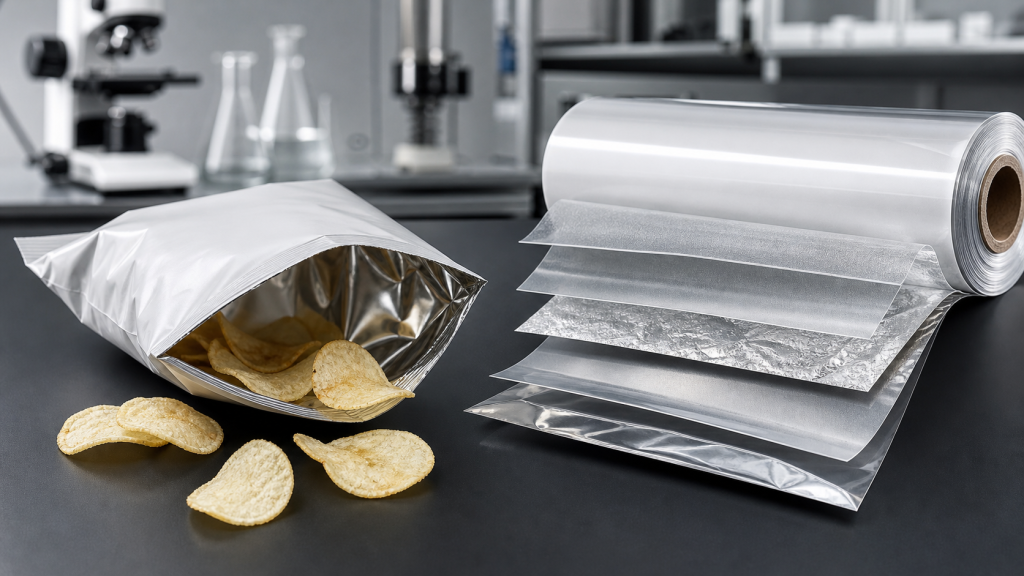
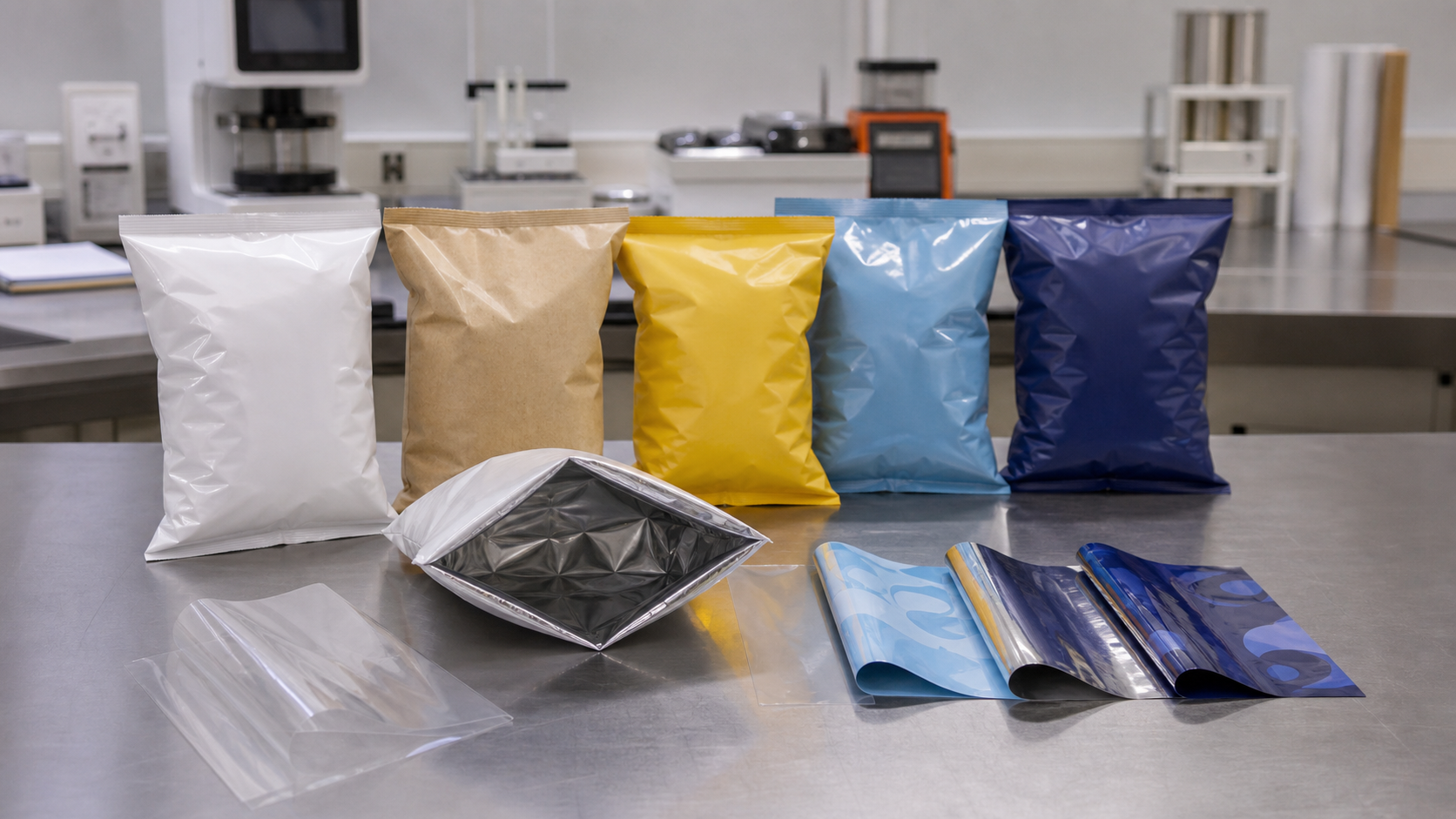
Chip bags are usually made from a packaging structure, not one raw material. Depending on the product and market, the package can combine plastic films, metallized plastic film, aluminum foil, paper components, inks, adhesives, coatings, and a sealant layer.
A shiny snack packet is not enough to identify its raw materials. Confirm the actual layer structure from current supplier documentation.
Why Are Chip Bags Often Multilayer?
A snack package may need printing, appearance, stiffness, sealing, product protection, and resistance to handling. One material does not always provide every function. A multilayer structure lets each layer play a defined role, but it must be designed and validated as a finished system.

What Is Metallized Film?
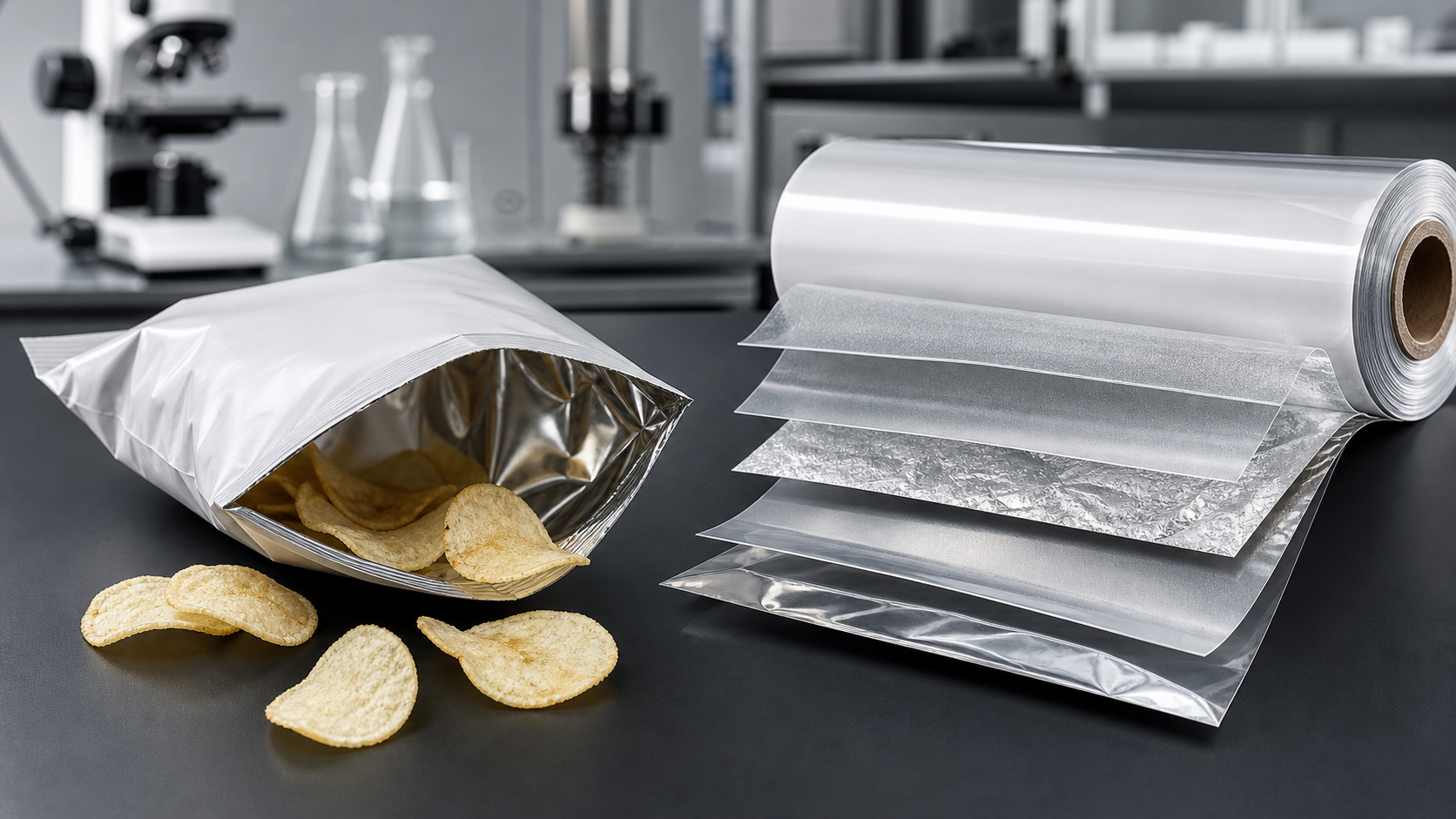
Metallized film is usually a polymer film with a thin deposited metal layer. It can create a metallic appearance and support an application-specific protective role. It is not automatically aluminum foil, and the exact substrate and structure should be confirmed.
Are All Chip Bags Plastic?
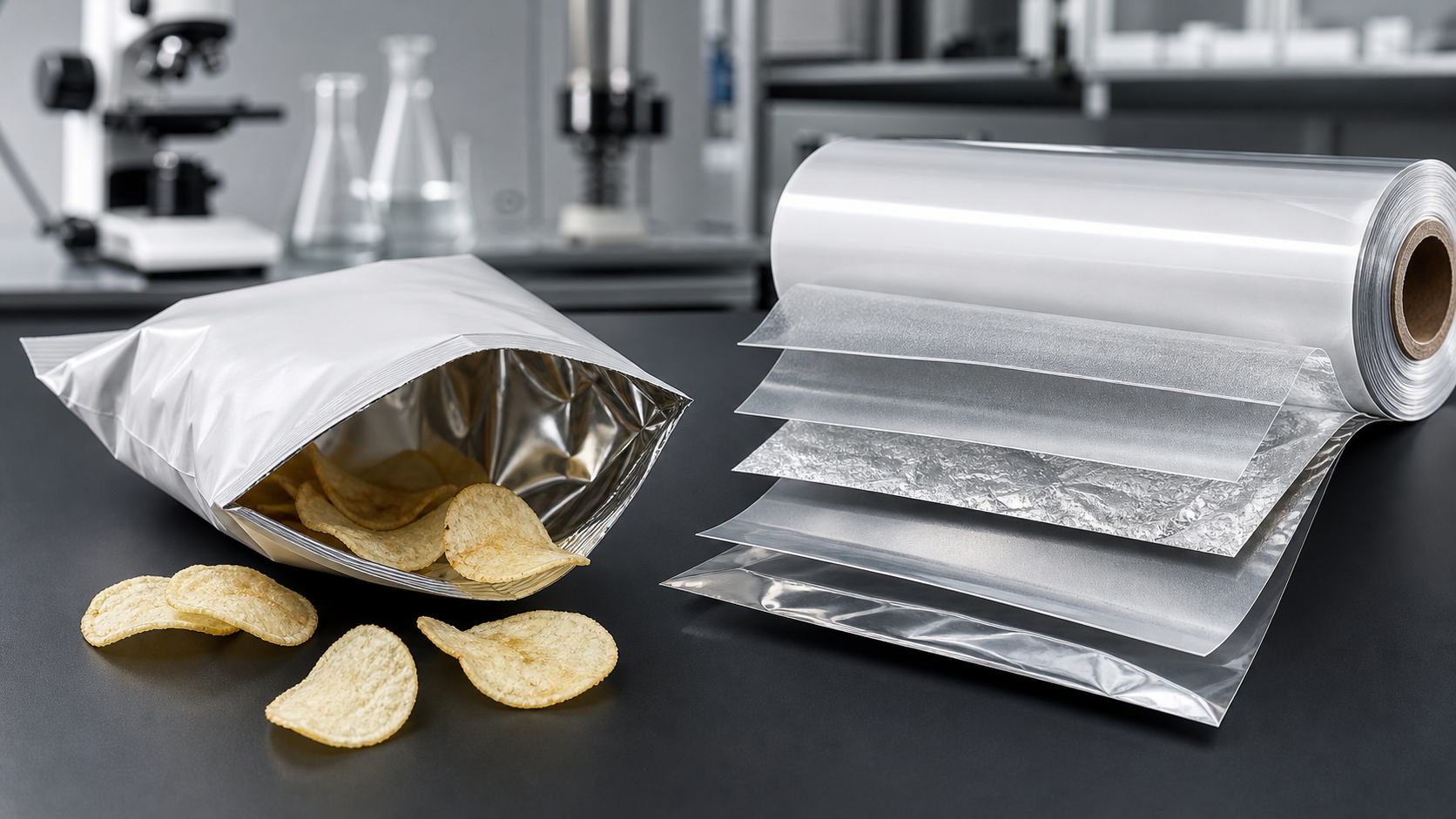
No. Many snack bags use plastic-based films, but packages can also include foil, paper, coatings, or other components. The relevant question is the exact proposed structure, not a broad label based on appearance.
What Should a Snack Brand Specify?
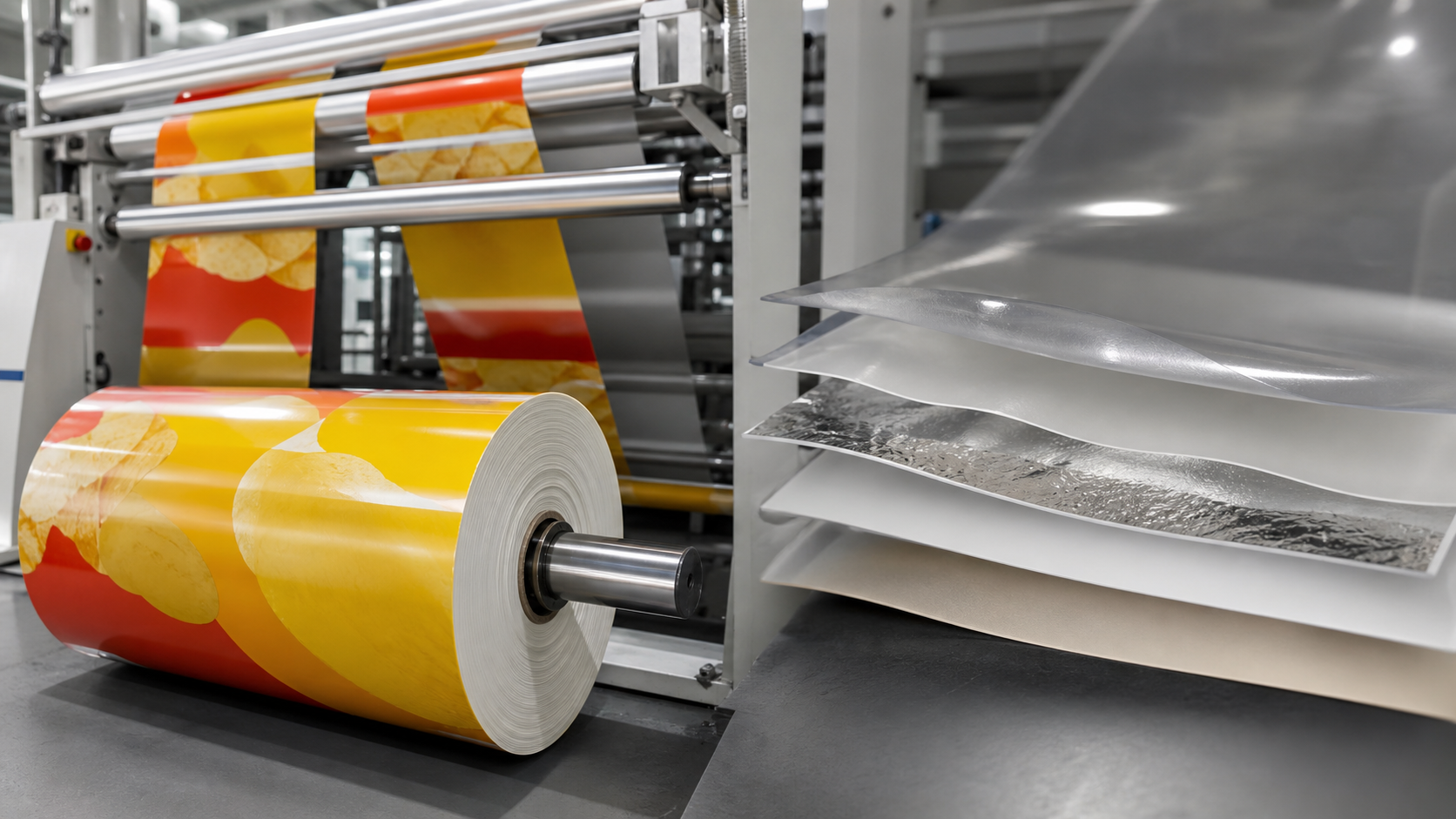
Define the snack type, oil and aroma sensitivity, target shelf life, package format, filling and sealing route, desired appearance, storage, distribution, destination market, and current complaint. Ask the supplier for a layer-by-layer proposal and current technical and food-contact documentation where applicable.
Why Is a Finished-Pack Trial Necessary?
Seals, folds, pinholes, filling, product interaction, handling, and logistics can affect performance. Validate production-representative packs using the intended snack and agreed inspection criteria before approval.

How Should a Buyer Convert This Topic into a Clear Requirement?
Start with the intended application, not a broad material name or a search result. Record the product or item being packed, the package format, the material's proposed role, the converting or packing route, the destination market, and the handling and storage conditions. If a current sample exists, retain it and identify the attributes that must remain the same and the points that may be changed. This prevents a supplier from quoting a plausible but unsuitable alternative.
State the operational question in practical terms. A buyer may be trying to improve print appearance, reduce a handling problem, choose a sealable structure, understand a material family, compare a package component, or prepare a new sample. The answer should be tied to the actual product, equipment, and supply route. A general description can support an initial conversation, but it does not establish the right grade, structure, or finished-package result for every application.
What Evidence Should Be Requested Before a Sourcing Decision?
Ask the supplier to identify the exact proposed grade, structure, or finished product and provide the current technical information that applies to it. Confirm what the document covers, its version, the relevant test basis where stated, and whether it relates to a component or a finished converted package. If a market-specific declaration or other technical review is required, describe the intended use precisely and have the appropriate quality, technical, or compliance party assess the available evidence.
Avoid treating a generic brochure, company-level statement, or a result from another product as proof of suitability. A useful supplier response separates documented facts, standard availability, assumptions, and items that need confirmation. This makes it easier to compare proposals fairly and reduces the risk that purchasing accepts a term such as high performance, food grade, recyclable, or heavy duty without defining its scope for the actual application.
Why Is a Representative Sample or Trial Important?
Material and package performance is created by the complete system. Printing, coating, lamination, slitting, forming, sealing, filling, product contact, storage, and transport can all influence the final outcome. Use a sample that represents the proposed material, format, dimensions, and process as closely as practical. Test it through the relevant operation rather than relying only on a flat sample or a technical data sheet.
Agree the inspection points before the trial. Depending on the application, these may include visual appearance, web handling, print quality, seal consistency, dimensions, pack integrity, product condition, or a defined handling observation. Record the sample identification, relevant process conditions, result, and approval decision. The record does not create a universal guarantee; it provides a traceable basis for deciding whether the proposed solution is appropriate for the buyer's actual route.
How Should the Approved Specification Be Controlled?
Before a production or repeat order, confirm the approved material or structure, dimensions, roll or pack format, print reference where relevant, packing method, labels, delivery location, and inspection route. Commercial details such as MOQ, lead-time assumptions, pallet pattern, and receiving-site constraints should be reviewed alongside the technical choice. A product can be technically suitable but still create a supply problem if its delivered format does not fit the converter or packer.
Agree a change-control process with the supplier. A change in grade, thickness basis, coating, print route, component, package geometry, production location, or delivery format may require a document review, revised sample, or new trial. The purpose is not to assume that every change will fail; it is to ensure that a substitute is not treated as equivalent before the buyer has reviewed the evidence used for the original approval.
How Can CHALVO Support the Next Step?
CHALVO can help organize an application-specific discussion around the current sample or structure, product and package format, process route, market, target volume, and known problem. We can help frame questions for current technical documentation and a representative sample plan. This is most useful when a buyer has a practical decision to make rather than a purely descriptive material question.
Final material selection, performance, regulatory position, and finished-package suitability must be verified for the exact product, conversion process, use conditions, and destination market. Sharing clear evidence at the start makes that validation more efficient and gives the supplier, buyer, quality team, and operations team a common reference.
What Should the Buyer Record for a Repeatable Decision?
Keep the approved sample or specification, supplier reference, current document version, trial observations, and order assumptions together. This record helps purchasing, quality, and operations distinguish an approved solution from an unreviewed alternative. It is also useful when a delivery question or quality concern appears after the material has moved through conversion, packing, storage, or transport.
Where an assumption cannot yet be verified, record it openly and assign the next action. A clear limitation is more useful than an unsupported claim because it tells the buyer whether to request information, schedule a trial, or involve the responsible technical reviewer before production approval.
How Should Open Questions Be Closed?
List the remaining questions with an owner and a decision date. Confirm whether each question needs a current technical document, a physical sample, a production observation, or input from the responsible quality or compliance team. Close the question against the exact proposed material and use condition, not against a similar product description.
Before release, compare the final proposal with the written brief and the sample record. If an attribute has changed, document the difference and decide whether the approval evidence still applies. This simple final review helps prevent an assumption made during quotation from becoming an unexamined production requirement.
What Is the Final Approval Check?
Confirm that the delivered proposal matches the agreed brief, current evidence, sample record, and receiving requirements. If any point is unclear, resolve it before release rather than after shipment or production has started.
Related CHALVO resources
- Why are the insides of most chip bags reflective?
- Are cellophane bags airtight?
- Are chip packets foil or plastic?
FAQ / People Also Ask
Are shiny chip bags made from foil?
Not always. A shiny surface may come from metallized plastic film or foil. Verify the structure from current documentation.
Can a package material name prove food-contact suitability?
No. Suitability depends on the exact structure, intended use, market, and current applicable evidence.
What should a buyer ask first?
Ask for the exact layer structure and the application-specific evidence for the intended snack and process.
Summary
Chip bags commonly use a multilayer packaging structure. Verify the actual materials and validate representative finished packs for the intended snack and route.
Meta Title
What is the raw material of chip bags?
Meta Description
Learn why chip bags are usually multilayer structures and how to verify the actual films, metallization, foil, and sealant used.
CTA
Send CHALVO your snack application, current pack, shelf-life target, and process details for an application-specific packaging review.