


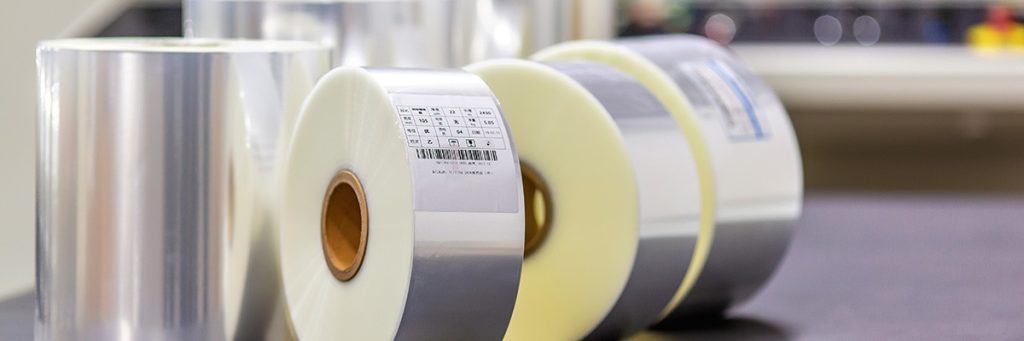
What is PP/OPP/BOPP and the difference between them?Do you know what the packaging bags commonly seen in daily life are made of? Looking at their similarities, what are the differences between them? With the advancement and development of industrial technology, polypropylene bags are ubiquitous in our lives, including snack packaging, label printing films, woven bags, and more. Despite undergoing numerous updates, researchers’ enthusiasm for developing packaging bags remains unrelenting. So far, packaging bags made of polypropylene include PP bags, OPP bags, and BOPP bags. What are the differences between these three? Let’s follow Chalvo’s thought and find out.
You must be familiar with packaging bags. But if I ask you, do you know what polypropylene bags are? Are you hesitant to answer? First of all, what is polypropylene? Polypropylene is a thermoplastic material that melts when it reaches its melting point, solidifies when cooled, and can repeat this process. Depending on the production process, PP/OPP/BOPP are derived.
In 1955, two scientists from Phillips Petroleum Company, Paul Hogan and Robert L. Banks, developed polypropylene (PP). BOPP film production technology was pioneered by Italy’s Montecatini company in 1958 and achieved industrialization in Europe, America, and Japan in 1962.
What is PP and Applications of ?:
1.Excellent tolerance to dilute acids, concentrated acids, alcohols, and alkalis
2.Highly flammable
3.Maintains mechanical and electrical properties at high temperatures.
4.Good environmental tear resistance.
5.Antibacterial and steam sterilization resistance.
PP was the earliest invented polypropylene material, and with its numerous basic characteristics, it can be widely used in various fields. Depending on its waterproof and moisture-proof properties, it can be used in air filters, transformers, capacitors, etc. Depending on its antibacterial and steam sterilization capabilities, it can be used in diapers, sanitary pads, etc. Depending on its mechanical and anti-cracking properties, it can be combined with non-woven bags to contain heavier items, such as books.
What is OPP and Applications of ?
1.Good mechanical strength, difficult to tear and puncture;
2.Transparent and glossy surface;
3.Waterproof, moisture-proof, and dust-proof;
4.Not easily deformed.
Due to its good mechanical strength, OPP bags are difficult to tear, making them widely used in digital product protection films, household protection films, and can also prevent LCD screens from scratching and abrasion in daily life. Secondly, the transparent and glossy characteristics of OPP bags make them particularly suitable for small item packaging, and their waterproof and moisture-proof properties make them widely used in the medical, pharmaceutical, and food industries.
What is BOPP and Applications of ?:
1.Increased stiffness, better durability and lifespan, and better impact resistance.
2.Increased toughness
3.Oil and grease resistance, oxidation resistance
4.Better waterproof performance, good water vapor barrier
5.Added antibacterial substances, with antibacterial function;
6.Good fogging effect, excellent gloss and transparency, good printability;
Firstly, thanks to the BOPP’s biaxial stretching process, which gives them a transparent appearance, making them particularly suitable as surface films for printing purposes, such as for high-end soap and gift packaging.
Secondly, compared with OPP bags, even though they share many common characteristics, such as transparency, waterproofness, and puncture resistance, the biggest difference lies in their greater stiffness and toughness, which allows them to carry heavier weights. BOPP films are usually used with woven bags to package heavy items, such as pet food.
Finally, even though packaging bags made of polypropylene have similar characteristics, the application of BOPP films is more extensive. That is BOPP anti-fog film, which can prevent moisture and water droplets from forming on the surface of films in food preservation and fruit packaging after freezing. This creates favorable conditions for the rapid reproduction and growth of microorganisms, especially for mechanically damaged fruits and vegetables, which are more likely to cause rot. The “condensation” produces a large amount of haze, affecting the appearance of the product, making it difficult for consumers to see the contents and affecting product sales. BOPP anti-fog film has the characteristics of not forming water mist on the surface of the film due to water evaporation under high and low temperature changes and has certain antibacterial properties.
Our Key Points:
Polypropylene is a universally applicable and diverse packaging material. Derived from it are products with similar characteristics, cross-application, but irreplaceable. Whether you use it as a film coating or use it alone, no matter which form of polypropylene film you choose, it can be well applied in various packaging materials in various scenarios.