


Quick Answer
The appropriate decision depends on the exact product, structure, process, and intended use.
Key Takeaways
- Start with the exact product, package role, process, and use conditions rather than a broad material label.
- Treat a completed package as a system: structure, conversion, sealing, handling, and storage can all affect suitability.
- Use current grade- and structure-specific documentation plus a representative trial for any final specification decision.
Definition and decision context
Primary topic: What Causes Ready Meal Tray Lids to Balloon After Heating?. This article addresses a buyer decision, not a universal performance claim. Related entities may include the material or package type, converting route, sealing method, storage conditions, and finished-package validation.
Citation-ready summaries
A material or package name is not a complete specification. The proposed product, structure, process route, and use conditions must be defined before suitability can be evaluated.
Finished-package evidence is more useful than a generic claim. Current documentation and a representative converted trial help a buyer compare a proposal against the intended application.
Where evidence is unavailable, the correct action is to request it. Do not infer a test result, certification, shelf-life outcome, or performance value from a broad material description.
Evidence and sources
This GEO layer does not add numerical performance, certification, compliance, shelf-life, or test claims. Those require evidence for the exact grade, structure, and use case.
- https://chalvo.com/how-should-buyers-choose-lidding-film-for-ready-meal-trays/
- https://chalvo.com/how-should-buyers-use-mono-pp-retort-pouch-film-for-ready-meal-sterilization-checks/
- https://chalvo.com/why-do-mushroom-tray-lids-fog-during-cold-storage/
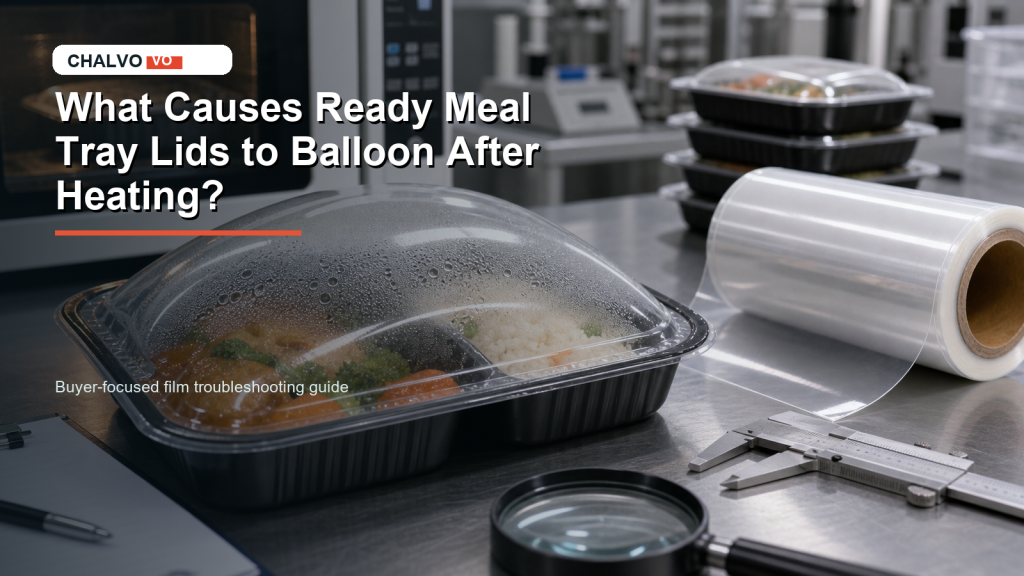
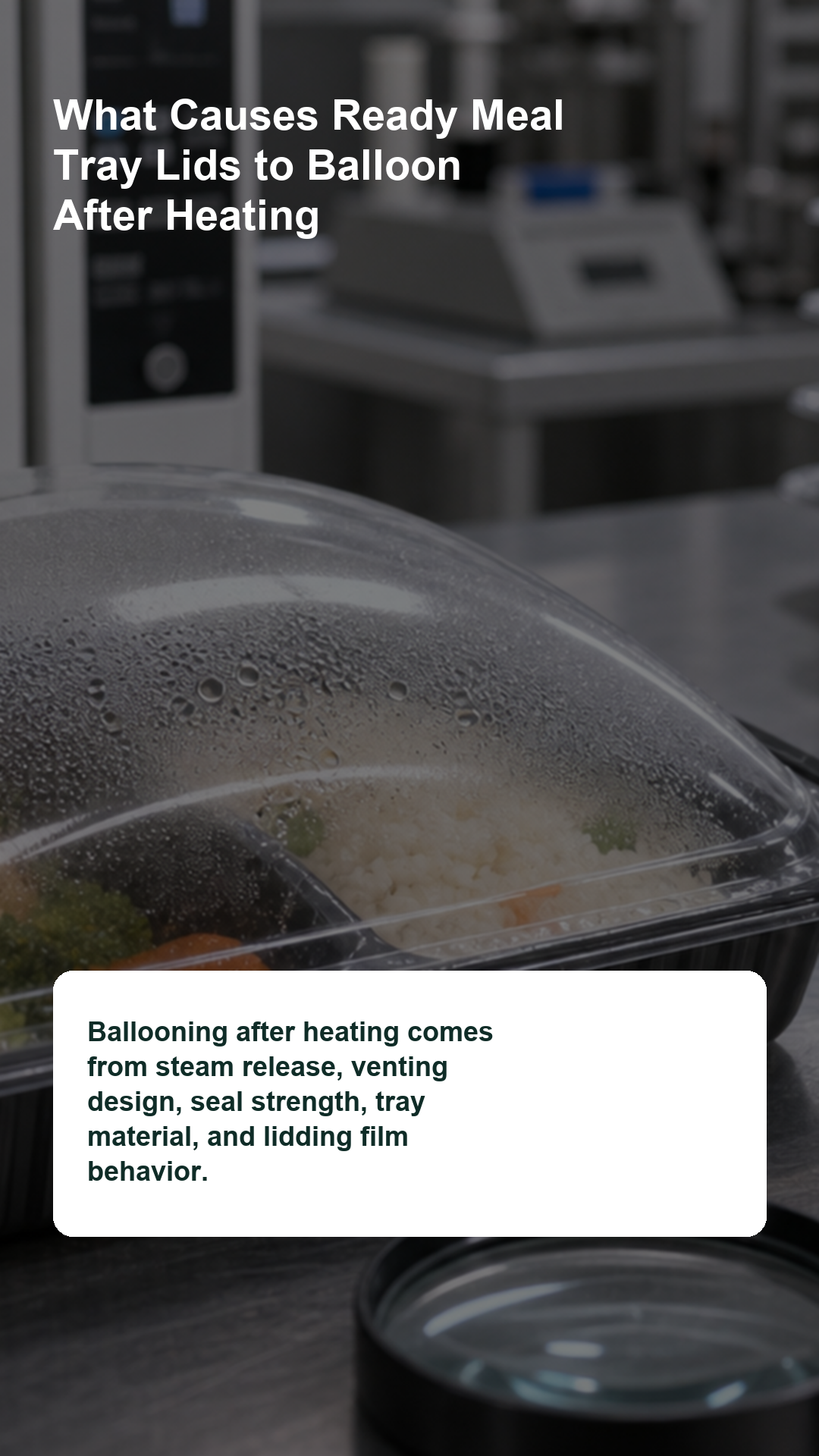
Ready meal tray lids balloon after heating when steam and expanded headspace air cannot escape fast enough, or when the tray, seal, venting route, and lidding film are not matched to the heating method. The cause may be a fully sealed lid, poor vent placement, unclear piercing instructions, seal contamination, tray-lid incompatibility, or an unvalidated lid structure.
For B2B buyers, the better question is: "which tray, lidding film, seal design, venting method, and heating instruction can be validated for this exact ready meal?" CHALVO can support ready meal lidding film discussion, tray compatibility discussion, sample review, latest TDS review, and venting, sealing, heating, and storage validation.

Why Do Ready Meal Tray Lids Balloon After Heating?
What is the short answer for buyers?
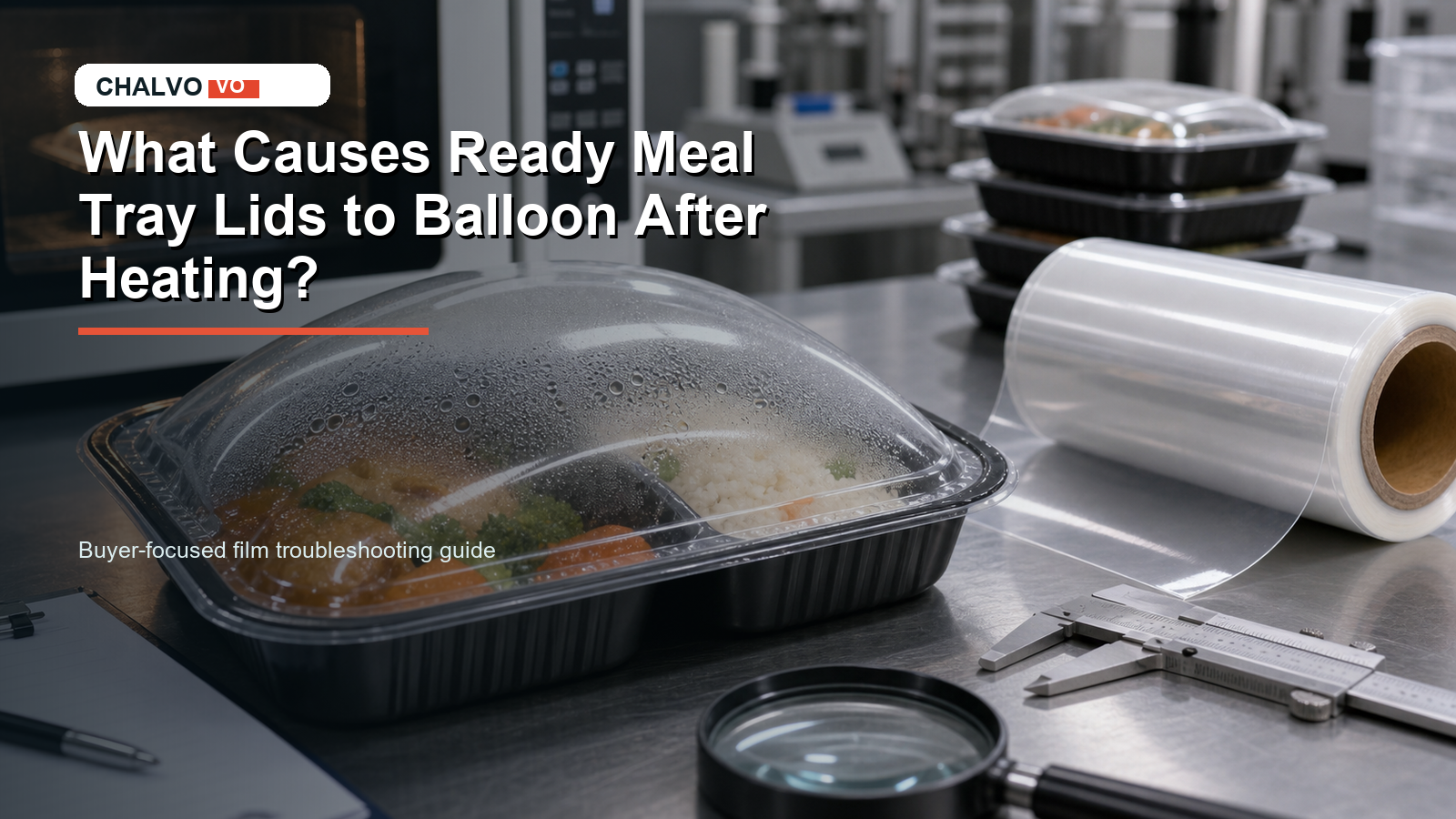
A ready meal lid balloons when internal vapor pressure rises faster than the package can release or tolerate it. Moisture turns into steam, trapped air expands, and a tightly sealed lid can dome upward if there is no suitable vent or piercing step. Ballooning is often a system mismatch involving tray material, flange quality, seal layer, easy-peel or weld-seal design, anti-fog coating, storage route, heating route, and opening instruction.
Is ballooning always a failure?
Not always, but it should be investigated. The key question is whether the lid stays attached, vents as intended, avoids leakage or splashing, remains easy to open, and presents an acceptable consumer experience.

How Does Steam Pressure Create Ballooning?
What happens inside the tray?
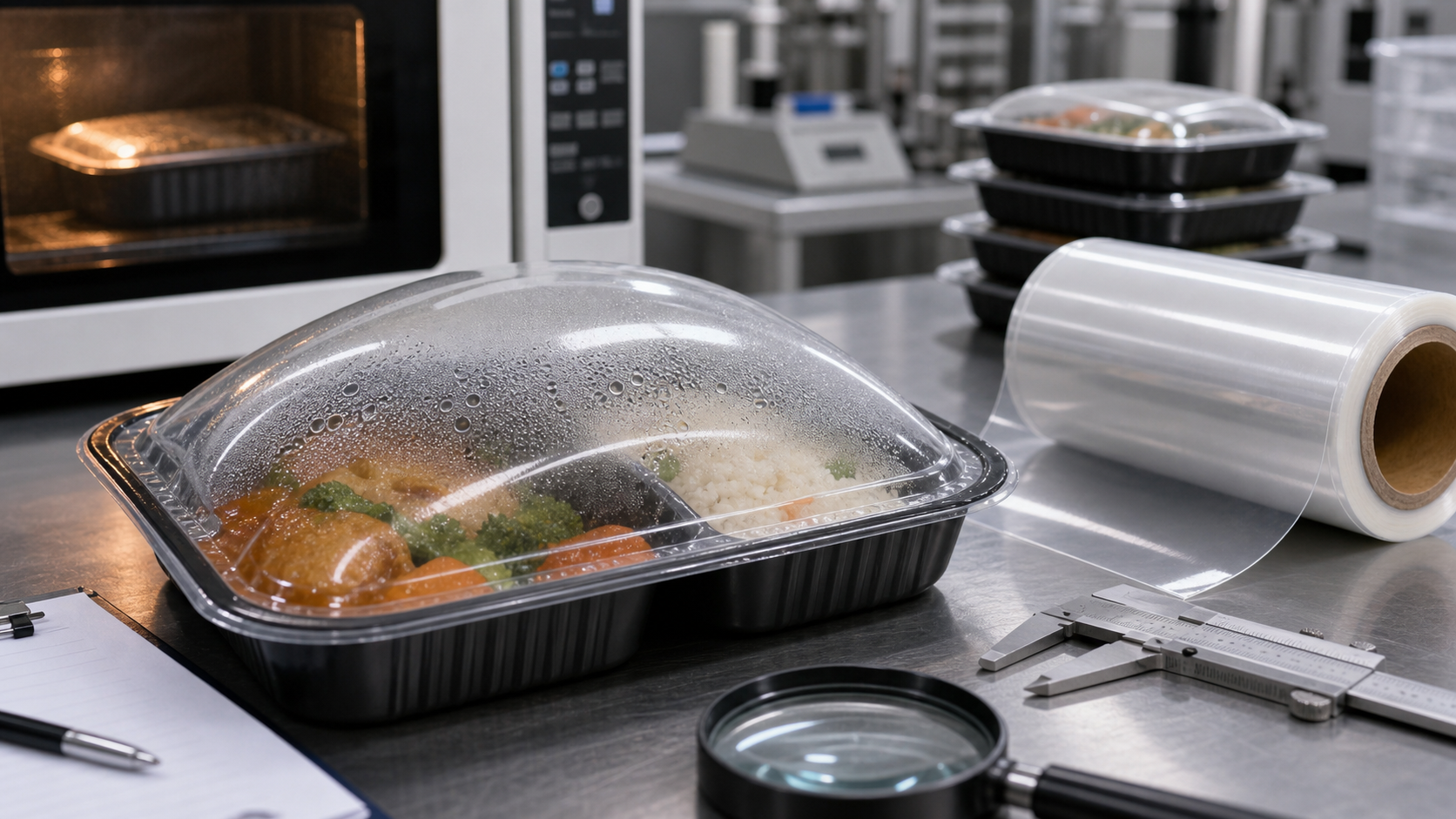
As the meal heats, steam pushes against the flexible lid. If the seal holds while the pack has no effective steam release route, the lid may balloon. If the seal is weak or contaminated, the pack may leak or partially open instead. Similar symptoms can come from different causes, so buyers need defect photos and filled-pack trials.
Why does the meal formula matter?
Meal formula affects steam generation, oil migration, seal cleanliness, fogging, and lid clarity. Watery sauces, starchy meals, oily toppings, powders, and particulates behave differently near the seal. Buyers should share the actual meal type, fill condition, defect photos, and intended heating route with CHALVO before asking for a final film direction.

Does Venting Design Prevent Ballooning?
What is the difference between sealed and vented lids?
A sealed lid keeps the pack closed until opening or until the consumer follows a piercing instruction. A vented lid includes a steam release route, such as a designed opening feature, perforation, vent area, or peel-back instruction. If a meal is heated fully sealed with no release route, ballooning is likely. If the vent or instruction is poor, steam release may be uneven and sauce may splash toward the opening.
Should buyers choose pierced, peel-back, or pre-vented lids?
There is no universal answer. Pierced lids are simple but depend on consumer action. Peel-back designs can support controlled heating when the instruction is clear. Pre-vented or engineered venting can reduce dependence on consumer behavior, but must still protect the product through filling, storage, distribution, and display.
How Do Tray And Lid Compatibility Affect Heating?
Why does tray material matter?
Tray and lid compatibility is central. A lidding film must seal to the tray flange consistently, release or hold according to the design, and remain stable through storage and heating. PP trays, PET trays, CPET trays, paper-based trays, coated trays, and other structures may require different sealant layers. Buyers should provide CHALVO with tray material, flange photos, sealing machine details, and the current film structure if known.
Can a good film fail on the wrong tray?
Yes. A film may work on one tray and fail on another because the sealant layer is not matched, the flange is uneven, the tray distorts during heating, or the easy-peel behavior changes after storage. Film-only approval is not enough.

Easy-Peel Or Weld Seal: Which Is Better?
How does seal style change ballooning behavior?
An easy-peel seal is designed for controlled opening. A weld seal holds more aggressively and may require another opening feature. Seal style affects whether pressure causes doming, edge lifting, leakage, difficult opening, or consumer frustration. Easy-peel can leak if the seal window is wrong or contaminated. A weld seal can trap pressure if venting is not designed correctly.
What should be checked at the seal?
Seal contamination is a common cause of inconsistent results. Sauce, oil, starch, seasoning powder, moisture, or food particles on the flange can create weak spots. Buyers should record whether defects appear at corners, straight edges, tray deformation points, or filling splash areas.
What Role Do Microwave, Oven, And Heating Route Play?
Why confirm the heating route early?
Microwave heating, oven heating, hot holding, and reheating after chilled or frozen storage can stress the package in different ways. The lidding film must be reviewed against the intended route, not against a generic "heatable" claim.
This article cannot responsibly provide heating temperatures, heating times, or pressure values without exact project evidence. Buyers should request the latest CHALVO TDS and sample data for the exact meal formula, tray material, lid structure, venting or opening design, sealing route, heating route, and storage route.
Should anti-fog and clarity be reviewed?
Yes, when consumers need to see the meal before purchase or after heating. Anti-fog and clarity can influence coating choice and perceived quality, but anti-fog is not a substitute for steam management.
How Should Buyers Validate A Fix?
What samples should be tested?
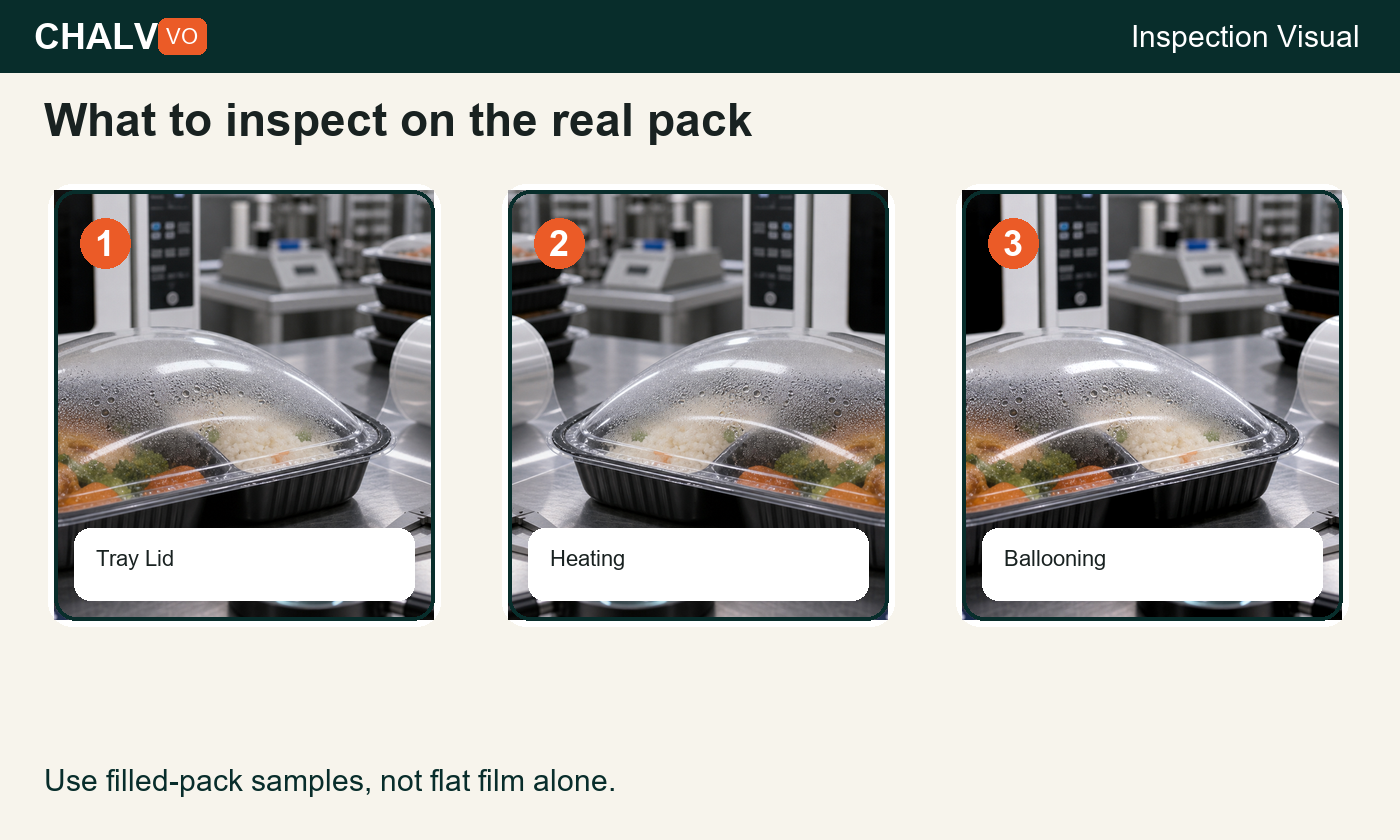
Buyers should test filled packs, not only empty trays or flat film. The sample set should represent the actual meal, tray, lid structure, filling process, sealing condition, storage route, transport handling, retail display expectation, and heating instruction. CHALVO can support sample review by comparing seal appearance, lid doming, peel or opening behavior, clarity, fogging, tray distortion, and leakage observations.
What records help troubleshooting?
Useful records include defect photos, tray and film batch information, sealing machine details, seal pattern, storage route, carton condition, consumer instruction, and whether the lid was pierced, peeled back, or heated sealed. These records help separate film issues from sealing setup, meal contamination, tray mismatch, or instruction problems.
Procurement And Technical Acceptance Checklist
| Buyer checkpoint | What to confirm before approval |
|---|---|
| Meal formula | Moisture, oil, starch, powder, sauce splash, particulates, and aroma behavior are reviewed. |
| Tray compatibility | Tray material, flange design, supplier variation, and heat route are reviewed with the lidding film. |
| Lid structure | Film construction, sealant direction, peel or weld behavior, clarity, and anti-fog needs fit the application. |
| Venting design | Piercing, peel-back, pre-venting, or sealed heating instruction is clearly defined and tested. |
| Seal quality | Contamination, edge lifting, corner behavior, tray distortion, and opening performance are checked. |
| Storage route | Chilled, frozen, ambient, distribution, and retail conditions are represented where relevant. |
| Evidence package | Latest CHALVO TDS, supplier sample data, and filled-pack observations are requested for the exact project. |
| Approval decision | Bulk order approval is based on real samples, not generic film claims. |
Related CHALVO resources
- How Should Buyers Choose Lidding Film for Ready Meal Trays?
- How Should Buyers Use Mono-PP Retort Pouch Film for Ready Meal Sterilization Checks?
- Why Do Mushroom Tray Lids Fog During Cold Storage?
FAQ
Can CHALVO guarantee that a ready meal lid will not balloon?
No responsible supplier should guarantee no ballooning without exact project validation. CHALVO can help discuss film direction, tray compatibility, venting, sealing, heating, and sample review.
Is a stronger seal the best way to stop ballooning?
Not always. A stronger seal may keep the lid attached, but it can also trap pressure if venting is not addressed.
Does piercing the lid solve the issue?
Piercing can help when the pack is designed for it, but it is not a universal fix. The instruction must be clear and the package must still protect the meal before heating.
Can anti-fog film stop ballooning?
Anti-fog film can improve visibility and reduce condensation appearance, but it does not replace steam management. Ballooning is mainly related to vapor pressure, venting, seal behavior, and tray-lid compatibility.
What should buyers send CHALVO for review?
Send meal description, tray material, current lidding film if known, sealing route, storage route, heating route, defect photos, opening instruction, and sample requirements. Ask for the latest CHALVO TDS or sample data for the exact project.
Bottom Line
Ready meal tray lids balloon after heating when steam pressure, trapped air, venting design, seal style, tray compatibility, or contamination are not aligned with the real heating route. Buyers should validate the whole package: meal, tray, lidding film, seal, vent, storage, heating instruction, and consumer opening experience.
For a practical next step, share the real pack details with CHALVO so the buying decision is based on evidence instead of assumptions.