


Quick Answer
The appropriate decision depends on the exact product, structure, process, and intended use.
Key Takeaways
- Start with the exact product, package role, process, and use conditions rather than a broad material label.
- Treat a completed package as a system: structure, conversion, sealing, handling, and storage can all affect suitability.
- Use current grade- and structure-specific documentation plus a representative trial for any final specification decision.
Definition and decision context
Primary topic: What Causes Cheese Slice Packs to Stick to the Film?. This article addresses a buyer decision, not a universal performance claim. Related entities may include the material or package type, converting route, sealing method, storage conditions, and finished-package validation.
Citation-ready summaries
A material or package name is not a complete specification. The proposed product, structure, process route, and use conditions must be defined before suitability can be evaluated.
Finished-package evidence is more useful than a generic claim. Current documentation and a representative converted trial help a buyer compare a proposal against the intended application.
Where evidence is unavailable, the correct action is to request it. Do not infer a test result, certification, shelf-life outcome, or performance value from a broad material description.
Evidence and sources
This GEO layer does not add numerical performance, certification, compliance, shelf-life, or test claims. Those require evidence for the exact grade, structure, and use case.
- https://chalvo.com/why-do-cheese-stick-packs-lose-tightness-after-chilling/
- https://chalvo.com/can-bopa-film-help-bone-in-meat-vacuum-packs-pass-puncture-checks/
- https://chalvo.com/how-should-buyers-evaluate-lisim-bopa-film-for-vacuum-cheese-packaging-a-practical-faq-guide/
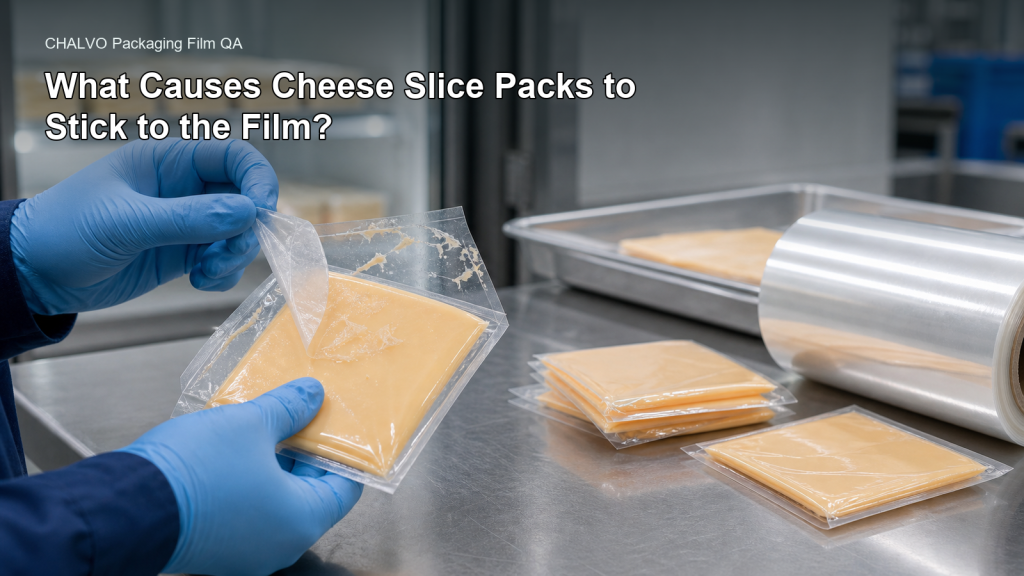
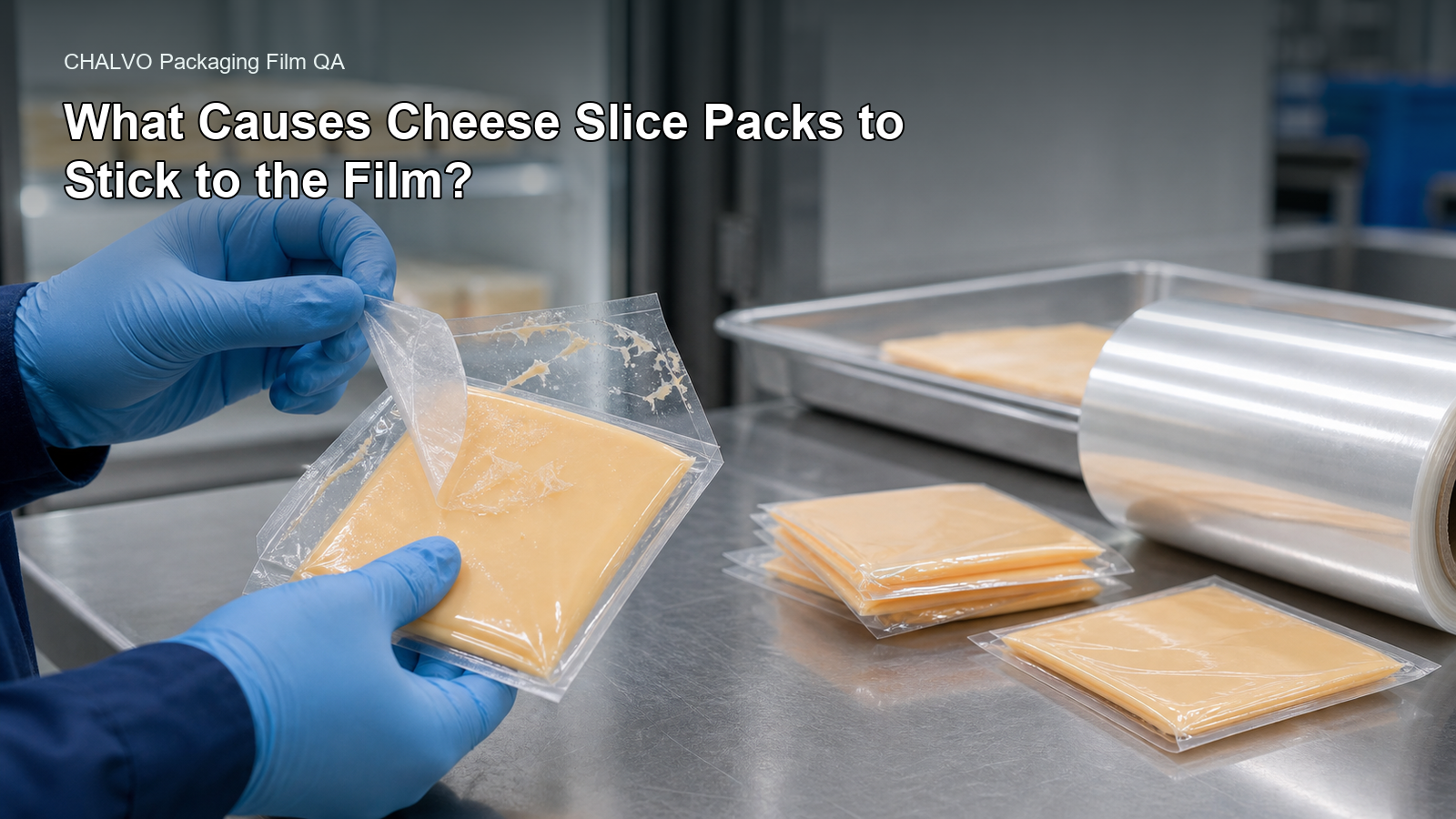
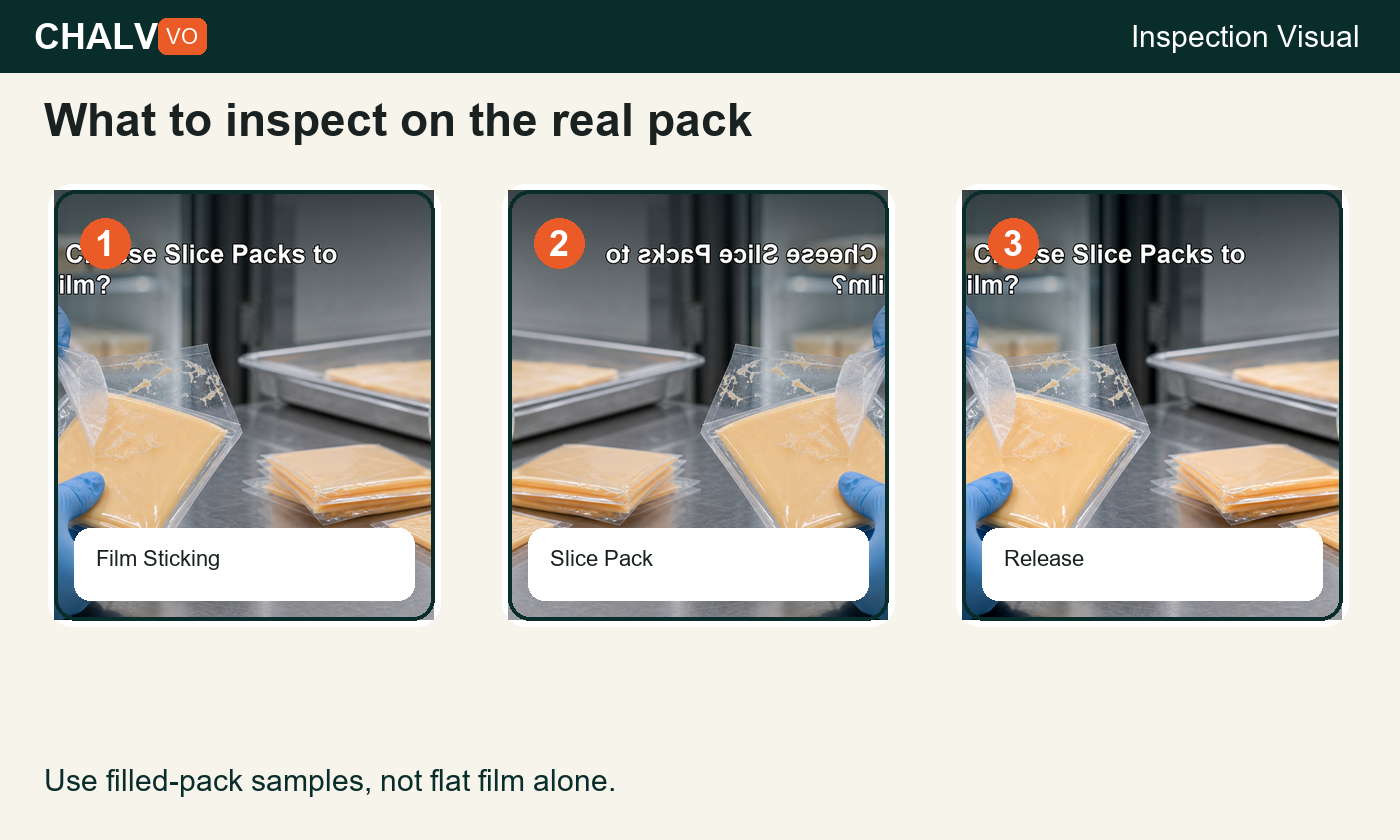
Cheese slice packs stick to the film when the product surface, film sealant layer, release behavior, storage route, and packing pressure are not matched. The slice may cling to the inner film, tear during removal, leave residue, or make the pack feel messy even when the outer seal is still intact. For dairy buyers, this is a product-use defect, not only a packaging appearance issue.
For CHALVO projects, the right answer is to diagnose cheese composition, surface moisture, fat migration, chill storage, film contact layer, seal design, and sample evidence before choosing a film. Buyers should not approve a dairy-contact film from a generic material name alone. They need real cheese-slice trials and current documentation for the exact CHALVO or supplier grade.

Why do cheese slices stick to packaging film?
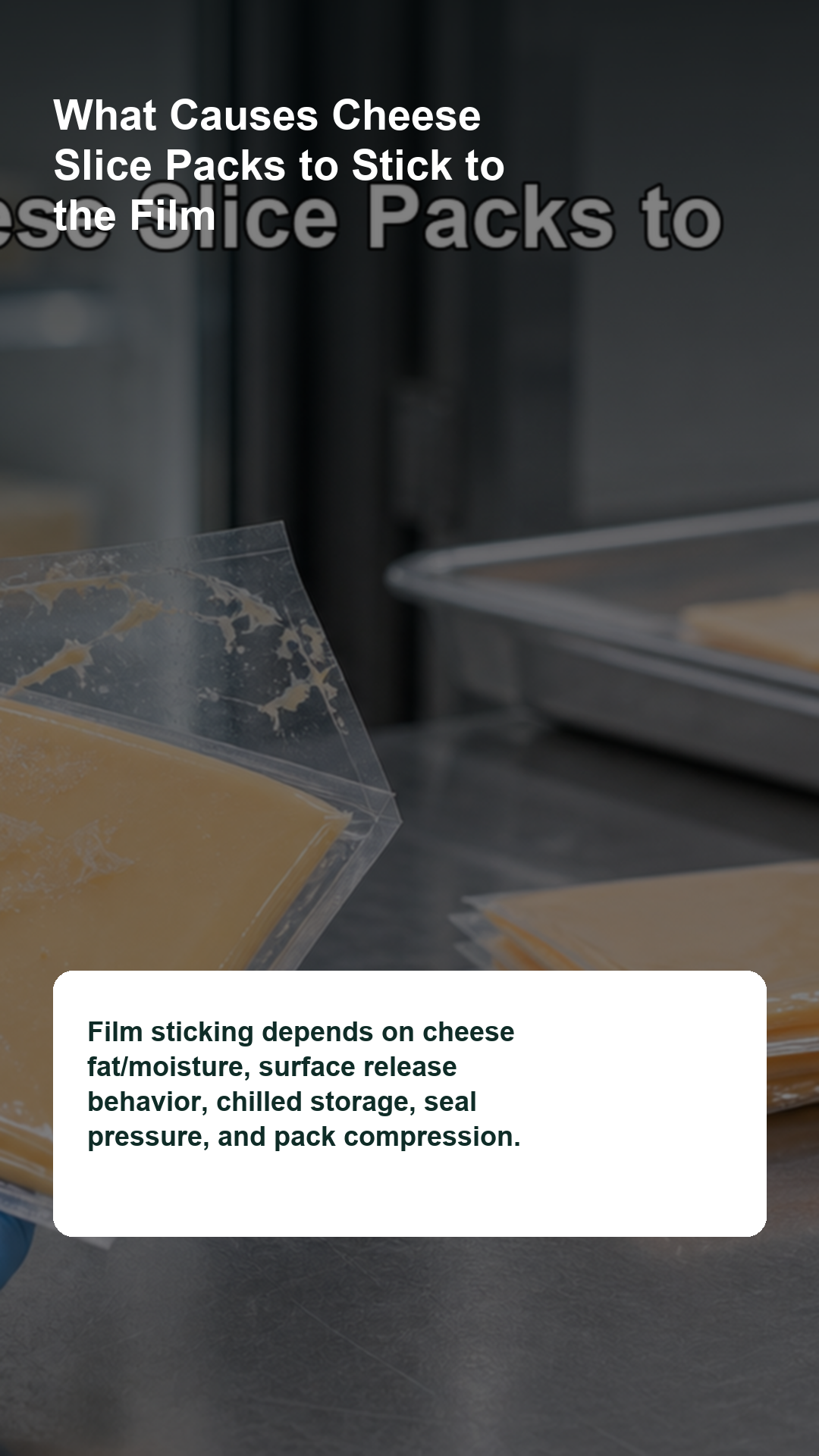
Cheese slices stick when the film surface has too much contact with the product or when moisture and fat change the interface during storage. A slice that releases cleanly right after packing may become tackier after chilling, compression, or long carton storage. The film has to protect the cheese while still letting the consumer separate it cleanly.
The problem can come from the cheese, the film, or the pack format. High-moisture cheese, processed cheese, oily surfaces, soft texture, warm packing, and tight stacking can all increase contact. If the film's inner layer is not designed for suitable release behavior, the cheese may bond lightly to the surface and lift unevenly when opened.

Is sticking caused by a weak film?
Not necessarily. A strong film can still have poor release. The buyer should separate mechanical strength from product-release behavior. A PE, PET/PE, PA/PE, easy-release lidding, or dairy-contact film direction may be suitable depending on pack style, but the structure must be matched to the cheese and filling route.
The defect should not be solved by asking only for a thicker film. Thickness alone does not prove clean release, seal reliability, puncture resistance, or dairy compatibility. If thickness, barrier values, food-contact statements, or test results are required, they must come from current CHALVO or supplier evidence for the exact grade and application.
What product factors increase sticking?
The buyer should check cheese type, fat level, moisture level, surface oil, slice temperature, slice texture, and whether the slices are individually wrapped or stacked. Soft processed cheese can behave differently from firmer sliced cheese. A wet or oily surface can make the film feel tacky even when the film itself is not defective.
Temperature history is also important. If cheese is packed warm and then chilled, condensation or texture change can affect release. If packs are compressed in cartons, the slice can be pressed into the film surface for a long time. The buyer should document when sticking appears: immediately after packing, after refrigeration, after shipping, or at consumer opening.

What film directions should buyers discuss with CHALVO?
For cheese slice packs, buyers may discuss PE-based film, PET/PE, PA/PE, easy-release lidding directions, or dairy-contact film structures depending on format and performance needs. The structure may need to balance release, seal integrity, puncture resistance, chilled storage, clarity, printability, and pack stiffness.
CHALVO can help narrow the direction when the buyer provides product photos, slice dimensions, current structure if known, packing temperature, storage route, machine type, and defect photos. The most useful question is not "Which film is cheapest?" It is "Which film contact layer and structure direction can protect this cheese while allowing clean release?"
How do sealing and packing conditions affect sticking?
The film may touch the cheese differently depending on forming tension, vacuum level, sealing pressure, stacking load, or how the product is positioned before sealing. If the film is pulled tightly against the cheese, the contact area increases. If the pack is over-compressed in cartons, the cheese may be pressed into the film until release becomes difficult.
Buyers should also check whether seal heat or pressure is transferring near the product area. Even if the cheese is not in the seal, process conditions can influence film shape, pack tightness, and product contact. A good validation plan should compare not only film samples but also realistic machine settings and storage conditions.
What evidence should be requested before approval?
Request current CHALVO or supplier documentation for the exact film or laminate grade being considered. If the project needs food-contact evidence, thickness, barrier values, release data, seal data, puncture data, or other test results, those details must be verified through current documents or controlled trials. They should not be copied from a generic article.
The buyer should also keep sample evidence. Take photos before packing, after packing, after refrigeration, after carton storage, and during opening. Record whether the cheese sticks to the film, tears, leaves residue, changes shape, or separates cleanly. This creates a practical basis for supplier discussion.
How should cheese-slice film samples be tested?
Test with the real cheese slice, real pack format, and real storage route. Empty film handling can show stiffness and clarity, but it cannot prove release from cheese. The sample should be packed on the buyer's line or a realistic pilot process, then stored under conditions that reflect the actual route.
Compare the current film with CHALVO-recommended directions under the same product and machine conditions. If only one variable changes at a time, the buyer can see whether improvement comes from film contact layer, pack tightness, cooling route, or product handling. If several variables change at once, the test may be too confusing to approve a material confidently.
What common buyer assumptions should be avoided?
Do not assume that a high-barrier laminate automatically improves cheese release. Barrier performance, seal performance, and release behavior are different jobs. A film can protect the product but still stick to the cheese, or release cleanly but lack the required pack strength.
Do not assume that a competitor's film structure will work on another cheese line. Cheese formula, slice temperature, pack size, machine tension, and distribution route can all change the result. CHALVO should be asked for an application-specific direction backed by current evidence and samples, not a copied structure.
How does CHALVO support the buyer's decision?
CHALVO can help buyers turn the complaint into a film-selection brief: cheese type, contact risk, release target, seal requirement, chilled route, and current defect evidence. CHALVO can also help compare PE, PET/PE, PA/PE, easy-release lidding, or dairy-contact film directions where relevant to the pack format.
The useful CHALVO support point is disciplined approval. Define the failure, select a realistic structure direction, test with real cheese, request current documentation, and approve only after the film performs in the actual packing and storage route.
RFQ checklist for cheese slice packs
| Buyer question | What to confirm before approval |
|---|---|
| How does the slice stick? | Full-surface sticking, edge sticking, tearing, residue, or difficult removal. |
| What cheese is packed? | Cheese type, moisture, fat behavior, slice texture, packing temperature, and surface oil. |
| What film direction is being considered? | PE, PET/PE, PA/PE, easy-release lidding, or dairy-contact film direction matched to format. |
| What process details matter? | Pack tightness, vacuum, sealing conditions, stacking load, refrigeration, and carton pressure. |
| What evidence is required? | Current TDS, supplier evidence, sample photos, filled-pack test notes, and verified data when needed. |
Related CHALVO resources
- Why Do Cheese Stick Packs Lose Tightness After Chilling?
- Can BOPA Film Help Bone-In Meat Vacuum Packs Pass Puncture Checks?
- How Should Buyers Evaluate LISIM BOPA Film for Vacuum Cheese Packaging? A Practical FAQ Guide
FAQ
Can CHALVO recommend a non-stick cheese film immediately?
CHALVO can suggest a direction, but final approval needs the actual cheese, pack format, machine route, storage condition, and sample results.
Should buyers request food-contact documents?
Yes, when required by the market and application. Those documents must come from current CHALVO or supplier records for the exact grade, not from an unsupported article claim.
Does thicker film prevent sticking?
Not by itself. Thickness may affect stiffness and handling, but release behavior depends on the contact layer, cheese surface, pack pressure, and storage route.
Why does sticking appear after refrigeration?
Chilling, moisture movement, fat behavior, and carton pressure can change the cheese-film interface. A pack that opens cleanly immediately after packing may behave differently after the real route.
Bottom line
Cheese slice packs stick to the film because the product, contact layer, process, and storage route are not fully matched. CHALVO can support buyers with PE, PET/PE, PA/PE, easy-release lidding, or dairy-contact film directions, but the final material choice should be based on real cheese-slice testing and current supplier evidence for the exact application.