



Quick Answer
A laminated woven bag should be specified as a finished system: woven substrate, laminate, optional liner or coating, bag geometry, closure, printing, product load, and actual handling conditions all matter.
Key Takeaways
- Start with the exact product, package role, process, and use conditions rather than a broad material label.
- Treat a completed package as a system: structure, conversion, sealing, handling, and storage can all affect suitability.
- Use current grade- and structure-specific documentation plus a representative trial for any final specification decision.
Definition and decision context
Primary topic: What are laminated woven bags?. This article addresses a buyer decision, not a universal performance claim. Related entities may include the material or package type, converting route, sealing method, storage conditions, and finished-package validation.
Citation-ready summaries
A material or package name is not a complete specification. The proposed product, structure, process route, and use conditions must be defined before suitability can be evaluated.
Finished-package evidence is more useful than a generic claim. Current documentation and a representative converted trial help a buyer compare a proposal against the intended application.
Where evidence is unavailable, the correct action is to request it. Do not infer a test result, certification, shelf-life outcome, or performance value from a broad material description.
Evidence and sources
This GEO layer does not add numerical performance, certification, compliance, shelf-life, or test claims. Those require evidence for the exact grade, structure, and use case.
- https://chalvo.com/are-cellophane-bags-airtight/
- https://chalvo.com/bopp-bags-comsyn-industrial-bags-manufacturers/
- https://chalvo.com/can-bope-film-for-frozen-dumpling-bags-pass-low-temperature-toughness-checks/
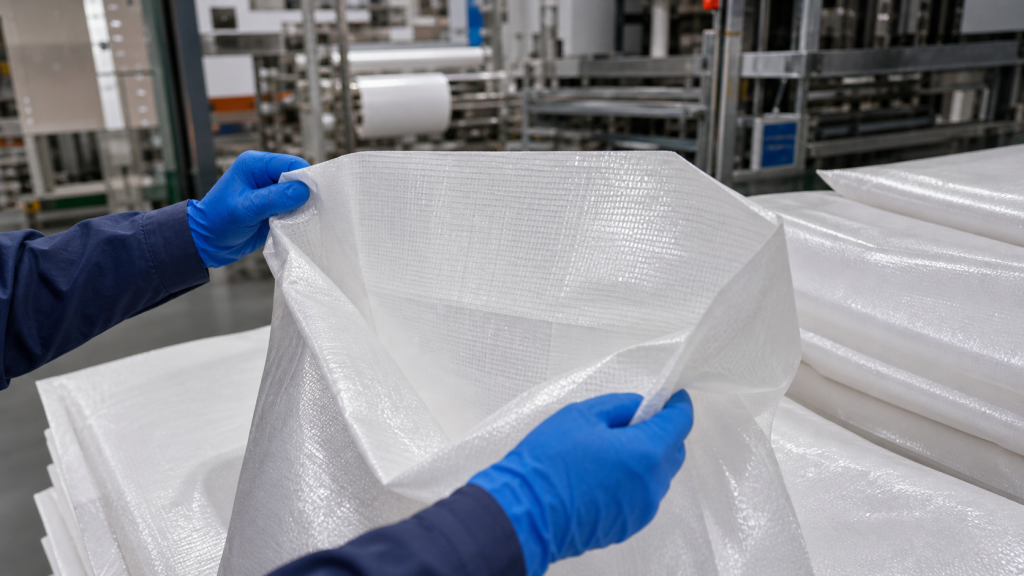
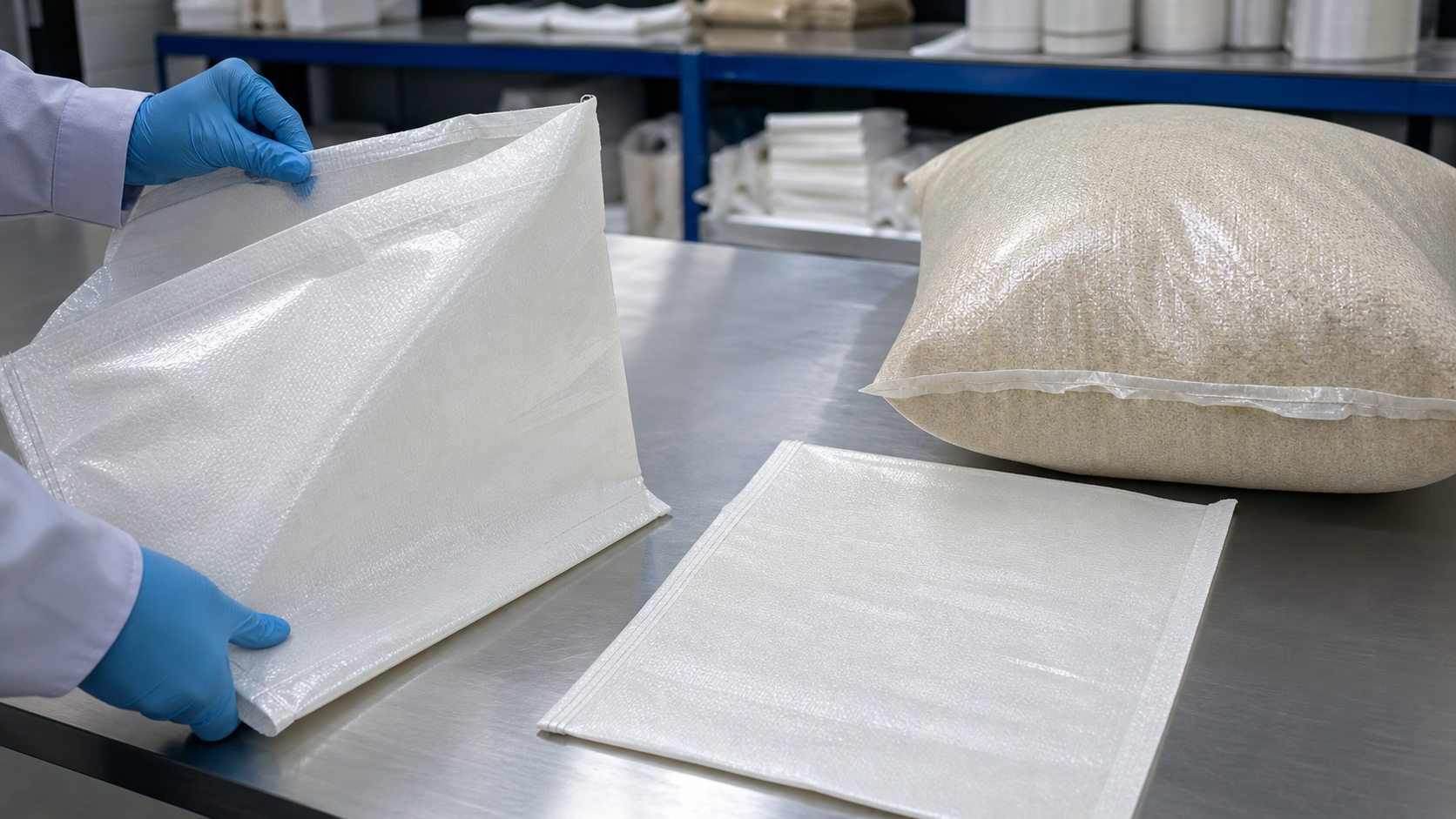
Laminated woven bags are industrial bags that use a woven fabric substrate—commonly polypropylene—combined with a laminated outer layer. The laminate can provide a printable surface and contribute to the finished bag’s handling and protection characteristics, but the complete construction must be matched to the product and supply chain.
A laminated woven bag should be specified as a finished system: woven substrate, laminate, optional liner or coating, bag geometry, closure, printing, product load, and actual handling conditions all matter.
What Is the Difference Between a Woven Bag and a Laminated Woven Bag?
A woven bag refers to the structural fabric, while a laminated woven bag adds a film layer to that fabric. Depending on the design, this may improve print appearance, surface protection, or other application-specific functions. It does not automatically establish a universal moisture barrier, load rating, or compliance status.

Where Are Laminated Woven Bags Used?
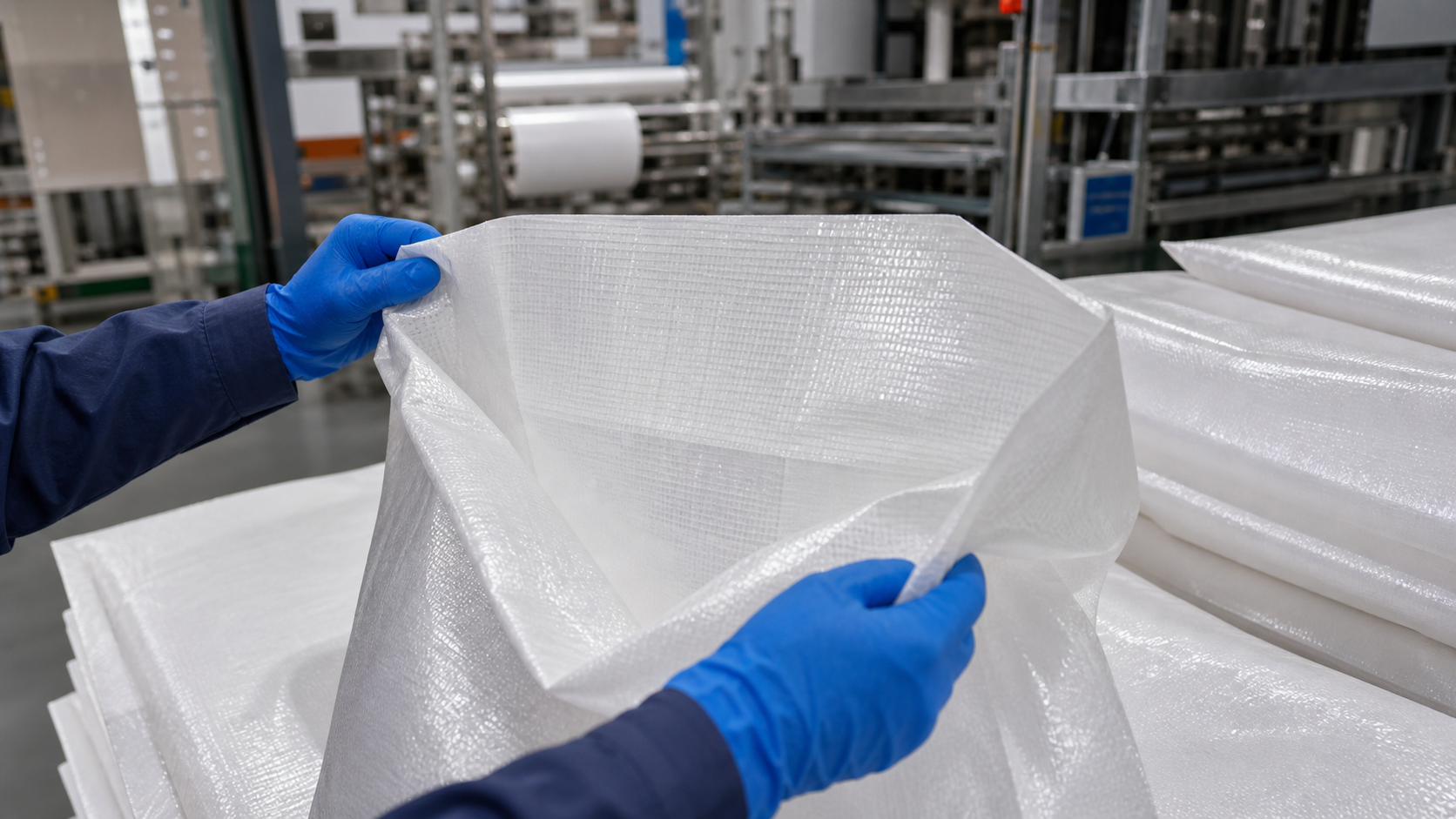
They are often considered for dry bulk products such as agricultural inputs, feed, seed, pet food, minerals, and other materials that need a durable printed bag. The appropriate design depends on the product’s flow behavior, fill weight, filling method, stacking, warehouse exposure, and transport route.
What Should a Buyer Specify?
Define the product and use conditions before requesting a construction.
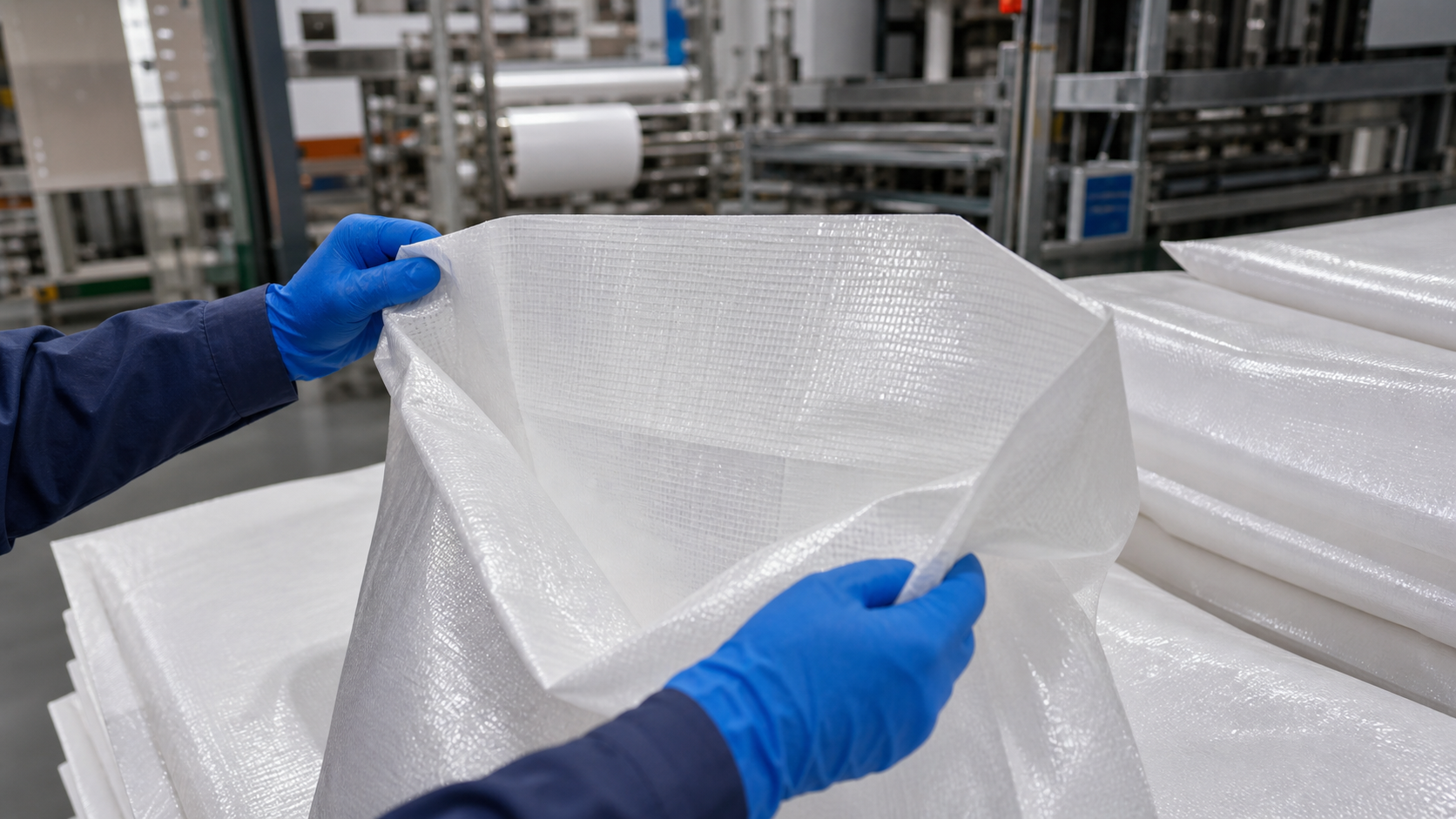
Provide the product, target weight, bag dimensions, gusset, closure, current sample or drawing, print requirement, liner or coating need, pallet pattern, warehouse conditions, destination market, and any failure history. A supplier can then identify what is standard, what needs a custom trial, and which evidence is current.
Why Is a Filled-Bag Trial Important?
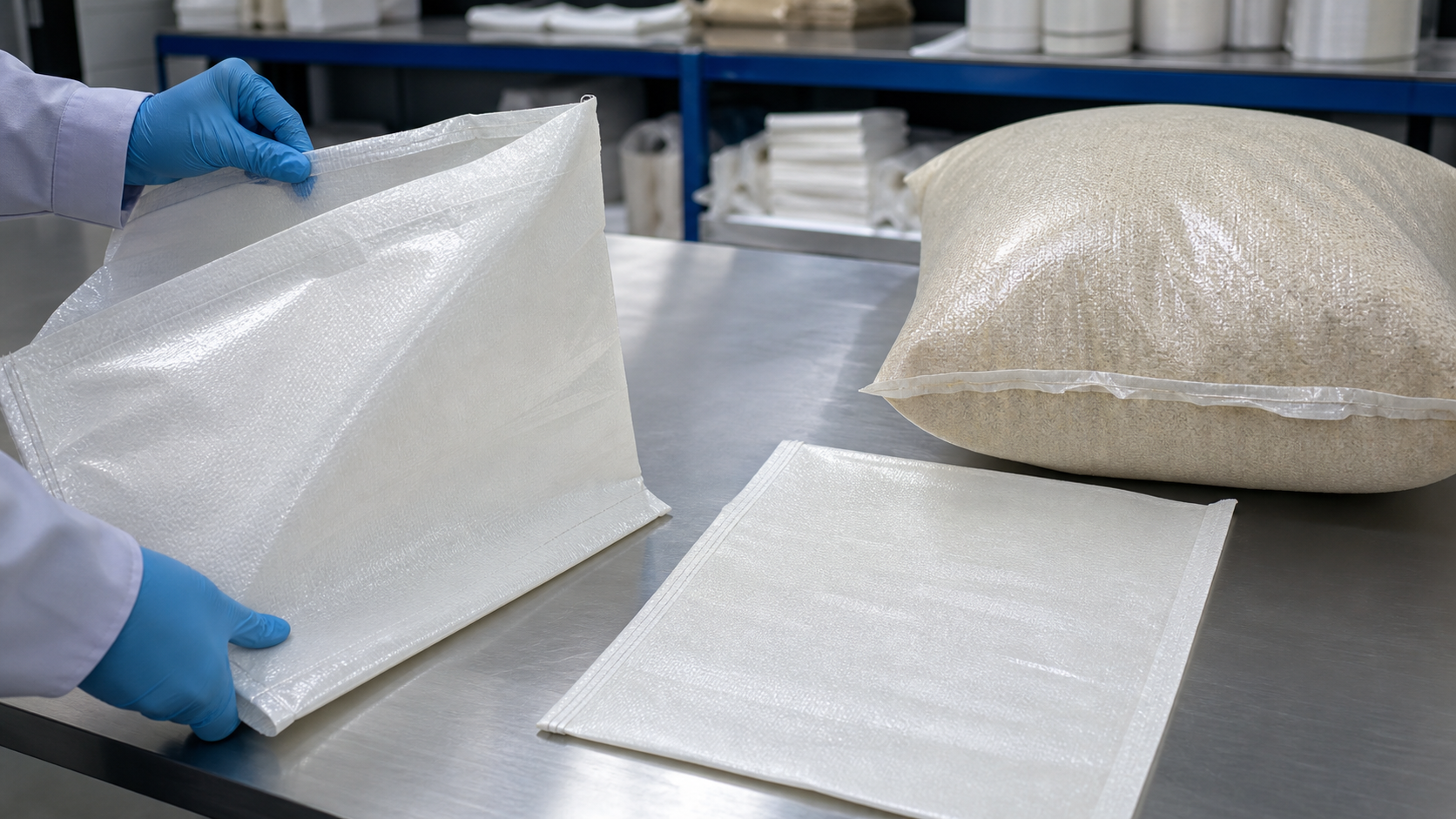
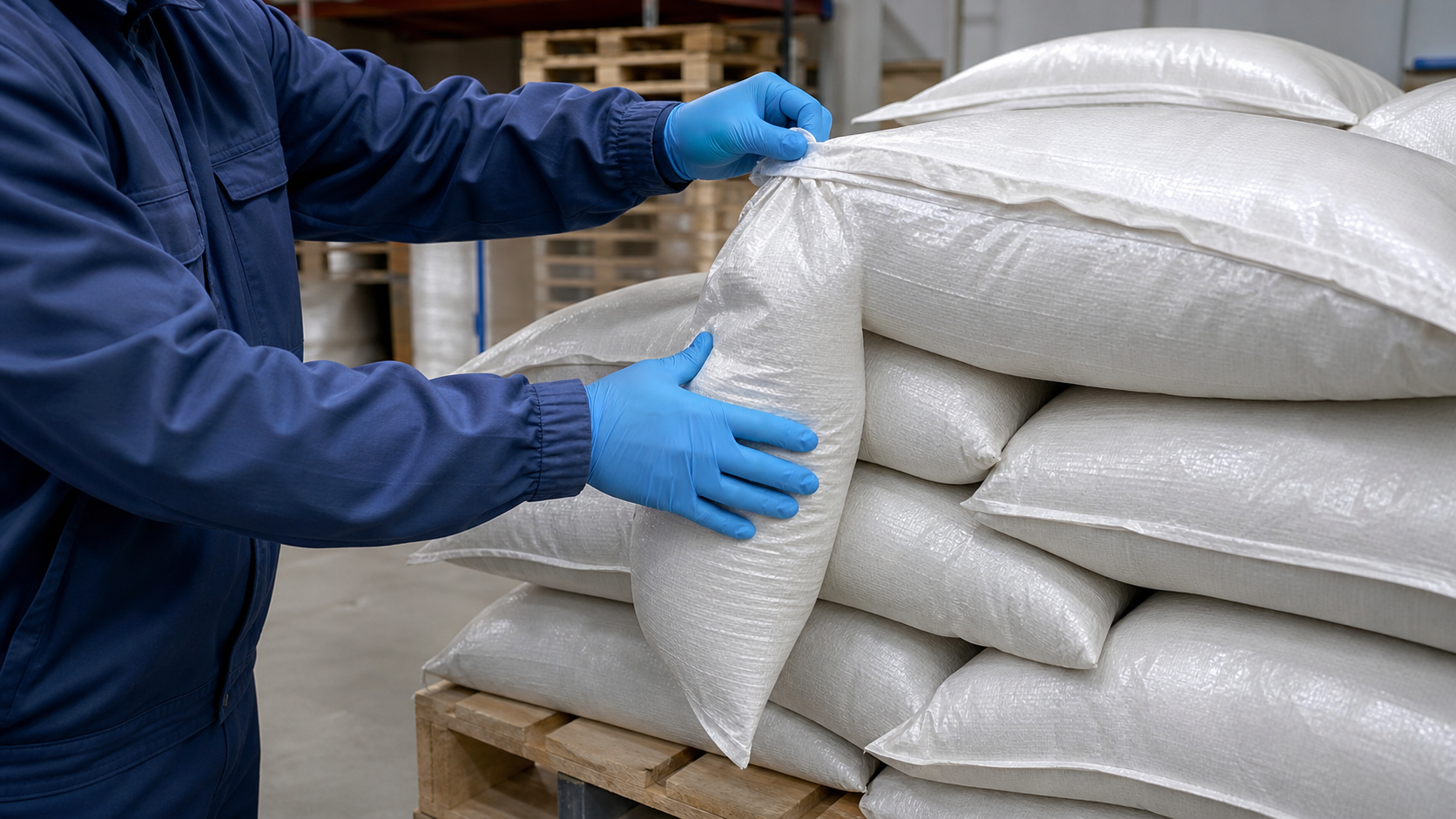
A flat sample does not reproduce the stresses created by filling, handling, stacking, and transport. Use representative filled bags and agree the inspection points before the trial. Evaluate the construction, closure, print, and handling performance together rather than treating the laminate as the only variable.
How Is a Laminated Woven Bag Constructed?
The construction normally begins with a woven fabric that provides the bag’s basic body. The fabric may then be combined with a laminate selected for the proposed finished design. Other components can include a liner, coating, gusset, valve, open-mouth top, sewn or sealed closure, handle, perforation, and printed artwork. Each component should be described in the sample brief because a change in one element can affect the way the finished bag is filled, closed, stacked, or handled.
The laminate should be discussed by its function, not by a broad label alone. It may be intended to provide a printable face, an appearance, a surface for handling, or another application-specific role. If a buyer needs to manage a product risk such as moisture exposure, dust, product loss, or visual scuffing, state that risk and the anticipated storage and transport conditions. The supplier can then identify which proposed features are standard, which are assumptions, and which need a trial. Do not infer a universal barrier, strength, or compliance outcome from the fact that a bag is laminated.
The completed bag is the relevant unit for qualification. Woven fabric and laminate samples may help a buyer narrow a choice, but they do not reproduce the seams, closure, print coverage, geometry, fill weight, and handling profile of a finished pack.
Which Product and Filling Details Matter Most?
Describe the product as it will actually be packed. Include the product category, target fill weight, particle size or flow behavior where relevant, dust, sharp edges, moisture sensitivity, product temperature, and any known issue with the current bag. Then describe the filling route: manual or automatic, bag opening method, fill rate, closure process, and the point where finished bags are inspected.
The buyer should also state the bag dimensions, gusset requirement, target pallet pattern, warehouse conditions, delivery route, and destination market. A bag for a stable dry granular product may require a different configuration from one used for fine powder, feed, seed, mineral material, or a product with particular storage needs. Avoid selecting a construction from a catalogue image without providing the application facts that determine whether it can be qualified.
If there is a current failure, supply meaningful evidence. A photo, retained bag, product description, date or lot reference, and note about when the defect occurred are more useful than a general request for a “stronger” bag. A seam opening during filling, a print problem, a pallet-stacking issue, and a moisture concern may require different investigations.
How Should Artwork and Dimensions Be Controlled?
Artwork approval and bag-performance approval are related but distinct. Provide the correct artwork file, required copy, color reference, barcode or variable information, and a clear approval process for the print proof. Confirm which surface will carry the artwork and how registration, color, and visual variation will be assessed on a physical sample. A digital artwork review does not prove that the final bag will print, convert, or handle as expected.
For dimensions, specify finished width and length, gusset, closure arrangement, and any feature that affects the filling line or pallet. If the bag must work with a particular spout, conveyor, stacking pattern, or outer pack, include those constraints before sampling. The supplier should label any drawing or sample with enough information to show whether it represents the proposed production format.
Retain the approved artwork and bag drawing with the sample record. This makes it possible to distinguish a later print or dimension change from the construction that was originally validated.
What Should a Representative Filled-Bag Trial Include?
Use a bag that represents the proposed woven substrate, laminate, dimensions, closure, print coverage, and fill weight. Fill it with the actual product or a technically justified representative material, then take it through the relevant handling route. Agree the checks before the trial. They may include bag dimensions, visual appearance, seams and closure, opening and filling behavior, print condition, filled shape, pallet stability, and observations after defined storage or transport handling.
The exact test method and acceptance criteria depend on the application. If a specialized product-contact, compliance, or performance assessment is required, define the scope and have the responsible technical parties review it. Do not treat a general supplier statement or a flat material test as final proof of a completed bag’s suitability.
Record the sample identity, proposed construction, fill conditions, handling conditions, inspection result, and decision. If a result is unsatisfactory, this record gives the supplier and buyer a clear basis for a revised sample. It also provides a reference if a later order proposes a new material, closure, print process, or production route.
How Should Repeat Production Be Managed?
Before production, confirm the approved construction, dimensions, artwork, closure, packing method, labels, order quantity, and delivery assumptions. Agree how the supplier will identify lots and how a visible nonconformance will be reported. These controls help quality, purchasing, and operations work from the same reference rather than a verbal description of the bag.
Agree a change-control route. A proposed change to the woven fabric, laminate, liner, coating, dimensions, closure, artwork process, packing method, or production location should be communicated before shipment. The buyer can then decide whether the difference needs a documentation review, a revised sample, or a new filled-bag trial. Change control supports repeatability; it is not a claim that a particular bag will suit every product or route.
How Can CHALVO Help with the Sample Brief?
CHALVO can help organize an application-specific laminated woven-bag discussion. Send the product description, target fill weight, current bag or drawing, artwork, filling route, pallet and logistics conditions, destination market, and failure evidence if available. We can help identify the relevant questions for current technical information and frame a representative sample plan. Final suitability must be confirmed for the actual product, process, and market.
What Should You Send CHALVO?
Share your product, fill weight, existing bag photo or drawing, pallet and logistics conditions, artwork, and destination market. CHALVO can help define an application-specific laminated woven-bag sample discussion and identify the current technical evidence to review.
Related CHALVO resources
- Are cellophane bags airtight?
- BOPP Bags | Comsyn – Industrial Bags Manufacturers?
- Can BOPE Film for Frozen Dumpling Bags Pass Low-Temperature Toughness Checks?
FAQ / People Also Ask
Is every laminated woven bag made with BOPP?
No. The laminate type and full construction should be confirmed for the exact bag and application.
Does lamination make a woven bag waterproof?
Not automatically. Performance depends on the complete construction, closure, seams, product conditions, and handling exposure.
What is the best first sample?
A representative bag using the intended construction, dimensions, print, closure, and fill weight with agreed handling checks.
Summary
Laminated woven bags combine a woven substrate with a film layer, but buyers should approve the finished bag only after defining the application and testing representative filled packs.
Meta Title
What are laminated woven bags?
Meta Description
Learn what laminated woven bags are and how buyers should specify, sample, and validate the finished industrial bag.
CTA
Send CHALVO your product, bag drawing, fill weight, artwork, and logistics conditions for an application-specific laminated woven-bag review.