


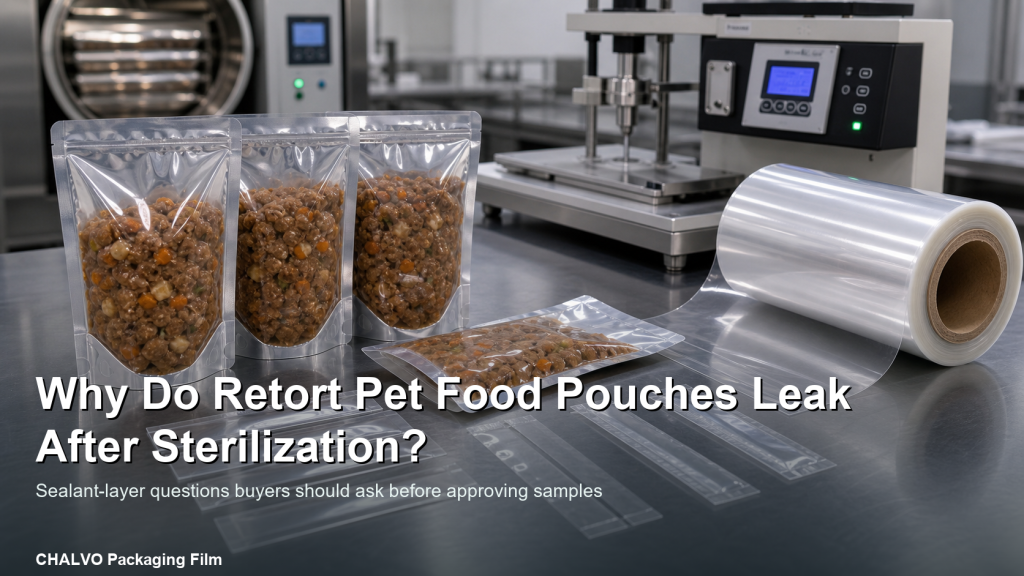

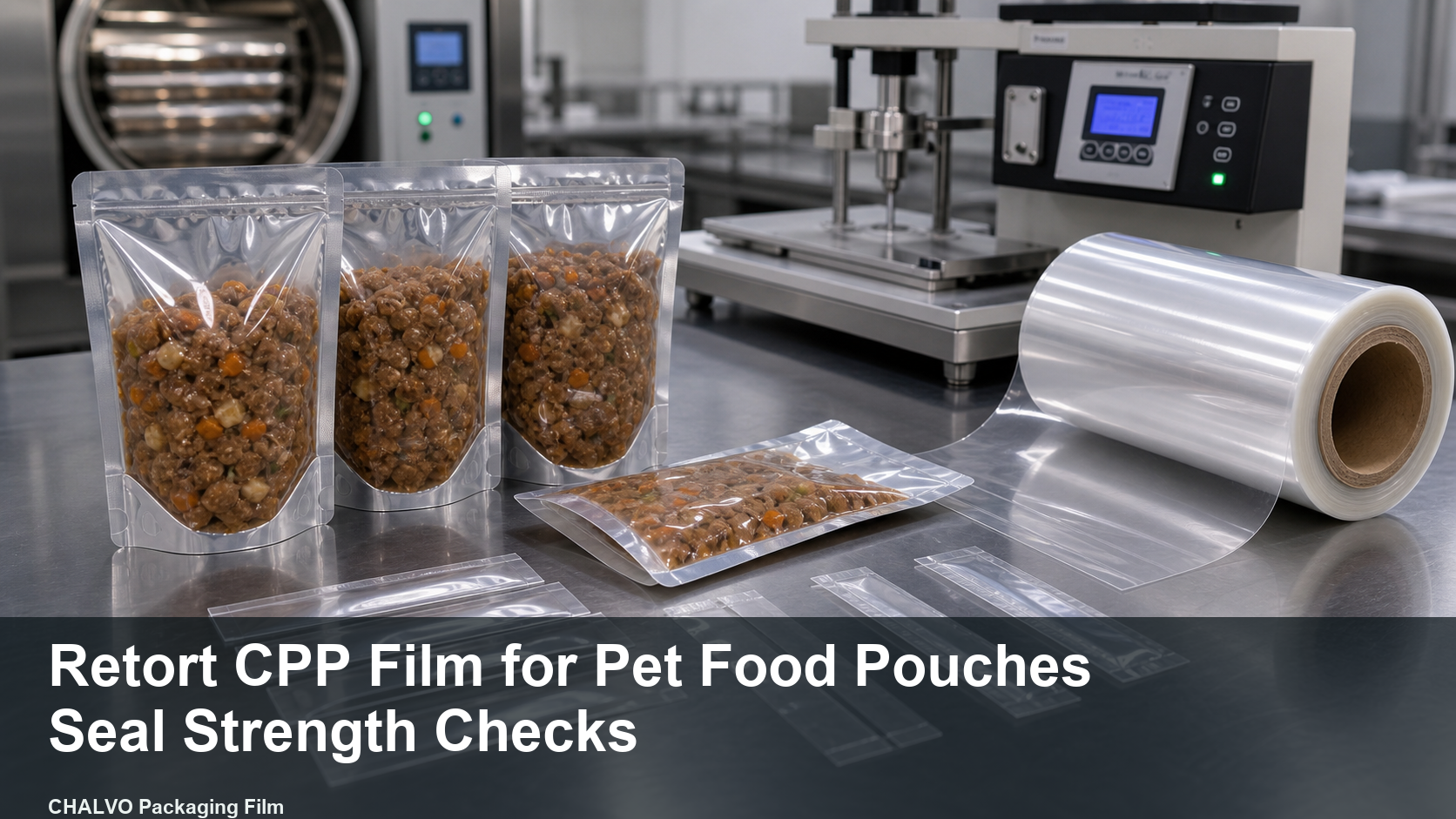
Retort CPP Film for Pet Food Pouches Seal Strength Checks is a narrow buyer decision, not a broad film procurement guide. The useful question is whether retort CPP film can do the specific job in wet pet food pouches, and what proof the buyer should request before sampling or commercial approval.
For CHALVO buyers, the starting point should be the package job: product risk, pack format, converting route, storage condition, and the evidence needed for approval. The material name only becomes useful after those conditions are clear.
Why this buyer check matters
Buyers need pet-food pouch seal strength after sterilization, especially with oil, meat particles, and heavy filling. A film may look suitable on a supplier page and still fail if the sealant, laminate, machine route, filling condition, or storage condition is different from the real pack.
In this article, the film role is retort CPP sealant layer for wet pet food laminate pouches. That role should be written into the sample request so CHALVO and the buyer are discussing the same performance target.

Buyer checks before sampling
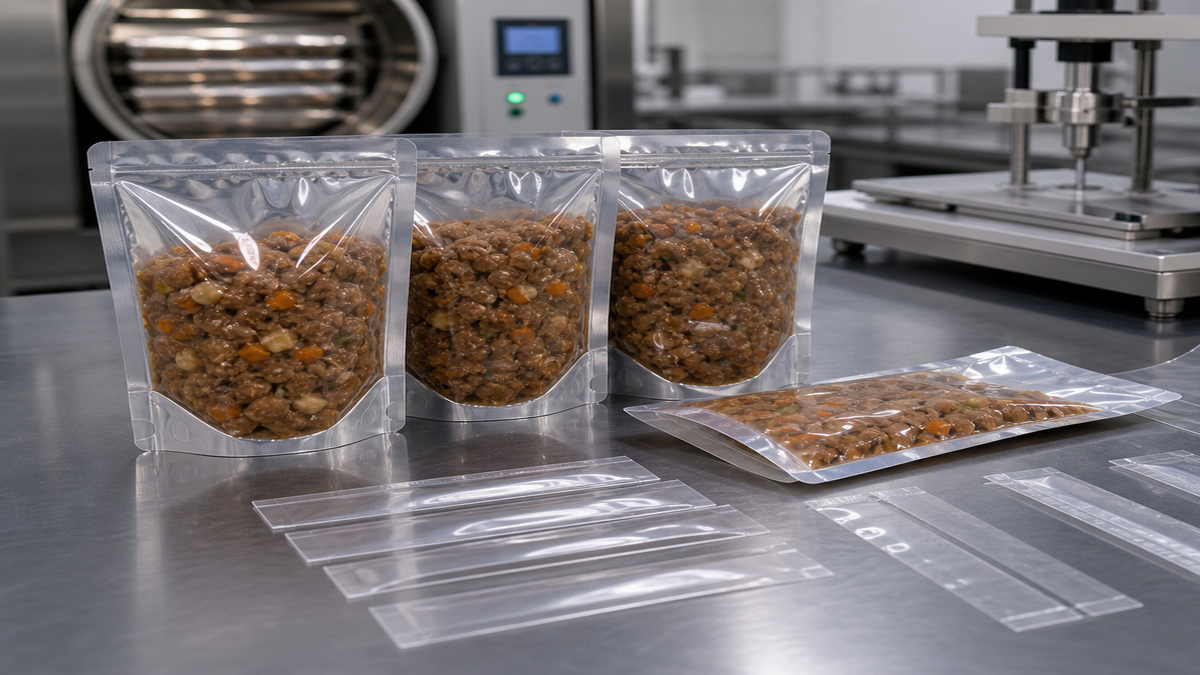
Before asking for price, confirm the package format, product weight, filling route, sealing route, storage temperature, target shelf life, and the failure mode the buyer wants to avoid. For wet pet food pouches, the most important checks are:
- Seal contamination
- Post-retort strength
- Pouch drop testing
- Odor barrier structure
- Food-contact evidence
These checks keep the article practical: the buyer is not choosing a material in isolation, but approving a structure for a real package.
What CHALVO should be asked to confirm
CHALVO can help review whether retort CPP film is a reasonable direction for wet pet food pouches, which structure should be discussed, and what sample evidence should be requested. The inquiry should include current structure if available, machine type, line speed, target market, expected storage, and any failure seen in the existing pack.
TDS and evidence discipline
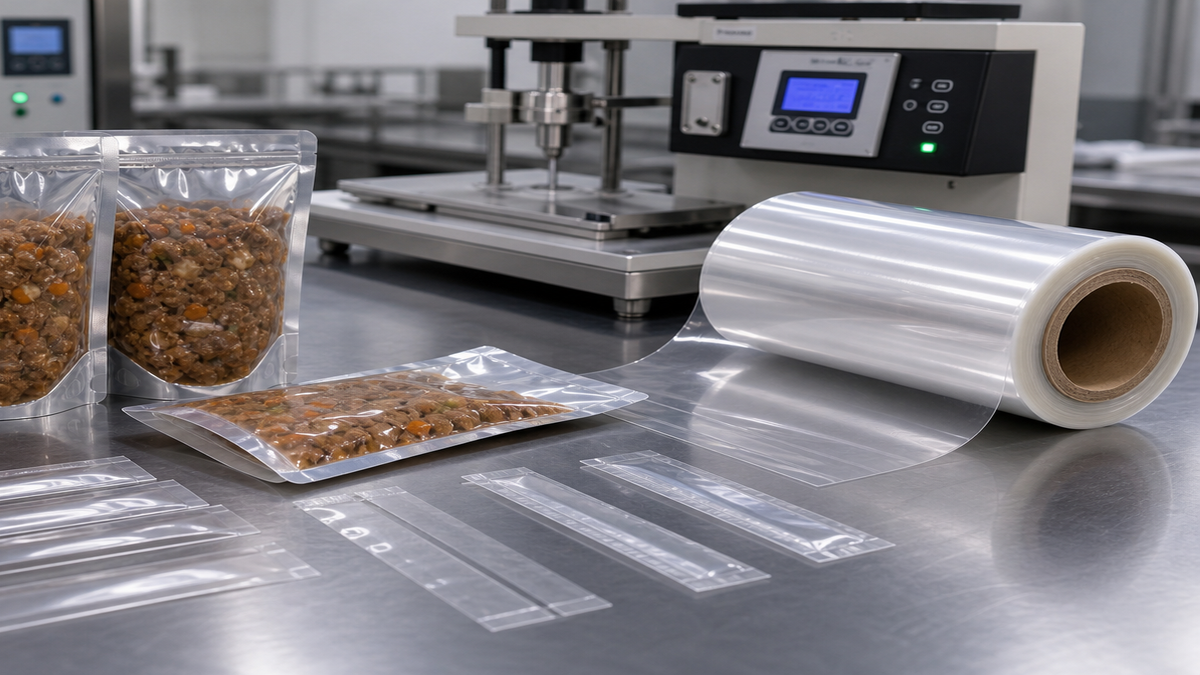
This article does not invent TDS values, barrier values, seal-strength numbers, shrink percentages, anti-static values, certification wording, coating weights, or thickness ranges. If the decision depends on those values, buyers should request the latest CHALVO TDS or sample data for the exact grade, structure, and application.
Public Google results and competitor pages are useful for identifying repeated buyer concerns. They are not CHALVO product evidence and should not be copied into a purchasing decision.
How to brief CHALVO
Send CHALVO the product, package format, target structure, machine route, storage condition, appearance requirement, and the problem the buyer wants to prevent. With that information, CHALVO can help narrow the material route and identify which data should be checked before trial approval.