

PVDC Film
PVDC film provides an effective barrier against contaminants, ensuring the protection and quality of various products across different industries.
Commercial PVDC Film
The Optimal Solution for Your Food, Pharmaceutical, and Chemical Packaging Needs
Chalvo’s high-quality plastic packaging films ensure the integrity and safety of your products across various industries.
- Excellent barrier properties
- Excellent heat sealability
- High transparency
- Chemical resistance

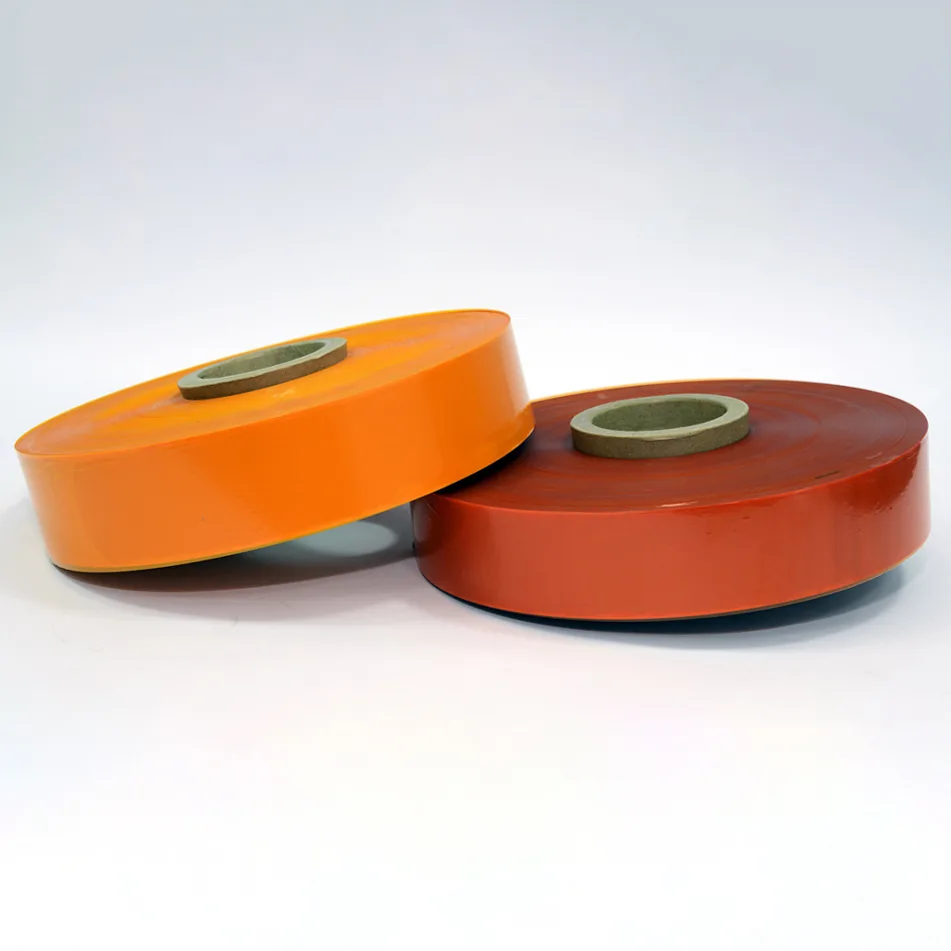
Table Of Contents For This Page
To make sure you can find the information you want quickly,
we have prepared this content directory that will jump to the corresponding location when you click on it.









General Application For PVDC Film
PVDC Film has the following wide range of applications, Inquiry us for more solutions.
Food Package
Medical Packaging
Product Catalog
PVDC Film to Promote Your Business

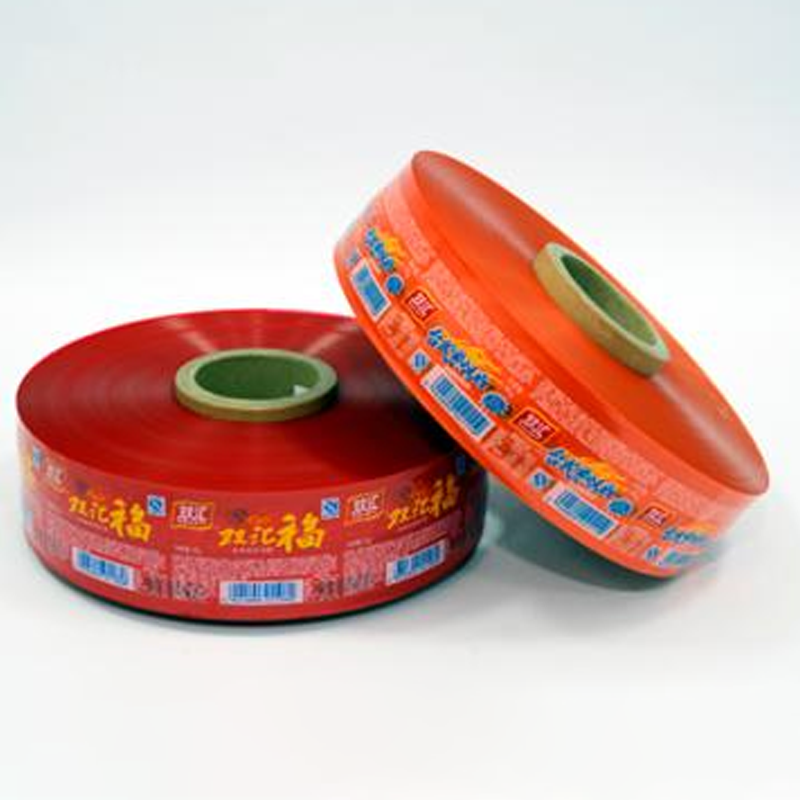
Food Packaging Film
- Typical Thickness: 40~150mic, Spercial specifications can be customized according to customer requirements.
- Tensile Srength: MD>60MPa, TD>80MPa
- Density: 0.91g/cm³
- Classic products:
PVDC Flaky Casing Film
PVDC Composite Cover Film
PVDC Composite Thermoforming Stretch Bottom Film
Vacuum Film
Multifunctional Composite Film

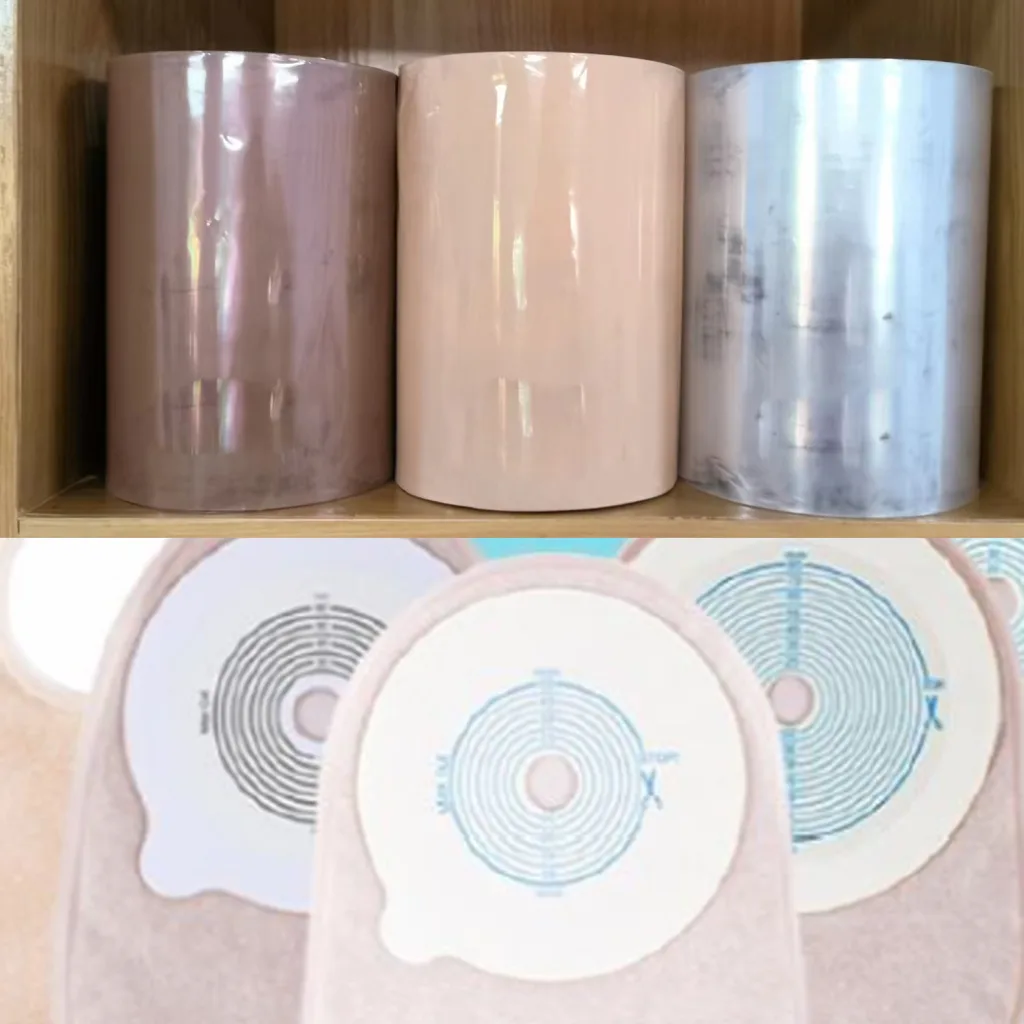
Medical Film
- Typical Thickness:75 mic, Spercial specifications can be customized according to customer requirements.
- Tensile Srength: MD>140MPa, TD>280MPa
- Structure: 11 layers, PE/EVA/PVDC/EVA/PE
- Classic products:
OSTOMY BAG BARRIER FILMS
What People Are Saying ?


A Brief Self-Nomination, Why Choose Chalvo?
Reliable PVDC Films Manufacturer in China
- Larger Capacity, Better Price. Annual production up to 50,000 tons & lower wholesale price
- Lower MOQ, More Flexibility. Save you more and generate higher profitability with 500KG MOQ
- Certified Products, Safety Guaranteed.Compliance of ISO and EN, strictly production to guarantee quality.
Frequently Asked Questions
If the Films reach you and for whatever reason you are not satisfied you should notify CHALVO within 7 days of receiving the Films and we will replace or rework for free.
We generally request customers work to our standard payment terms for at least the first order. These are 50% deposit and 50% prior to shipping. It is possible to negotiate other payment terms such as Net 30, but these are agreed on a case by case basis.
Stage One: full DFM at time of quotation by highly experienced engineers. They will highlight any problem areas or make suggestions for changes. Stage Two: incoming inspection of materials with our own Gas Transmission Rate Tester Stage Three: Full QC inspection and report before shipping
We generally request customers work to our standard payment terms for at least the first order. These are 50% deposit and 50% prior to shipping. It is possible to negotiate other payment terms such as Net 30, but these are agreed on a case by case basis.
CHALVO is currently certified ISO22000 /BST/SGS
We aim to quote all prototype projects within 24 hours. All General packaging projects within 24 hours. All non-conventional packaging projects within 3 days. There are sometimes processes and materials which CHALVO does not offer in house; these could add time to the quotation and will be highlighted as and when.
All projects are DDU unless otherwise stated. This means the quote includes all freight and charges to a port of your choice. Any and all import and other taxes in your country are your own responsibility. If you require different shipping terms these can be negotiated on a case by case basis.
We accept payment via bank transfer to China.
More Related Flexible Packaging Film Supplies
The Smart Way To Improve Your Business


EVOH FILM
- High gloss and translucency for better display of products
- Excellent odor barrier to prevent fragrance leakage
- Good oxygen and water vapor barrier performance
- Excellent stretch forming uniformity, efficient water
- resistance to effectively maintain the locking of packaged meat products moisture
- Surface treatment is available for lamination
- Good resistance to wear and heat sealing properties


PET FILM
- High gloss
- Excellent gas isolation
- Excellent light-blocking properties
- Moisture resistant, high temperature resistant

BOPE FILM
- Uniform Shrinkage
- Clean Room Production
- Automated Quality Control
- High transparent
PVDC Film: The Ultimate Guide(2022)


Table Of Contents
Development History of PVDC
The development of polyvinylidene chloride (PVDC) began in the 1930s when scientists at Dow Chemical discovered its exceptional barrier properties against moisture, oxygen, and aromas. Commercialized under the trade name Saran in the 1940s, PVDC was initially used for military applications, such as protective coatings and packaging, before expanding into consumer goods. Its high chemical resistance and low permeability made it ideal for food packaging, extending shelf life significantly. Over the decades, PVDC evolved with improved processing techniques and copolymerization methods, enhancing flexibility and thermal stability. Despite environmental concerns over chlorine content, PVDC remains vital in medical and food industries due to its unmatched barrier performance. Recent advancements focus on sustainable alternatives while maintaining its core benefits.
What is PVDC?
Polyvinylidene chloride, or polyvinylidene dichloride (PVDC), is a homopolymer of vinylidene chloride. PVDC film is a thin film made from polyvinylidene dichloride resin. It is created through a process of casting or blowing, resulting in excellent mechanical and performance properties.
REF: What is PVDC ?
What is PVDC Designed For?
PVDC film is designed for a variety of applications due to its beneficial properties, such as:
Packaging: PVDC film is commonly used in food packaging, including snack foods, confectionery, fresh produce, and baked goods. Its clarity, strength, and barrier properties make it ideal for preserving and displaying products.
Labels: It is also used for labeling, especially in the beverage industry, where its durability and printability are essential.
Lamination: PVDC films are often used in lamination with other materials to enhance their strength and protective qualities.
Printing: Due to its excellent printability, PVDC is widely used for various printed materials and advertising displays.
Is PVDC Film Safe?
PVDC film is considered safe for use in food packaging and other consumer applications. It is non-toxic, odorless, and chemically inert, which makes it suitable for direct contact with food products. Regulatory bodies such as the FDA (Food and Drug Administration) and EFSA (European Food Safety Authority) typically approve PVDC film for use in food packaging, provided it meets certain standards and regulations.
How to Choose the Right BOPP Film?
Choosing the right PVDC film depends on the specific requirements of your application. Here are some factors to consider:
Thickness: Depending on the application, you may need a thicker or thinner film. Thicker films provide more durability and barrier protection, while thinner films can be more economical.
Clarity and Transparency: For packaging applications where product visibility is crucial, opt for highly transparent films.
Barrier Properties: If you need protection against moisture, oxygen, or other gases, choose films with enhanced barrier properties.
Surface Treatment: Some PVDC films come with surface treatments such as corona or plasma treatments to improve adhesion for printing or lamination.
Coating: Films can be coated to enhance properties like sealability, slip, or anti-static characteristics.
Heat Sealability: If the film needs to be heat-sealed, ensure it has good heat sealability characteristics.
Cost: Consider the cost relative to the benefits provided by the specific type of PVDC film.
How is PVDC film produced
The production process of PVDC film typically involves the following main steps:
- Raw Material Preparation: First, resin (PVDC) is prepared as the raw material, usually melted into a liquid form at high temperatures. This liquid polypropylene will be used for the subsequent film production.
- Extrusion: The liquid is extruded through an extrusion machine, forming a continuous film sheet. This film sheet typically contains additives to improve its performance and characteristics.
- Cooling: The extruded film sheet is passed through a series of cooling rollers or air cooling devices to rapidly cool and solidify it. This helps the film maintain its shape and smoothness.
- Casting: The cooled film sheet is fed into casting machine. This step helps improve the film’s physical properties, such as strength, transparency, and gloss.
- Further Cooling: The stretched film is cooled again to stabilize its structure.
Cutting and Winding: Finally, the film is cut to the desired width and wound into rolls or reels for storage and transportation.
The production process of PVDC film may vary based on specific product requirements and different production equipment, but it typically includes the above fundamental steps. The control and optimization of these process steps are crucial for the performance and characteristics of the film to ensure that the final product meets customer needs.


Chalvo Film Properties for Packaging
- Transparency: PVDC film typically has high transparency, making it suitable for packaging and printing applications to showcase product contents.
- High Gloss: It provides excellent gloss, making printed materials look more attractive.
- Good Printability: PVDC film is suitable for various printing methods, including offset printing, gravure printing, flexographic printing, and digital printing.
- High Strength and Tear Resistance: It offers outstanding mechanical properties, making it a reliable material for packaging and label production.
- Water Resistance: PVDC film has good resistance to moisture, protecting packaged items from humidity and water.
- Temperature Resistance: It can maintain its performance within a specific temperature range, suitable for packaging in various environmental conditions.
- Food Contact Safety: PVDC film typically complies with food contact standards, making it suitable for food packaging.
- High Breathability: It helps maintain the freshness of packaged items, particularly for certain fresh foods.
Classification and Applications of BOPP Film


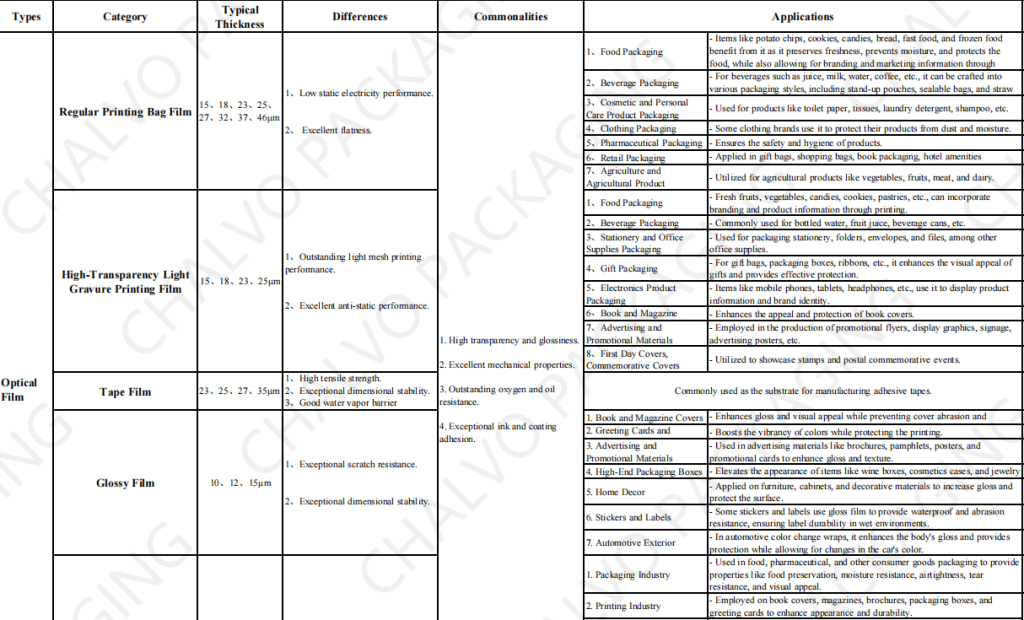
There are lots of different kinds of PVDC film. People make different kinds of PVDC films for different things. Based on the film that people make now, there are a few different kinds of PVDC film: Food Film. Medical Film. Among them, the food film is with the largest output and most common kind of PVDC films.
Why PVDC Film is the Best Choice for Sausage Casing? In this link, you can learn more about the PVDC SAUSAGE PACKAGING film.
And we have also sorted out the classification and application of PVDC films. Check the following picture



Challenges and Challenges Faced by PVDC Film
PVDC film, as a common packaging material, also faces some challenges and difficulties:
1.Environmental Pressures and Regulatory Compliance: With the increasing environmental awareness and concerns about plastic pollution and sustainable packaging, PVDC film may face environmental pressures. Consumers and governmental agencies may have more negative perceptions of plastic packaging, leading to additional regulations and restrictions. Evolving regulations and standards, such as food safety requirements and packaging labeling regulations, require manufacturers to ensure their PVDC films comply, potentially increasing production and testing costs.
2.Market Competition: The PVDC film market is highly competitive, with numerous suppliers offering various types of PVDC products. Price competition can reduce product margins and put pressure on manufacturers and suppliers. Simultaneously, customers’ demands for personalized and customized packaging are increasing, requiring manufacturers to provide more diversified PVDC film options, adding to production complexity and costs.
3.Material Innovation and Raw Material Cost Fluctuations: With the emergence of new packaging materials, such as biodegradable plastics and bio-based plastics, PVDC film may need to continuously innovate to meet market demands and environmental trends. Additionally, PVDC film production is affected by fluctuations in raw material prices, especially polypropylene. The instability of raw material prices can impact costs.

How to Choose the Right PVDC Film Supplier
Choosing the right supplier is critical, especially if you need high-quality PVDC films. Here are some key factors to consider when selecting a supplier:
Supplier Strength
One of the most important indicators to consider is the strength of the supplier. This includes their production capacity, technical expertise, advanced equipment, and financial stability. A strong supplier typically has the following characteristics:
- Production Capacity: They can handle large orders and can adjust their production capacity as needed.
- Technical Expertise: They have advanced production processes and technologies to produce high-quality BOPP films that meet different customer requirements.
- Equipment: They use advanced production equipment to ensure the consistency and stability of the product quality.
- Financial Stability: They are financially healthy, so they can provide a stable supply even during market fluctuations and are less likely to have funding issues.
Relevant Certifications for PVDC Films
Certifications are important when choosing a supplier. The production and sale of PVDC films need to meet certain industry standards and regulations. Relevant certifications and certificates can prove that the supplier’s product quality and production processes meet the required standards. Common certifications include:
- ISO 9001: This is a quality management system certification. It means the supplier’s production processes are standardized, and the quality of their products is consistent.
- ISO 14001: This is an environmental management system certification. It means the supplier pays attention to environmental protection and sustainable development in their production processes.
- FDA: This is necessary if you export PVDC films to the United States. It means the products meet the safety standards of the U.S. Food and Drug Administration.
- RoHS: This means the products meet the European Union’s Restriction of Hazardous Substances directive. It’s necessary if you export PVDC films to the EU.
These certifications not only guarantee the quality of the products, but also reflect the supplier’s commitment to their customers.
Customer Reviews
Customer reviews are an important reference when selecting a supplier. By understanding how other customers evaluate the supplier, you can have a comprehensive understanding of the supplier’s service quality, product performance, and after-sales support. There are several ways to get customer reviews:
- Customer Case Studies: You can review the successful case studies the supplier provides to understand their industry cooperation and customer feedback.
- Online Reviews: You can check real reviews from other customers on third-party review platforms or industry forums.
- Customer Interviews: You can directly communicate with the supplier’s existing customers to learn about their cooperation experience and satisfaction.
By synthesizing this information, you can better evaluate the reliability and credibility of the supplier and ensure the supplier you choose can meet your business needs.


PVDC AND CHALVO
PVDC film, as a common packaging material, has played a significant role in various application areas. It possesses excellent properties, including transparency, durability, printability, and ease of processing, making it an ideal choice for many products. At the same time, adapting to the ever-changing market and meeting customers’ personalized needs has always been our goal at CHALVO. If you are looking for high-quality PVDC film, please feel free to inquire.
REF:Chalvo: Why Choose Chalvo?
REQUEST A QUOTE
We will contact you within 1 working day, please pay attention to the email with the suffix “@chalvo.com”.
For moisture-sensitive tablets and capsules, see our guide to PVC PVDC film for pharmaceutical use — coating weights, WVTR values and a supplier checklist.