


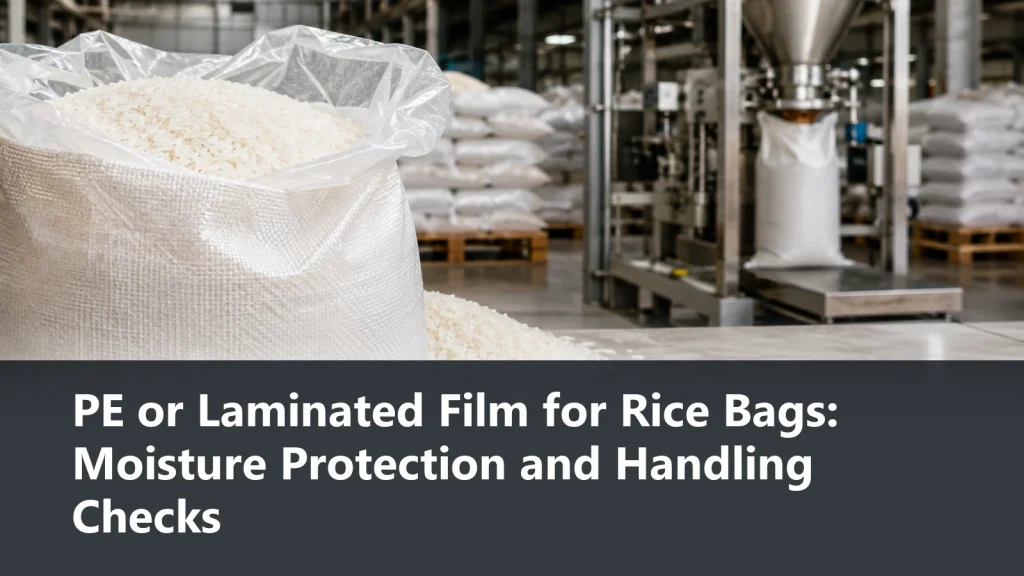


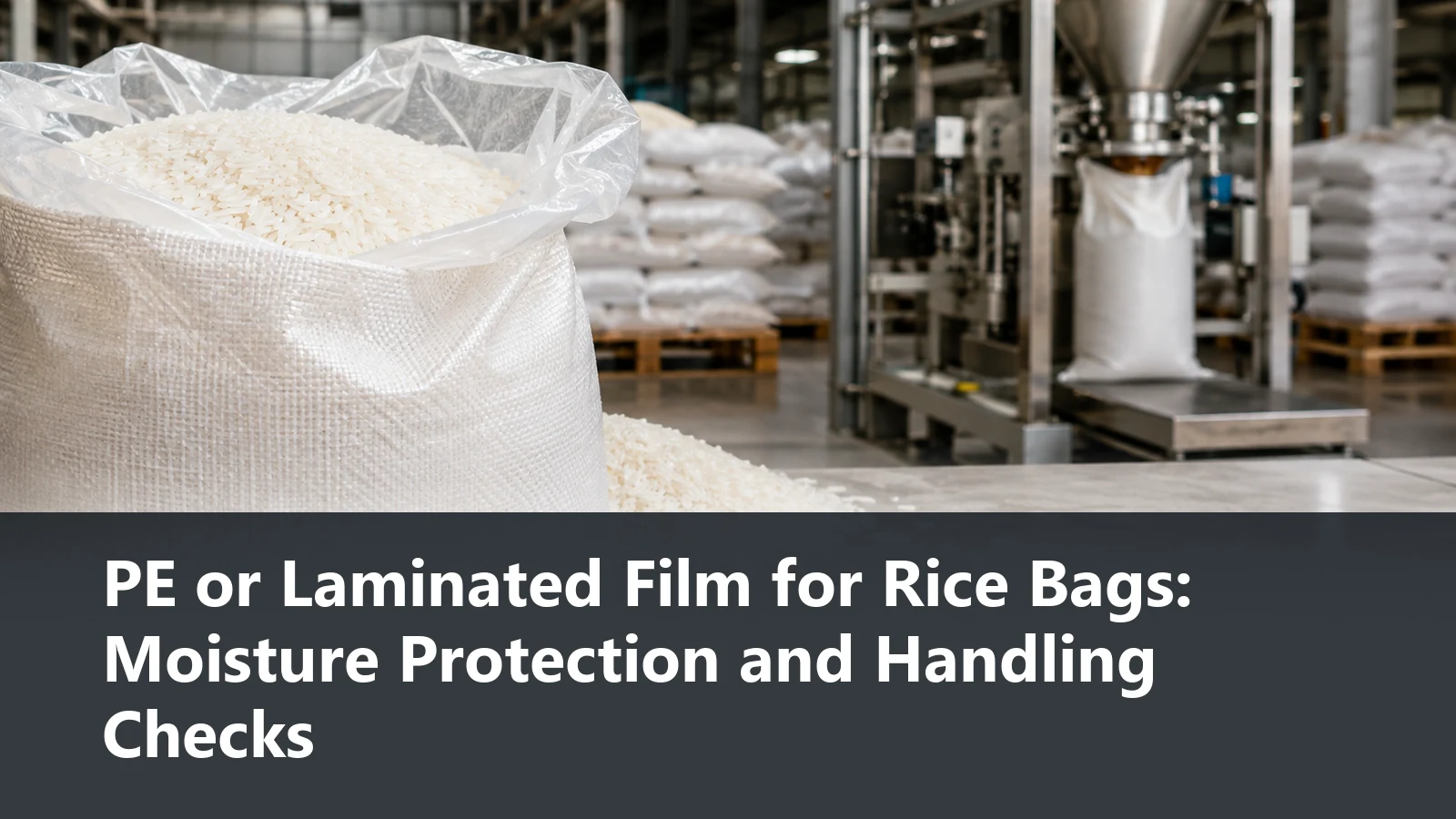
Choosing a rice-bag liner by material name alone creates avoidable risk. A PE liner may be a sensible starting point when moisture protection and heat sealing are the main needs. It does not, by itself, show that the finished bag will survive filling, stacking, port handling, pallet transport, or the intended storage period.
For a rice project, buyers should first define the rice type, bag size, filling method, storage and shipping conditions, target market, and shelf-life objective. Then they can decide whether a PE liner, a laminated construction, or another packaging route fits the actual failure risks. The finished bag, rather than an isolated film value, is what must be approved.
What Can Go Wrong With a Rice Bag During Storage and Transport?
Rice packaging has to manage more than moisture transmission. A bag can fail when it is overfilled, dropped, dragged, stacked too high, exposed to humid storage, or damaged by rough pallet edges. For retail packs, print appearance and shelf presentation can also matter. For export or bulk distribution, bag handling and load stability may carry more weight.
The risk profile changes with the project. A small retail pouch on a controlled distribution route is not the same as a woven outer bag with an inner liner moving through ports and warehouses. Do not use a retail-pouch structure as proof for a bulk rice bag, or the reverse.
Before discussing film, define the bag format, net fill weight, rice grain shape, filling speed, storage humidity, shipping route, pallet arrangement, handling method, and required product life. Those details determine what the liner needs to do.
Where Does PE Fit in a Rice-Bag Structure?
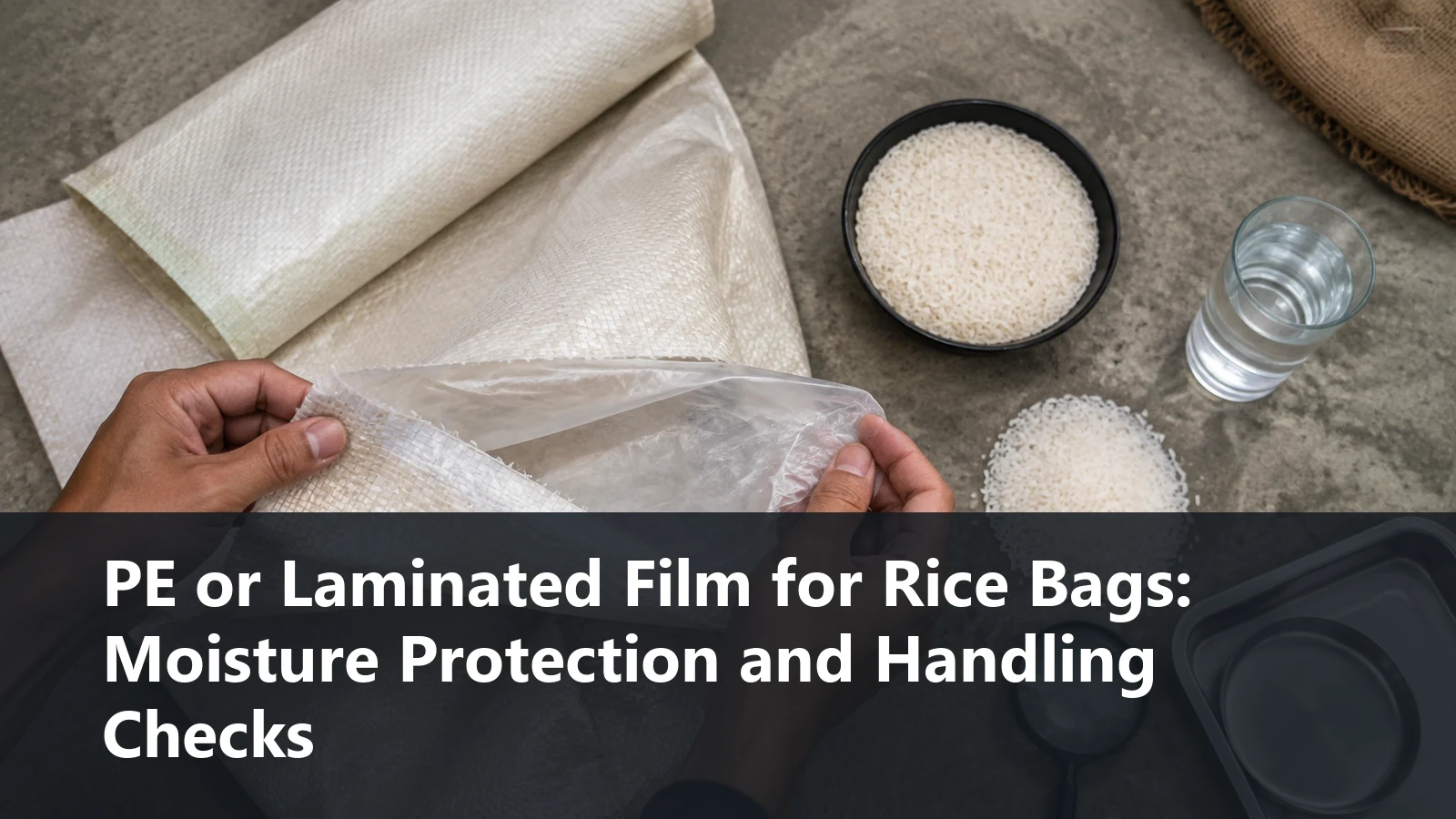
PE is often considered for its moisture resistance, flexibility, and sealing role. In a rice bag, it may be used as an inner liner, a sealant layer in a laminate, or part of a multi-layer construction. The exact role depends on the bag format and the outer material.
If a woven outer bag carries much of the load, the liner may mainly support moisture management and containment. If the package is a printed retail bag, the structure may need separate layers for printing, mechanical support, barrier needs, and sealing. A material named PE does not describe the grade, thickness, seal behavior, outer bag, or finished-bag performance.
Ask the supplier for a structure drawing. It should identify each layer, its thickness or mass where applicable, its intended function, and the interface between the liner and outer bag. That makes it easier to compare two offers without relying on broad phrases such as “high barrier” or “strong bag.”
Does a PE Liner Solve Every Moisture Problem?
No generic film can be approved from its material name. The relevant question is whether the proposed finished structure gives enough protection under the project’s defined humidity, storage duration, and handling conditions.
Water-vapor performance should be discussed with the test method, test temperature, relative humidity, unit, specimen thickness, and the exact specimen structure. A value reported for a thin PE film cannot be treated as a value for a woven bag with a liner, a printed laminate, or a filled and sealed package.
The P9 research card contains public supplier-page leads on rice bags, PE liners, and barrier packaging. Those pages are useful for initial supplier questions, not for setting a purchasing specification. Obtain current documentation and, where the risk justifies it, test the proposed complete package.
When Does a Laminated Construction Deserve Discussion?
A laminated construction may be worth discussing when the project needs functions that a simple liner and outer bag do not address together. Examples can include a defined print surface, a separate sealing layer, added protection against handling damage, or a more deliberate barrier route. Whether the extra conversion is justified depends on the product and supply chain.
Do not describe a laminate as automatically better. More layers can change cost, converting requirements, recycling considerations, and inspection needs. A simpler route may be appropriate when the stated moisture, handling, and presentation requirements are modest and the complete bag performs in trials. A more complex route may be appropriate when the risk cannot be managed by the simpler option.
What Should Buyers Compare in a PE Liner RFQ?
Start with the complete bag, not just a nominal film gauge. An RFQ should state the rice product, bag dimensions, net weight, outer-bag material, intended liner arrangement, filling process, target storage and shipping conditions, destination market, printing requirement, and proposed tests.
Then request the proposed PE grade or grade family, thickness, width, seal configuration, relevant technical data sheet, and any evidence that applies to the proposed structure. If moisture performance is offered, request the stated method and conditions. If a supplier offers a seal-strength or puncture result, ask what specimen, equipment settings, and conditioning were used.
For a finished rice bag, the most useful comparison often includes trial samples. Inspect filling behavior, grain contamination near the seal, bag closure, drop or handling resistance where relevant, stacking stability, and any signs of liner damage after transport simulation. A laboratory number can support screening, but it does not replace a bag trial.
How Do Filling and Sealing Conditions Affect the Liner Choice?
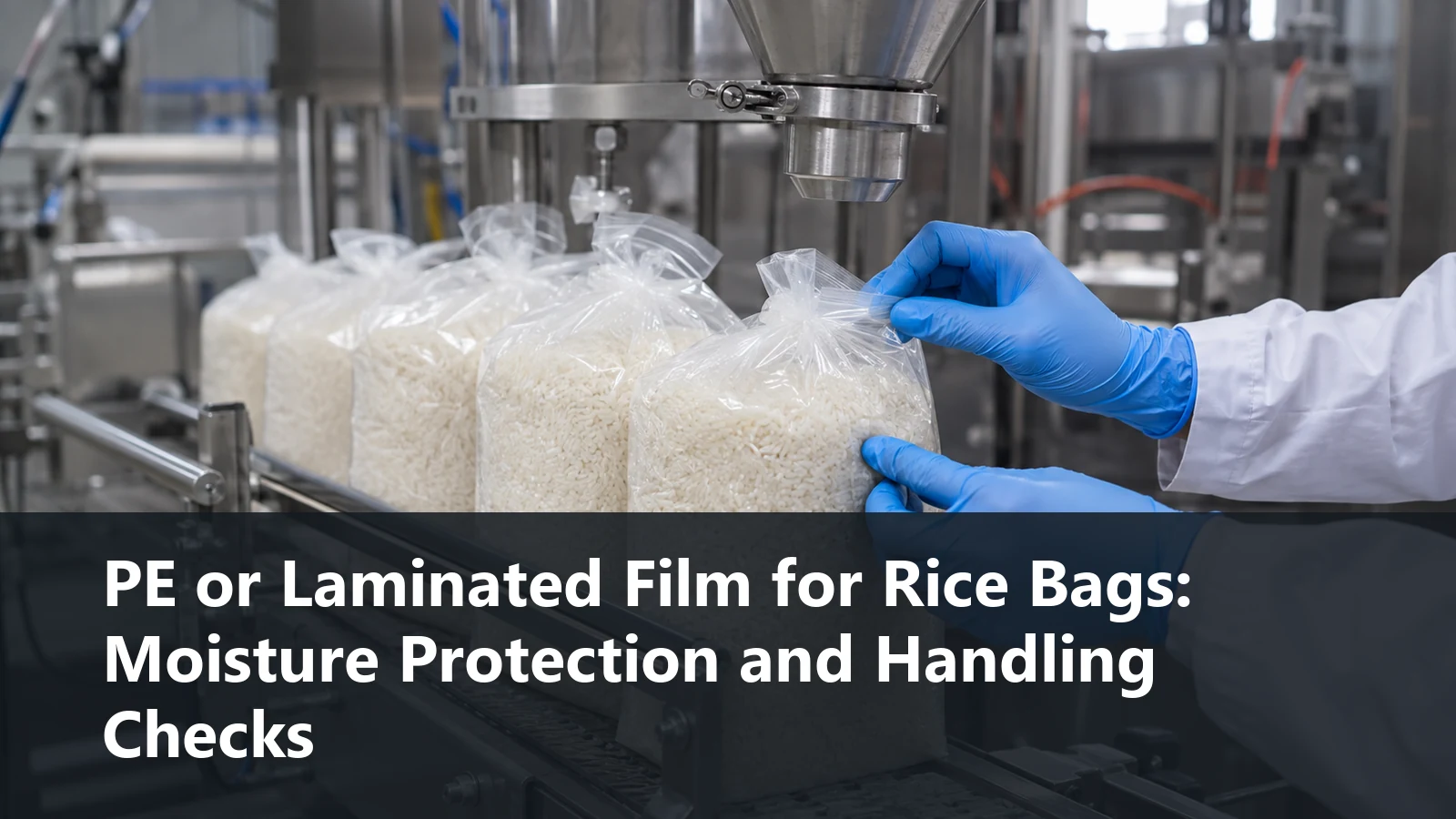
Rice can place demands on the sealing stage. Grain dust or stray kernels near the seal area can affect closure quality. The appropriate response is not to assume that a particular PE grade is contamination tolerant. Confirm the actual filling method, seal design, sealing window, jaw condition, dwell time, pressure, line speed, and inspection method.
A supplier may show a heat-seal range for a film. That range should be treated as a starting point. Production conditions can differ from a laboratory test because the bag geometry, dust control, filling accuracy, machine condition, and material batch all affect the result.
What Handling Checks Matter After the Bag Leaves the Filling Line?
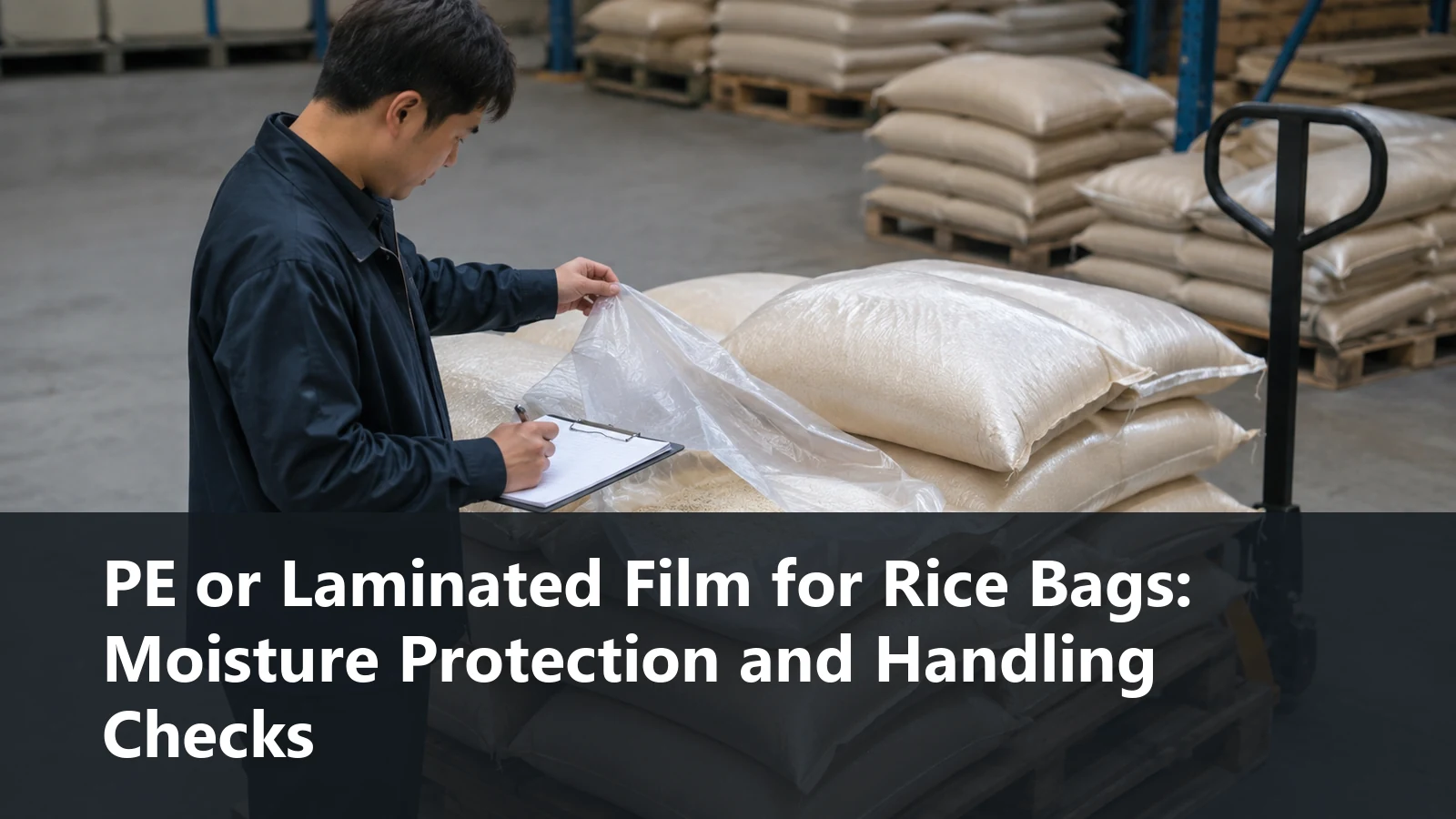
The liner works inside a system. Outer-bag strength, stitch or seal design, bag closure, stack pattern, pallet condition, loading method, and freight handling can all influence whether the liner remains intact.
Use realistic checks for the intended route. These may include filled-bag inspection after handling, checks for seam or seal opening, signs of abrasion against the outer bag, pallet-edge damage, and package condition after the storage or transport exposure that matters to the project. The test plan should reflect the buyer’s actual risk rather than a generic claim about shipping durability.
What Food-Contact Documents Should Be Requested?
Do not infer target-market compliance from a material label or a generic “food-safe” statement. Request documents that apply to the proposed grade, complete structure where relevant, intended food contact, and destination market. Depending on the project, this may include supplier declarations, migration information, or other supporting records.
Review the documents against the actual use. A declaration for another grade, another structure, or a different market does not automatically apply to the rice bag being purchased.
A Practical Starting Framework for Rice-Bag Options
For a lower-complexity starting point, buyers can discuss a straightforward outer bag with a PE liner where the application, handling route, and moisture requirement are defined and the full bag is trialled. This is a discussion starting point, not a performance promise.
For a medium-complexity route, buyers can compare a structure that separates outer-bag handling or print functions from liner or sealing functions. The decision should be supported by the required package appearance, closure method, distribution risks, and sample results.
For a higher-complexity route, buyers can discuss a laminate or additional functional layer only when the actual barrier, handling, print, or supply-chain requirement calls for it. Relative complexity does not indicate price, MOQ, lead time, or guaranteed performance.
What Should Be Approved Before a Commercial Order?
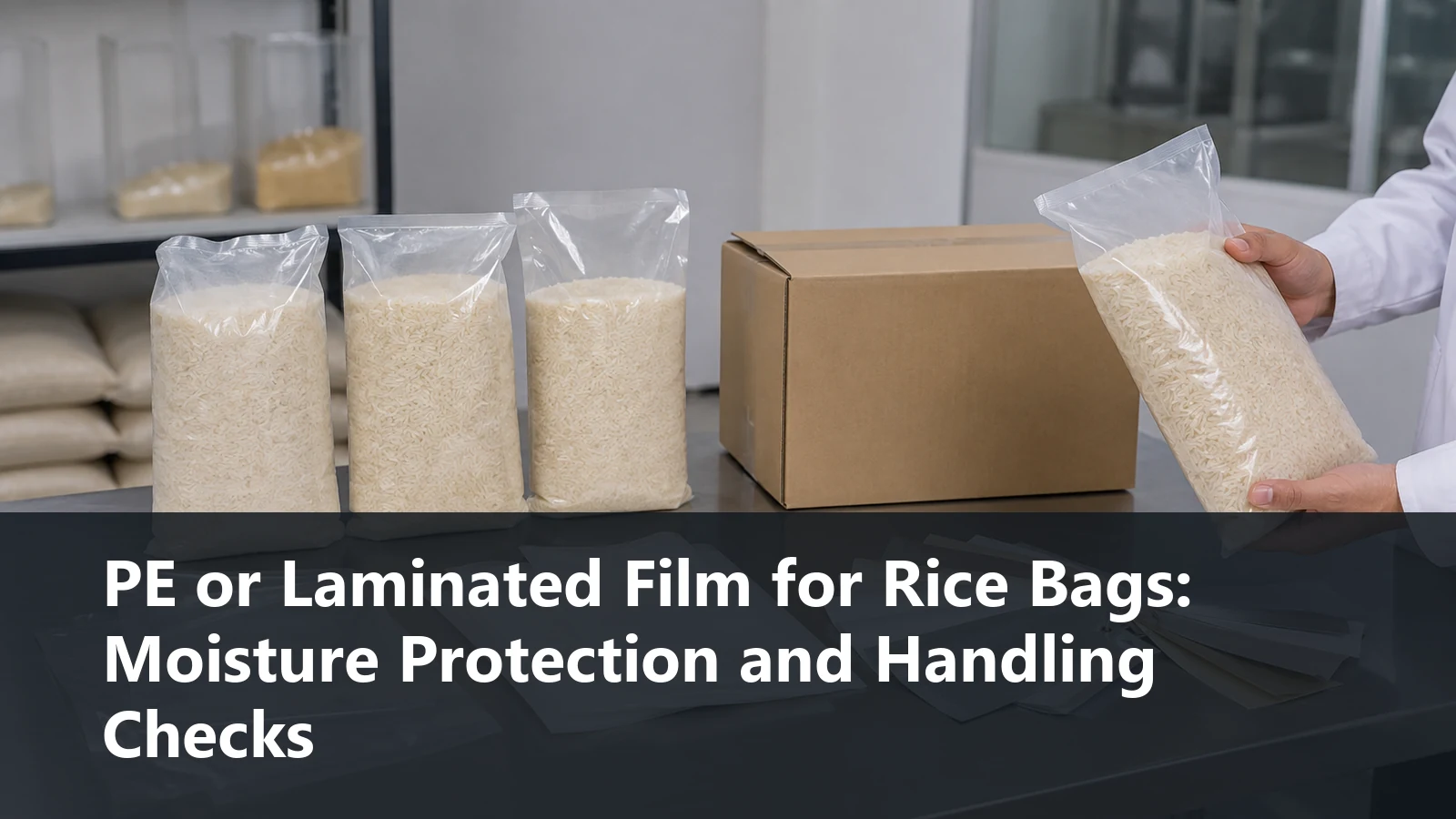
Approve the project in sequence: define the rice and bag format; map moisture, handling, and closure risks; review the full structure; compare test data with stated conditions; review target-market documentation; obtain samples; run filling and handling trials; then approve the commercial specification.
CHALVO supports overseas B2B buyers with packaging-film sourcing and customization discussions. For a rice-bag liner project, a useful inquiry includes the rice type, bag size, outer structure, target storage and route, filling method, destination market, and the checks the buyer needs before approval.
Summary
PE can be a useful rice-bag liner or sealing component, but it is only one part of the package. Define the actual moisture, filling, and handling risks, compare complete structures under stated conditions, and approve the filled bag through relevant trials before placing a commercial order.
Sources for further verification
- https://www.anitaplastics.com/blog/pp-woven-bags-for-rice-packaging
- https://www.vp-packaging.com/applications/rice-package/how-do-you-know-your-rice-packaging-is-eco-friendly
- https://yundufillingmachine.com/rice-packing-ultimate-guide
Technical questions still requiring project evidence
- What rice type, fill weight, bag format, storage profile, shipment route, and shelf-life objective apply?
- What PE grade, thickness, complete structure, sealing method, and outer bag are proposed?
- Which moisture, seal, handling, pallet, and transport tests represent the actual commercial route?
- Which food-contact records apply to the proposed grade, structure, intended use, and target market?