




Quick answer: choose a structure, not a shiny web
Metallized BOPP can be a sensible candidate for a flexible pack when the design needs a metallized surface for its intended moisture, light or appearance role and the converter can verify the whole laminate. A finished package specification still needs evidence for the full structure. The words *metallized BOPP* do not, by themselves, establish heat sealability, oxygen barrier, food-contact status, shelf life or resistance to flex cracking after conversion.
That distinction matters most when the purchase request says something vague such as “use 12 micron VMOPP” or “make it like the current silver snack bag.” A buyer should first state the job of the web: printed outer web, barrier web inside a laminate, a sealable layer, or a decorative surface. Then ask for evidence for the actual laminate, product, machine and distribution route.
For this article, we reviewed a supplier-provided report for one 12 µm VMOPP roll. Its figures are useful for an RFQ screening discussion, but they are not a universal metallized-BOPP benchmark and they do not replace current lot data or a finished-pouch trial.
What is metallized BOPP film used for in flexible packaging?
Metallized BOPP is biaxially oriented polypropylene film carrying a vacuum-deposited aluminium layer. In a flexible-packaging structure, it may supply metallic shelf appearance and contribute to the moisture/light barrier role. Whether it is the right web depends on what must happen on each side of the film after it leaves the metallizer.
Use metallized BOPP as a laminate component when the package has a defined barrier role
For dry snacks, biscuits, confectionery, powdered products or similar packs, a metallized web is often considered as part of a multi-layer structure. The practical question is not “does the roll look metallic?” It is “which web supplies the barrier, which web prints, which web seals, and how will the bonds survive the product and distribution conditions?”
Public manufacturer documents make the same separation. Flex Films lists metallized BOPP products for sandwich lamination, heat-sealable formats and non-heat-sealable decorative formats; Süper Film likewise lists both heat-sealable and non-heat-sealable metallized BOPP grades. Those are product families, not interchangeable labels. A buyer therefore needs to name the intended converting route before comparing quotes.
Do not assume a metallized BOPP web can seal a pouch
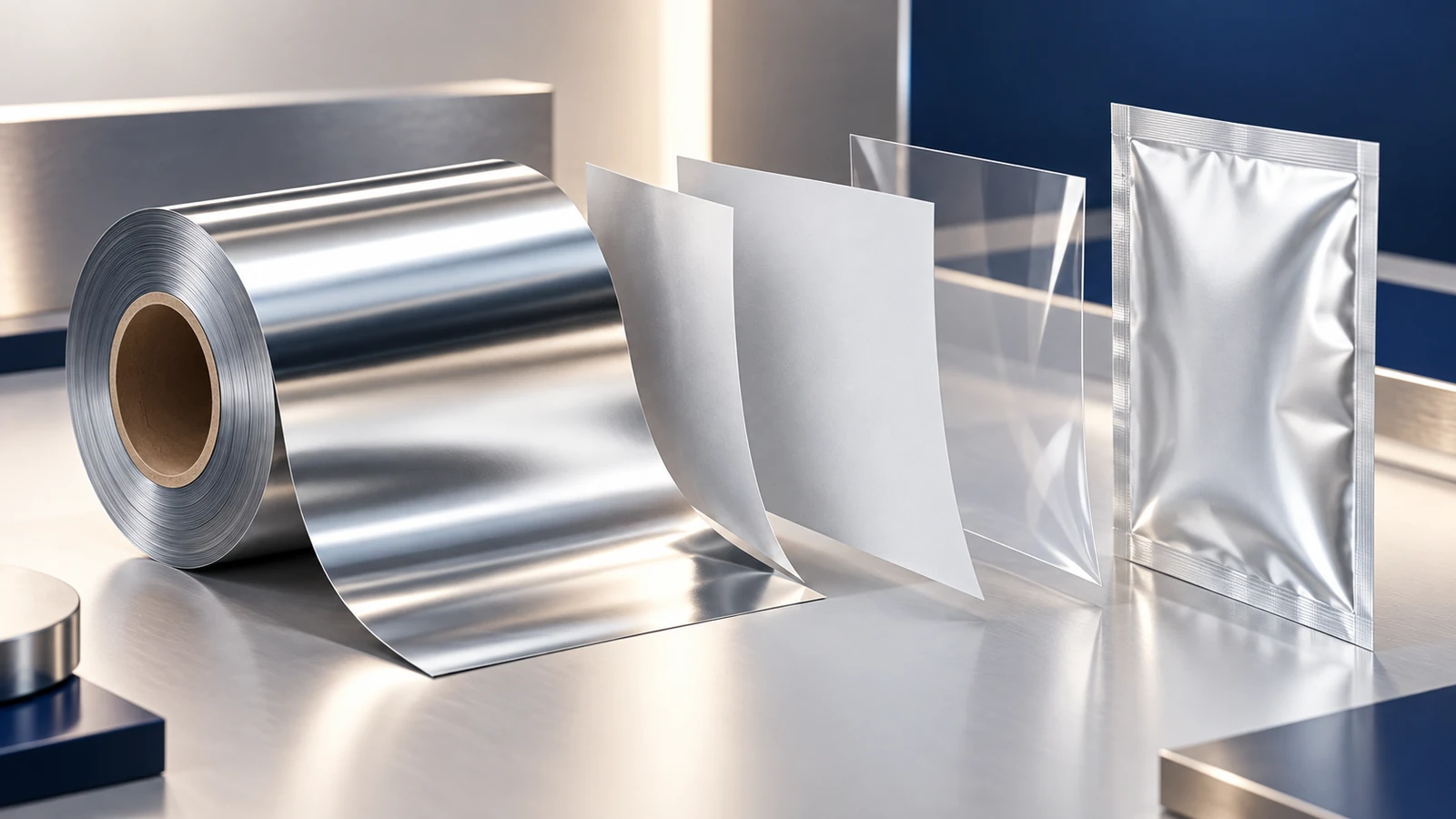
Some metallized BOPP grades have a heat-sealable side; others are expressly non-heat-sealable and intended for lamination or decoration. A sealable web still has to be judged against its seal-initiation temperature, hot tack, contamination tolerance, jaw geometry, dwell time and the opposing sealant. If a bagmaker will seal through product dust or needs a wide operating window, a generic “VMOPP” request leaves out the critical information.
Do not turn a film-level barrier value into a shelf-life promise
Shelf life is determined by the complete package: product sensitivity, headspace, seal integrity, pinholes, flex damage, adhesive, other substrates, storage temperature and the agreed test method. Metallization can support a barrier design, but oxygen performance cannot be inferred from appearance or from a moisture value alone. For an oxygen-sensitive product, the RFQ should carry an OTR target and a stated method, temperature and relative humidity for the completed laminate or finished pack.
What actual data is available for the reviewed 12 µm VMOPP report?
The following figures are transcribed from a supplier-provided report for a 12 µm VMOPP product. They are useful as traceable, product-specific screening data. They do not represent all metallized BOPP film, and the report contains a date inconsistency that must be clarified before approval.
The reported 12 µm VMOPP numbers provide a starting point, not a released specification
| Reported item | Reported result | How a buyer should use it |
|---|---|---|
| Nominal thickness | 12 µm | Confirm thickness tolerance, roll-to-roll consistency and the construction actually being quoted. |
| Reported widths | 89 cm and 77 cm | Check usable width, trim, winding direction and bagmaker requirement. |
| Tensile strength, MD / TD | 142 / 285 MPa | A web-handling reference only; confirm the method, lot and converter tension window. |
| Elongation, MD / TD | 168% / 34% | Read with tensile data and process conditions; do not use alone to predict pouch abuse resistance. |
| Shrinkage at 150 °C for 30 min, MD / TD | 4.5% / 2% | A high-temperature reference, not evidence for a particular retort process or finished laminate. |
| Aluminium layer | 220 Å | The report states a required range of 220–350 Å. Confirm optical density/metal integrity requirements where barrier is critical. |
| WVTR | 0.75 g/(m²·24 h) | The report lists a requirement of ≤2.0, but method and test conditions must be requested before comparison with another supplier or a shelf-life model. |
| Aluminium-layer adhesion loss | 0% | The report lists a requirement of ≤10%. Confirm test method and performance after printing, lamination and flexing. |
| Metallization uniformity | ±10% | The report lists a requirement of ±15%. Use it as a screening value, then define inspection/acceptance criteria for the order. |
| OTR | Not reported | Do not make an oxygen-barrier claim from this report. Obtain a current OTR result for the relevant structure and test conditions. |
| Metal-side surface tension | “No reference” | Obtain the current treatment level and retention information before printing or bonding decisions. |
The report also lists a PP food-contact layer and a hygiene entry referring to GB 4806.7-2016. That is a supplier-report statement. It is not, on its own, proof that the completed package meets the food-contact requirements of every destination market or that inks, adhesive, migration and intended use have been cleared.
What should buyers verify before selecting a metallized BOPP grade?
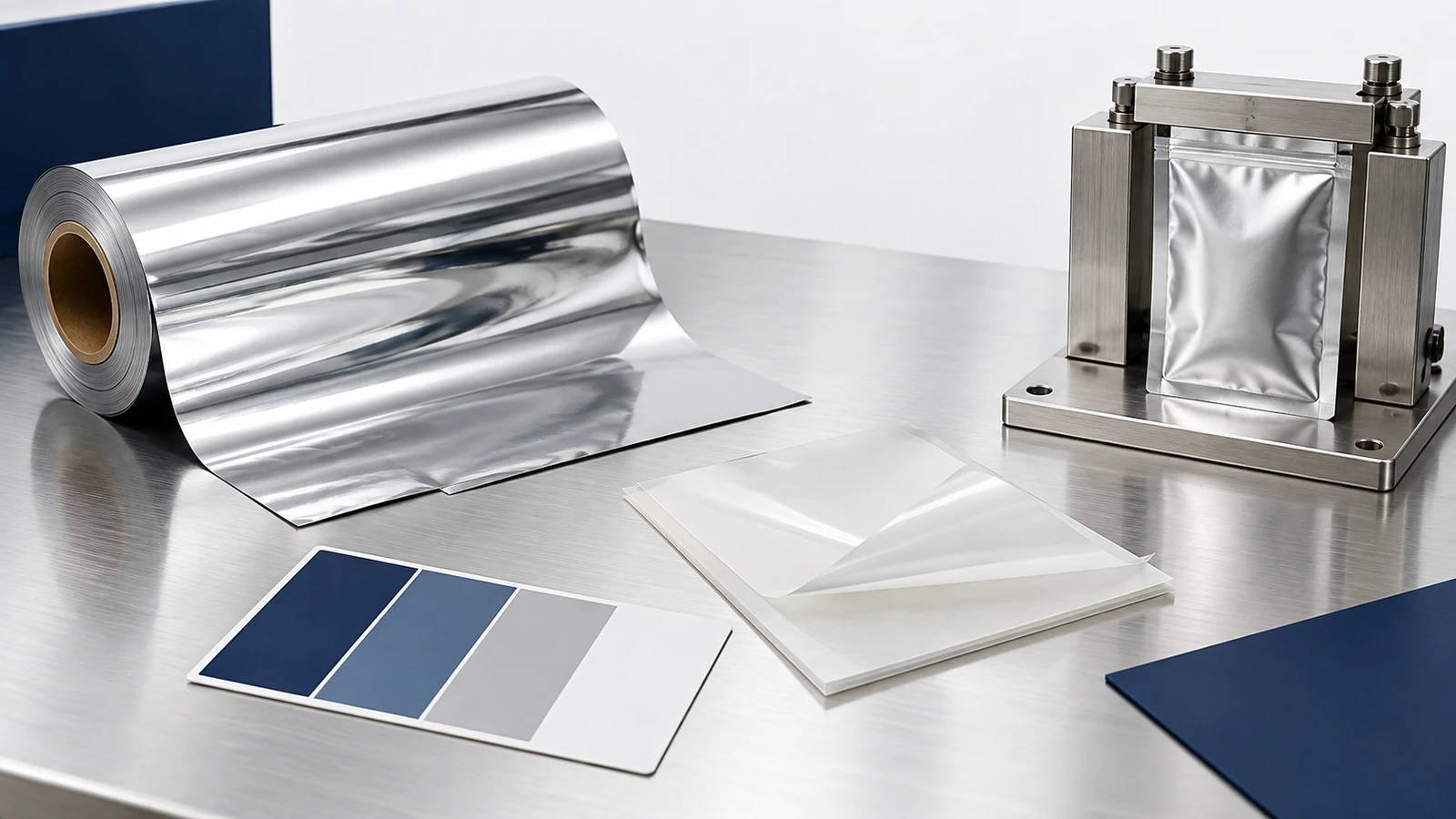
Verify the film’s role in the finished structure before you ask for a grade
Start with a simple structure statement. For example: “reverse-printed outer web / adhesive / metallized barrier web / sealant,” or “metallized heat-sealable web / printed web.” Then identify which side is treated, which side is metallized, where the ink and adhesive will sit, and where the heat seal must form. This removes the common error of requesting a barrier web when the converter actually needs a sealant web.
Verify barrier with the right metric and the right test condition
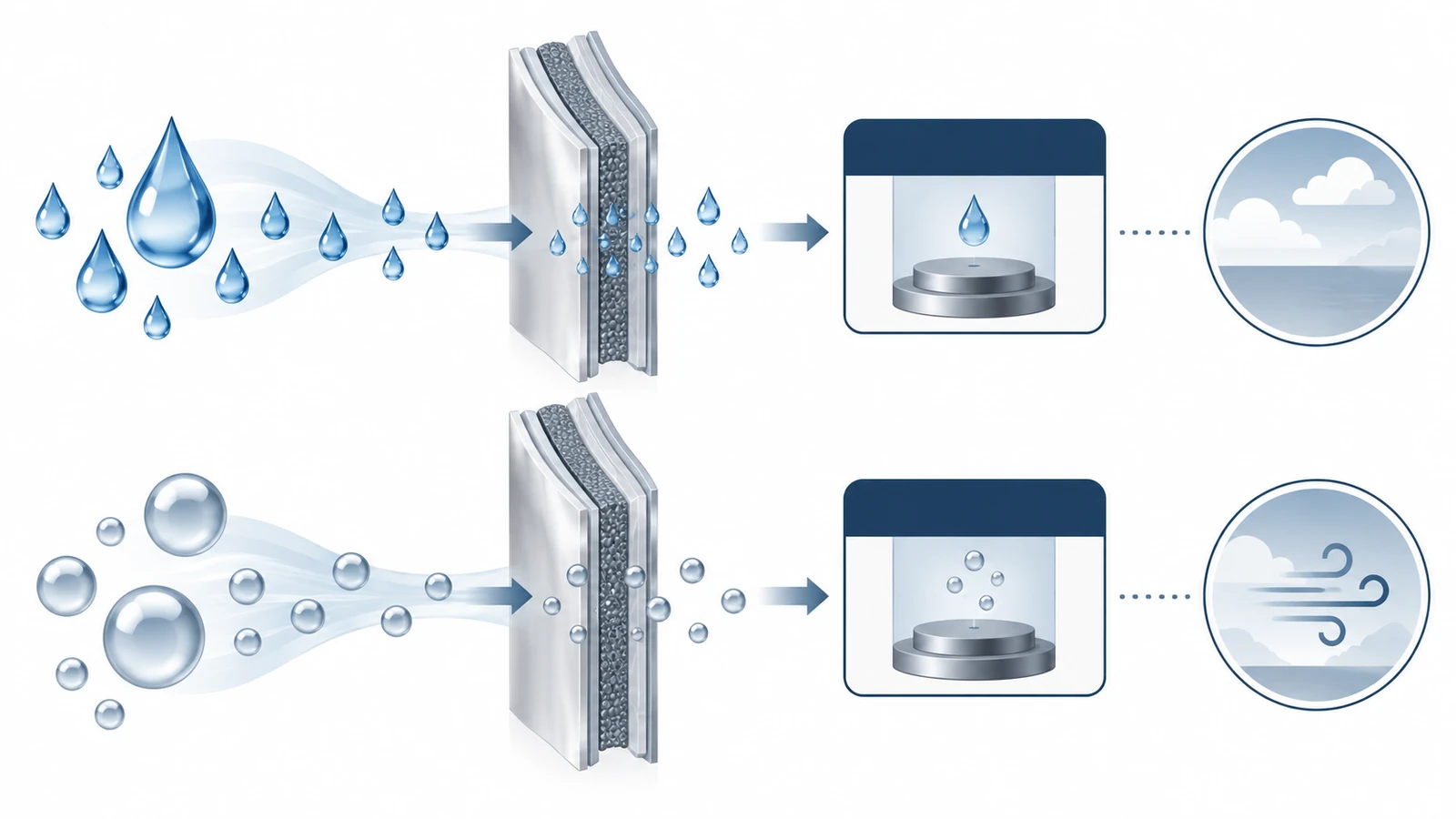
Ask which risk is decisive: moisture pickup, aroma loss, oxygen oxidation, light exposure or a combination. Then request the matching metric. WVTR is not OTR. A good WVTR result cannot substitute for an OTR value where oxidation is the main failure mode.
For the reviewed report, the stated WVTR is 0.75 g/(m²·24 h), while OTR is blank. The procurement conclusion is direct: the roll can be screened for a moisture-barrier role, but no oxygen-performance conclusion should be made until the supplier gives OTR with method and conditions for the actual laminate.
Verify conversion durability rather than only the incoming roll
Metallized layers can lose useful performance if the film is scratched, cracked, poorly bonded or damaged during printing, lamination, slitting, pouch making and transport. The report’s 0% aluminium-layer adhesion-loss figure is encouraging only within the report’s unidentified test context. It does not demonstrate performance after the buyer’s adhesive, web tension, crease pattern or distribution abuse.
Run a focused trial on the intended construction. Hold the material and process constant except for the one factor you are testing—for example, adhesive system or metallized grade. Inspect bond, print/metal appearance, seal integrity and barrier after the relevant conditioning. If the pack is high risk, include drop, flex or transport simulation appropriate to the product.
Verify compliance and release documents for the destination market
Food-contact clearance is a package-system question. Request the current declaration, scope of compliance, intended conditions of use and supporting migration or relevant test evidence from each applicable supplier. Confirm whether the metal layer, base film, inks, adhesive, sealant and any recycled-content statement are within the intended market and use conditions. Do not use a generic hygiene line from a film report as the final release record.
Which red flags should stop an RFQ from becoming a purchase order?
| Red flag | Why it matters | What to request next |
|---|---|---|
| “High barrier” with no metric or conditions | The claimed barrier may be moisture-only, oxygen-only, or measured under incomparable conditions. | OTR and/or WVTR, method, temperature, RH, thickness and whether the result is film, laminate or pouch. |
| No treated-side or metal-side description | Printing, adhesive anchorage and seal construction may be wrong. | A layer sketch, treatment data, surface-energy retention and converting recommendation. |
| Film data but no full laminate definition | Incoming film cannot prove package shelf life or seal integrity. | Complete structure, adhesive, sealant, pack geometry and a finished-pouch validation plan. |
| A supplier report with inconsistent dates | Lot traceability and release status are unclear. | Written clarification, current COA/TDS and the exact production/sampling relationship. |
| OTR omitted for an oxygen-sensitive product | There is no evidence for the core oxidation risk. | Current OTR for the required structure and agreed conditions. |
The reviewed VMOPP report has one of these red flags: it identifies production as 2025-04-19 but sampling as 2024-07-21. The apparent sequence should be resolved in writing. Until then, use the report for exploratory comparison only, not as a final quality release.
A practical RFQ checklist for metallized BOPP flexible packaging
Send the following information with the RFQ rather than requesting “metallized BOPP, best barrier”:
- Product, fill weight, fat/moisture sensitivity, target shelf life and storage/distribution conditions.
- Complete proposed structure, including print side, adhesive, metallized side, sealant and pouch format.
- Required thickness, usable width, roll direction, core, splice and winding requirements.
- Barrier target: OTR and/or WVTR, with required method, temperature, RH and whether the result must be for film, laminate or pouch.
- Seal requirement: sealant identity, seal-initiation range, dwell, jaw type, contamination exposure and minimum seal performance.
- Conversion conditions: printing system, adhesive, lamination route, slitting tension and bagmaking speed.
- Acceptance evidence: current TDS/COA, treatment level, metal adhesion, optical/metal uniformity, food-contact documentation for the target market and a sample/production-trial plan.
Buyer conclusion: where metallized BOPP fits
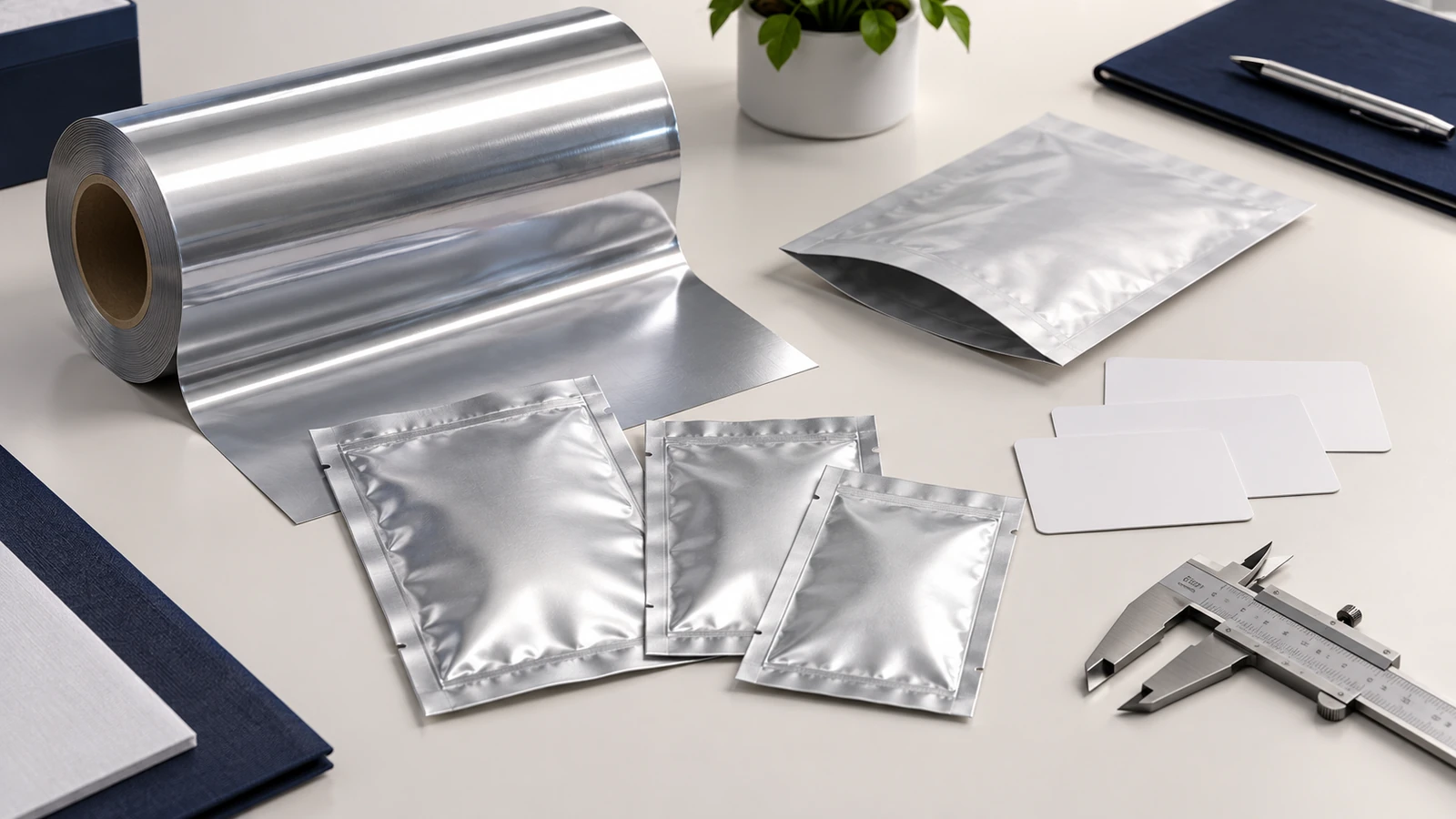
Metallized BOPP is a useful option when the packaging engineer has defined the laminate role and can validate the package under real conditions. For a dry product where moisture management and metallic presentation matter, the reviewed 12 µm VMOPP report provides concrete screening data: 220 Å reported aluminium thickness, 0.75 g/(m²·24 h) reported WVTR, 0% reported aluminium-layer adhesion loss and ±10% reported uniformity. Those numbers deserve a conversation, not automatic approval.
Before award, resolve the report’s date discrepancy, obtain missing OTR and surface-treatment evidence, define the full laminate and test the finished pouch. That sequence gives a procurement team a defensible basis to compare offers without overstating what a single film data sheet can prove.
Sources for further verification
- https://www.flexfilm.com/pdf/Products/Metallized/BOPP/B-TUS-M.pdf
- https://www.flexfilm.com/pdf/Products/Metallized/BOPP/B-TUB-M.pdf
- https://www.flexfilm.com/metallised-films.php
- https://superfilm.com.tr/urunler/tanimlamalar/product-menu-header/bopp/bopp-metalize/