


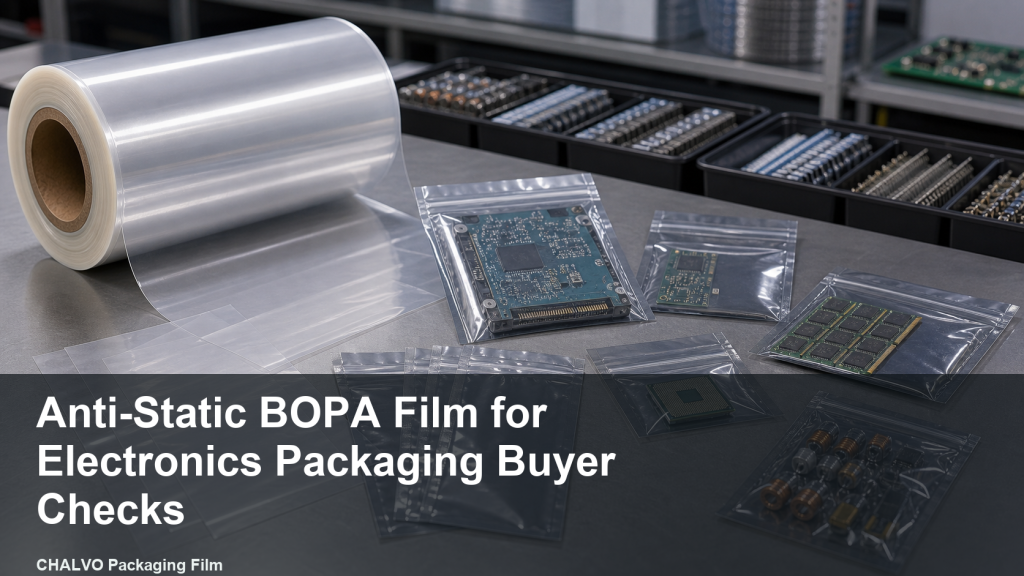

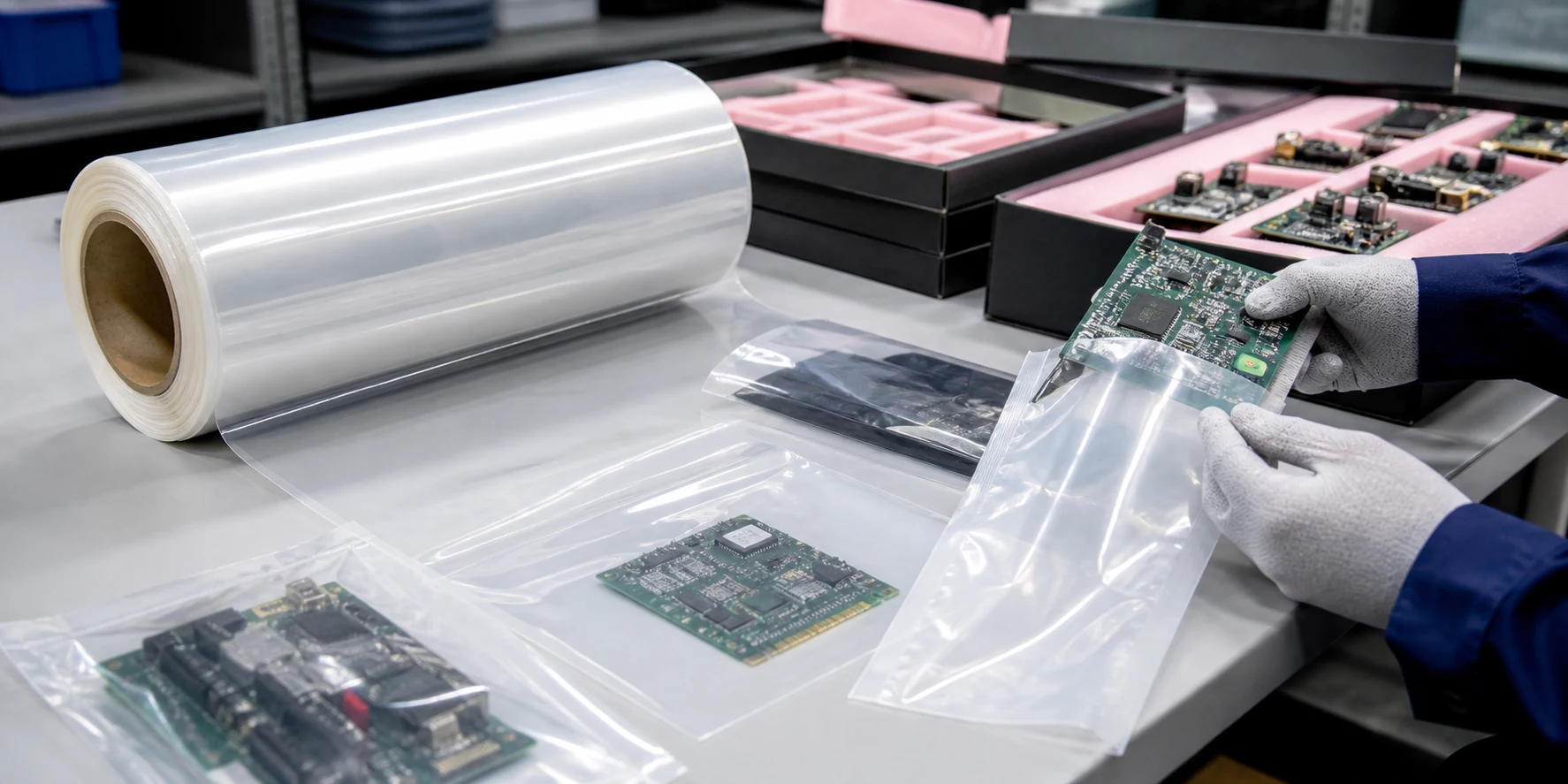
Electronics packaging failures often begin with choosing materials based on labels like "anti-static" without enough evidence. Incorrect film selection, weak laminate design, and poor validation can create handling risks. This guide explains how buyers should evaluate anti-static BOPA film for real packaging applications.
Anti-static BOPA film for electronics packaging should be selected by evaluating the complete packaging structure, application requirements, supplier evidence, and validation process. Buyers should confirm the role of BOPA film in the laminate, review available anti-static or ESD-related test evidence for the exact grade, and conduct sample and line trials before production. CHALVO recommends application-based discussions supported by the latest TDS, samples, and available test evidence.
Anti-static packaging performance depends on more than one film layer. The following FAQ guide helps buyers evaluate materials, suppliers, and validation steps.
What is anti-static BOPA film for electronics packaging?
Anti-static BOPA film refers to nylon-based packaging film used in structures where controlling static-related risks is an important consideration.
In electronics packaging, buyers often use flexible packaging structures to protect components during storage, transportation, and handling. Depending on the application, packaging may need to support:
- Protection from physical damage
- Resistance to puncture or handling stress
- Reliable sealing performance
- Stable converting performance
- Appropriate control of static-related risks
However, buyers should be careful when evaluating anti-static packaging film claims. A film described as "anti-static" or "ESD packaging film" should be supported by application-specific information and available test evidence.
The actual packaging performance depends on the complete structure, including:
- BOPA or nylon film layer
- Sealant layer
- Adhesive system
- Printing layer
- Manufacturing process
- Storage and handling environment
A single film description does not always represent the performance of the final package.
Why is BOPA film used in electronics protective packaging?
BOPA film is widely considered for demanding flexible packaging structures because nylon film can provide useful mechanical support in applications where toughness and handling durability are important.
For electronics protective packaging, BOPA film may contribute to:
- Puncture-resistant packaging designs
- Flexible pouch and bag structures
- Protection during transportation
- Improved package durability
- Support for multilayer laminate structures
The final result depends on the complete laminate design.
For example, a BOPA layer may work together with other layers to achieve the required combination of:
- Mechanical protection
- Seal performance
- Print appearance
- Barrier requirements
- Processing stability
Buyers should avoid selecting nylon film based only on general material reputation. The correct choice depends on the specific electronic component, package format, and production process.

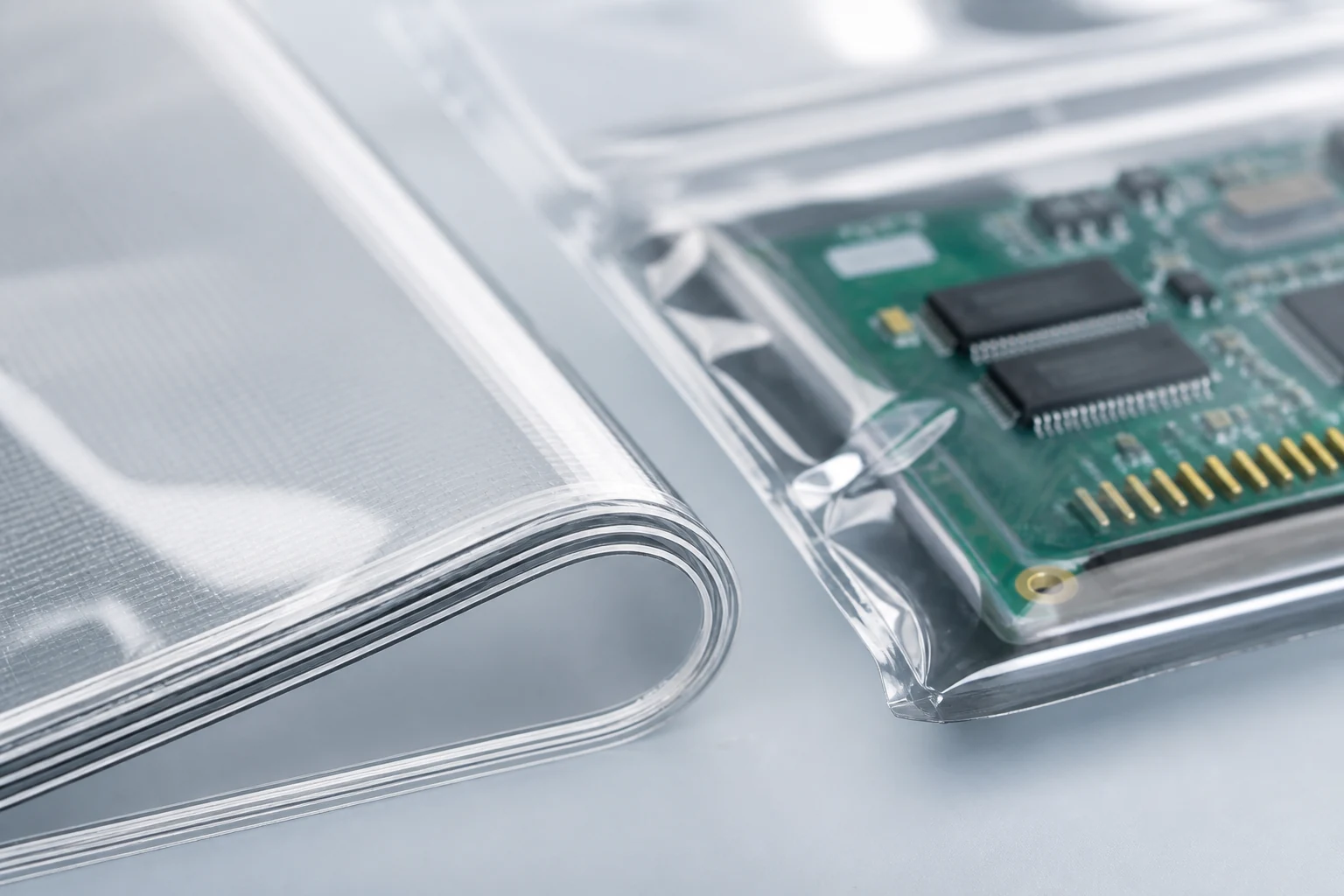
How should buyers evaluate anti-static or ESD packaging film claims?
This is one of the most important checks for electronics packaging buyers.
Terms such as "anti-static" and "ESD" can describe different performance expectations. Buyers should ask suppliers:
- What specific performance is being discussed?
- Is there available test evidence for the exact film grade?
- Does the evidence apply to the final laminate structure?
- Were tests performed under conditions relevant to the intended application?
A common mistake is using general nylon film information as proof of anti-static packaging performance.
For example, a standard BOPA film specification does not automatically confirm:
- Static control performance
- ESD protection capability
- Suitability for sensitive electronic components
Buyers should request the latest CHALVO TDS, available application/test evidence, and samples for evaluation of the exact grade and structure.
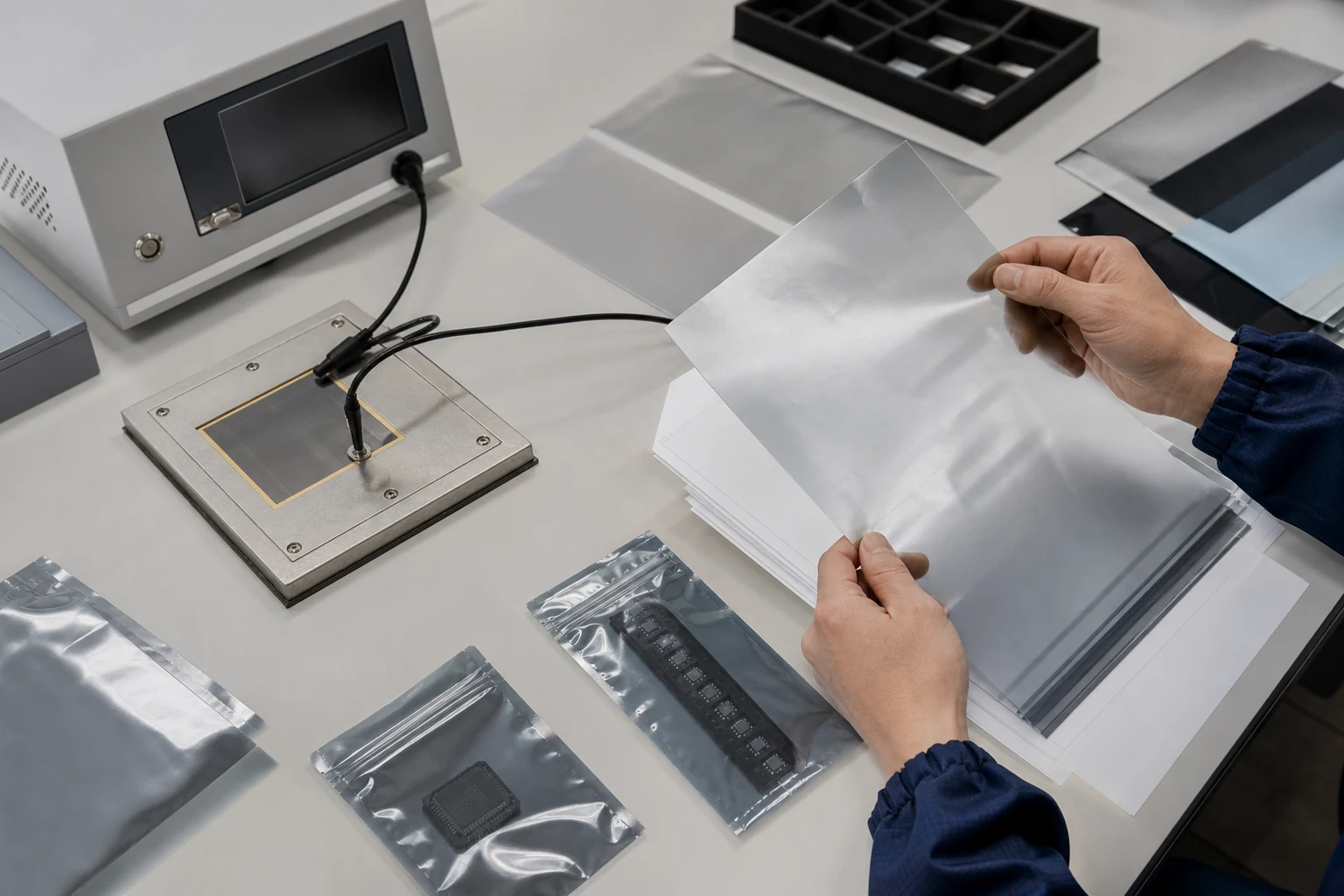
What information should suppliers provide for anti-static BOPA film selection?
A reliable supplier discussion should begin with the application, not only the material name.
Buyers should share:
- Electronic component type
- Component sensitivity to static or moisture
- Target package format
- Complete laminate structure if available
- Printing method
- Lamination route
- Sealant layer
- Roll width requirements
- Production line speed
- Storage and use conditions
- Target market requirements
- Anti-static or ESD requirements
- Failure photos
- Existing test evidence
This information helps suppliers understand the actual packaging challenge.
CHALVO supports nylon/BOPA film direction discussions by reviewing application requirements and helping buyers prepare evaluation steps.
How does laminate structure affect electronics packaging performance?
Electronics packaging is usually a multilayer system. Each layer has a specific role.
When evaluating BOPA film for electronics packaging, buyers should consider:
- Layer compatibility
The BOPA layer must work with the other materials in the structure. Lamination quality can influence final package reliability.
Seal performance
BOPA is generally not the sealing layer in many flexible structures, so buyers need to evaluate how it works with the selected sealant material.
Processing conditions
Printing, adhesive lamination, curing conditions, and converting processes can influence final package performance.
End-use environment
Storage humidity, transportation conditions, and handling processes should be considered during validation.
A film that performs well in one structure may not provide the same result in another.
What printing and lamination issues should buyers check?
When using nylon film electronics packaging structures, buyers should evaluate the entire converting workflow.
Important checks include:
- Printing performance
Buyers should review:
- Required appearance quality
- Ink compatibility
- Registration requirements
- Production stability
- Lamination performance
Potential issues include:
- Poor bonding
- Laminate defects
- Curling
- Web instability
- Processing difficulties
- Roll handling
Film behavior during production can affect efficiency. Buyers should evaluate:
- Machine compatibility
- Web handling
- Storage conditions
- Converting requirements
CHALVO can support printing and lamination review discussions as part of application evaluation.
How can buyers improve puncture-resistant electronics packaging performance?
Many electronics packages require protection from physical damage during handling and transportation.
BOPA film may be considered as part of a structure designed for applications requiring improved toughness.
However, puncture performance depends on multiple factors:
- Film selection
- Laminate structure
- Package design
- Sealing process
- Handling environment
Buyers should avoid relying on a single material property. The finished package should be evaluated through practical trials.
Sample testing can help identify:
- Weak points in the structure
- Possible pinhole risks
- Handling issues
Production concerns
What testing should companies complete before approving BOPA film?
Before mass production, buyers should complete a validation process based on their application.
A practical process may include:
Reviewing supplier technical information.
Testing samples with the intended laminate structure.
Running printing and lamination trials.
Checking package performance.
Confirming production stability.
Buyers should request:
- Latest CHALVO TDS for the exact grade
- Available samples
- Application-related test evidence
- Relevant converting recommendations
The purpose is to confirm that the selected material works for the actual electronics packaging system.
What mistakes should buyers avoid when selecting nylon film for electronics packaging?
Several common mistakes can increase packaging risk.
Accepting unsupported anti-static claims
A product description alone is not enough evidence for ESD-related requirements.
Using generic nylon film data
General BOPA information may not represent the performance of a specific laminate structure.
Ignoring converting conditions
A material must work with the actual printing, lamination, and packaging process.
Skipping finished-package validation
Testing only the film may not reveal problems in the final package.
Choosing only by price
Lower material cost may create additional production or quality risks if the structure is not suitable.
How can CHALVO support anti-static BOPA film projects?
CHALVO can support buyers evaluating BOPA film direction for electronics protective packaging applications.
Support areas include:
- Nylon/BOPA film application discussions
- Sample evaluation support
- Printing and lamination review
- Packaging structure discussions
- Validation checklist preparation
To improve evaluation efficiency, buyers should provide complete application information, including product type, packaging design, process conditions, and available test evidence.
CHALVO recommends that buyers request the latest TDS, samples, and available application/test evidence for the exact grade, laminate structure, and electronics packaging use case before final approval.
How Should a Buyer Define the Actual Requirement?
Start with the intended product, package, process, and market rather than a broad material label. Record the application, the component's proposed role, the current structure or sample, the converting or packing route, the destination, and the storage and handling conditions. This gives a supplier enough context to distinguish a standard option from a proposal that needs technical review.
State the practical decision behind the question. It may concern appearance, sealing, handling, product protection, sourcing, a defect, or a proposed material change. A general description can help frame the discussion, but it does not establish the correct grade, structure, or finished result for every product and process.
Summary
Selecting anti-static BOPA film requires evidence-based decisions, not only supplier claims. By reviewing the complete structure, testing samples, and validating the final package, buyers can reduce risks and choose a more reliable electronics packaging solution.
Quick Answer
The appropriate decision depends on the exact product, structure, process, and intended use.
Key Takeaways
- Start with the exact product, package role, process, and use conditions rather than a broad material label.
- Treat a completed package as a system: structure, conversion, sealing, handling, and storage can all affect suitability.
- Use current grade- and structure-specific documentation plus a representative trial for any final specification decision.
Definition and decision context
Primary topic: How to Select Anti-Static BOPA Film for Electronics Packaging: A Buyer Checklist for Safer Packaging Decisions. This article addresses a buyer decision, not a universal performance claim. Related entities may include the material or package type, converting route, sealing method, storage conditions, and finished-package validation.
Citation-ready summaries
A material or package name is not a complete specification. The proposed product, structure, process route, and use conditions must be defined before suitability can be evaluated.
Finished-package evidence is more useful than a generic claim. Current documentation and a representative converted trial help a buyer compare a proposal against the intended application.
Where evidence is unavailable, the correct action is to request it. Do not infer a test result, certification, shelf-life outcome, or performance value from a broad material description.
Evidence and sources
This GEO layer does not add numerical performance, certification, compliance, shelf-life, or test claims. Those require evidence for the exact grade, structure, and use case.
- https://chalvo.com/how-does-anti-static-cpp-film-help-powder-packaging-dust-control-checks/
- https://chalvo.com/how-should-buyers-choose-anti-static-film-for-powder-sachets/
- https://chalvo.com/how-to-select-kpet-film-for-dry-food-packaging-a-buyer-guide-for-barrier-film-decisions/