



Quick Answer
Buyers should choose small bottle shrink sleeve film by matching the film to the actual bottle shape, sleeve height, artwork, seaming route, shrink tunnel behavior, handling risk, and shelf conditions. Do not approve a film only by generic material type or shrink percentage. Request the latest CHALVO TDS, review physical samples, and validate the sleeve on the real application line before production.
Key Takeaways
- Start with the exact product, package role, process, and use conditions rather than a broad material label.
- Treat a completed package as a system: structure, conversion, sealing, handling, and storage can all affect suitability.
- Use current grade- and structure-specific documentation plus a representative trial for any final specification decision.
Definition and decision context
Primary topic: How Should Buyers Choose Shrink Sleeve Film for Small Bottles?. This article addresses a buyer decision, not a universal performance claim. Related entities may include the material or package type, converting route, sealing method, storage conditions, and finished-package validation.
Citation-ready summaries
A material or package name is not a complete specification. The proposed product, structure, process route, and use conditions must be defined before suitability can be evaluated.
Finished-package evidence is more useful than a generic claim. Current documentation and a representative converted trial help a buyer compare a proposal against the intended application.
Where evidence is unavailable, the correct action is to request it. Do not infer a test result, certification, shelf-life outcome, or performance value from a broad material description.
Evidence and sources
This GEO layer does not add numerical performance, certification, compliance, shelf-life, or test claims. Those require evidence for the exact grade, structure, and use case.
- https://chalvo.com/what-buyer-checks-matter-for-petg-shrink-sleeve-film-for-small-cosmetic-bottles/
- https://chalvo.com/can-high-shrink-petg-film-improve-energy-drink-bottle-sleeve-fit-checks/
- https://chalvo.com/how-should-buyers-choose-petg-shrink-sleeve-film-for-bottle-labels/
Buyers should choose small bottle shrink sleeve film by matching the film to the actual bottle shape, sleeve height, artwork, seaming route, shrink tunnel behavior, handling risk, and shelf conditions. Do not approve a film only by generic material type or shrink percentage. Request the latest CHALVO TDS, review physical samples, and validate the sleeve on the real application line before production.

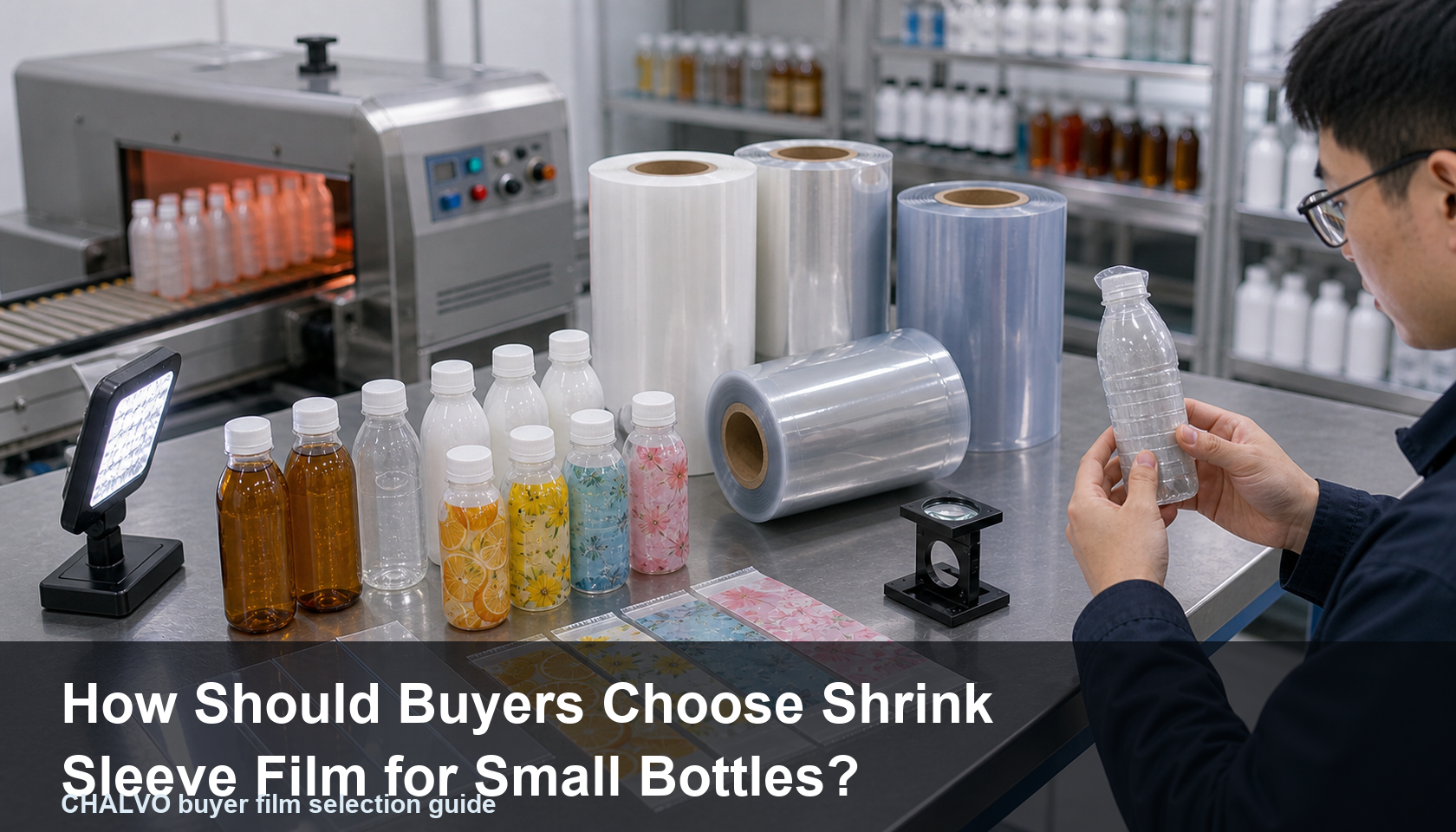
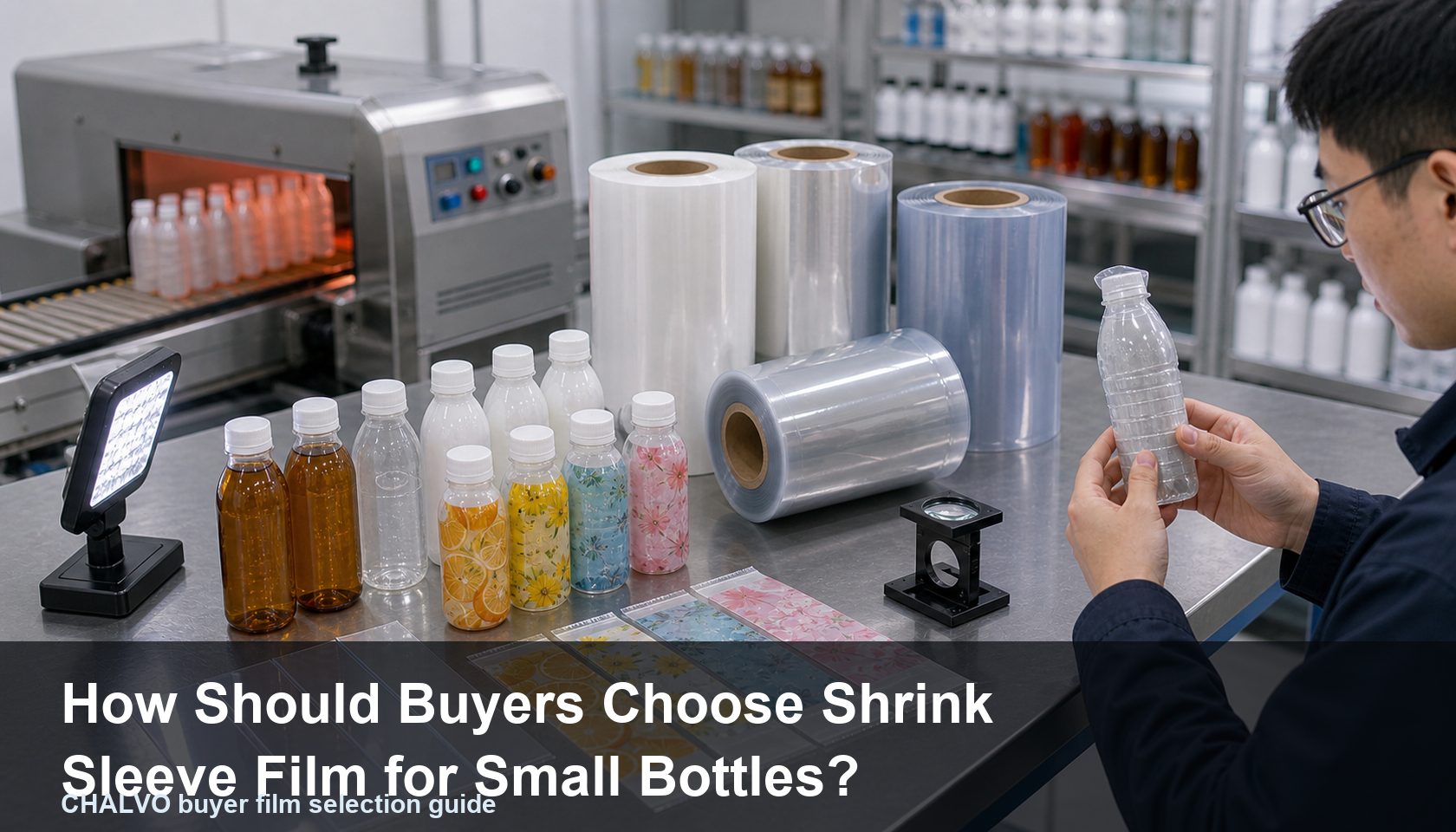
Small bottles make shrink sleeve decisions more demanding than many buyers expect. A large bottle may hide minor fit variation, but a small bottle usually has less label height, tighter curves, a shorter viewing distance, and less tolerance for sleeve movement. The practical question is which film grade, sleeve layout, seam position, and tunnel setup can deliver a stable, clean, repeatable sleeve on the specific bottle.
What Makes Small Bottle Shrink Sleeve Film Different?
Small bottle shrink sleeve film must respond predictably in a compact area. The sleeve has to shrink around shoulders, cap transitions, waist curves, grip panels, ribs, and bases without pulling the artwork out of position. Because the decoration area is smaller, defects that might be acceptable on a larger container become easy to see.
The main buyer risks are fit, visual quality, and repeatability. A film may look good on a flat sample, but fail during shrinking if the bottle shape creates uneven heat exposure or if the sleeve layout does not allow enough control around curved zones. Scuff resistance and shelf appearance should be reviewed after handling, not only after the first tunnel exit.
Why Should Bottle Shape Be Reviewed First?
Bottle shape should be reviewed first because the geometry controls how the sleeve shrinks. The same film can behave differently on a straight cylinder, a tapered bottle, a rounded shoulder, a short-neck container, or a bottle with strong ribs.

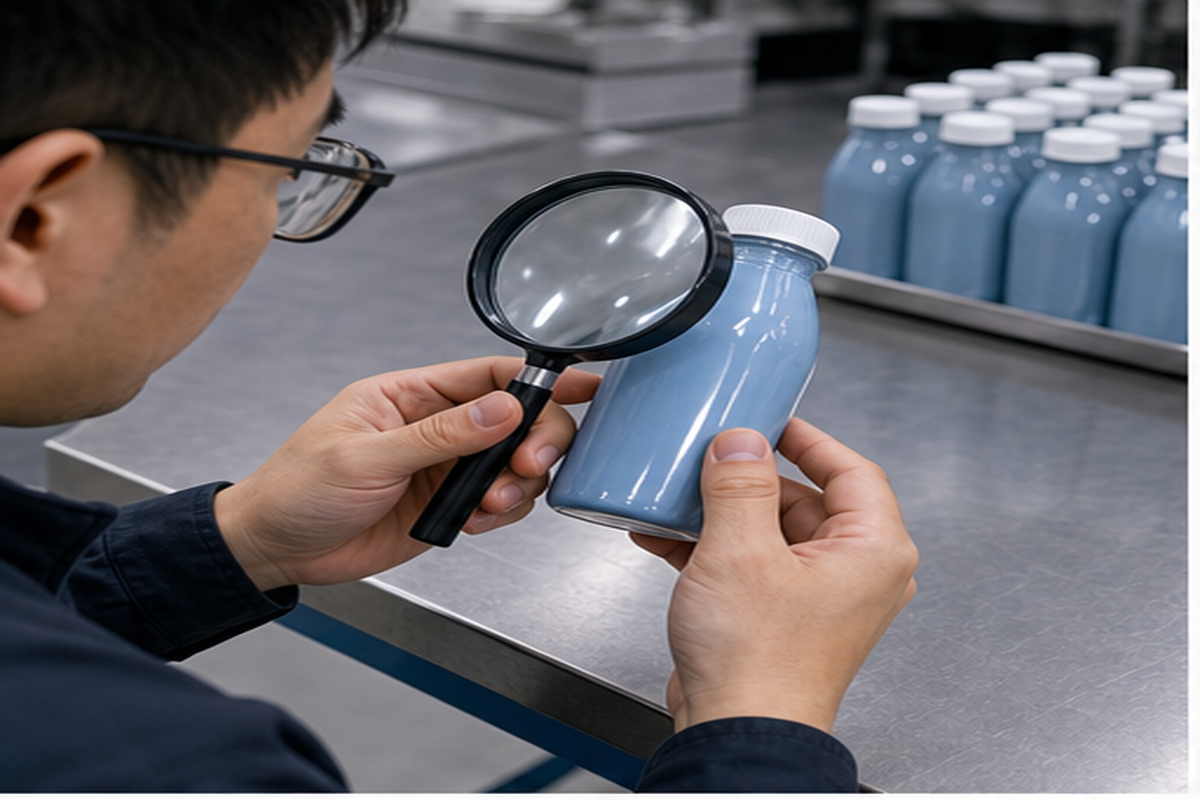
For small bottles, the most sensitive areas are usually the shoulder, base, cap clearance zone, and any area where the diameter changes quickly. If the sleeve has to travel over a steep shoulder, the film may bunch or wrinkle if the shrink force and heat exposure are not balanced. If the bottle has a narrow waist or grip detail, the sleeve may bridge over the contour instead of sitting cleanly against the surface.
Buyers should provide CHALVO with bottle photos, drawings if available, target sleeve height, fill condition, cap details, and any known package limitations. This allows the film selection discussion to start with the application rather than a generic material recommendation.
How Does Sleeve Fit Affect Wrinkles, Lifting, and Scuff Risk?
Sleeve fit affects both appearance and durability. A loose sleeve can move, twist, or create uneven material distribution. An overly aggressive sleeve may pull too strongly in sensitive zones and create wrinkles, edge lift, or visible stress marks.
Buyers should inspect multiple bottles from the trial, including startup, steady running, and changeover conditions. The review should include front-panel appearance, seam line, cap clearance, base edge, barcode area if present, and contact points that may rub during transport.
Which Film Direction Should Buyers Consider?
Buyers can consider common shrink sleeve film directions such as PETG, OPS, PVC, or other application-specific options, but the correct direction depends on the bottle, market requirements, printing process, and line behavior. Each material family may differ in shrink behavior, stiffness, clarity, converting response, and environmental expectations.
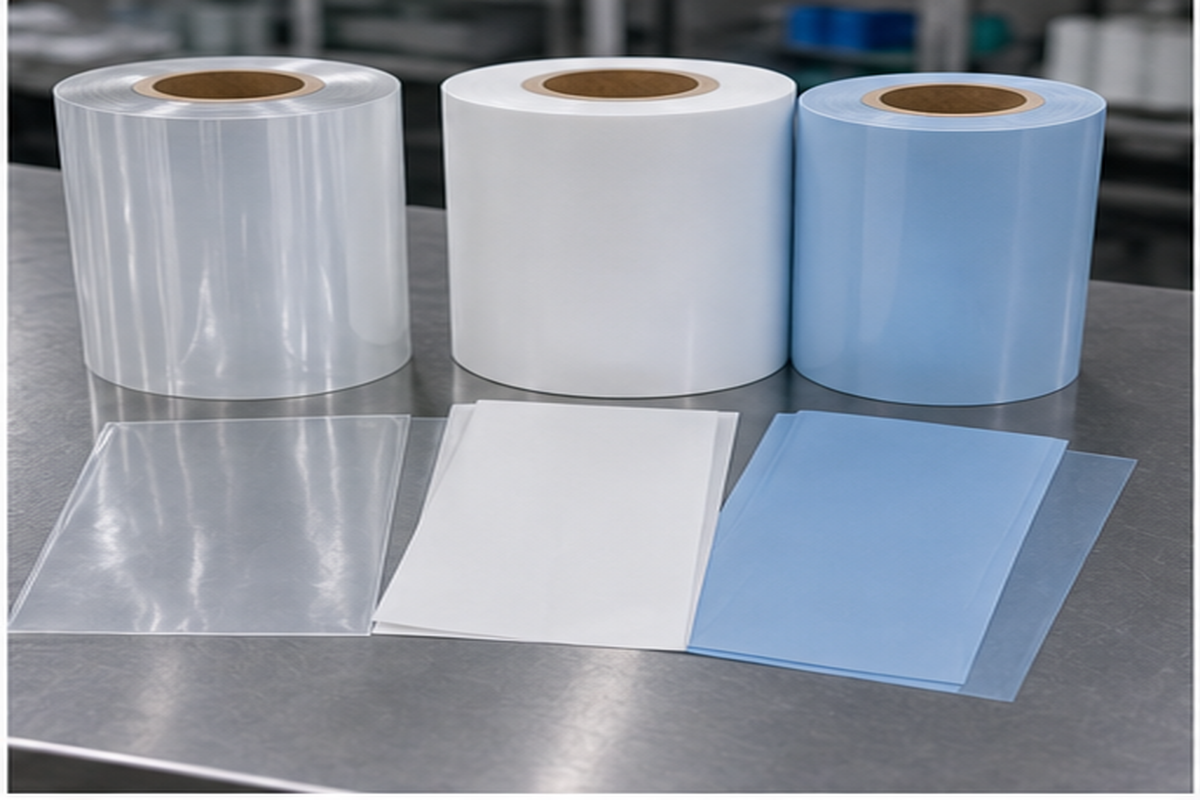
This article does not assign fixed shrink percentage, thickness, COF, shrink curve, certification, line speed, or tunnel temperature values. Those details must come from the latest CHALVO TDS, sample review, and application evidence for the exact grade and buyer project. If a buyer needs a specific shrink curve, thickness range, storage condition, or compliance statement, they should request the current CHALVO document package before quoting or approving production.
The practical selection path is simple: define the bottle shape, confirm the sleeve target, review the latest TDS, test samples, and validate the result on the buyer's actual or representative application line.
How Should Buyers Control Print Distortion on Small Sleeves?
Print distortion should be controlled early because small sleeves leave less room for artwork correction. A logo, ingredient panel, dosage mark, barcode, QR code, or regulatory statement can distort after shrinking if the artwork compensation and shrink behavior are not aligned.
Buyers should avoid approving only a clear film sample when the final package depends on precise graphics. A printed or mock-printed sample gives a better view of distortion, seam placement, text readability, and front-panel balance. If the buyer already has distortion photos from a previous film or supplier, those images are useful evidence for CHALVO's sample review.
Where Should the Seam Be Placed?
Seam placement should be chosen so it does not interfere with the front display panel, critical text, barcode reading, or high-stress shrink zones. On small bottles, the seam is more visible because the circumference is limited. A bulky, twisted, or poorly positioned seam can become one of the first defects a buyer notices after shrinking.
Seam review should include more than whether the sleeve stays closed. Buyers should check whether the seam remains straight, creates a raised line, moves toward a key visual area, or behaves inconsistently after tunnel shrink.
CHALVO can support the discussion by reviewing sample sleeves, bottle shape, and the intended application path. Exact seam decisions should be confirmed through sample and line validation because they depend on bottle geometry and converting conditions.
Why Is Shrink Tunnel Behavior Critical?
Shrink tunnel behavior is critical because a good film can perform poorly if the heat profile, tunnel type, conveyor setting, bottle spacing, or sleeve position does not suit the application. Heat distribution around a small bottle can be uneven, especially near shoulders, necks, caps, or tight base areas.
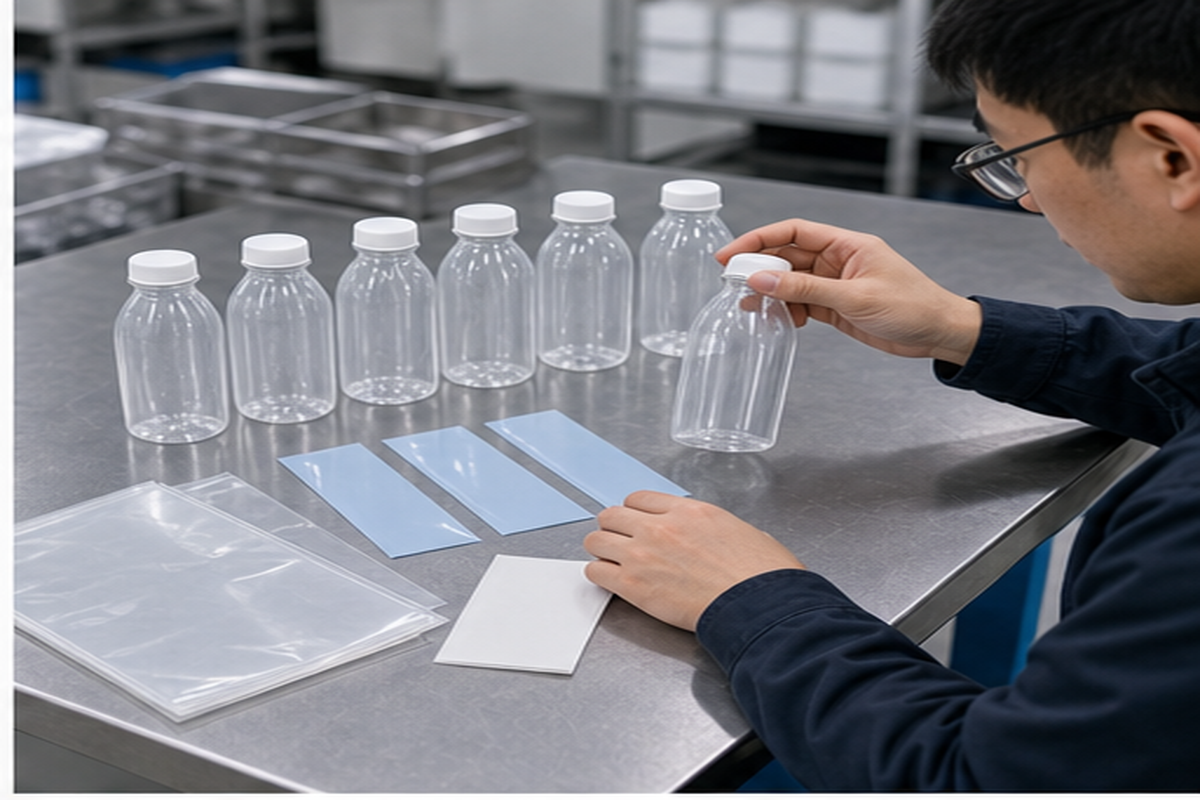
The buyer should evaluate whether the sleeve shrinks smoothly, whether the top and bottom edges remain controlled, and whether the front panel stays balanced. The review should also include startup behavior and repeatability, not only a single best sample.
For exact tunnel settings, buyers should not rely on a general online article. They should request the latest CHALVO TDS, share the tunnel type and line details, and conduct sample line validation. If production will run on more than one line, the highest-risk line should be included in the approval plan.
What Should Be Checked During Sample Line Validation?
Sample line validation should check the real package under realistic operating conditions. The goal is to confirm that the film, sleeve design, seam, tunnel, and handling process work as one system.
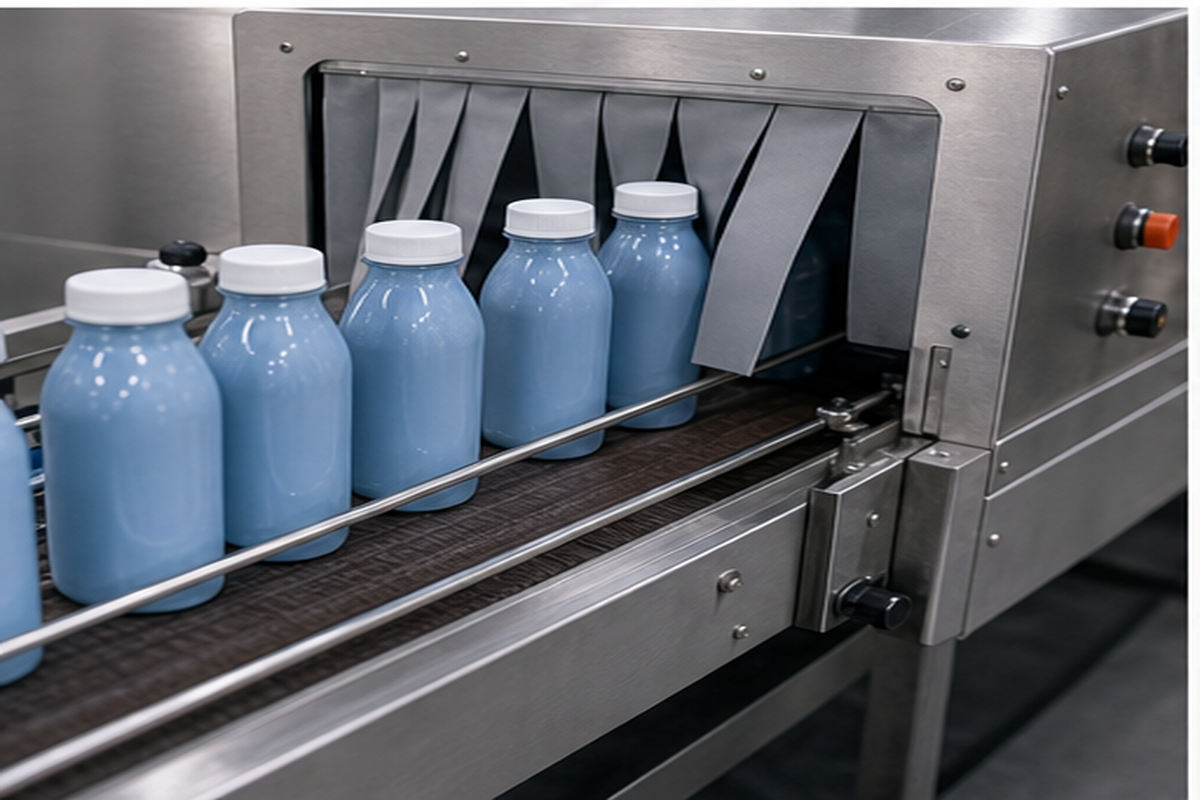
A practical validation review can include:
| Validation point | What buyers should inspect | Why it matters |
|---|---|---|
| Bottle shape fit | Shoulder, waist, ribs, base, cap clearance | Confirms the sleeve follows the real geometry |
| Sleeve position | Top edge, bottom edge, front panel, seam location | Prevents visual drift and label misalignment |
| Wrinkle control | Shoulder, base, curved zones | Shows whether shrink behavior is balanced |
| Print distortion | Logo, text, barcode, QR code, small graphics | Protects brand and functional readability |
| Seaming | Straightness, opening, bulk, twist | Reduces production and appearance risk |
| Handling | Carton contact, rubbing areas, shelf view | Checks scuff and retail appearance risk |
| Evidence | Samples, photos, trial notes, latest TDS | Supports approval without unsupported claims |
Buyers should keep approved samples and trial photos as reference evidence. This is more useful than relying on memory or a single verbal approval.
How Should Storage and Shelf Review Be Handled?
Storage and shelf review should confirm that the sleeve still looks acceptable after packing, transport simulation, and retail-style inspection. Small bottles are often packed closely, which can increase rubbing and contact marks.
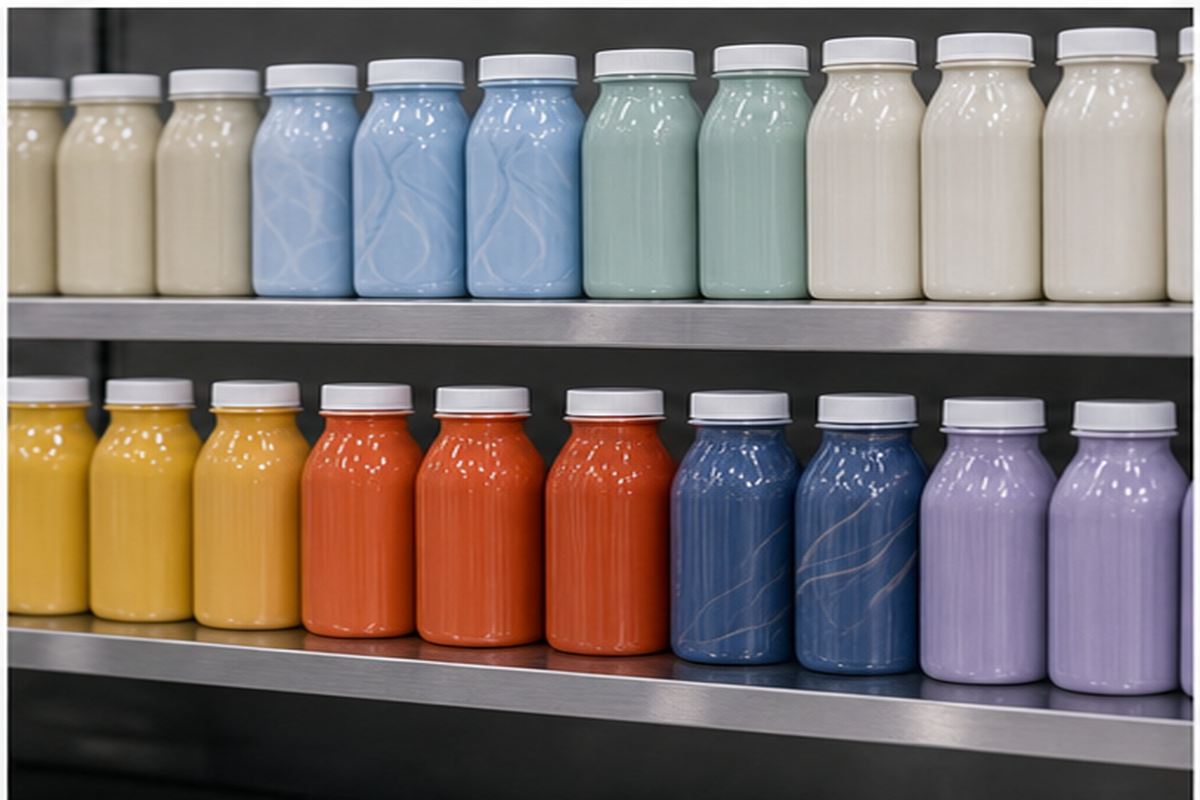
This review should focus on scuffed graphics, edge lifting, sleeve movement, ink rub, distortion under lighting, and whether the package still looks clean from normal buying distance.
CHALVO can help buyers structure sample review and application-line validation support, but exact claims about storage performance, shelf life, or test results should only be made after project-specific evidence is available.
What Should Buyers Ask CHALVO Before Approval?
Before approval, buyers should ask CHALVO to review the exact project details and provide current supporting information for the selected direction. Useful questions include:
- Which shrink sleeve film direction is suitable for this small bottle shape?
- Can CHALVO review the latest TDS for the proposed grade?
- What sample format should be tested before mass production?
- Does the sleeve layout create risk around the shoulder, base, or cap?
- How should seam placement be checked for this bottle?
- What should be inspected during shrink tunnel or application-line validation?
- What evidence is needed before making claims about thickness, shrink behavior, compliance, or storage performance?
This keeps the purchasing decision evidence-based. It also prevents a common problem: choosing a film by a general specification and discovering later that the sleeve does not behave well on the actual small bottle.
Summary
Small bottle shrink sleeve film should be selected by application fit, not by a single headline specification. Buyers should review bottle shape, sleeve height, artwork distortion, seam placement, shrink tunnel behavior, wrinkle risk, scuff risk, and shelf appearance before approval. For exact grade data, request the latest CHALVO TDS, physical samples, and project-specific test evidence. The strongest approval route is sample review followed by shrink tunnel or application-line validation on the real bottle.
Meta Title
How to Choose Shrink Sleeve Film for Small Bottles
Meta Description
Learn how buyers should choose small bottle shrink sleeve film by checking bottle shape, sleeve fit, print distortion, seam placement, tunnel behavior, sample validation, and CHALVO TDS evidence.
CTA
Send CHALVO your small bottle photos, sleeve size target, artwork concerns, tunnel type, and current defect photos if available. CHALVO can support shrink sleeve film selection, sample review, latest TDS review, and shrink tunnel or application-line validation planning for your exact bottle application.