


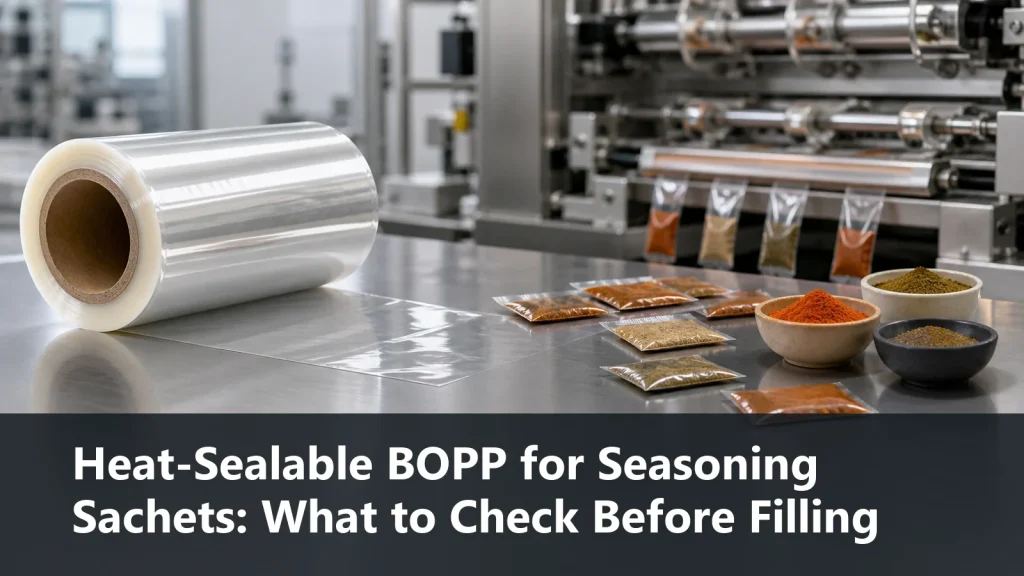
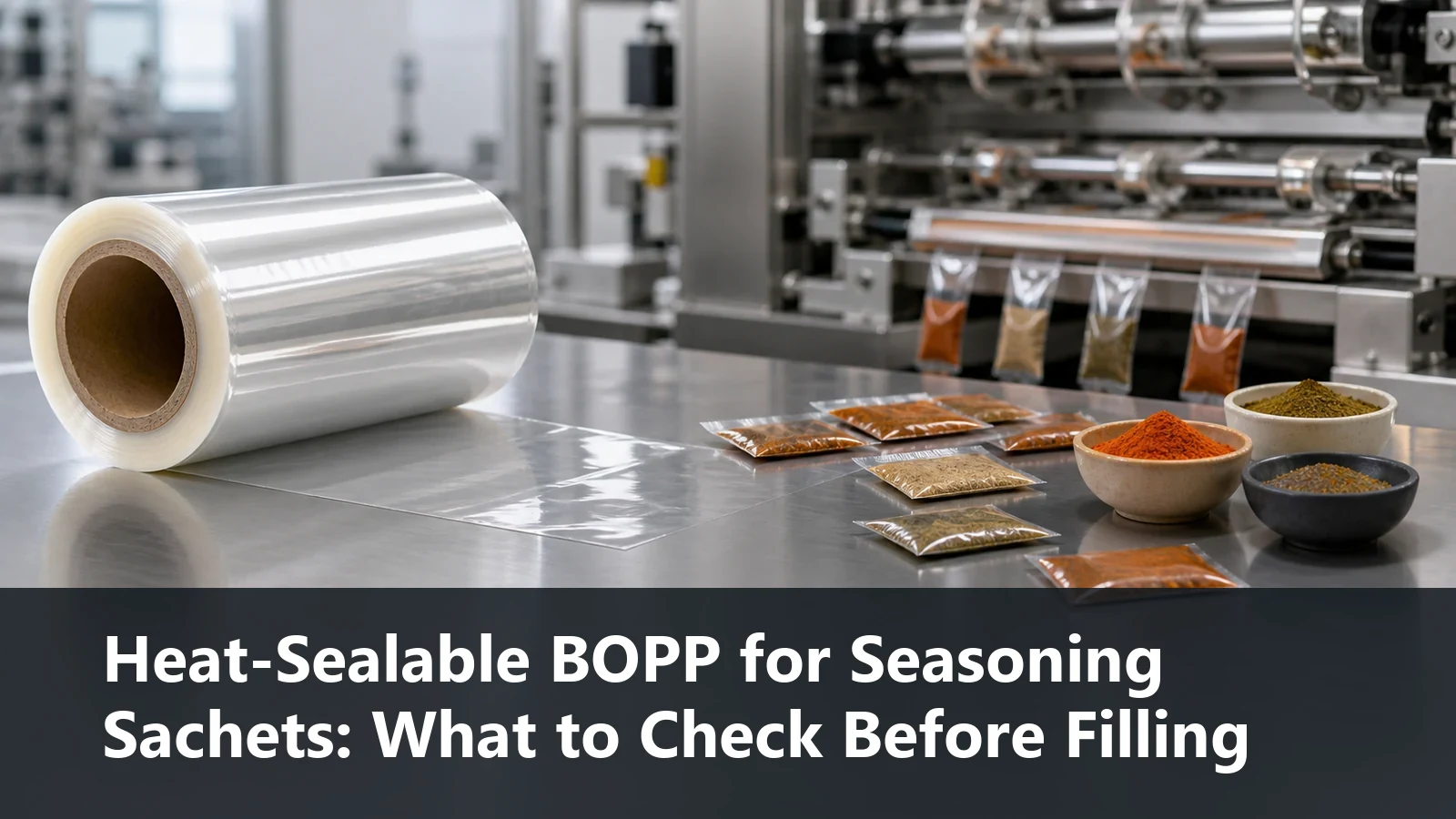
A seasoning sachet is small, but it can expose a packaging line to a difficult combination of powder contamination, high cycle rates, thin web handling, and shelf-life expectations. That is why “heat-sealable BOPP” is only a starting point for a sourcing discussion. Buyers should confirm what role the BOPP grade plays in the structure, what the powder does at the seal area, and whether the proposed material can run under representative filling conditions.
Heat-sealable BOPP may suit a seasoning sachet where its grade, seal interface, coefficient of friction, and machine conditions are aligned. It should not be selected from a nominal seal-temperature range alone. The accepted pouch must be validated with the actual powder, structure, and packaging line.

Start With the Sachet Failure Mode
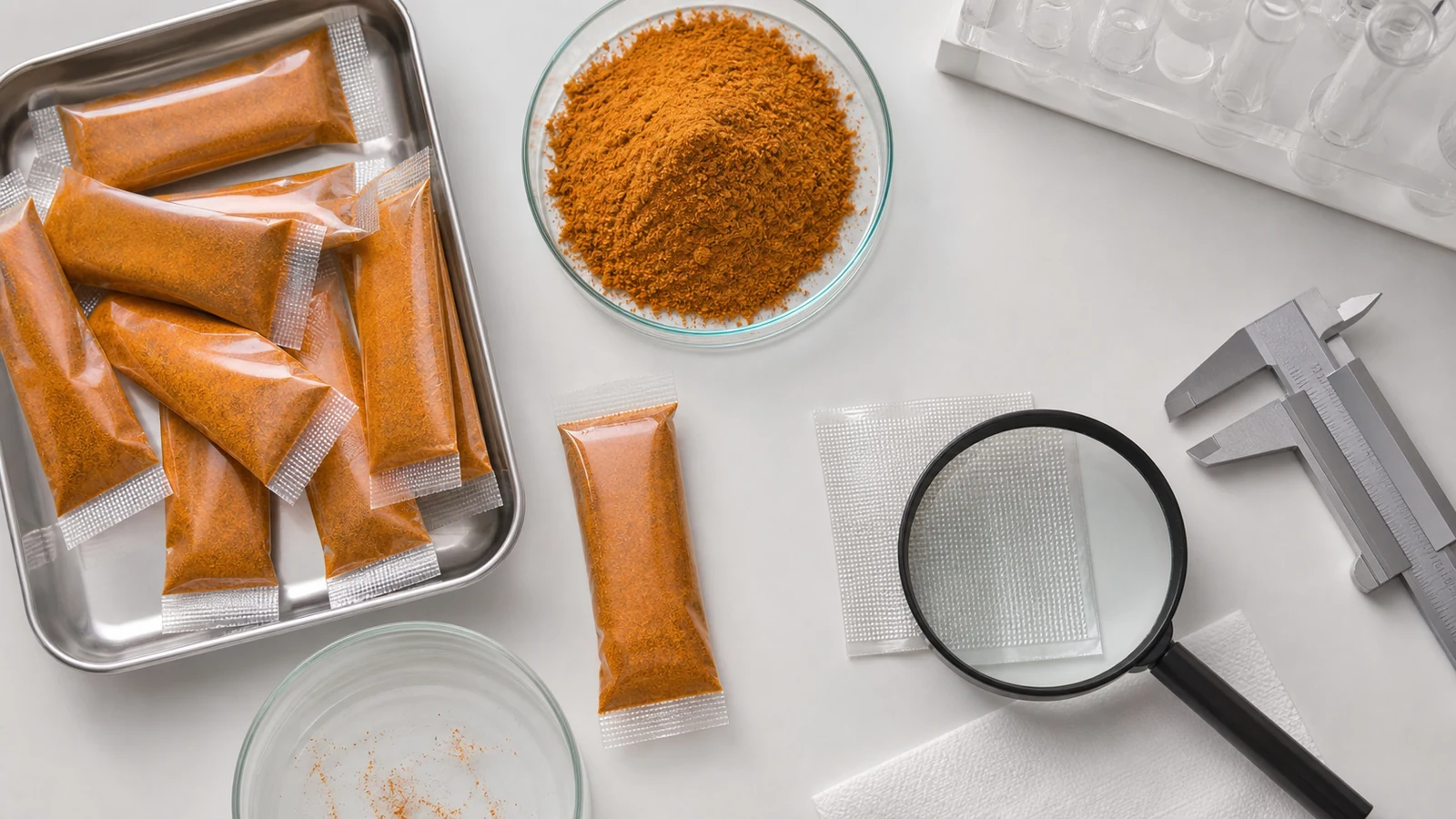
“Seasoning” covers very different products: dry salt blends, sugar-containing powders, chilli blends, oily spice mixes, hygroscopic ingredients, and granulated inclusions. Their particle size, flow, dusting behaviour, oil level, and desired aroma retention are not the same. A three-side sachet for a quick-service meal can also run under very different conditions from a stick pack packed at a lower rate.
Before comparing films, define the failure that costs the most:
- Open or leaking seals: powder, dust, oil, or granules may enter the seal land.
- Tracking and feeding instability: web friction, roll winding, static, tension, and forming geometry can interact.
- Loss of flavour or caking: the package needs a structure-level review of moisture, oxygen, and aroma paths.
- Poor retail presentation: scuffing, haze, print registration, and wrinkling may matter, but they do not prove pouch integrity.
- Split corners during distribution: fill volume, sharp inclusions, seal geometry, carton compression, and film construction can all contribute.
This product brief turns a generic film enquiry into a testable sourcing request.
What “Heat-Sealable BOPP” Does—and Does Not—Tell You
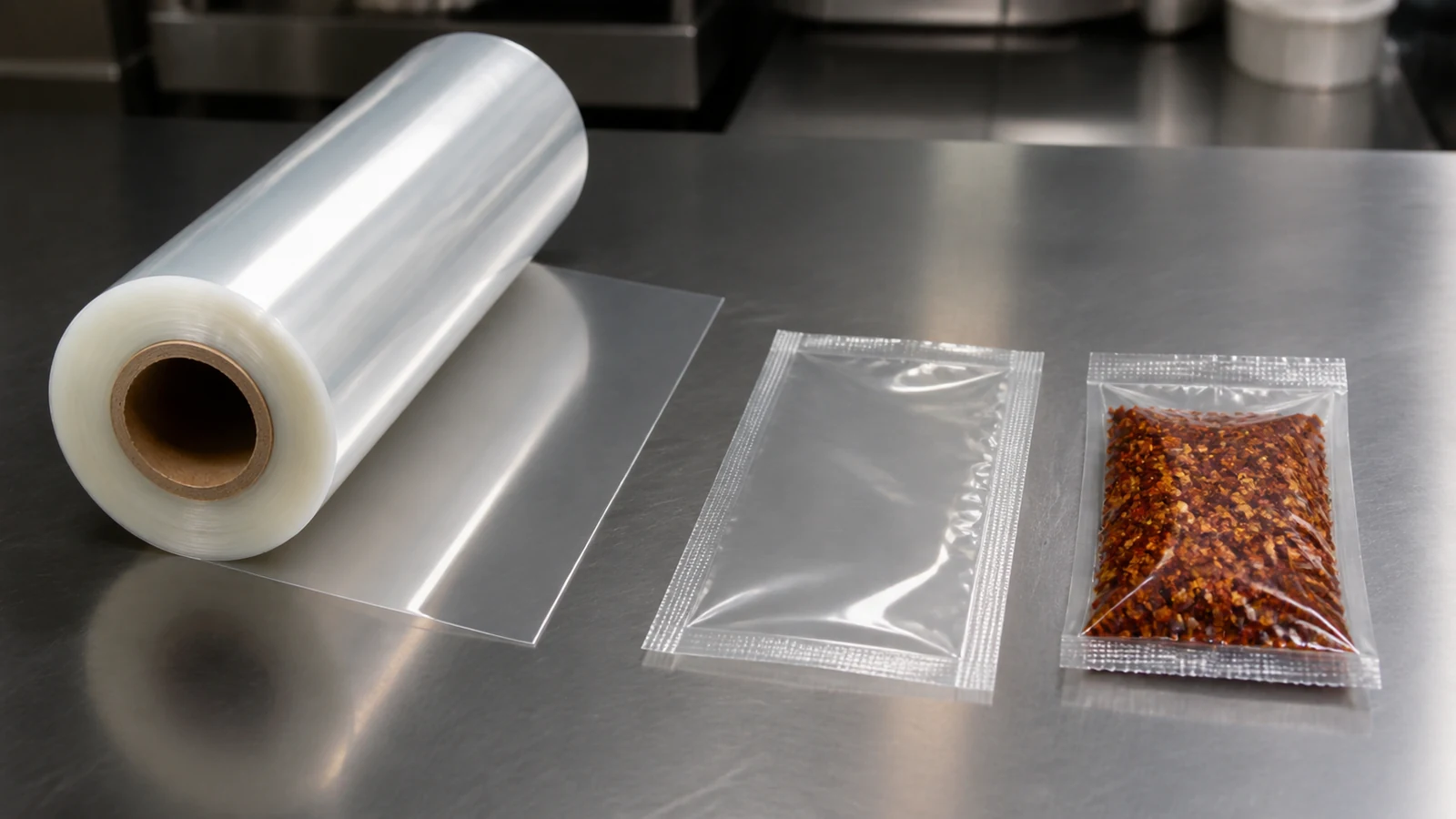
BOPP can be used as a clear or printable web and, with the appropriate heat-sealable design, may provide a sealing route in certain pouch applications. The material name does not reveal the entire construction. A heat-sealable surface may be created through coextrusion, coating, or a defined layer configuration. Ordinary BOPP should not be assumed to seal in the same way as a designated heat-sealable grade.
The supplier should identify the specific grade, thickness, treatment, intended seal interface, and whether the quoted data apply to the individual film or a finished laminate. If a sample is proposed for a laminated sachet, ask which layer contacts which layer at the jaw. The outer printable web, inner seal surface, adhesive, metallized or coated layer, and product-contact surface can each affect the final result.
Published guides sometimes state a numerical heat-seal range. Such numbers can be useful as a trial starting point, not as an approval condition. Heat-seal strength changes with jaw temperature, pressure, dwell time, specimen width, interface, conditioning, and whether powder is present in the seal. A range shown for one grade cannot be copied to another structure or line.
Why Powder Contamination Changes the Decision
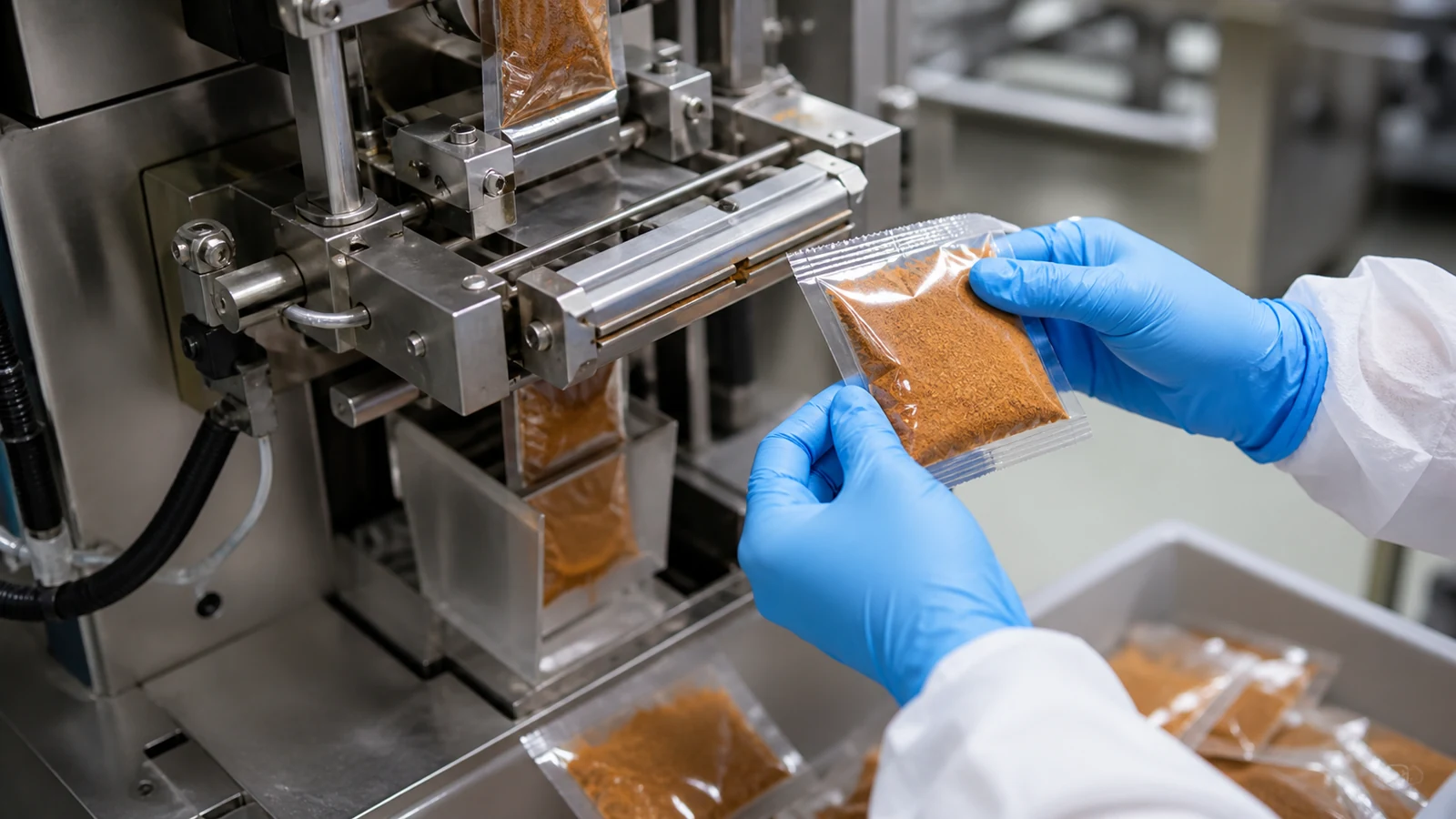
With seasoning sachets, the seal is rarely as clean as a laboratory strip. Fine powder may sit on the seal surface; larger particles may create channels; oily ingredients can change wetting and sealing behaviour. A visually closed seal can still become a leak path after handling.
Ask the filler team where powder enters the pouch, how much it dusts, whether there is vibration or settling before the jaws close, and whether the equipment includes de-dusting, suction, or other controls. Then make trial pouches deliberately under both typical and challenging conditions. A line trial should inspect top, bottom, and fin seals separately when the pouch design includes them.
The trial record should distinguish an equipment setting issue from a material issue. For example, a narrow operating window may point to the need to review the sealing layer or jaw conditions, but it is not evidence that every BOPP route is unsuitable. Similarly, raising temperature to compensate for contamination may introduce distortion, sticking, or other processing problems. The useful outcome is an agreed working window that is reproduced on the actual line.
COF Is a Line Parameter, Not a Catalogue Decoration
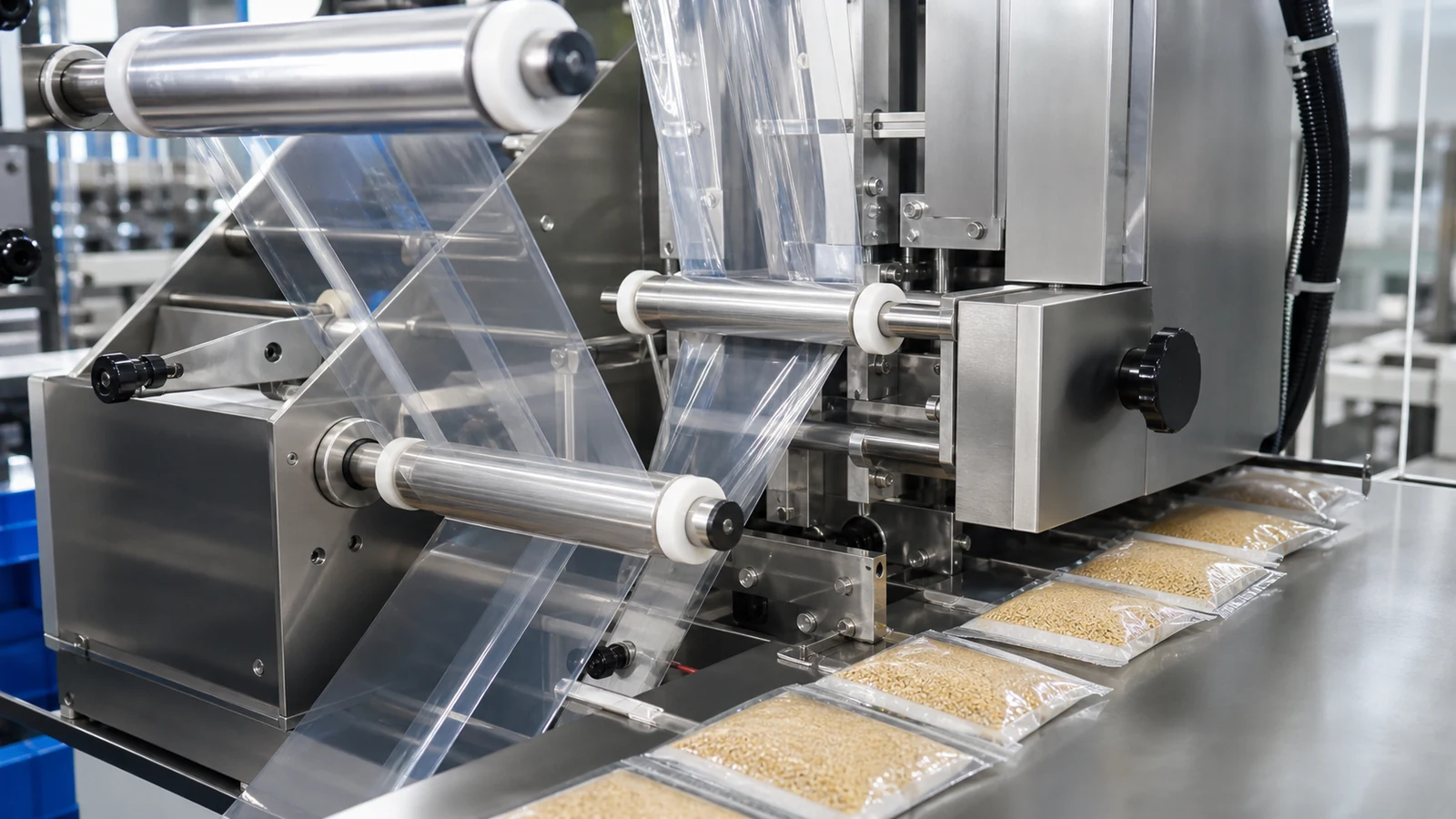
Coefficient of friction (COF) influences how the web unwinds, travels through guides, opens, forms, and stacks. A COF value without the tested surfaces, method, conditioning, and film orientation is not enough to predict line behaviour. Too much slip or too little slip can both become problems depending on the machine and pouch style.
For a seasoning-sachet trial, record the existing film's handling behaviour as a baseline: web tracking, roller contact, static observations, registration stability, jaw release, and finished-sachet stacking. Compare the proposed grade under the same tension and production conditions. If the material is printed or laminated, include the final converted construction rather than testing only an unconverted clear web.
Compare Structure Complexity Before Asking for a Quote
The table below offers starting directions. It does not prescribe a structure or indicate a price level.
| Starting direction | When it may be considered | Potential purpose | Questions that remain |
|---|---|---|---|
| Lower-complexity heat-sealable BOPP route | Defined product risk, controlled shelf-life route, and a compatible line | Simple clear or printed sachet construction | Grade-specific sealing, powder tolerance, COF, compliance evidence, pouch trial |
| Printed outer web with dedicated seal layer | Appearance and seal function need separate control | Lets printing and sealing roles be optimized independently | Lamination quality, seal interface, filling contamination, migration review |
| Functional-barrier laminate | Documented moisture, oxygen, aroma, light, or handling risk requires it | Assigns distinct functions to different layers | Test conditions, layer map, fold damage, converting feasibility, end-market requirements |
Higher structure complexity is not automatically better. It can add conversion variables and cost without correcting the real defect. Conversely, a simple route should not be approved simply because it initially runs; it must still retain integrity through distribution and intended storage.
A Practical Seal-Window Trial
Set a trial plan before samples arrive. Agree on the pouch format, fill weight, product, line type, target output, jaw profile, nominal pressure, and expected dwell time. Request current technical documentation for the exact grade and record all settings used in the trial.
Test a reasonable temperature and operating range rather than selecting one number. At each condition, check appearance, jaw release, seal continuity, peel or burst method where appropriate, and leakage after handling. Include normal powder loading and a defined contaminated-seal condition. Record the actual results with the lot and structure; avoid describing a general website value as a guaranteed production window.
If the supplier provides a seal curve, clarify the test method, specimen configuration, seal width, dwell time, pressure, and the film-to-film interface. The data may still be relevant, but only after the buyer understands what was measured.
Documents and Questions Buyers Should Request
Before a purchase decision, the buyer should request:
1. Exact film grade, thickness, treatment and a current TDS. 2. Full layer sequence and which surfaces form each seal. 3. Heat-seal, hot-tack, COF, and barrier data with methods, units, thickness, and conditions. 4. A declaration or other applicable documentation for the target food-contact market, tied to the actual structure where required. 5. The proposed pouch drawing, filling method, powder characteristics, machine type, speed, and known defect samples. 6. A trial plan covering clean and contaminated seals, handling, and intended storage or distribution exposure.
CHALVO can help coordinate these questions across the material supplier, converter, and buyer's line team. The decision should remain evidence-based: a confirmed grade, an identified seal interface, a realistic powder challenge, and tested finished sachets are more meaningful than a broad claim about heat-sealable BOPP.
Sources for further verification
- https://www.cloudflexfilm.com/heat-sealable-bopp-film-seal-temperature-guide
- https://www.fspgfilm.com/Can-BOPP-Film-Be-Used-for-Food-Packaging-and-Heat-Sealing-id08936335.html
- https://www.cosmofilms.com/blog/benefits-of-using-heat-sealable-films
- https://onlinelibrary.wiley.com/doi/full/10.1002/pts.2564