


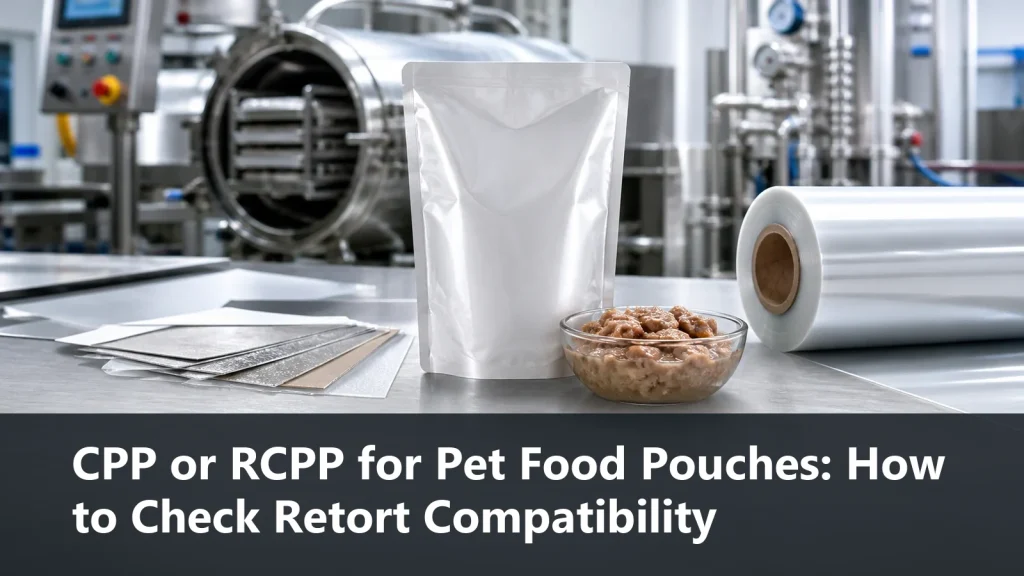
Wet pet food pouches are not simply “high-temperature bags.” They must pass through a defined thermal process while maintaining seal integrity, pouch appearance, and the performance required by the complete package. CPP and retort CPP (RCPP) are often discussed for the seal-side or inner layer, but neither material name can prove retort suitability by itself.
For a wet-pet-food pouch, CPP or RCPP should be assessed as one layer in a complete retort structure. Buyers need the actual sterilization temperature and time, the layer sequence, the seal interface, and post-process pouch evidence before approving a specification.

Start With the Actual Process, Not a Temperature Label
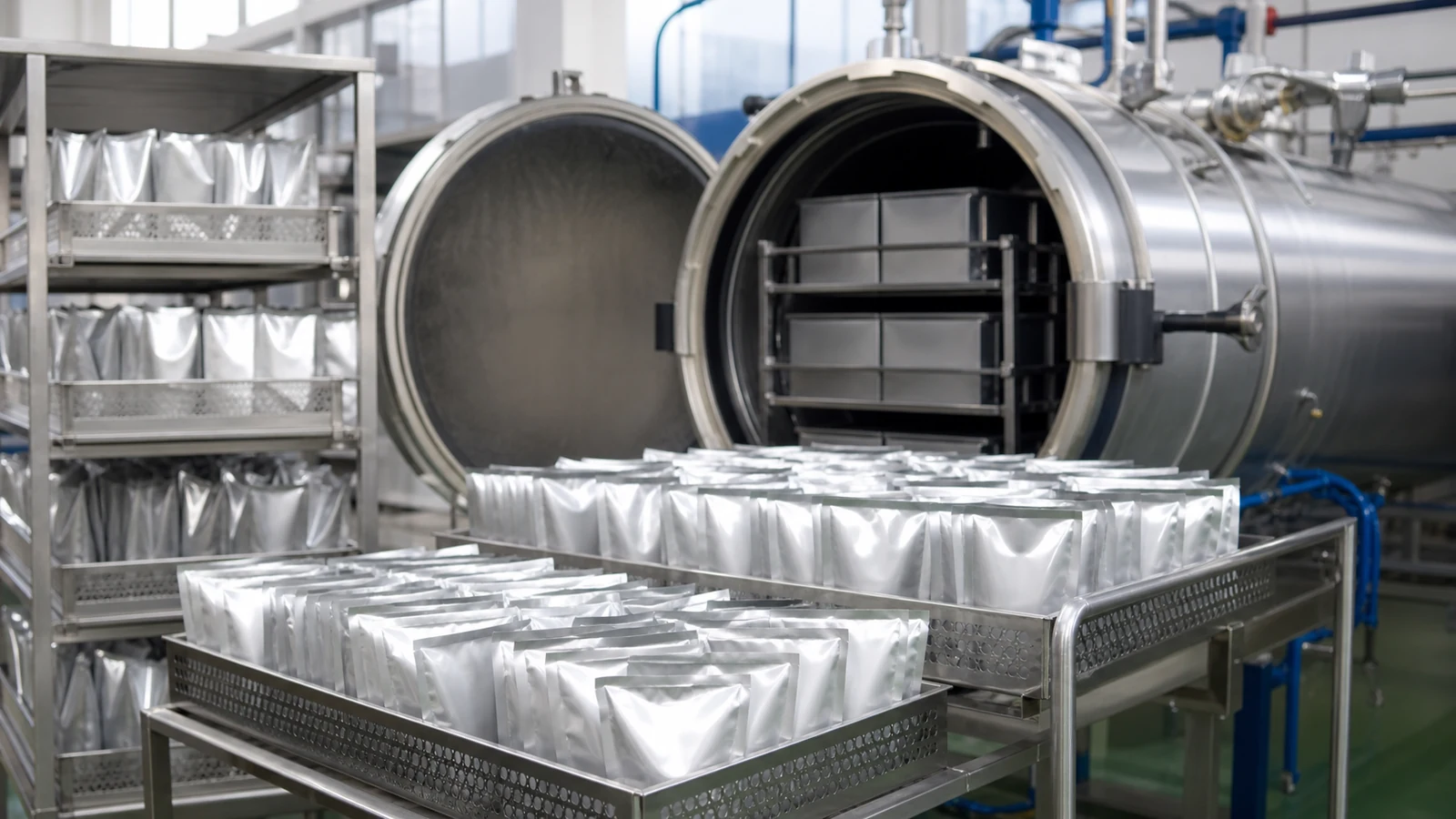
Public product pages often refer to temperatures such as 121°C or 135°C. These can identify a possible retort application range, but they do not establish that every grade, thickness, pouch style, or process is interchangeable. A thermal process has a temperature profile, hold time, pressure conditions, heating and cooling stages, product load, and pouch geometry. The difference between a hot-fill route, pasteurization, and a full retort process matters.
Ask the buyer or co-packer for the validated process description: target temperature, hold time, overpressure if applicable, heating and cooling profile, product formulation, pouch size, fill weight, and seal layout. Also ask whether the requirement is based on an established process authority or a new development trial. This separates a sourcing conversation from an untested assumption.
What CPP and RCPP May Do in a Pouch Structure
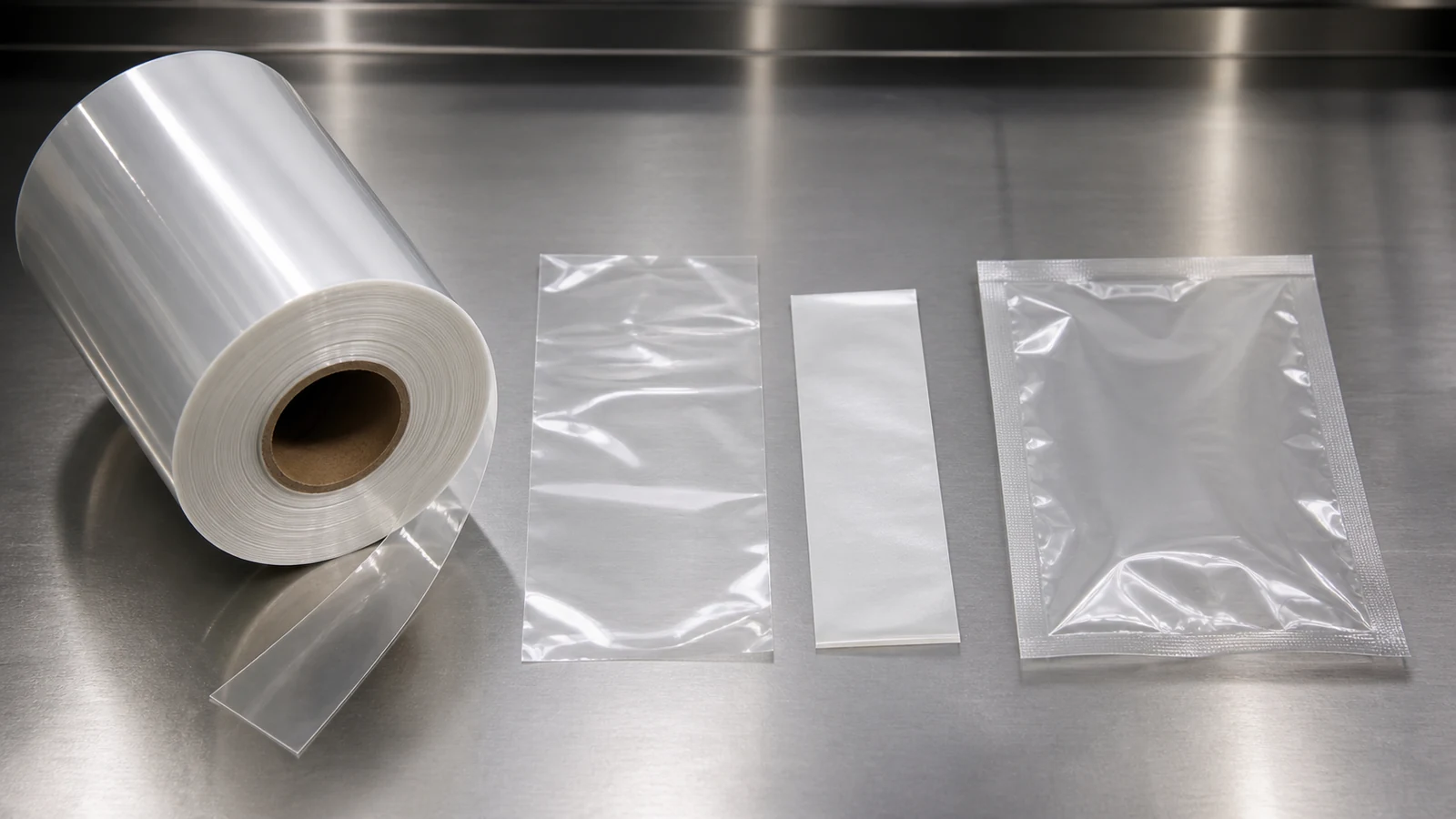
CPP is commonly considered where a flexible, heat-sealable layer is needed. RCPP denotes a CPP route designed for retort-related conditions, but the actual heat resistance and sealing behaviour remain grade- and structure-specific. It is often the seal-side layer rather than the only answer to barrier, puncture, or print-stability needs.
A retort pouch may contain several layers with different jobs. A stable outer web can support printing and handling; one or more functional layers may target barrier or puncture needs; the inner layer must form and retain a reliable seal under the defined process. Adhesives, lamination quality, fold zones, gussets, and spouts can also determine whether the finished pouch survives. Saying “RCPP gives high barrier” without the layer map and test conditions is not a usable purchase conclusion.
Before sampling, request the full layer sequence, each material’s nominal role, thickness or gauge, intended product-contact layer, and current technical documentation for the exact grade. Identify whether cited values came from a single film, a laminate, or a finished pouch.
Failure Modes Buyers Should Separate
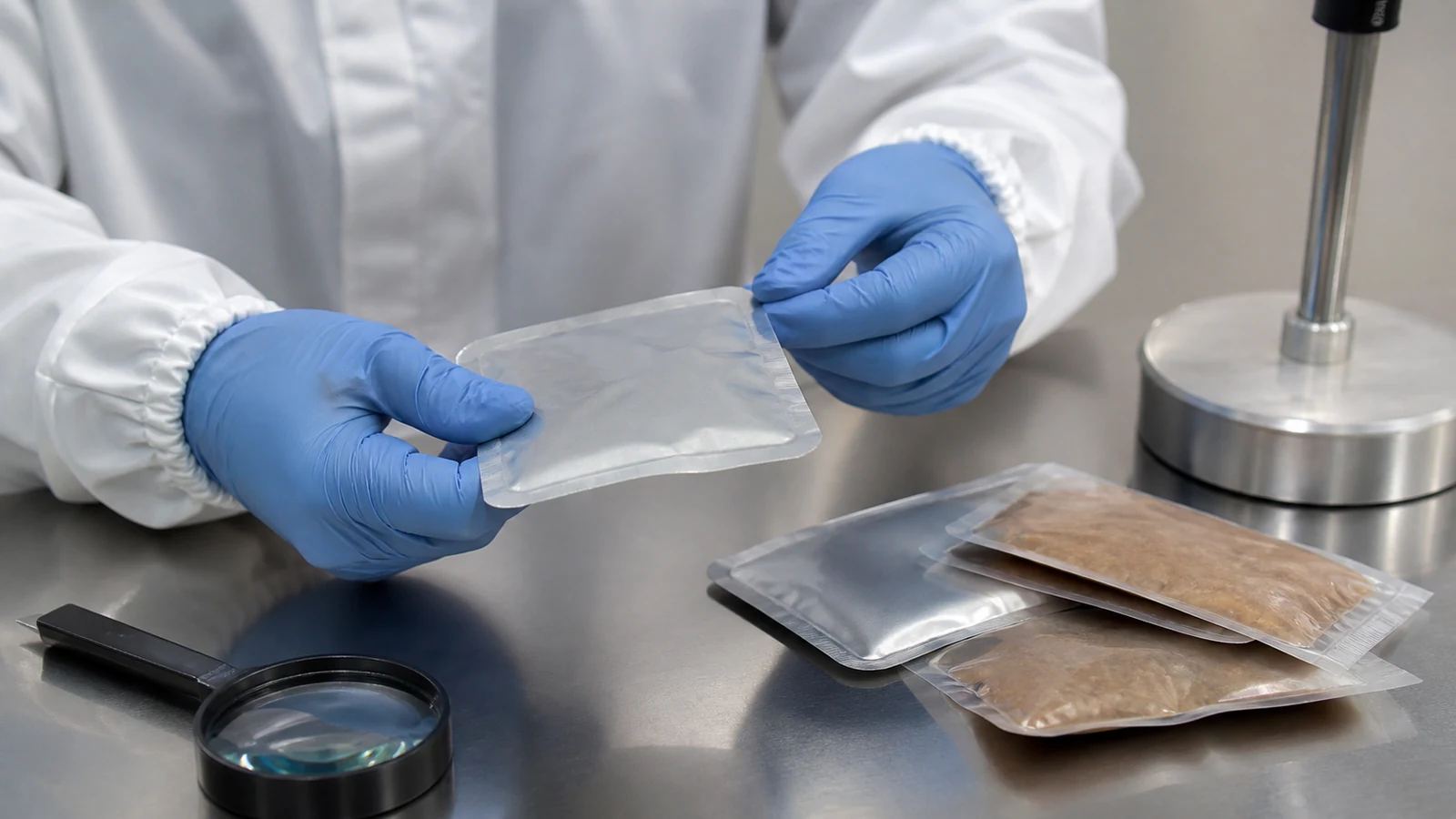
Retort failures are often grouped together, making corrective action difficult. The evaluation should distinguish at least these outcomes:
- Seal channel or seal opening: may relate to interface choice, jaw conditions, contamination, pressure cycling, or product in the seal zone.
- Delamination or interlayer defect: requires examination of adhesive system, cure, surface treatment, lamination process, and retort exposure.
- Pinhole, flex crack, or corner damage: can depend on structure, fold history, pouch design, product particles, and post-retort handling.
- Distortion, curl, or loss of appearance: may relate to differential shrinkage, layer balance, print system, or cooling conditions.
- Shelf-life concern: must separately assess oxygen, moisture, aroma, light, and package integrity using defined methods and conditions.
The objective is not to assign every defect to CPP or RCPP. It is to create a traceable record of which component and condition should be verified next.
Compare Structure Complexity as a Starting Framework
The following is a comparative discussion tool, not a formula or price commitment.
| Starting direction | When it may be discussed | Potential value | Evidence still required |
|---|---|---|---|
| Simpler CPP-led seal route | The process is lower demand and the complete shelf-life risk is defined | A clear seal-layer starting point | Exact thermal route, seal retention, barrier adequacy, final pouch tests |
| Multi-layer retort laminate with dedicated seal layer | Wet food requires distinct print, barrier, mechanical, and seal roles | Separates layer functions for targeted optimisation | Layer map, adhesive/cure, process compatibility, post-retort inspection |
| Enhanced functional structure | A documented oxygen, light, puncture, or distribution requirement justifies it | Additional layers may address a specific bottleneck | Retort response, fold damage, recyclability route, application-specific tests |
More layers may add useful functions, but they also add interfaces to verify. A buyer should not specify a complex structure merely because it sounds more protective. Conversely, a low-complexity proposal should not be approved because a short empty-pouch test looked acceptable.
Confirm Seal Performance Through the Full Cycle
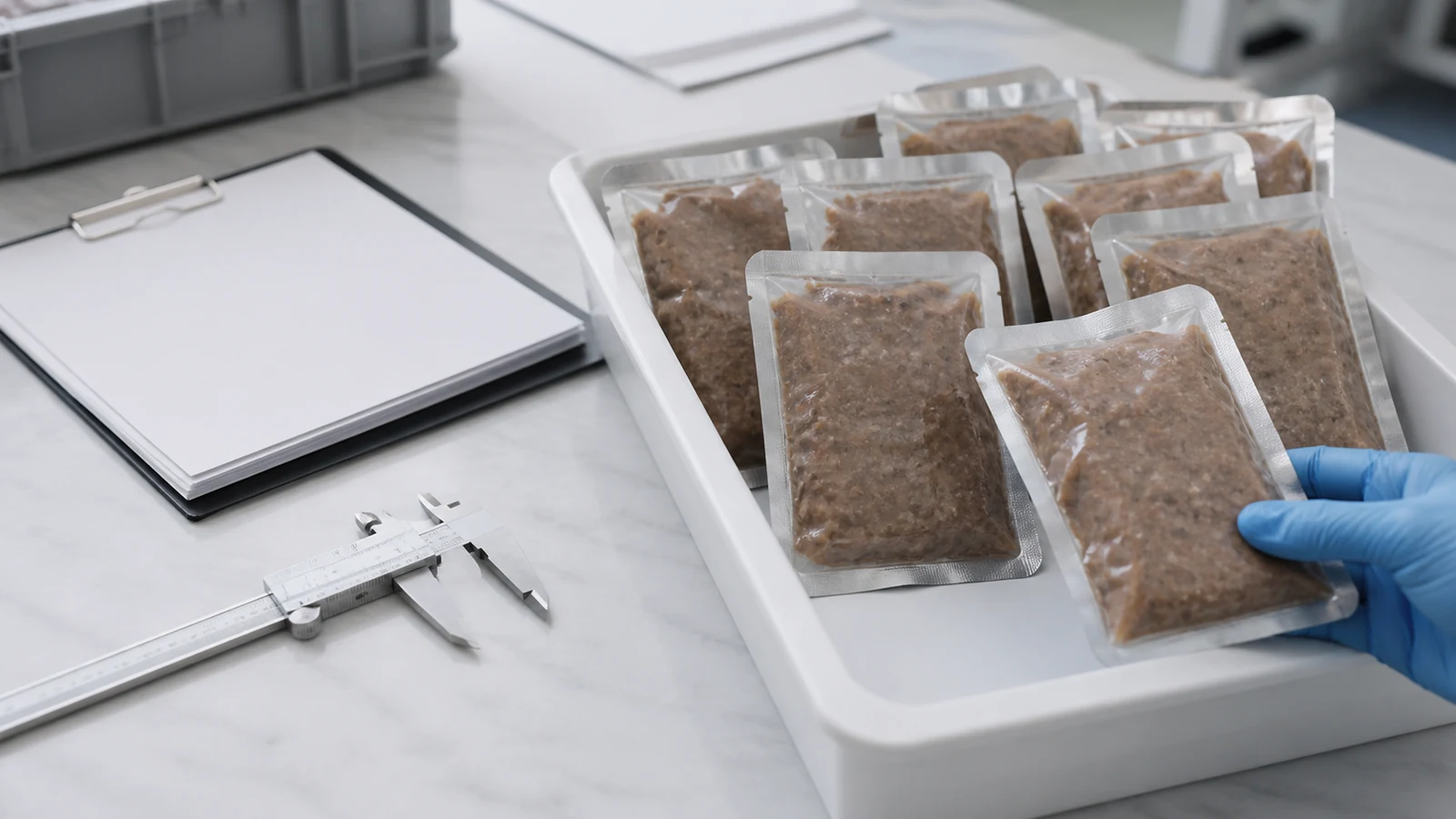
The sealing layer has to work before, during, and after the process. Review the pre-process sealing window, contamination sensitivity, jaw setup, dwell time, pressure, and product placement. Then evaluate seals after retort and cooling under a documented inspection protocol. Use the same pouch format, fill weight, and product where possible.
A useful trial plan includes baseline pouches, deliberately challenging but controlled conditions, and post-process checks of seal continuity, opening behaviour, leakage or burst method as appropriate, appearance, and structural defects. Preserve samples and record lot number, structure, cure time, line settings, retort profile, and observations. If performance changes, the record helps distinguish material, conversion, and process causes.
Supplier claims about retort resistance should be treated as a lead for questions. Ask for the process condition and test configuration behind the claim. A stated maximum temperature alone does not describe hold time, pouch loading, pressure, cooling, seal interface, or whether the result was generated on a final laminated pouch.
Barrier, Food Contact, and Evidence Boundaries
Pet-food shelf life can involve oxygen, moisture, aroma, light, fat-containing contents, and mechanical integrity. No single material label covers all of them. Where OTR, WVTR, or other permeability data are relevant, request the method, unit, temperature, humidity, specimen thickness, and whether the data represent the single web or the final structure. For a retorted pouch, confirm what was measured after the intended process if that is the decision point.
Food-contact and market requirements also need structure-specific documentation. A generic statement from a webpage is not a substitute for documents linked to the actual material, supplier, market, and intended conditions of use. The buyer should confirm these obligations with the relevant responsible parties before commercial approval.
Buyer Checklist Before Specifying CPP or RCPP
1. What exact process—temperature profile, hold time, pressure, heating and cooling—will the pouch see? 2. What is the full structure, and what is each layer intended to do? 3. Is the proposed CPP/RCPP grade the final product-contact seal layer, and what interfaces does it seal to? 4. Which post-retort defects have occurred or are most costly: leak, delamination, flex crack, distortion, or shelf-life loss? 5. Which data are available for the exact grade and final construction, with methods and conditions? 6. What finished-pouch trial will reproduce product, fill weight, sealing, retort, cooling, and distribution exposure? 7. Which food-contact and market documents must be checked for the actual structure?
CHALVO can help buyers collect the layer map, supplier documents, process information, and representative samples so a retort-pouch comparison is based on evidence. Final approval should come from the actual process and finished-pouch results, not from the phrase “retort CPP.”
Sources for further verification
- https://www.cloudflexfilm.com/retortable-cpp-film
- https://www.baolaipackaging.com/retort-pouch.html
- https://www.mfirstpack.com/news/retort-pouch-material-structure-comparison-what-do-pet-pa-al-and-rcpp-actually-determine
- https://www.amaxchemical.com/post/how-to-improve-post-retort-softness-and-retort-resistance-in-cpp-film