





Candy pillow packs can look acceptable at startup yet open in the cartoner or distribution. A single jaw-temperature setting hides the real problem: the seal must form quickly, carry load while hot, and remain intact after cooling.
Set a CPP heat-seal window by testing the exact printed laminate across controlled jaw temperature, dwell time, and pressure combinations. Measure immediate hot tack and cooled seal strength separately, inspect failure modes and seal continuity, then confirm the robust region on the production wrapper with candy, folds, and expected contamination present. The approved window is a validated operating region—not one “best” temperature.
The objective is a repeatable pack, even when normal material and machine variation move the process away from its center point.
What Is a Heat-Seal Window?
A heat-seal window is the range of process combinations that produces acceptable seals for a defined package, product, machine, and test method.
Temperature matters, but it is only one axis. Dwell time controls heat transfer to the CPP sealant, while pressure affects contact between seal faces. Jaw geometry, film construction, cooling, and line speed also change the result.
For that reason, a temperature range copied from a film brochure is not a candy-pack operating window. It may help frame a first screening study for that supplier's grade, but it does not validate another CPP grade, laminate, wrapper, or candy.

Which Film and Machine Details Must Be Fixed Before Testing?
Fix the complete converting and packaging condition before comparing seal results. Otherwise, the study mixes material variation with process variation.
Record at least:
- the exact CPP grade, lot, thickness, and which side is sealable;
- the complete printed or metallized laminate structure, adhesive, ink system, and cure status;
- roll age, storage, conditioning, and splice status;
- wrapper type, jaw pattern, jaw alignment, seal width, and temperature-control location;
- target speed, actual dwell time, pressure setting, cooling condition, and pack format;
- candy type, product temperature, fines, sugar, oil, or coating likely to enter the seal area.
Cosmo's public CPP portfolio illustrates why “CPP” alone is not a specification: it separates transparent, pigmented, and barrier CPP types and describes heat sealability as grade-dependent functionality. A candidate for CHALVO review should therefore be identified by an exact grade and construction, not merely as generic cast polypropylene.

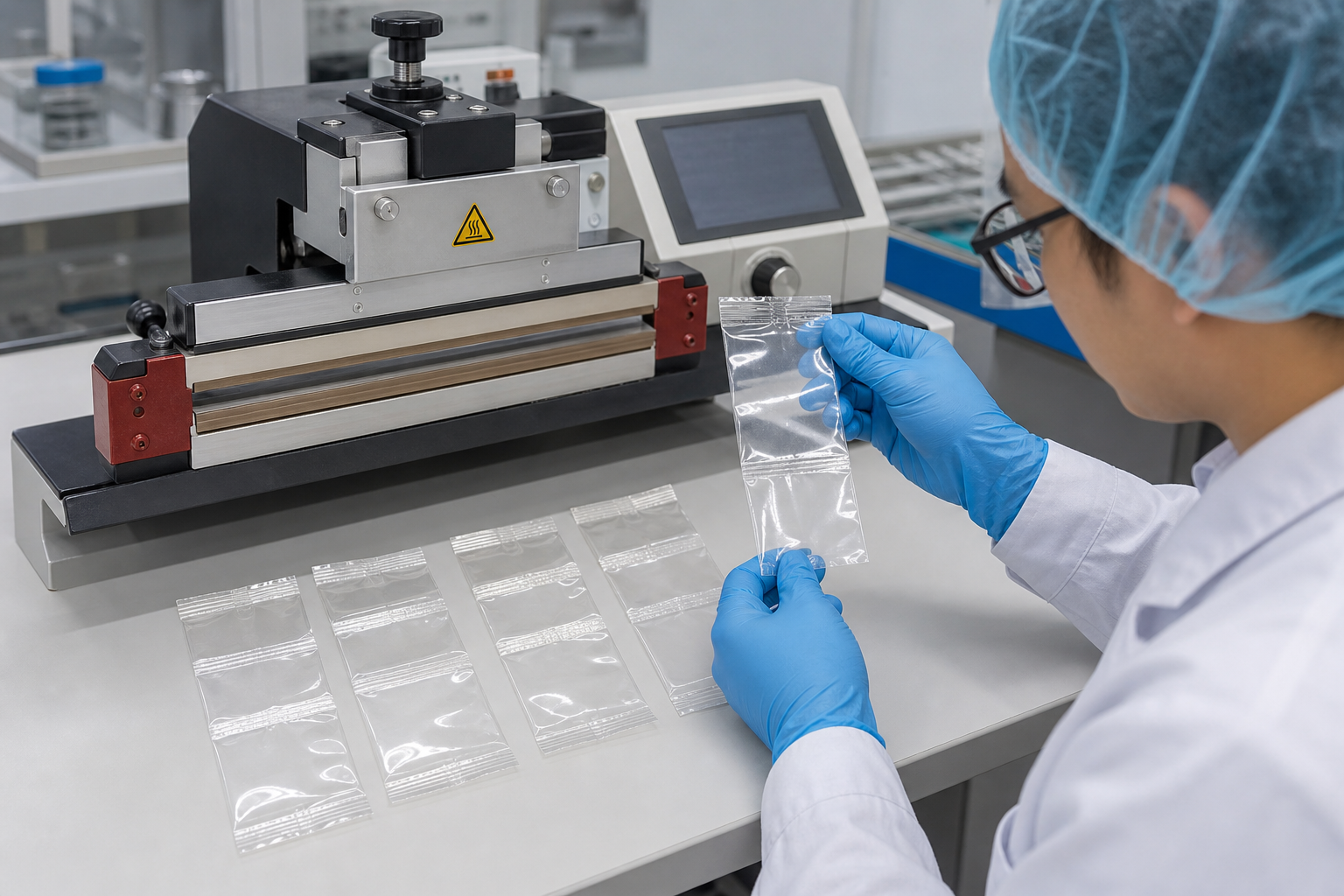
How Should You Build the Laboratory Test Matrix?
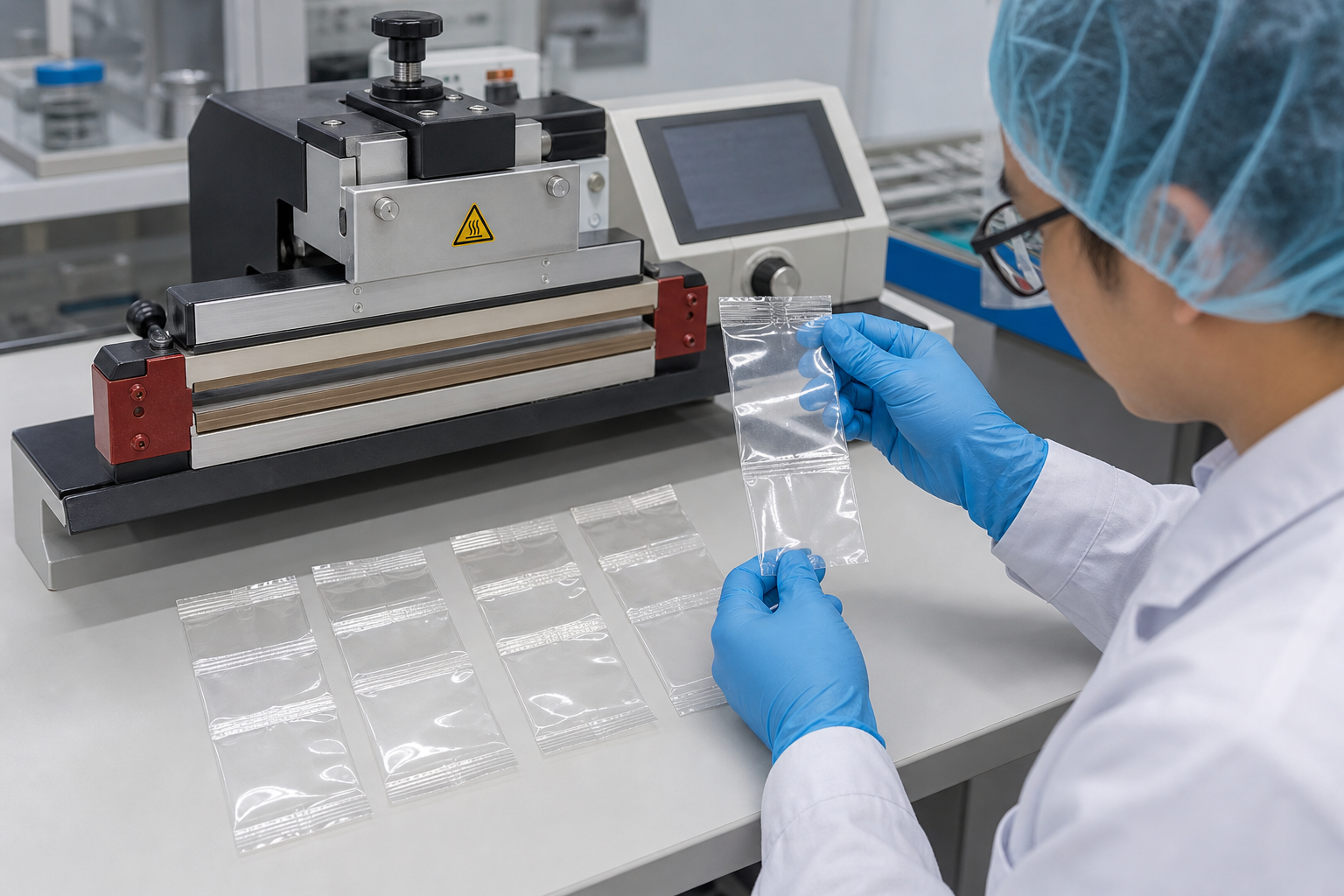
Use a staged design that finds the response shape first and then concentrates testing near the acceptable boundaries.
ASTM F2029 provides practices for making laboratory heat seals and treating seal-strength data to evaluate heat sealability. It also states an important limitation: laboratory sealing can establish starting relationships, but differences in scale, seal area, and speed mean the curve does not validate production equipment.
A practical sequence is:
1. Choose fixed baseline conditions. Hold specimen orientation, seal width, dwell, pressure, conditioning, and cooling time constant. 2. Run a broad temperature sweep. Use evenly spaced points wide enough to reveal no-seal, rising-strength, plateau, and possible distortion or burn-through behavior. Do not assume the endpoints in advance. 3. Add dwell and pressure levels. Repeat around the promising region to learn whether the apparent window collapses at faster cycles or lower contact pressure. 4. Replicate and randomize. Test multiple specimens at every condition and avoid running all low or high conditions in a sequence that confounds results with equipment drift. 5. Record actual conditions. Log measured values and calibration status rather than relying only on controller setpoints.
The output should be a response map linking each condition to hot tack, cooled strength, failure mode, and appearance.
Why Must Hot Tack and Cooled Seal Strength Be Tested Separately?
They answer different questions. Hot tack asks whether the newly formed seal can resist load before it cools; cooled seal strength asks how the finished seal separates after conditioning.
ASTM F1921/F1921M covers instrumented measurement immediately after a seal is made and before it cools to ambient temperature. This is highly relevant to vertical or horizontal candy packing, where product drop, web pull, or pack handling may load the seal shortly after jaw release.
ASTM F88/F88M measures the force required to separate a strip containing a seal and identifies the specimen failure mode. Use a written F88 setup that keeps specimen width, conditioning, grip separation rate, and tail-holding technique consistent. A change in tail orientation can change the measured result, so comparisons require the same technique.
A condition can show acceptable cooled strength but weak hot tack and open before developing final strength. A seal may also survive immediate handling yet have an unacceptable cooled failure mode.
How Do You Define the Lower and Upper Boundaries?
Define boundaries against a preapproved acceptance plan, not against the strongest average result.
The lower boundary is the point below which seals fail one or more requirements—for example, insufficient hot tack, low cooled strength, incomplete fusion, channels, or excessive variability. The upper boundary is where more heat, time, or pressure produces unacceptable distortion, thinning, sticking, print damage, squeeze-out, brittle behavior, or unstable running.
Do not declare seal-initiation temperature from one pull. Establish the method, threshold, replication, and failure-mode rules first. CHALVO-specific seal-initiation, hot-tack, seal-strength, coefficient-of-friction, or line-speed values should only come from the latest verified TDS or an exact-grade sample study.
The preferred center setting is not necessarily the midpoint between two temperature numbers. Choose a point with margin from every failure boundary across realistic dwell and pressure variation.
What Failure Modes Should QA Record?
Record how the specimen failed, because force alone can hide the mechanism.
Useful classifications include interface peel, cohesive failure within the sealant, film tear away from the seal, delamination, jaw-edge thinning, and opening through a wrinkle or channel. Also note seal appearance, width, registration, curl, blocking, and any material transfer to the jaws.
For candy packs, inspect seal-area contamination deliberately. Sugar dust, chocolate or fat smears, inclusions, folded gussets, trapped air, and crimp overlap can reduce effective contact. A clean-lab result should not be treated as evidence that the filled pack tolerates these conditions.
Seal strength is also not seal continuity. ASTM F2029 expressly limits its heat-sealability criterion to strength and excludes leak or continuity evaluations. Add a package-appropriate integrity method and a documented visual inspection when channels or contamination are credible risks.
How Do You Transfer the Laboratory Window to the Candy Wrapper?
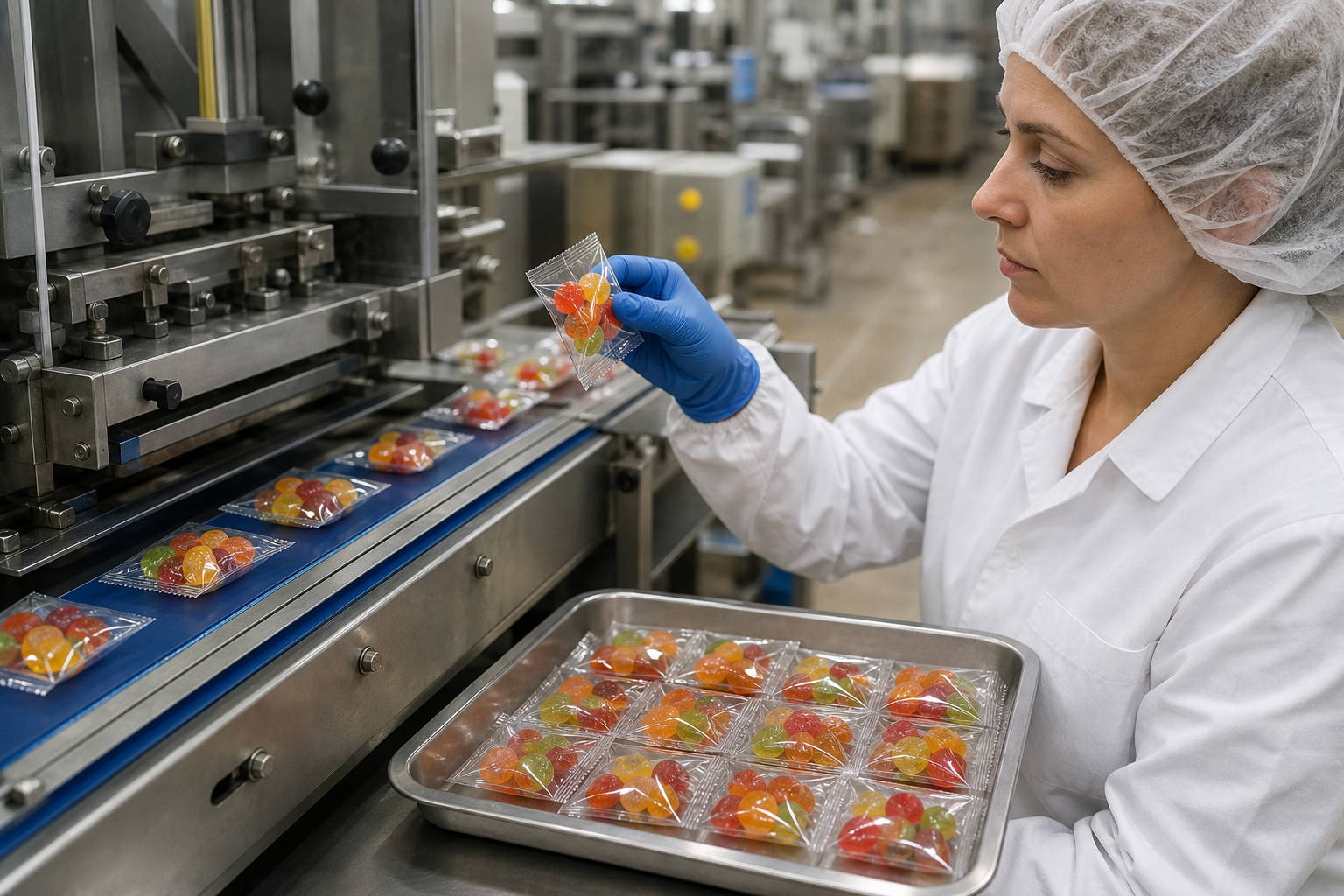
Use the lab map as a starting hypothesis, then conduct a production confirmation across the proposed center and edges.
First verify jaw temperature uniformity, parallelism, pressure delivery, dwell at actual speed, web tracking, and crimp registration. Run the exact laminate and pack format. Sample during startup, after thermal stabilization, at normal speed, around stops and restarts, and across more than one roll position where practical.
Challenge normal variation without bypassing safety or quality controls. Include the expected candy temperature and the credible amount of fines or coating in the seal zone. Evaluate end seals and fin or lap seals separately when their geometry and loading differ.
Production acceptance should combine immediate seal survival, cooled seal strength, failure mode, continuity or integrity, package appearance, machinability, and downstream handling. ASTM F2029 cautions that laboratory and production equipment may differ significantly, so a laboratory curve alone is not production validation.
What Should Be Sent to CHALVO for Grade Review?
Send a complete application brief so the candidate CPP direction can be reviewed against the real sealing task.
Include the laminate structure, layer thicknesses, which interface must seal, candy type, pack drawing, wrapper and jaw style, target speed range, present failure, current test method, conditioning, and representative failed packs. Ask for the latest TDS and sample data for the exact proposed grade.
CHALVO can then discuss a transparent, pigmented, metallized/barrier, or other CPP solution direction and arrange application-specific sample evaluation. No fixed CHALVO temperature, hot-tack, seal-strength, COF, certification, or guaranteed line-speed claim is made here because verified grade-specific evidence was not available for this article.
Frequently Asked Questions
Is seal initiation temperature the same as the minimum machine setting?
No. A laboratory seal-initiation result depends on the stated method and acceptance criterion. A production machine also introduces heat transfer, dwell, pressure, jaw geometry, speed, and contamination effects.
Can I raise jaw temperature to solve every weak seal?
No. More heat may mask poor contact temporarily and can create distortion, thinning, sticking, print damage, or a narrower operating margin. Check dwell, pressure, alignment, contamination, and material identity too.
Does a strong average seal mean the window is safe?
No. Buyers need variation, individual failures, failure modes, and boundary performance. A high average can coexist with sporadic channels or weak hot seals.
Should candy fines be included in qualification?
Yes, when fines are reasonably expected in production. Define a controlled challenge representative of the process and compare it with clean-seal controls.
When should the heat-seal window be revalidated?
Review it after a film grade or structure change, supplier or adhesive change, jaw replacement, major maintenance, speed increase, pack-format change, or persistent shift in seal results.
Summary
A reliable CPP heat-seal window comes from a controlled response map, separate hot-tack and cooled-strength tests, failure-mode review, and production confirmation with real candy-pack variation. Treat the result as a validated operating region, not a borrowed temperature.
Downstream Video Angle (60–75 Seconds)
Open on a candy pillow pack that looks sealed but opens under handling. Explain that a heat-seal window has three controlled inputs—temperature, dwell, and pressure—and two distinct outputs: immediate hot tack and cooled seal strength. Show a response map, then a production wrapper challenge with candy fines. Close by asking buyers to send CHALVO the exact laminate, wrapper, speed range, and failed packs for grade-specific sample review.
Visual Suggestions
1. Hero: a realistic candy pillow-pack line with CPP rollstock, sealing jaws, and sealed packs; no readable brand marks. 2. Body visual: laboratory hot-bar sealer with labeled temperature, dwell, and pressure controls beside prepared film strips. 3. Body visual: split scene showing immediate hot-tack pull versus conditioned F88-style seal-strength pull. 4. Body visual: close-up comparison of a clean crimp seal and a channel caused by controlled candy fines.