


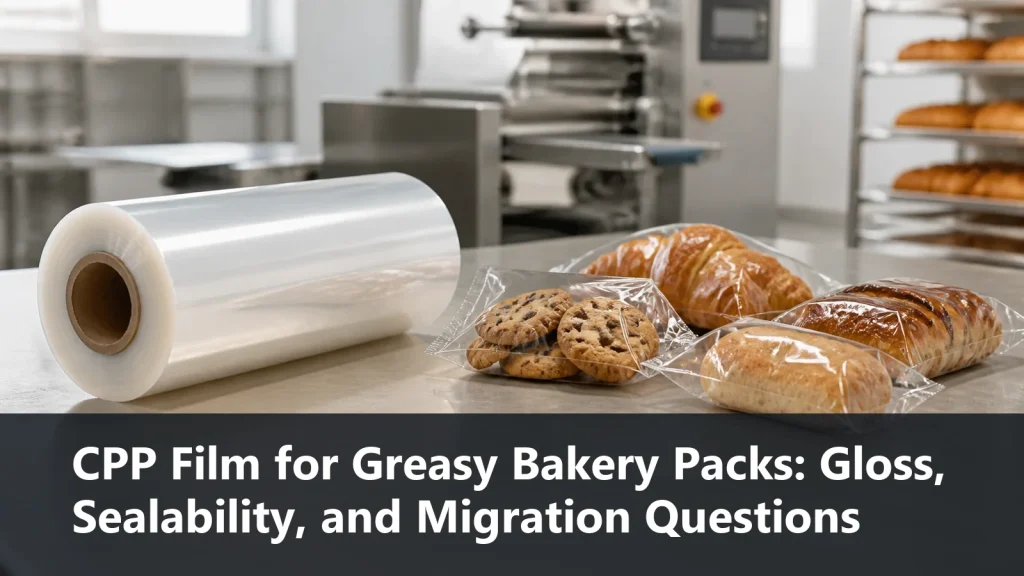
A glossy bakery pouch can look successful on the shelf and still fail the buyer’s more important checks. Rich pastries, cookies, filled buns, and oily baked snacks may bring grease contact, crumbs in the seal area, aroma expectations, compression during distribution, and food-contact questions into the same package. CPP is often considered for its appearance and sealing potential, but a CPP label does not define the finished structure or approve it for a particular bakery product.
CPP can be a useful component in bakery packaging where the exact grade and structure fit the product and packing line. Gloss should be treated as an appearance outcome, while seal integrity, grease exposure, barrier needs, and food-contact compliance must each be confirmed independently.

Define the Bakery Product Before Choosing Film
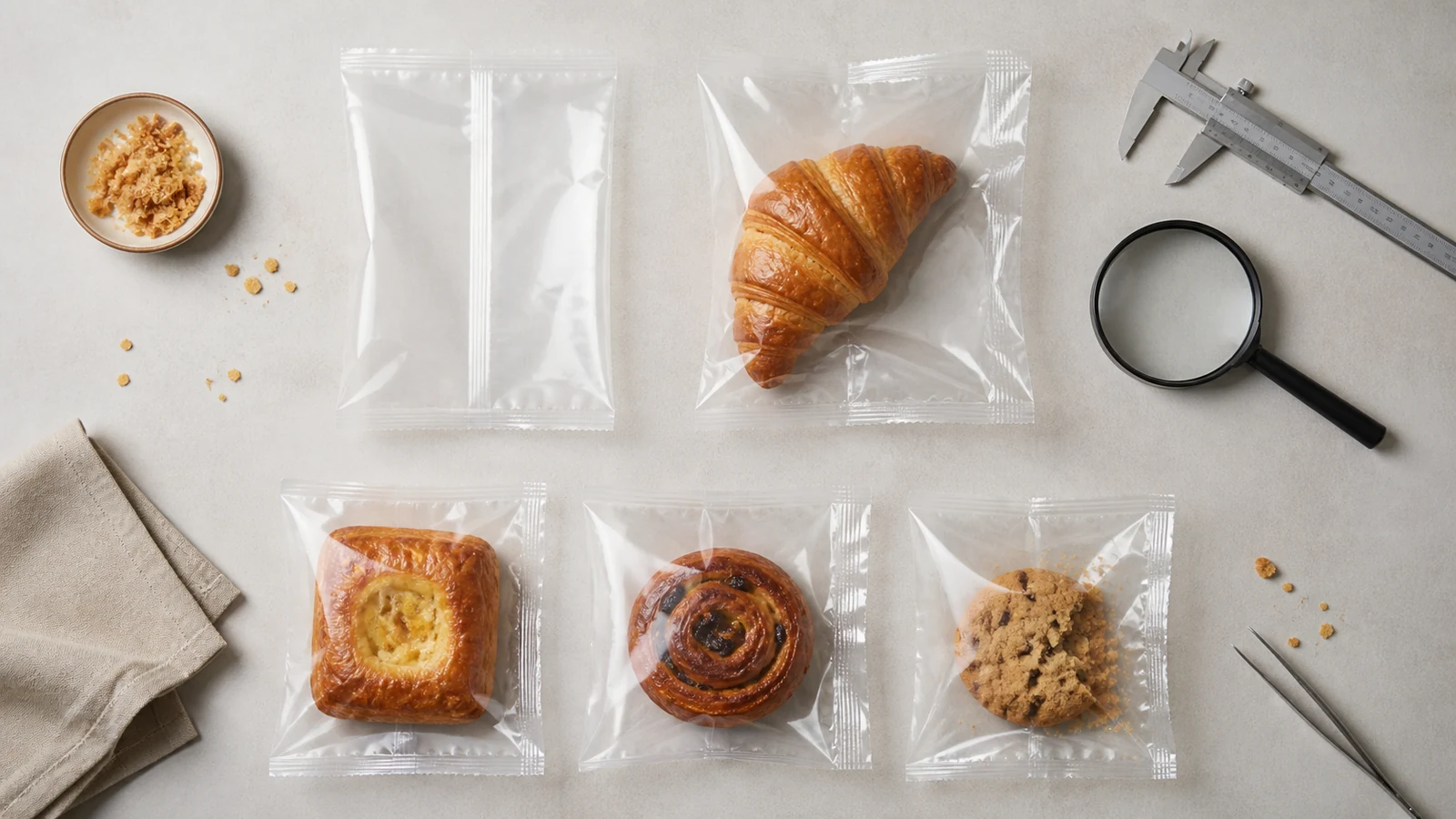
“Bakery packaging” is too broad for a specification. A dry biscuit, a butter-rich pastry, a chocolate-coated cookie, a fresh bread roll, and a frozen dough product can have very different risks. Some need to resist moisture pickup and preserve crispness; others are more sensitive to grease staining, crumbs, condensation, or compression. Shelf life, pack atmosphere, and storage temperature also change the material discussion.
The buyer’s first brief should state the product’s fat or oil characteristics, any powder or topping that can reach the seal, target shelf life, storage and transport climate, pouch format, fill weight, and line speed. It should also identify the visible defect that matters most: a weak seal, greasy-looking pack, aroma loss, haze, scuffing, split corner, or an unmet compliance file requirement.
This prevents an attractive web from being selected as a substitute for a complete packaging solution.
Where CPP May Sit in the Structure
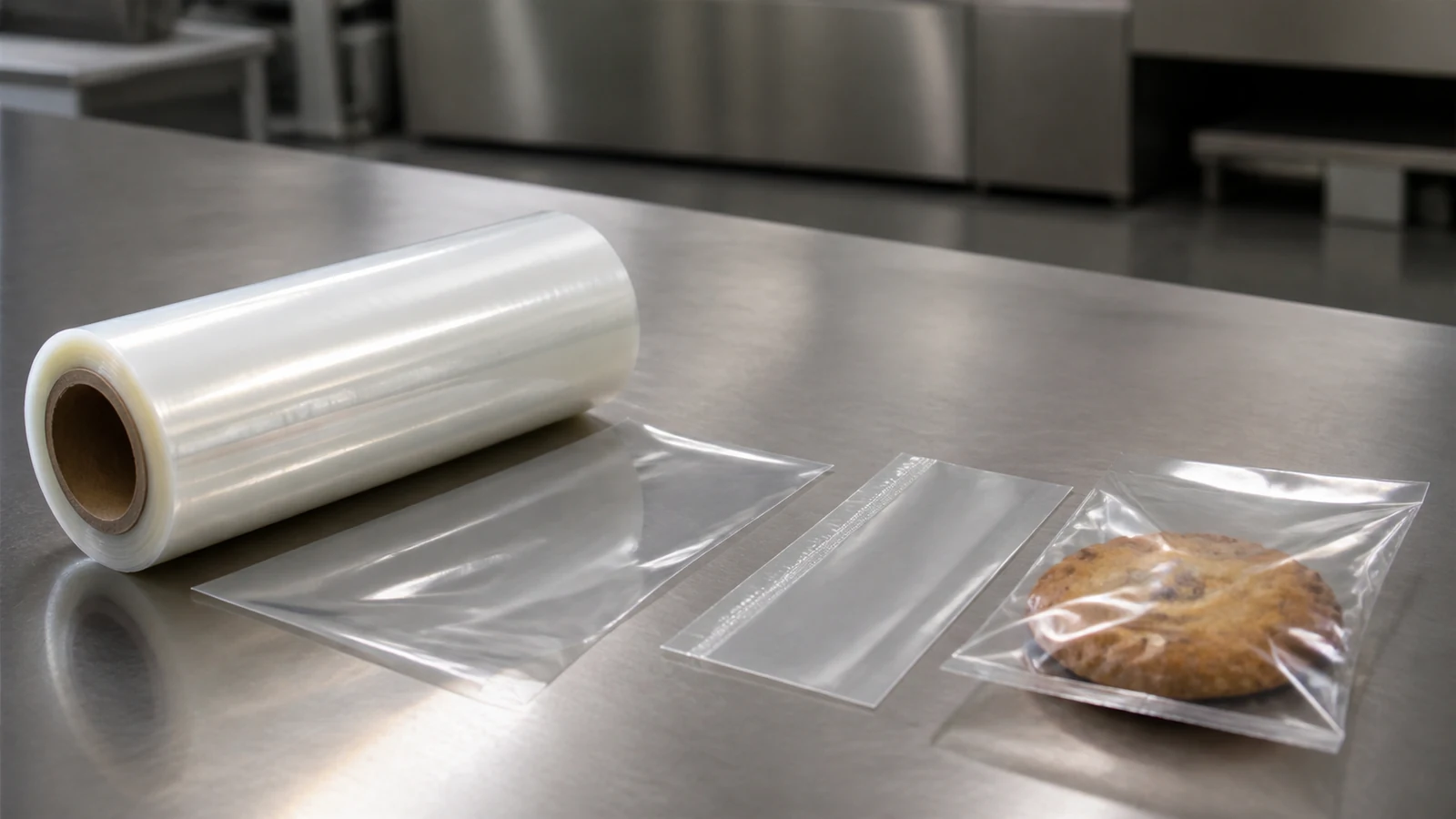
CPP is commonly used in flexible-packaging structures where a clear film, seal layer, or flexible component is required. Its exact role depends on grade, thickness, treatment, and the complete laminate. In a printed bakery pouch, another web may be chosen for print stability or surface appearance while CPP performs a seal-side or supporting role. In another route, CPP may contribute to the visible surface and converting behaviour.
The material name does not answer whether the pouch has the required oxygen, moisture, aroma, light, grease, or puncture performance. It also does not prove that the final food-contact surface is suitable for the target market. Request a layer map showing each web, coating, adhesive, ink, and seal interface. Then ask what evidence applies to the final construction rather than to a generic CPP product page.
Public sources frequently describe CPP as glossy, clear, easy converting, or suitable for food packaging. These descriptions are reasonable research leads, but the buyer still needs grade-specific documentation and trials. A broad thickness range may cover several constructions with different seal, stiffness, and processing behaviour.
Gloss Is Not a Functional Test
High gloss can support shelf presentation, especially where the buyer wants a bright view of pastries or printed graphics. It does not establish barrier, heat-seal strength, grease resistance, or transport durability. A glossy pack can become dull through scuffing, show oil marks through contact, or retain an unreliable seal after filling.
When gloss is important, specify the visual target and inspection condition: product visibility, print design, lighting, expected scuff exposure, and whether a clear window is required. Compare converted samples, not only unprinted roll stock. If a matte or coated effect is requested, check how that surface changes COF, print, lamination, and machine handling. The desired appearance should be a controlled requirement with a sample standard, not a loose marketing adjective.
Sealability Must Be Tested With Crumbs and Grease
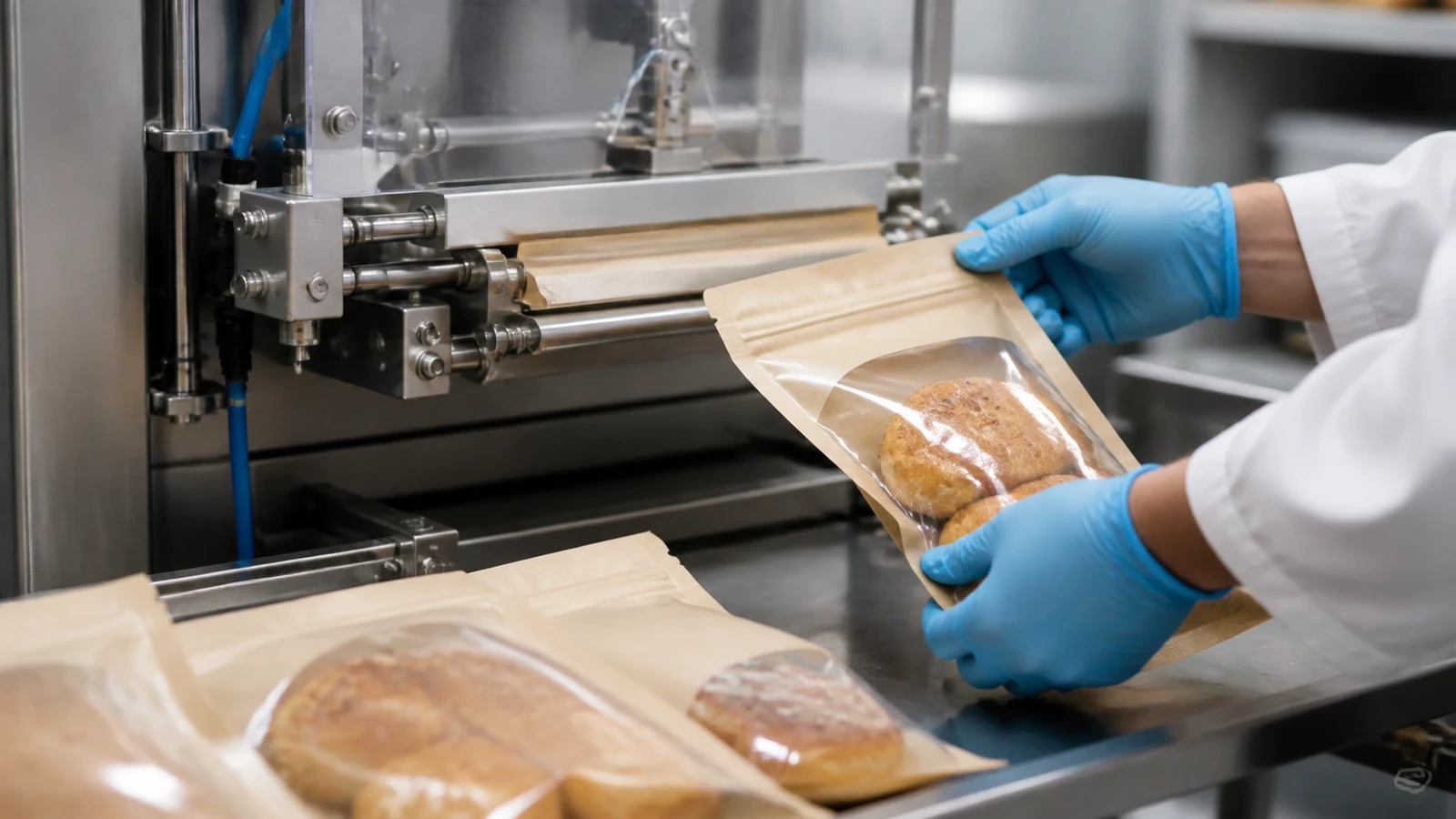
Bakery lines often create real seal challenges. Loose crumbs, sugar, oil, flour dust, or product contact can change the quality of the seal. A clean-film lab test is useful, but it does not reproduce a contaminated pouch mouth or the actual dwell time on a fast line.
Create a trial plan that includes normal filling and a defined challenging condition. Record the pouch format, seal geometry, exact structure, fill weight, product temperature, jaw configuration, temperature, pressure, dwell time, line speed, and observations. Inspect seals for continuity, appearance, leakage or other agreed integrity measures, and performance after handling. If a result changes, the record will help distinguish line setup, contamination, conversion, and film-interface causes.
Low seal-initiation values or a wide window shown in a brochure should not be treated as a guaranteed machine setting. Ask for method, seal width, film-to-film interface, dwell time, pressure, and test conditions. The relevant question is whether the final converted pouch holds under the buyer’s actual process.
Grease, Barrier, and Migration Are Separate Questions
An oily product can change the packaging discussion, but “oil resistance” should not become a vague claim. The buyer should describe the food contact route, product temperature, expected storage time, and whether grease reaches seams or external surfaces. Where material compatibility is proposed, it should be confirmed against the full structure, inks, coatings, adhesives, and applicable conditions of use.
Barrier questions should also be separated. Moisture, oxygen, aroma, light, and mechanical damage are different pathways. If OTR or WVTR data are relevant, request the method, units, temperature, humidity, test specimen, thickness, and whether the result represents a single web or the final laminate. A glossy CPP web may contribute usefully to a construction without being the source of all the pouch’s barrier performance.
Food-contact and migration considerations require documents for the actual formulation, structure, market, and intended use conditions. A website statement, a general “food grade” phrase, or another supplier’s claim is not evidence of compliance for the final pack. Buyers should involve their responsible regulatory and technical teams in defining the required documentation and validation.
Compare Structure Complexity Deliberately
| Starting direction | When it may be considered | Possible role | Evidence to collect |
|---|---|---|---|
| Simpler CPP-led route | Defined low-risk product and controlled distribution | Basic clear appearance and a sealing route | Grade, seal trial, grease exposure, relevant compliance documentation |
| Printed outer web plus dedicated CPP seal-side layer | Appearance and sealing need separate control | Assigns print and seal roles independently | Layer map, lamination quality, crumb/grease seal challenge, final pouch test |
| Functional laminate | Shelf life, aroma, light, puncture, or transport risk has been documented | Adds a specific functional layer where justified | Test conditions, converted-pouch integrity, fold behaviour, end-market requirements |
More complexity does not automatically deliver a better bakery pack. It should be introduced to solve a defined product risk and be verified as a complete conversion system.
Buyer Checklist Before Sampling
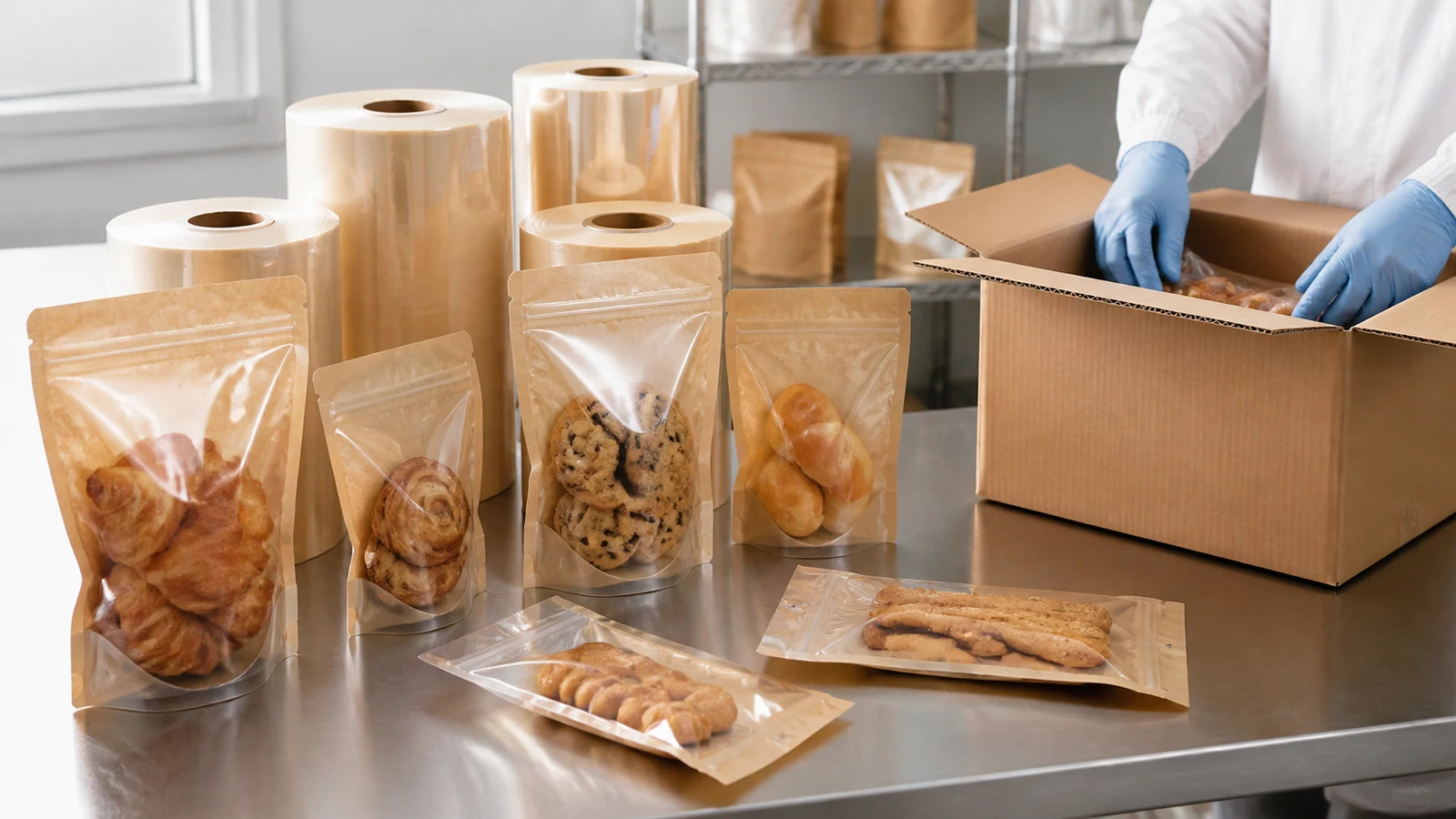
1. What bakery product, oil level, crumbs, toppings, and storage route are involved? 2. Which result is required: appearance, clean sealing, crispness, aroma, grease control, or transport protection? 3. What exact CPP grade, thickness, treatment, and structure are proposed? 4. Which layer meets which layer at the seal, under what line conditions? 5. What trial will reproduce product contamination, fill weight, speed, handling, and distribution exposure? 6. Which barrier data are required, with what methods and test conditions? 7. Which food-contact and migration documents must match the target market and final structure?
CHALVO can help organize a structure comparison, supplier documentation request, and representative trial plan. The final choice should be based on the actual bakery product and finished-pouch evidence—not on gloss or a generic CPP claim.
Sources for further verification
- https://www.kingchuanpackaging.com/the-case-for-cast-polypropylene-film-the-advantages-of-excellent-bakery-packaging-made-possible-by-its-high-resistance-to-acids-bases-and-oils
- https://www.pennpac.com/blog/exploring-cast-pp-applications
- https://www.firstagroup.com/resources/bopp-vs-cpp-a-comprehensive-guide-to-understanding-the-differences.html
- https://tritonint.com/films-by-type/cpp