


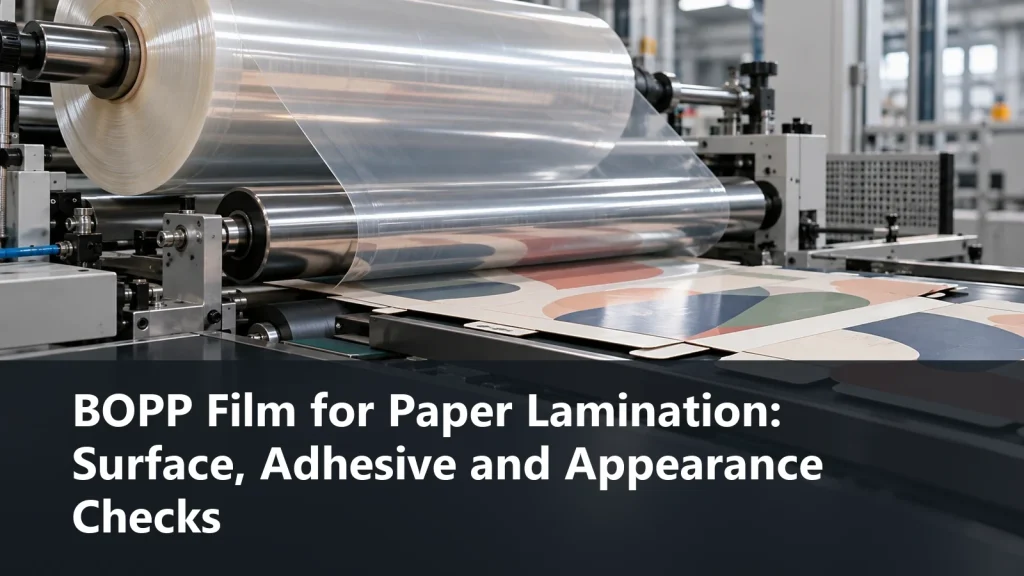

A print finisher laminates BOPP onto printed box wraps and covers. Some pieces develop weak bonds or edge lifting. Others show silvering, bubbles or whitening after creasing. Another job has the wrong gloss or matte appearance. Soon, everyone is asking whether the film, adhesive, ink or machine caused it.
Select BOPP for paper lamination as part of a complete system: the film surface must accept the chosen adhesive, the adhesive must bond to both the treated BOPP and printed substrate, and the film's gloss, matte, haze and converting behavior must suit the finished piece. Verify surface condition at use, follow the adhesive supplier's process conditions, and trial the actual paper, ink, adhesive and machine together before approving a production grade.
A good film cannot compensate for incompatible adhesive, uncured ink or unsuitable processing. Good adhesive cannot correct the wrong BOPP surface or appearance grade.
For a broader grade-selection framework, see BOPP Lamination Film: How Buyers Choose the Right Grade for Paper and Flexible Packaging. This article focuses on the paper-lamination interfaces and trial checks buyers should specify.

What Is BOPP Paper Lamination Used For?
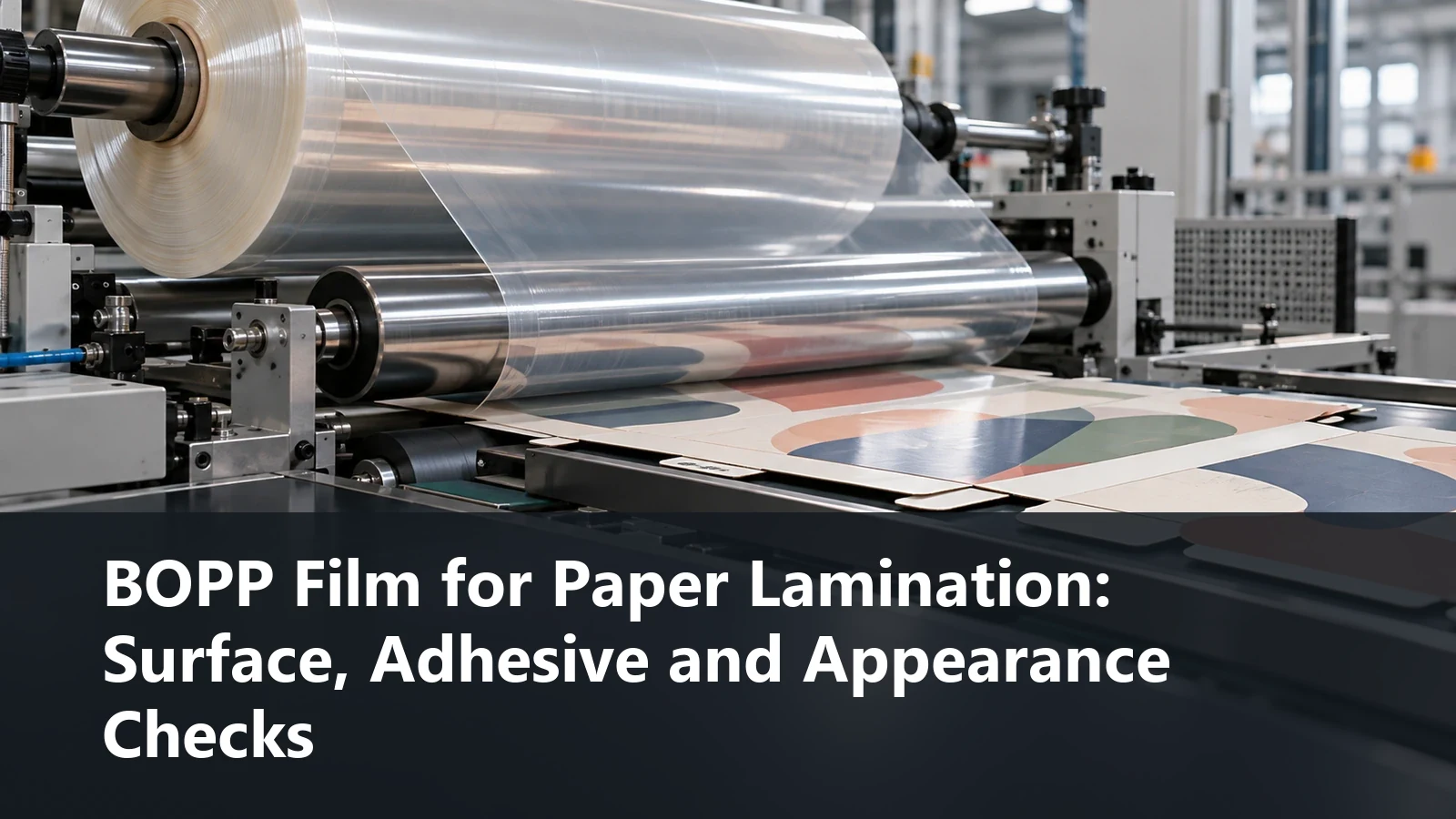
In print finishing, BOPP film can be laminated over printed paper or paperboard to add a protective and decorative surface.
Common applications include printed boxes, shopping or gift bags, book and stationery covers, presentation materials and other converted paper products.
Depending on the construction and grade, the BOPP layer can help provide:
- Scuff and handling protection
- Protection of the printed surface
- A degree of surface moisture resistance
- Gloss or matte appearance
- A smoother finished surface
- Changes to the stiffness or handle of the converted piece
However, laminating BOPP over paper does not automatically make the complete package waterproof. Edges, folds, cuts, paper structure and the complete package design still matter.
For buyers, the first question should therefore be about the finished product: What must the lamination protect, look like and survive after converting?
Gloss or Matte BOPP: Which Appearance Does the Job Need?
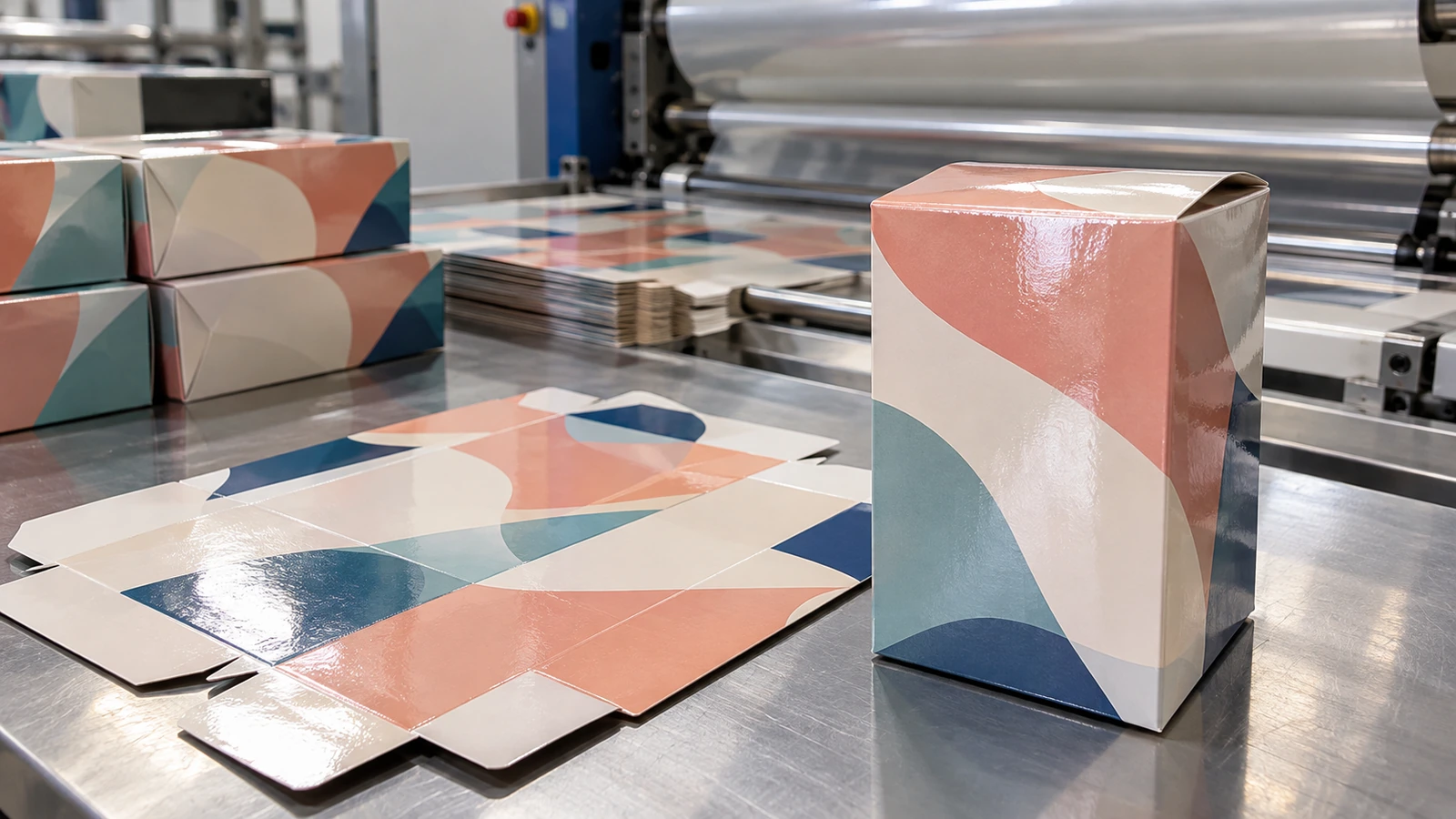
Gloss and matte BOPP are common appearance choices for paper lamination, but the decision involves more than choosing which sample looks attractive.
Gloss BOPP
Gloss BOPP can create a bright, reflective surface and allow printed graphics to remain visually prominent through the film.
When comparing gloss grades, inspect the actual printed sample. Film haze, clarity and surface appearance can affect how colors, fine graphics and dark printed areas appear after lamination.
A film that looks clear as an unlaminated roll may still produce a different visual result once combined with ink, adhesive and paper.
Matte BOPP
Matte BOPP creates a lower-gloss presentation and can substantially change the visual character of the printed piece.
Again, “matte” is not a complete technical specification.
Different grades can produce different surface appearances and downstream converting behavior. Scuffing, folding, creasing and other finishing operations should therefore be evaluated on the actual laminated structure.
For both categories, approve the finished laminate, not just the appearance of the bare film.
Is Bare Laminating BOPP the Same as Thermal Lamination Film?
No. This distinction should be clear in the RFQ.
In the process covered by this article, bare laminating BOPP is a suitable film. It normally has the treated surface required for the process and is combined with a separately selected adhesive during lamination.
By contrast, pre-coated thermal lamination film already incorporates a heat-activated adhesive layer. Depending on the product, this can involve an EVA-type adhesive system. It is processed according to the thermal film's specified conditions.
These are different products.
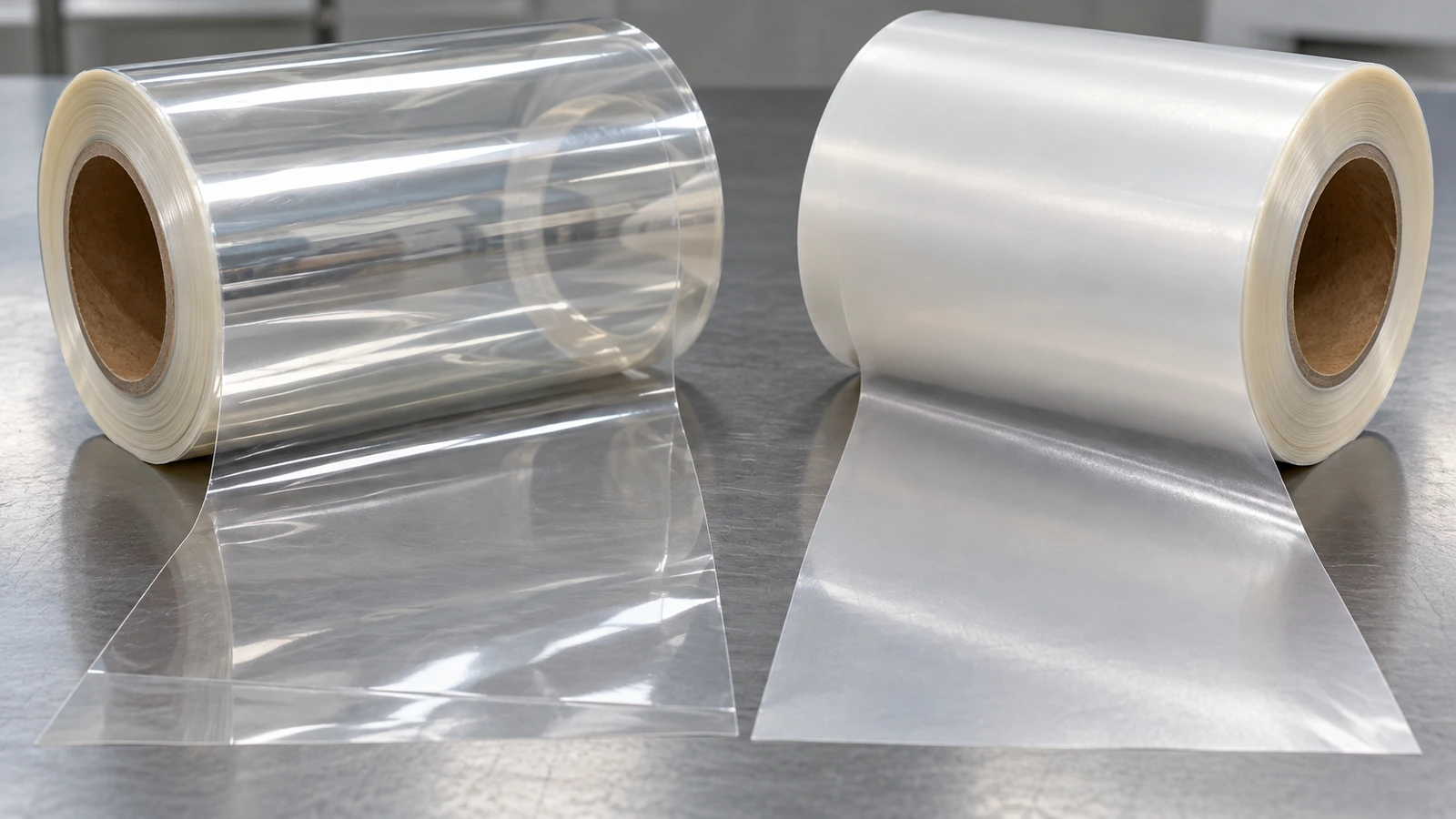
If a buyer asks only for “BOPP lamination film,” suppliers may interpret the request differently.
A useful sourcing question is:
Are we buying treated BOPP for our existing adhesive-lamination process, or pre-coated thermal lamination film?
This article focuses on the first category. Pre-coated thermal BOPP requires its own grade and process evaluation.
Why Does BOPP Surface Treatment Matter for Paper Lamination?
Untreated polypropylene has a surface that can be difficult for adhesives, inks and coatings to wet and bond to effectively.
For adhesive-based paper lamination, buyers should therefore select a BOPP laminating grade with the appropriate treated surface for the intended process.
Corona treatment is commonly used to modify film surface energy and improve wettability.
But three details are important.
First, confirm which side is treated.
If the film is one-side treated, the adhesive needs to contact the intended treated surface. Winding orientation should therefore be communicated clearly when ordering rolls.
Second, surface treatment does not remain static indefinitely.
Treatment level can decay during storage, and other surface-related changes can influence subsequent processing. For critical lamination work, verify the relevant surface condition at the appropriate point before use rather than relying only on an old production value.
Third, a dyne measurement is a process-control indicator. It does not prove that the finished laminate will have sufficient bond strength.
Actual adhesion still depends on the film, adhesive, ink or coating, paper and lamination conditions working together.
What supplier data can buyers use as a screening reference?
Cosmo Films' wet-lamination PCT-(P/L) TDS lists thickness options from 9 to 20 µm, minimum surface tension of 38 dynes/cm on both sides by ASTM D2578, kinetic film-to-film COF of 0.25–0.40 by ASTM D1894, gloss above 93 by ASTM D2457, and haze of 1.2–2.0% by ASTM D1003. The same sheet gives storage guidance of 25°C ±5°C and 55% ±5% RH to avoid accelerated reduction in surface-treatment level. These are supplier-published values for that specific grade, not universal BOPP-lamination specifications. Request the current TDS for the quoted grade and confirm your own incoming-check method. See the Cosmo PCT-(P/L) wet-lamination TDS.
How Should Buyers Match Adhesive to BOPP and Printed Paper?
It helps to visualize the construction as an interface chain:
BOPP → adhesive → ink/coating → paper or paperboard
Each interface matters.
Depending on the equipment and print-finishing process, conventional BOPP paper lamination can use water-based, solvent-based or other suitable adhesive technologies.
There is no single adhesive chemistry to recommend universally.
Instead, confirm that the selected adhesive is intended to work with both the treated BOPP surface and the actual printed substrate.
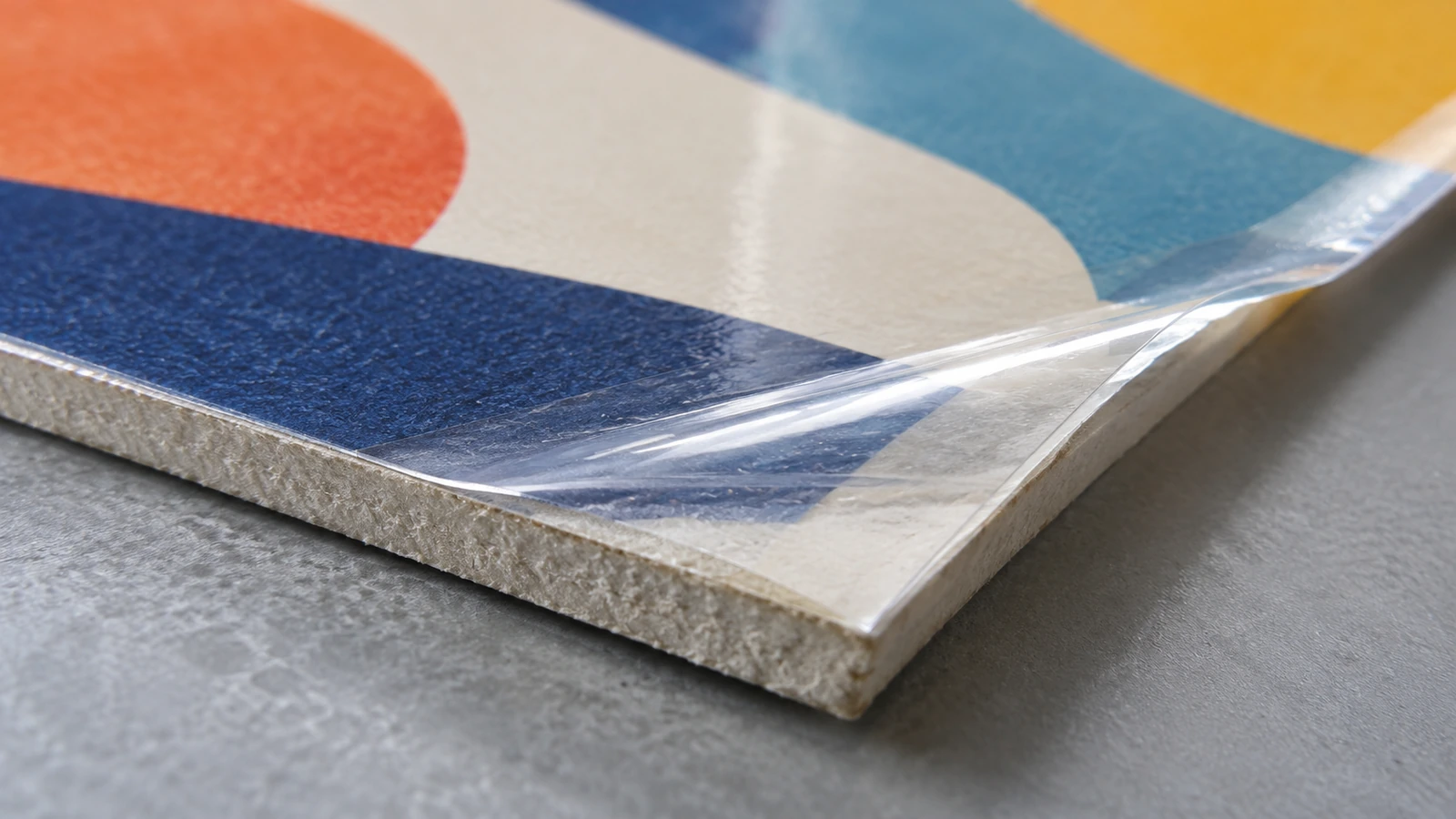
Then follow the adhesive supplier's technical guidance for relevant parameters such as:
- Adhesive application or coat weight
- Drying
- Nip conditions
- Temperature where applicable
- Pressure
- Line conditions
- Curing or conditioning time
Avoid copying settings from a different adhesive or film construction without validation.
A laminate may look acceptable immediately after the machine but develop a different bond after the specified curing or conditioning period. That is why final approval should occur at the appropriate evaluation stage.
Why Do Ink and Paper Condition Affect Lamination Bond?
In many printed jobs, the adhesive is not bonding directly to bare paper.
It is bonding to ink, varnish or another coating applied to the paper.
That means a weak interface below the adhesive can appear to be a “BOPP adhesion problem.”
Before lamination, confirm that the ink system is appropriately dry or cured for the process.
Heavy ink coverage, varnishes, metallic inks and other specialty print effects deserve particular attention because they change the surface presented to the adhesive.
If the ink or coating itself has weak adhesion to the paper, strong adhesion between the BOPP and adhesive cannot repair that lower interface.
Paper condition also matters.
Paper and paperboard vary in surface, stiffness, porosity and moisture condition. Those differences can affect adhesive behavior, appearance and downstream converting.
This is why a successful trial on one printed stock should not automatically qualify every other paper construction.
What Causes Silvering, Bubbles and Other Lamination Defects?
Visual defects often have multiple possible causes, so diagnosis should examine the whole system.
Silvering
Silvering can appear as fine silvery or micro-void areas where intimate optical contact has not been achieved.
Potential contributors can include substrate or ink texture, adhesive wetting or coverage and lamination conditions.
The correct response is not automatically “change the film.” Compare materials and process records to identify where contact or wetting is being lost.
For a broader guide to film properties and their data limits, see BOPP Film Properties: Which Specifications Matter for Packaging Buyers?.
Bubbles
Bubbles may be associated with trapped air, adhesive application, drying behavior, substrate condition or process settings.
Their location and timing can provide useful troubleshooting information.
Orange-Peel Appearance
An uneven, textured appearance can result from interaction among the film, adhesive, printed surface and process.
Inspect the original printed sheet as well as the finished laminate before assigning the defect to one component.
Wrinkles
Wrinkles can involve web handling, tension, temperature, paper condition or machine setup.
They should be investigated as a process-and-material interaction rather than assumed to be a film-property problem alone.
Dust and Contamination
Dust, paper fibers or other contamination can become trapped permanently between the BOPP and printed substrate.
These defects can be especially visible under a clear gloss film.
Clean material handling and a clean lamination environment therefore contribute directly to appearance quality.
How Do Film Gauge, Paper Weight and Moisture Affect Curl?
There is no universal “best micron” for BOPP paper lamination.
Thin laminating gauges are commonly available, but the appropriate film gauge should come from the grade, paper construction, equipment and finished-product requirements.
Film gauge can affect stiffness, handling and the behavior of the finished laminate.
At the same time, paper and BOPP respond differently to processing and environmental conditions.
Paper moisture, grain direction, conditioning, paper weight and stiffness can therefore contribute to curl or dimensional behavior after lamination.
Lamination tension and other process conditions also matter.
For a new paper stock or film gauge, the finished sheet should be evaluated after appropriate conditioning rather than approving the combination immediately at the laminator.
What Should Buyers Test Before Folding or Creasing?
A flat laminated sheet is only an intermediate product if it will later become a box, bag, cover or other converted item.
The real test may happen at the crease.
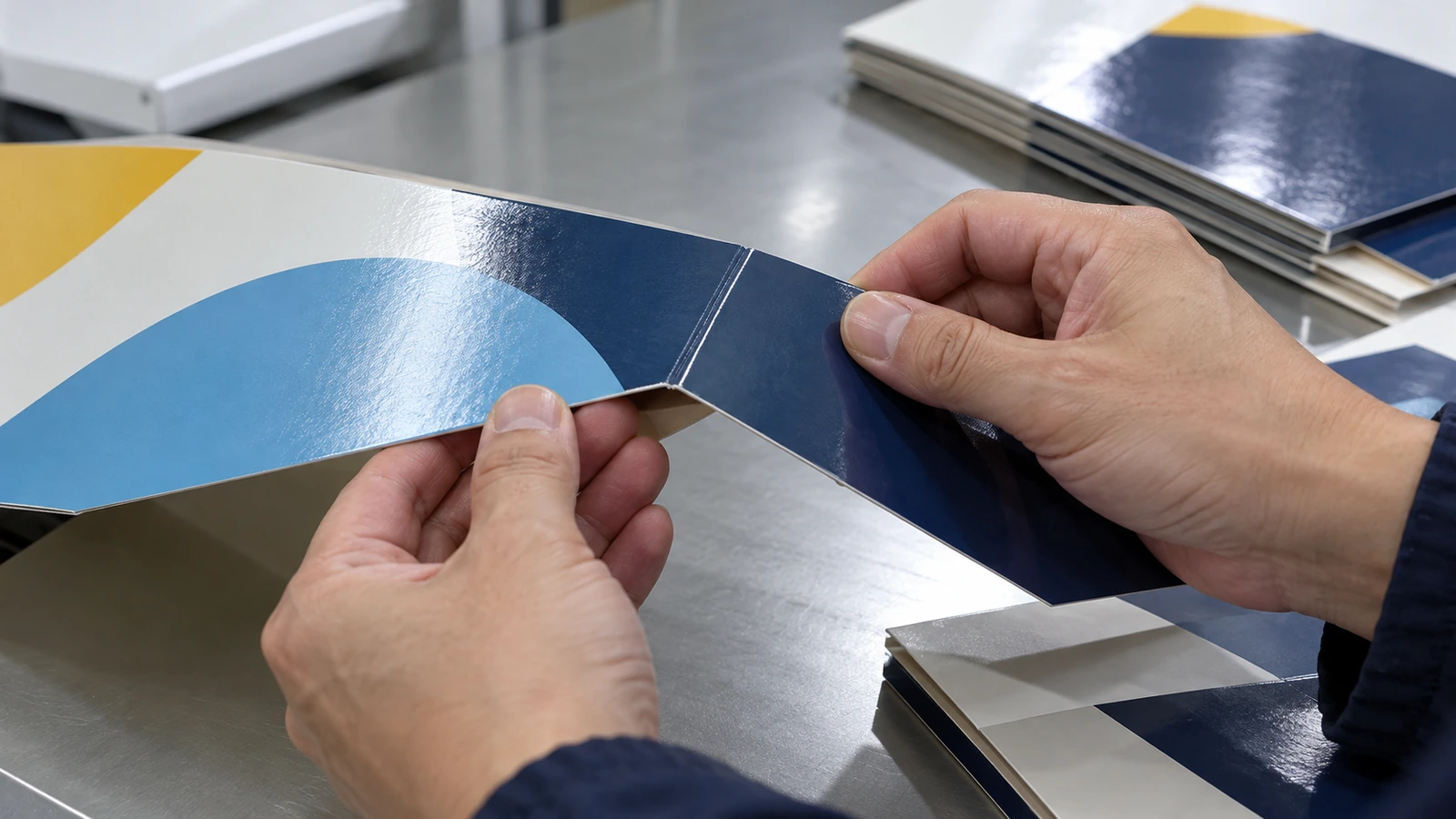
Fold or crease the trial material at the locations and geometry planned for production, then inspect for:
- Whitening
- Cracking
- Delamination
- Edge lifting
- Unacceptable visual change
This is particularly important where matte appearance or a heavier construction makes the crease visually prominent.
It does not mean matte film will necessarily fail. Check appearance and bond after the intended mechanical deformation.
Where relevant, the same principle applies to die-cutting, hot-foil stamping, spot UV and other post-lamination finishing.
If those processes are part of production, they belong in the qualification trial.
BOPP Paper-Lamination Checks
| Check area | What to verify | Typical failure if ignored |
|---|---|---|
| Surface | Correct treated laminating grade, treatment condition and adhesive-contact side | Weak or inconsistent bond |
| Adhesive | Compatibility with BOPP and printed substrate | Poor bond, edge lifting or appearance problems |
| Ink/coating | Appropriate dry/cured condition and compatibility | Interlayer failure, bubbles or weak bond |
| Process | Adhesive application, drying, nip and conditioning per supplier guidance | Incomplete bond or visual defects |
| Appearance | Gloss/matte target, haze, clarity and surface finish | Finished appearance differs from approved target |
| Cleanliness | Film, substrate and process cleanliness | Trapped dust or visible inclusions |
| Gauge/substrate | Film gauge matched to paper/board and process | Curl, handling or converting problems |
| Folding/creasing | Performance at actual folds and creases | Whitening, cracking or delamination |
| Post-converting | Die-cutting, foil, spot UV or other planned operations | Failure during downstream finishing |
These are typical relationships rather than one-to-one diagnostic rules. A defect can have several interacting causes.
How Should Buyers Run a BOPP Paper-Lamination Trial?
The most useful trial uses the materials that will actually meet in production:
candidate BOPP + actual paper/board + actual ink/coating + actual adhesive + actual machine + actual post-converting process
Before the trial, record the film grade and gauge and identify the correct treated surface.
Use the intended paper or paperboard. Confirm grain direction where it matters and ensure the printed material is appropriately ready for lamination.
Review the adhesive supplier's recommended process conditions before starting.
During the run, record the relevant adhesive and machine conditions so the result can be reproduced.
When comparing two BOPP grades, keep other variables as equivalent as practical. Otherwise, it becomes difficult to determine whether a different result came from the film or a process change.
Monitor the web and finished sheets for wrinkles, bubbles, silvering, wetting issues and other visible defects.
Do not make the final bond decision immediately if the adhesive system requires curing or conditioning.
After the appropriate period, evaluate the bond on the actual laminated sample. A practical peel-style evaluation can help compare adhesion, provided the buyer uses a consistent internal method appropriate to the construction.
Then inspect the edges, appearance and surface.
Fold and crease the material. Check scuff or handling performance where relevant. Finally, run any planned die-cutting, foil, spot UV or other finishing operations.
Retain clearly labeled control samples so future production can be compared with the approved result.
Supplier data example: wet BOPP versus thermal-lamination BOPP
Do not compare bare wet-lamination BOPP with pre-coated thermal film as if the numbers described interchangeable products. Cosmo's PCT-(P/L) wet-lamination TDS describes a both-sides-treated film and lists the 9–20 µm gauges and 38 dynes/cm minimum surface-tension example above. Its separate PCT-2(MDL) thermal matte TDS describes a BOPP-based film with a low-temperature-melting extrusion-coated surface; it lists gauges of 18, 20, 22, 27 and 33 µm and a supplier process range of 100–120°C, with optimum conditions depending on line speed/dwell time and dimensional stability. That TDS also warns that its 18, 20 and 22 µm versions are not suitable for folding and creasing applications.
These figures belong to two named Cosmo product examples. They are useful for checking whether an RFQ has identified the right product family and for preparing questions about surface, gauge and finishing, but they are not a general BOPP rule or a recommended setting for another supplier's film. See the PCT-2(MDL) thermal matte TDS. A broader TDS checklist is in How to Read a Packaging Film TDS Before Ordering.
Paper-Lamination Trial Checklist
| Stage | Check |
|---|---|
| Before | Confirm BOPP grade, gauge and gloss/matte target |
| Before | Identify treated/adhesive-contact side |
| Before | Verify surface condition where required |
| Before | Confirm actual paper/board and relevant grain direction |
| Before | Confirm ink/coating is ready for lamination |
| Before | Review adhesive supplier's process guidance |
| During | Record adhesive/application and machine conditions |
| During | Monitor wetting, bubbles, wrinkles and silvering |
| During | Compare candidate grades under equivalent conditions |
| After | Allow specified curing/conditioning |
| After | Evaluate bond on actual laminated construction |
| After | Inspect edges and visual appearance |
| After | Fold/crease at planned locations |
| After | Check scuff/handling performance where required |
| After | Trial die-cutting, foil or spot UV where relevant |
| Control | Retain labeled samples and trial records |
This process turns a subjective statement such as “the film laminates well” into a reproducible qualification tied to a specific construction.
What Documentation and End-Use Requirements Should Buyers Check?
If the laminated paper or paperboard will become food packaging, review the applicable food-contact requirements and documentation for the complete intended construction and use.
Documentation for an individual BOPP grade should not automatically be treated as approval of the finished paper, ink, adhesive and film combination.
The same system-level thinking applies to recyclability.
Paper laminated with plastic film is a composite structure, so its recycling pathway can differ from unlaminated paper and from mono-material plastic packaging.
Buyers should check the requirements and collection/recycling conditions in the destination market rather than making a universal recyclability assumption.
How CHALVO Supports BOPP Paper-Lamination Projects
CHALVO (Hangzhou Chalvo New Material Co., Ltd.) is a Chinese packaging-film export and supply-chain integration company, not a BOPP film factory.
For paper-lamination sourcing projects, CHALVO can help buyers organize the application requirements and match relevant candidate BOPP grade families.
CHALVO can also collect available grade-specific TDS information across its supplier network, organize trial requirements and coordinate film samples or trial rolls for buyer and converter evaluation.
Adhesive selection, process conditions and final laminate performance still need to be validated by the buyer with the actual adhesive, print, paper, equipment and post-converting process.
FAQ: BOPP Film for Paper Lamination
What BOPP Film Is Used for Paper Lamination?
For adhesive-based print finishing, buyers generally need a suitable treated BOPP laminating grade selected for the intended process and appearance.
Gloss and matte are common appearance categories, but grade, gauge, surface treatment, adhesive compatibility and downstream converting requirements should all be confirmed before ordering production quantities.
Does BOPP Need Corona Treatment for Paper Lamination?
The adhesive-contact surface normally needs appropriate surface characteristics for the intended bonding process, and corona-treated BOPP is commonly used.
Confirm the treatment specification and correct side for the selected grade.
Because surface treatment can change during storage, verify relevant surface condition near the point of use where required.
What Adhesive Is Used to Laminate BOPP to Paper?
Water-based, solvent-based and other suitable adhesive systems may be used depending on the laminator, film, print and substrate.
There is no single universal choice.
Use an adhesive intended for the complete construction and follow its supplier's guidance for application, drying, nip conditions and curing or conditioning.
Why Does BOPP Lamination Lift at the Edges?
Edge lifting can have several contributors, including BOPP surface condition, adhesive compatibility or application, ink/coating condition, curing, cutting, folding and substrate behavior.
Check the failure interface on the actual laminate rather than assuming the BOPP film itself is the cause.
Is BOPP Paper-Lamination Film the Same as Thermal Lamination Film?
No.
Bare laminating BOPP is used with a separately applied adhesive during the lamination process. Pre-coated thermal lamination film already carries a heat-activated adhesive layer and is processed according to that product's thermal-lamination conditions.
Specify which construction you need when requesting quotations or samples.
Summary
Successful BOPP paper lamination depends on the complete system: treated film surface, adhesive, printed substrate, machine conditions and downstream converting. Choose gloss or matte for the required appearance, verify treatment before use, follow adhesive-process guidance and validate bond, appearance, edges and folds using the actual production materials.
The numbers above are screening references from specific supplier TDS documents. They do not establish CHALVO specifications or guarantee that another grade will perform the same way.
CTA: Sourcing BOPP for printed paper or paperboard lamination? Send CHALVO your paper/board type, printed construction, gloss or matte target, BOPP gauge requirement, adhesive-lamination process and post-converting needs. CHALVO can help match candidate grade families, collect available grade-specific TDS information across its supplier network, organize trial requirements and coordinate samples or trial rolls for your own evaluation.
Sources for further verification
- Cosmo Films — PCT-(P/L) Wet Lamination Film BOPP Gloss TDS — product-specific gauge, surface-tension, COF and optical references; updated 2026-08-03. Supplier values are illustrative for this grade only.
- Cosmo Films — Thermal Lamination Film BOPP Matte, PCT-2(MDL) TDS — supplier-specific gauge options, process-temperature guidance and fold/crease limitation for selected gauges.
- Cosmo Films — Wet Lamination BOPP Films — product-family descriptions for wet-lamination gloss and matte films; confirm grade details in the current TDS.
- Henkel Adhesives — Paper Laminating — general litho-lamination context on adhesive moisture, drying time, substrate and machine conditions; not a BOPP-grade specification.
- Al Mulla and Al Hasan — Surface modification of biaxially oriented polypropylene (BOPP) film using acrylic acid-corona treatment: Part II. Long term aging surface properties — aging research under specific laboratory corona-treatment conditions; not a directly transferable storage-life guarantee for commercial BOPP grades.