


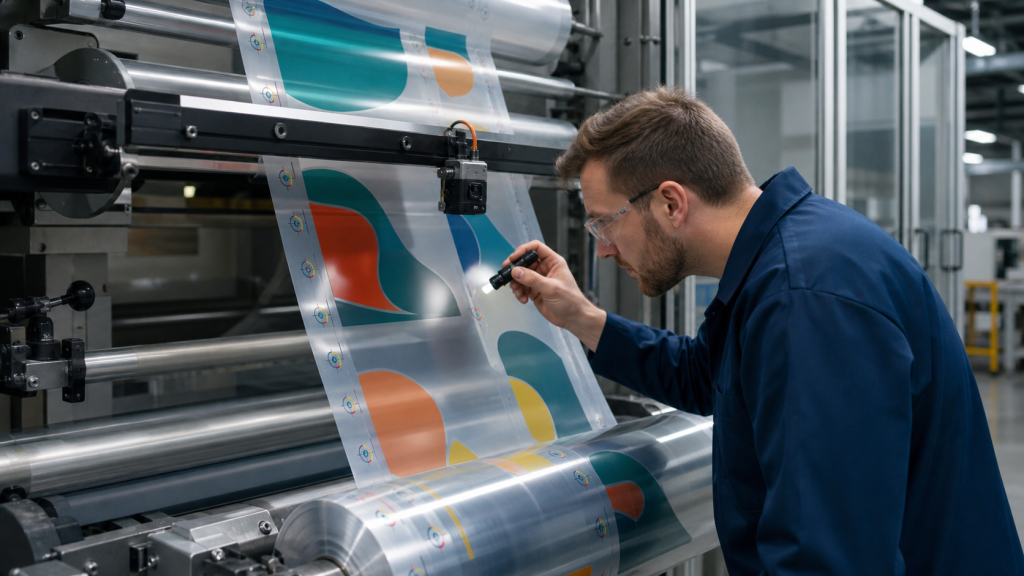

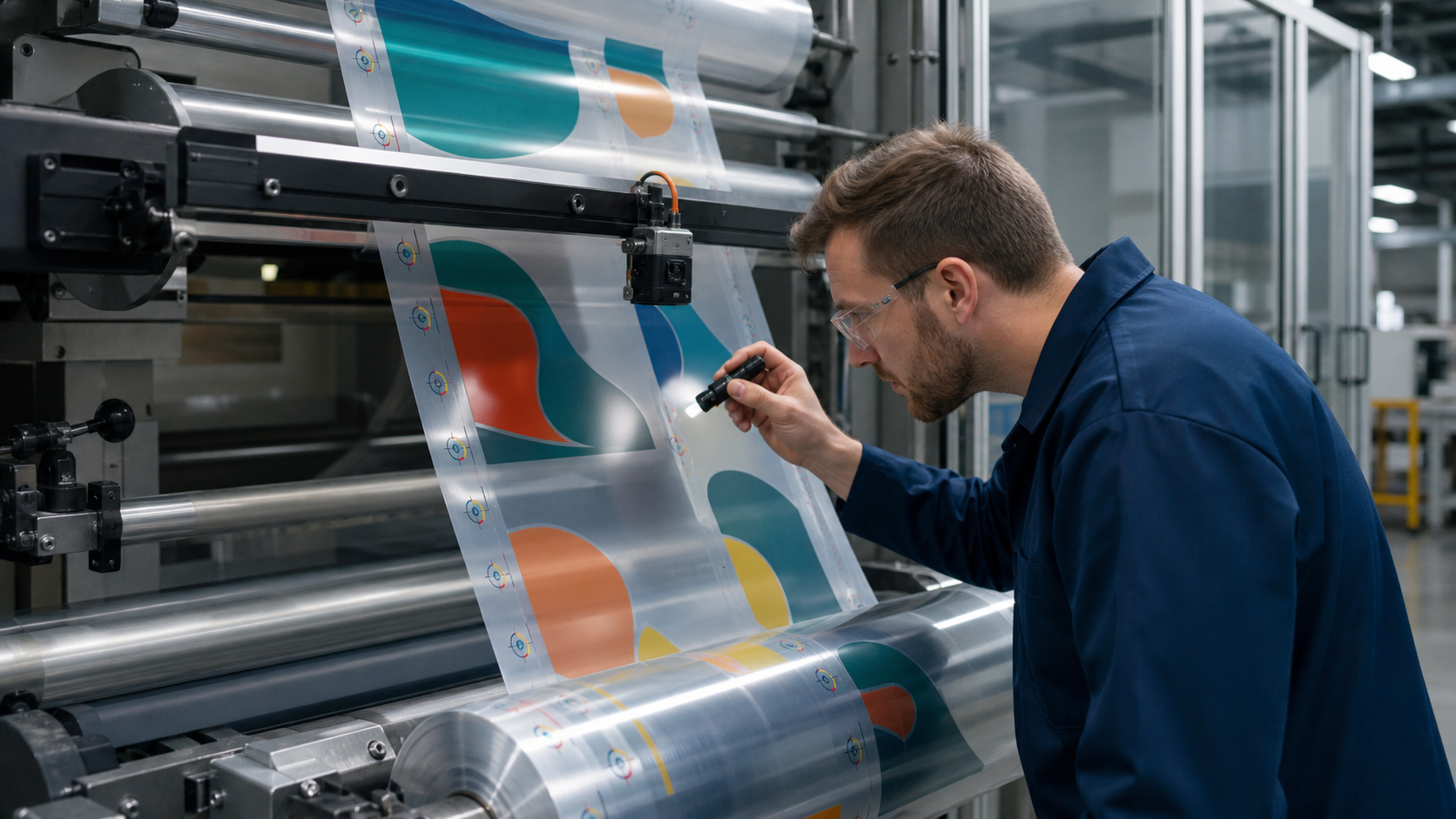
A BOPA roll printed well before storage, yet its colors now drift on press. Scrap rises, operators chase tension, and the supplier receives a complaint. Without a controlled comparison, humidity may be blamed too quickly—or missed completely.
BOPA can absorb moisture from its surroundings, and that moisture history can change film dimensions and web behavior enough to disturb multicolor print pitch. Humidity is not the only possible cause: web tension, dryer heat, roll geometry, ink or coating changes, and press setup can create similar drift. Quarantine the roll, document its history, condition comparison samples consistently, and run an affected-versus-reference roll trial before deciding responsibility.
The practical goal is not to prove that the warehouse was humid. It is to identify which variable changed the repeat length or lateral position of the web.
Why Can Humidity Affect BOPA Print Pitch?
BOPA is a polyamide film, so its condition can respond to atmospheric moisture. If the moisture state changes between manufacture, storage, slitting, and printing, the web may no longer behave exactly as it did when first approved.
On a multicolor press, each print station expects the substrate to arrive at a repeat length and lateral position that the register-control system can correct. A small dimensional or mechanical change may appear as progressive color drift, unstable corrections, edge-to-edge mismatch, or a register problem that grows as the press reaches operating conditions.
UNITIKA's official EMBLEM ON information is useful because it directly links moisture behavior to converting performance. For its simultaneous-biaxially-oriented BOPA, UNITIKA describes uniform machine-direction (MD) and transverse-direction (TD) properties, greater stability under moisture absorption, and pitch stability in multicolor printing. That is a product-specific claim, not proof that every BOPA roll will behave the same way. It does establish that moisture stability and print pitch are technically connected.
Film orientation also matters. A web can respond differently in MD and TD, so a buyer should not reduce the problem to a single “shrinkage” number. The relevant question is whether the affected grade and roll changed in the direction that matches the observed register pattern.
Is Humidity Always the Root Cause of Register Drift?
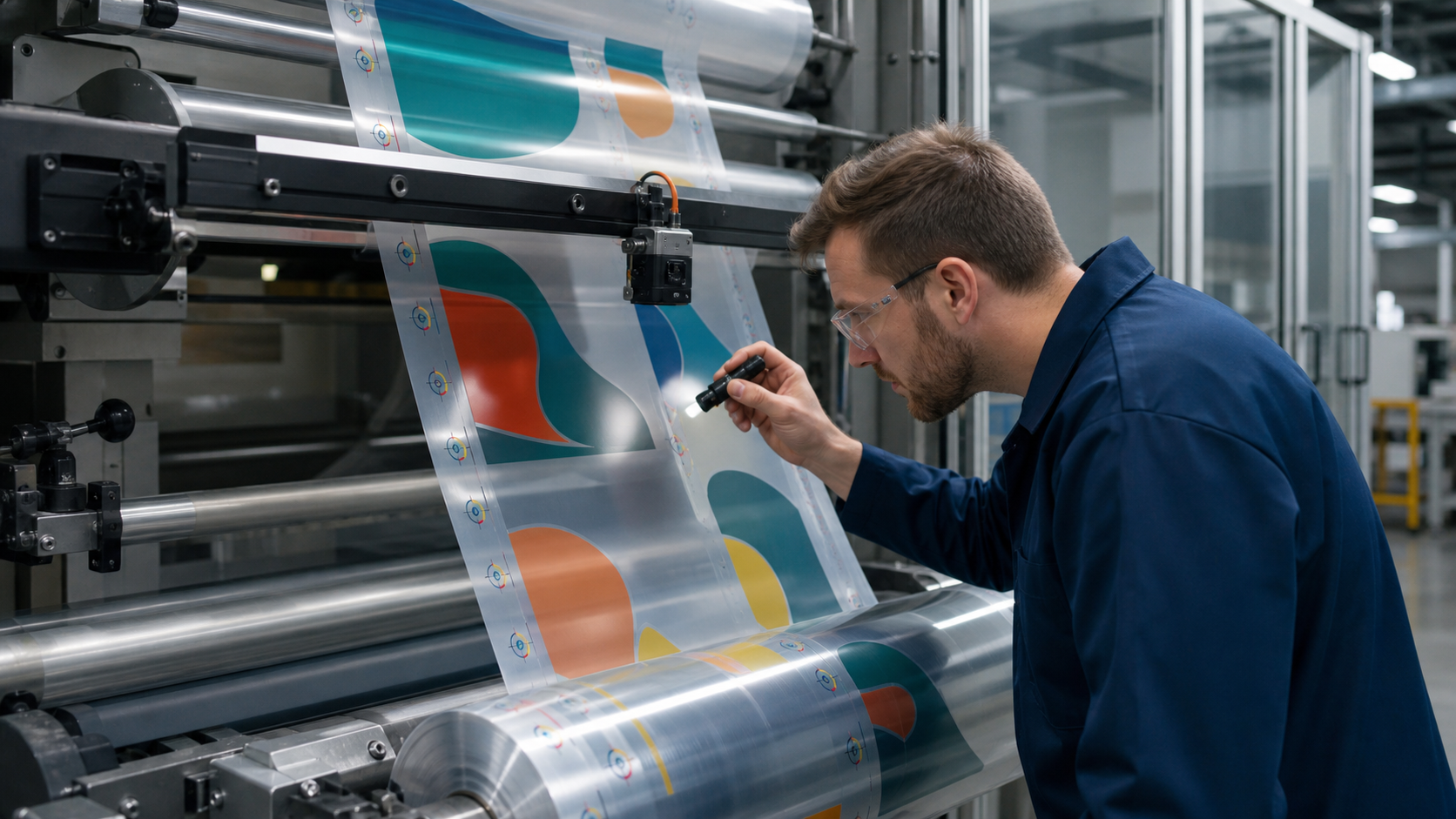
No. Humidity is a credible contributor, but register drift is a symptom shared by several film, roll, press, and process variables.
First check web tension. A different unwind profile, tension taper, nip condition, or closed-loop setting can stretch or relax the moving web differently from the approved run. If operators continually change tension to recover register, those interventions can hide the original pattern.
Then check heat. Dryer settings, exhaust balance, web temperature, and production speed affect how the substrate travels between stations. A problem that appears only after the press warms up may involve thermal and tension effects as well as moisture.
Roll geometry also matters. Gauge variation, baggy lanes, edge damage, telescoping, poor winding, or a distorted core can cause lateral wandering or uneven tension. Splices can introduce a sudden shift. Changes in ink, primer, coating, lamination history, or treated-side selection can alter drying and traction.
The right conclusion is therefore conditional: humid storage becomes more likely when the affected roll has a different exposure history and shows a repeatable difference under matched press conditions. It becomes less convincing when reference and affected rolls behave alike or when the drift follows a press component, station, splice, or operator adjustment.

What Does the Register Pattern Reveal?
The pattern helps narrow the cause before laboratory work begins.
- Progressive MD drift: Compare repeat length, web temperature, tension history, and moisture exposure. A gradual change through the run may indicate changing web condition or press equilibrium.
- Side-to-side or TD mismatch: Check edge condition, baggy lanes, roll alignment, lateral control, and whether moisture exposure was uneven across the roll.
- Cyclic drift: Inspect roll geometry, eccentricity, core condition, drive behavior, and repeating mechanical sources.
- Sudden change at a splice: Treat the splice, roll segment, or joined material as a separate population.
- One color station only: Inspect that station's registration, impression, dryer, and ink system before blaming the base film.
- Drift after warm-up: Record the change against time, speed, dryer state, and web temperature instead of relying on an operator's memory.
Save register-camera trends and defect samples with web direction, roll position, time, and press settings. A loose strip without traceability is weak evidence because it cannot show where the change developed.
How Should a Converter Investigate an Affected BOPA Roll?
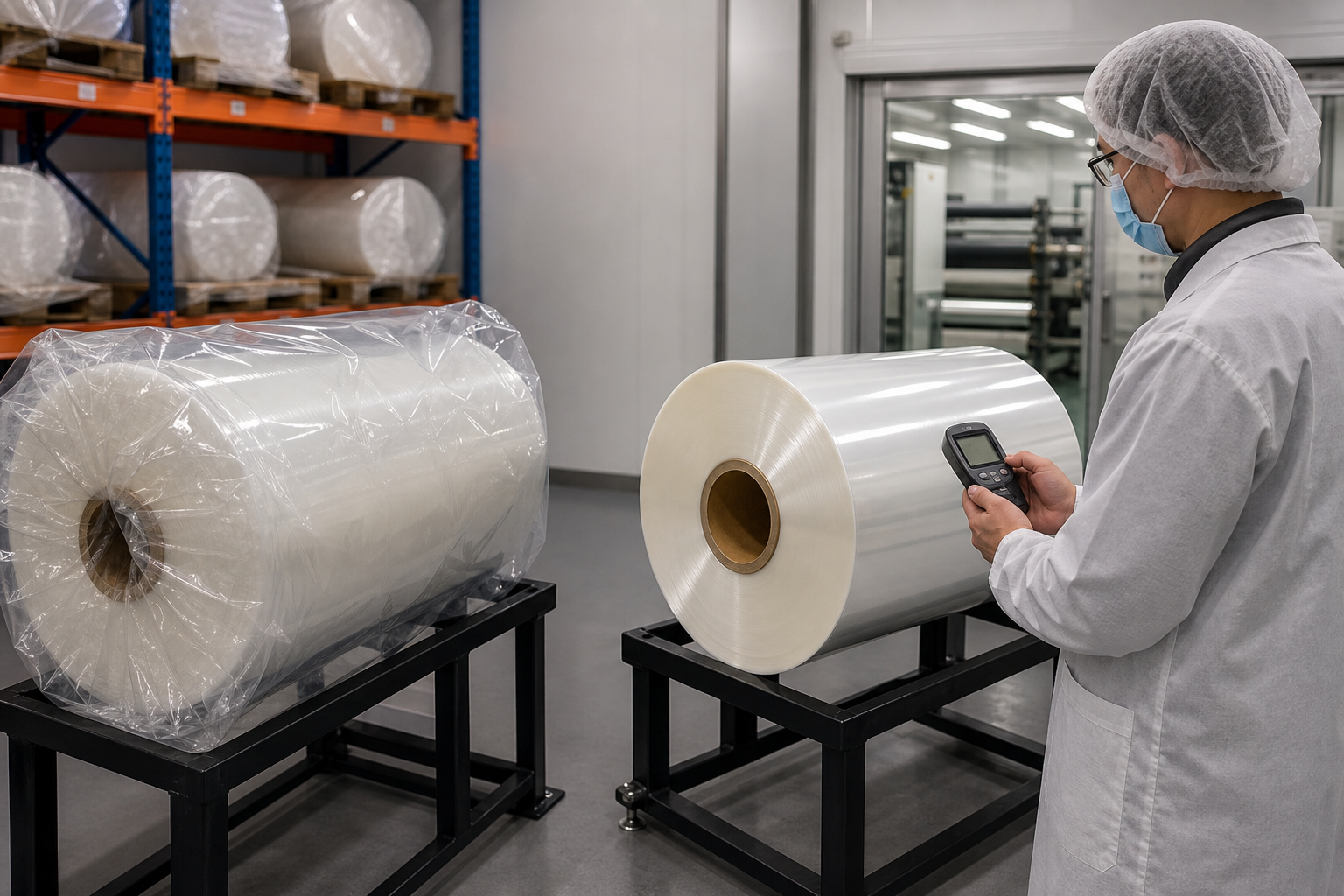
Use a controlled comparison that preserves evidence and changes one variable at a time.
1. Quarantine and identify the material
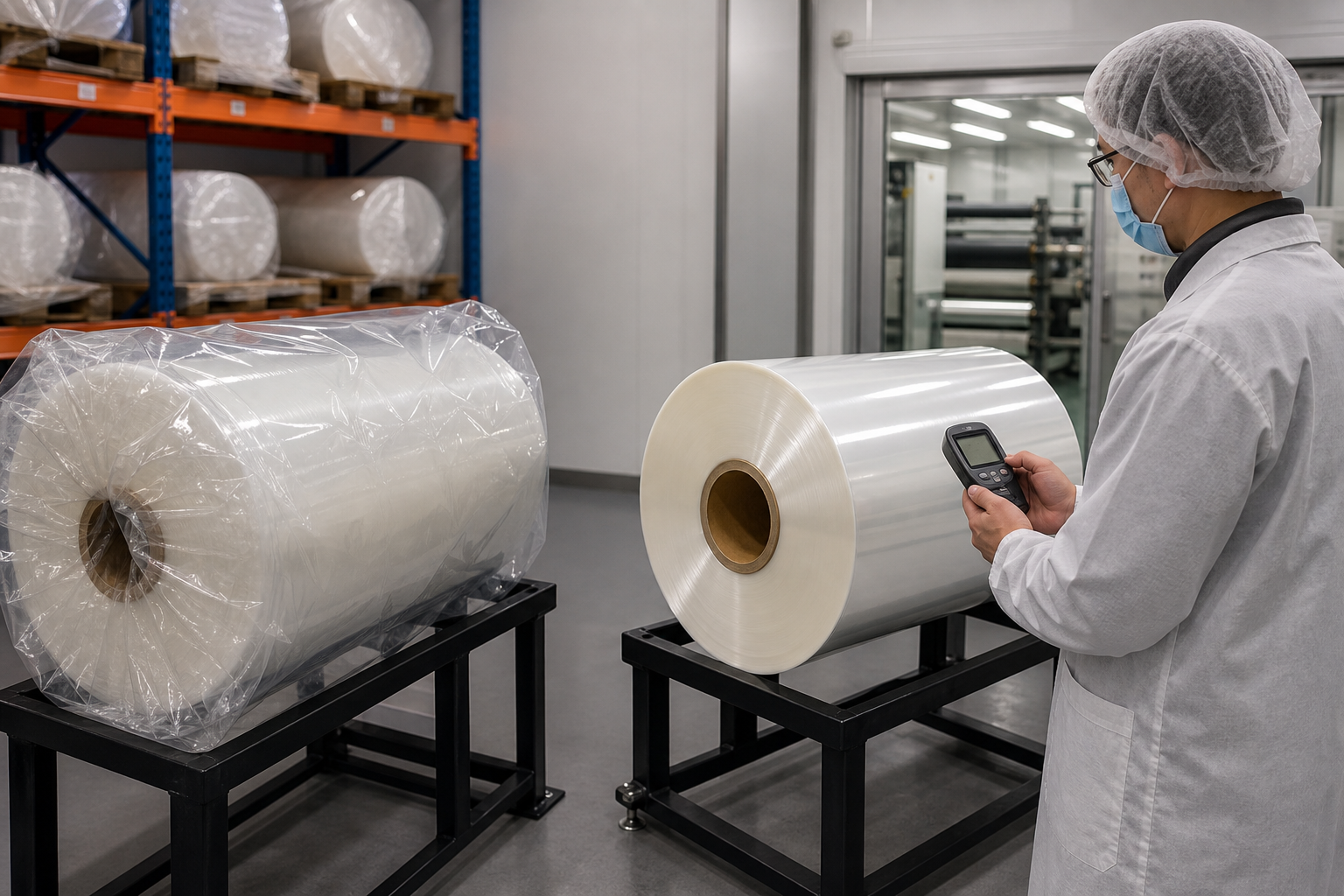
Record the grade, lot, roll number, slit position, treated side, packaging condition, receipt date, opening date, and remaining roll location. Photograph the roll, core, edges, wrapping, labels, and visible distortion. Do not discard the outer wraps before the supplier review.
2. Reconstruct the moisture history
Collect warehouse and press-room environmental records, packaging integrity, time between unwrapping and printing, and any movement between conditioned and uncontrolled areas. Record facts; do not convert a single humidity reading into proof of causation.
3. Preserve reference material
Select an approved reference roll or retained sample with the closest available grade, lot context, width, winding, and print job. Keep affected and reference specimens identifiable. If their histories are different, state that limitation.
4. Condition specimens consistently
ASTM D618 explains the governing principle: temperature and relative humidity can materially affect plastics properties and test results, so conditioning must be standardized for reliable comparisons. Use the applicable material specification, customer method, or agreed test plan; ASTM also notes that a specific material specification takes precedence.
Do not invent a universal conditioning setpoint or dwell time. The appropriate plan depends on the grade, specimen, previous exposure, test, and contractual specification.
5. Compare dimensions and web response
Measure the property tied to the failure: printed repeat, reference-mark spacing, width, curl, flatness, and MD/TD response under the agreed method. Include measurement uncertainty and specimen orientation. A single unconditioned reading is not enough to separate material variation from moisture history.
6. Run a matched press trial
Run reference and affected material with documented, matched settings. Lock the planned speed, tension profile, dryer conditions, print sequence, and register-control strategy long enough to compare behavior. Record every necessary adjustment instead of making silent corrections.
If practical, alternate the roll order or repeat the comparison. Reproducibility is stronger evidence than one successful or failed run.
What Should Buyers Request From the Film Supplier?
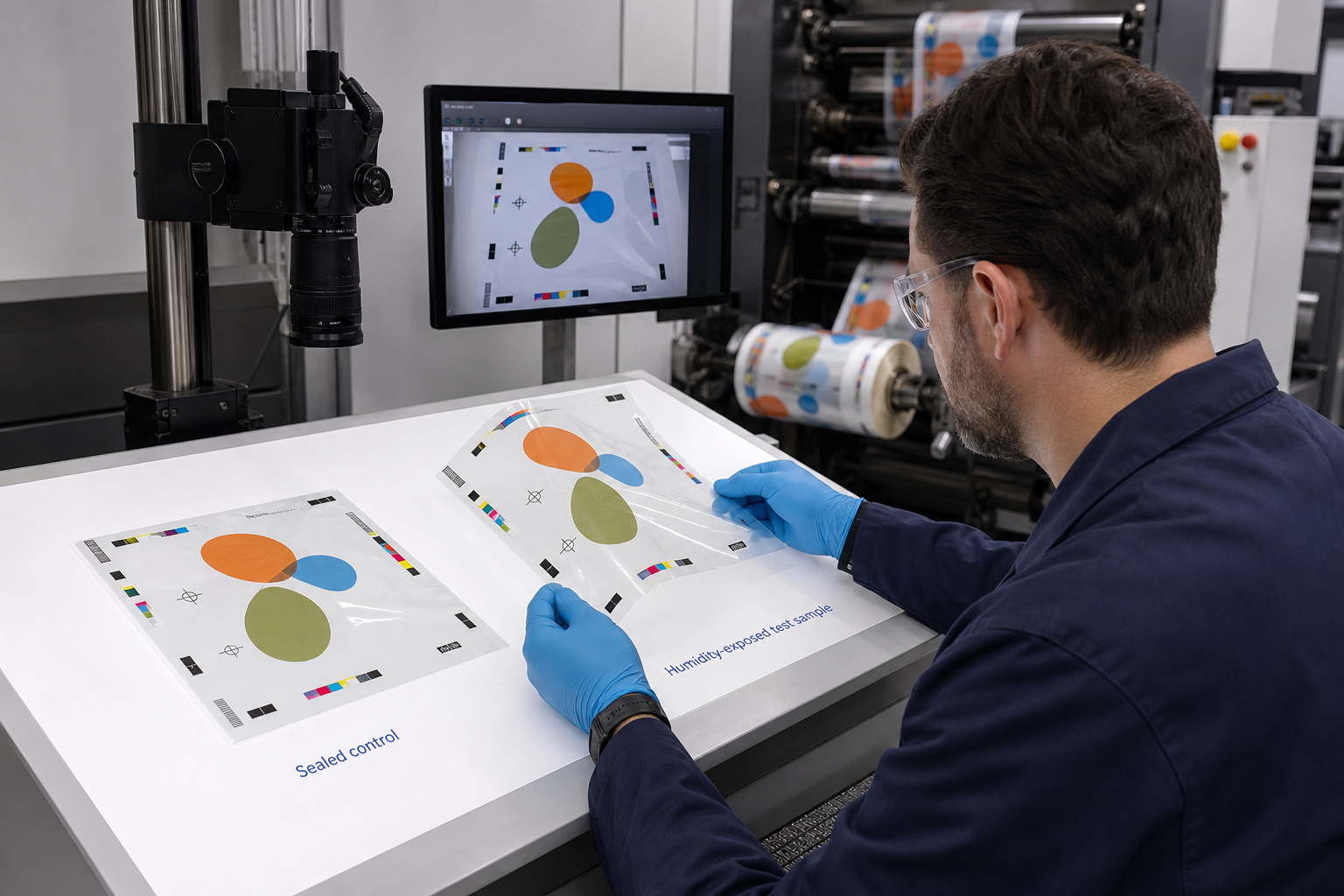
Request grade-specific evidence and a joint test plan, not a generic assurance that “nylon absorbs moisture.”
Send the supplier:
- grade, lot, roll, slit position, treated side, and roll dimensions;
- storage, wrapping, unwrapping, and press-room history;
- print repeat, web direction, press type, speed, tension, dryer, and register trends;
- photos and mapped samples showing where drift began;
- results from the reference-versus-affected comparison;
- the ink, primer, adhesive, or coating system where relevant.
Ask for the latest TDS and storage/handling guidance for the exact grade, plus any supported dimensional-stability or conditioning method. Confirm whether the proposed BOPA is intended for the print side, laminate position, treatment, and downstream application in your structure.
CHALVO can review a BOPA inquiry around the required printing, lamination, bag-making, and end-use conditions. Because no verified CHALVO grade-specific moisture or register values are available in the reviewed local evidence, buyers should request current documents, sample data, and an application-specific trial plan rather than relying on a general article.
How Can Buyers Reduce the Risk on Future Orders?
Write moisture and register control into receiving, storage, trial, and purchase requirements.
Define packaging integrity and roll identification requirements. Agree on how long rolls may remain unwrapped before printing and what to do after transfer between different environments, using supplier-supported instructions rather than a universal rule.
For qualification, compare candidate grades under the same conditioning and press protocol. Include MD and TD observations, repeat stability, roll flatness, winding quality, treatment, and downstream lamination or bag-making performance. UNITIKA's published distinction between moisture stability and multicolor pitch stability shows why “BOPA” alone is not a complete specification.
Finally, define the evidence needed for a claim: retained samples, environmental history, register data, matched roll trials, and an agreed measurement method. This turns a subjective press complaint into a technical supplier conversation.
Frequently Asked Questions
Does BOPA absorb moisture from the air?
Polyamide film can respond to atmospheric moisture. The practical effect depends on the grade, orientation, exposure history, and process. Use grade-specific supplier evidence and controlled comparisons.
Can a BOPA roll recover after conditioning?
Possibly, but recovery should not be assumed. Follow the supplier's handling guidance and verify dimensions and press behavior after controlled conditioning.
Should BOPA be conditioned before printing?
Use the film supplier's instructions and the agreed process specification. For comparative testing, keep temperature and humidity conditions consistent and documented.
Does moisture affect MD and TD equally?
Not necessarily. Orientation and film design influence directional behavior. Measure and report MD and TD separately when diagnosing register or alignment problems.
Is register drift proof that the BOPA film is defective?
No. Tension, heat, roll geometry, press components, inks, coatings, and setup can produce similar symptoms. A matched reference trial is more persuasive than the symptom alone.
What is the first action when register starts drifting?
Stop silent adjustments, preserve the trend data, identify the roll position and settings, and quarantine representative material for comparison.
Summary
Humid storage can contribute to BOPA register drift, but it is not a complete diagnosis. Compare affected and reference rolls under documented conditioning and press settings, map MD/TD behavior, and request grade-specific supplier evidence before assigning the cause.
Sources
- UNITIKA: EMBLEM ON
- UNITIKA: EMBLEM ON / ONM technical information (PDF)
- ASTM D618-21: Standard Practice for Conditioning Plastics for Testing
Meta Title
BOPA Print Register Loss After Humid Storage
Meta Description
Learn why humid storage can affect BOPA print register, how to separate film response from press causes, and what evidence buyers should request.
Talk to CHALVO
Send CHALVO your BOPA grade or target structure, printing method, roll details, storage history, register trend, and end-use requirements. Ask for the latest applicable TDS, sample information, and a controlled application-trial review before placing a production order.
60–75 Second Video Angle
“Humidity or press setup?” Follow one suspect BOPA roll from warehouse to press. Show drifting register marks, a moisture-history check, MD/TD sample comparison, and a matched affected-versus-reference trial. Close with the four evidence groups buyers should send: roll identity, exposure history, press data, and mapped samples.
Visual Suggestions
1. Real multicolor flexible-packaging press printing transparent BOPA, with register marks visibly separating. 2. Wrapped reference roll versus partially exposed suspect roll during warehouse-to-press handling. 3. QA technician comparing labeled MD/TD specimens and printed repeat marks. 4. Side-by-side controlled press trial using affected and reference rolls under matched settings.